

Short answer: buy the Audiocular Aura Pro (₹2,470) for the best specs per rupee, the JCally JM20 Max (₹3,799) if you want a dongle with an outside measurement behind it, or the Audiocular Spark (₹1,050) or FiiO JA11 (₹999) on a budget.
Geekman has covered consumer tech for over 10 years, and this ranking is built the way our buying guides always are: research first, then a hard look at the numbers. For all 8 DACs we compared the DAC chip, listed output power at 32 ohm, signal to noise ratio, formats, EQ features, warranty and live prices at The Audio Store and Headphone Zone. We did not measure these ourselves, and I say which figures are the maker’s and which come from outside measurements. Prices were seen on 25 October 2026.
A Type-C DAC is a small dongle that turns your phone’s or laptop’s USB-C port into a headphone jack with its own DAC chip and amplifier. This guide covers eight dongles from ₹999 to ₹3,799. For balanced 4.4mm outputs and more power, see our best portable DAC amps. To pick a pair to plug in, see our best IEM in India guide.
Find your Type-C DAC in 4 quick taps
Short answer: the Audiocular Aura Pro is the best value Type-C DAC, and the Spark is the pick for IEMs on a budget. Turn on JavaScript to use the Finder.
Pick in 30 seconds
Which Type-C DAC fits you?
Best value
Audiocular Aura Pro at ₹2,470, with 210 to 235 mW at 32 ohm listed.
Best measured
JCally JM20 Max at ₹3,799, with an independent SINAD of 113 dB.
Under ₹1,100
Audiocular Spark at ₹1,050, or FiiO JA11 at ₹999.
Most EQ control
Audiocular Aura Pro or Aura, with a 10-band and parametric EQ app.
Balanced option
Kiwi Ears AD1 Pro at ₹1,890, in a 4.4mm version.
Brand and service
FiiO JA11 at ₹999, with PEQ on Android.
The ranking
How I ranked these DACs
Each DAC gets a score out of 10 for performance (40%), value (40%) and service (20%). Performance comes from the listed chip, output power, noise figures, formats and features, plus independent measurements where I found them. Only the JCally JM20 Max had one. Value is those specs against the price. Service looks at the warranty, the brand and stock.
See the scores
| # | DAC | Perf. | Value | Service | Overall |
|---|---|---|---|---|---|
| 1 | Audiocular Aura Pro | 8.4 | 9.0 | 7.0 | 8.4 |
| 2 | JCally JM20 Max | 8.6 | 7.6 | 8.0 | 8.1 |
| 3 | Audiocular Aura | 8.2 | 8.2 | 7.0 | 8.0 |
| 4 | FiiO x Jade Audio JA11 | 6.6 | 9.0 | 8.5 | 7.9 |
| 5 | Audiocular Spark | 6.9 | 9.2 | 7.0 | 7.8 |
| 6 | JCally JM7 Max | 7.4 | 8.0 | 8.0 | 7.8 |
| 7 | Kiwi Ears AD1 Pro | 7.0 | 8.2 | 7.5 | 7.6 |
| 8 | Truthear KeyX | 7.2 | 6.8 | 8.0 | 7.2 |
Scores weigh performance 40%, value 40% and service 20%. They are my editorial judgement from the makers’ listed specs, outside measurements where they exist, and live prices on 25 October 2026. They are not lab results.
Quick picks
| Pick | DAC | Best for |
|---|---|---|
| Best Value Type-C DAC | Audiocular Aura Pro | A CS43198 dongle DAC with up to 235 mW at 32 ohm, a 10-band EQ and an app, at ₹2,470 |
| Best Measured Dongle | JCally JM20 Max | A CS43131 dongle DAC with 195 mW at 32 ohm and an independent SINAD of 113 dB, at ₹3,799 |
| Cleanest Listed Distortion | Audiocular Aura | A CS43131 and SGM8262 dongle with 227 mW and a listed THD+N of -115 dB, at ₹2,820 |
| Cheapest Branded Dongle | FiiO x Jade Audio JA11 | A small dongle with 30 mW per channel, 115 dB SNR, PEQ and DSD128, at ₹999 |
| Best Under ₹1,100 | Audiocular Spark | A CX31993 and MAX97220 dongle with 63 mW at 32 ohm and 124 dB SNR, at ₹1,050 |
| Mid-Price Power Pick | JCally JM7 Max | A CX31993 dongle with an SGM8262 amp and 118 mW at 32 ohm, at ₹2,399 |
| Choice of 3.5mm or 4.4mm | Kiwi Ears AD1 Pro | A small dongle with 60 mW total, 115 dB SNR and a choice of 3.5mm or 4.4mm output, at ₹1,890 |
| Brand-Name CS43131 With Web EQ | Truthear KeyX | A CS43131 dongle with 122 dB SNR and browser-based EQ, at ₹3,490 |
Tap a name to jump to its review. Live prices are in the buy box under each review. Prices change daily and bank offers can lower them.
All 8 picks
Best Type-C DACs in India
Eight dongles are worth considering. The top three get a full review and the other five get a short one. Prices run from ₹999 to ₹3,799, and The Audio Store and Headphone Zone are the main sellers.
Best Value Type-C DAC
1. Audiocular Aura Pro
8.4 Overall
8.4 Performance
9.0 Value
7.0 Service
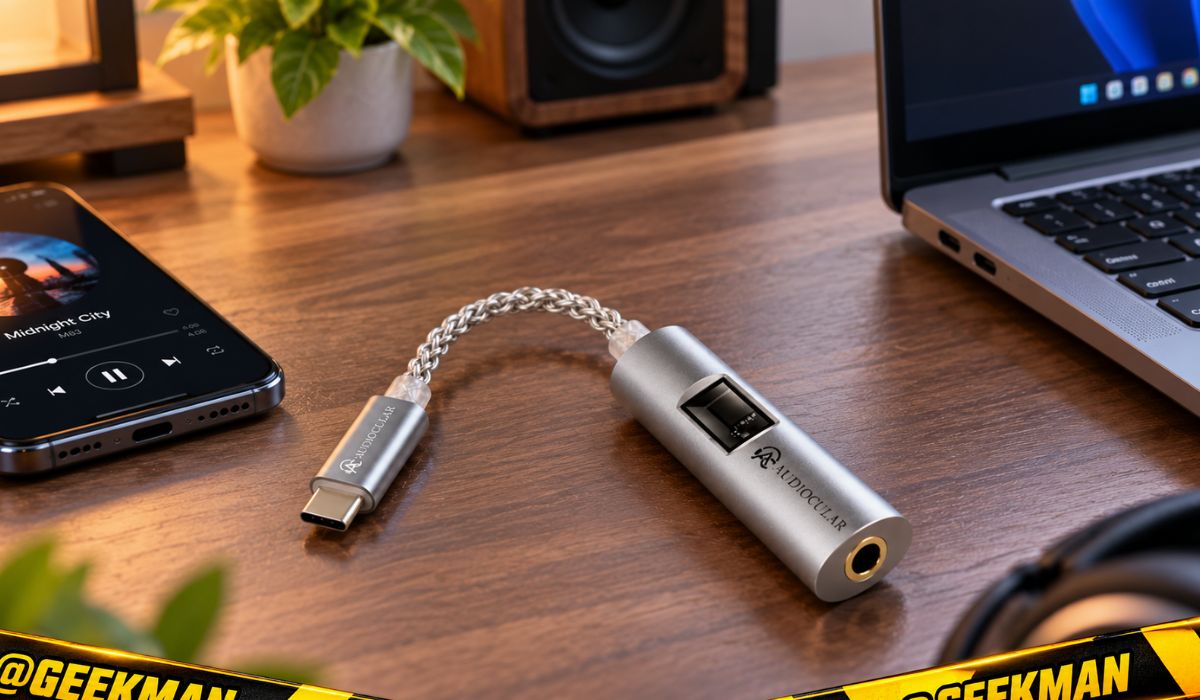
CS43198 DAC · 210 to 235 mW at 32 ohm · 125 dB SNR · 10-band EQ and Auto PEQ · Mic and inline controls
Best for
✓ Phone and laptop users who want the most power per rupee
✓ IEM and easy-to-drive headphone owners
✓ Buyers who like to tune with EQ
Not ideal for
– Anyone who needs a 4.4mm balanced output
– Buyers who want an independently measured DAC
– iPhone users who want a Lightning cable
Verdict: The best specs per rupee in this list. Output and noise figures beat dongles that cost ₹1,000 more.


Pros and cons
What we like
+ 210 to 235 mW at 32 ohm
+ EQ and Auto PEQ in an app
+ 12 month warranty
What we don’t like
– No independent measurement found
– 3.5mm output only
– App is Android and web
Audiocular Aura Pro Type-C DAC: what it is and the real numbers
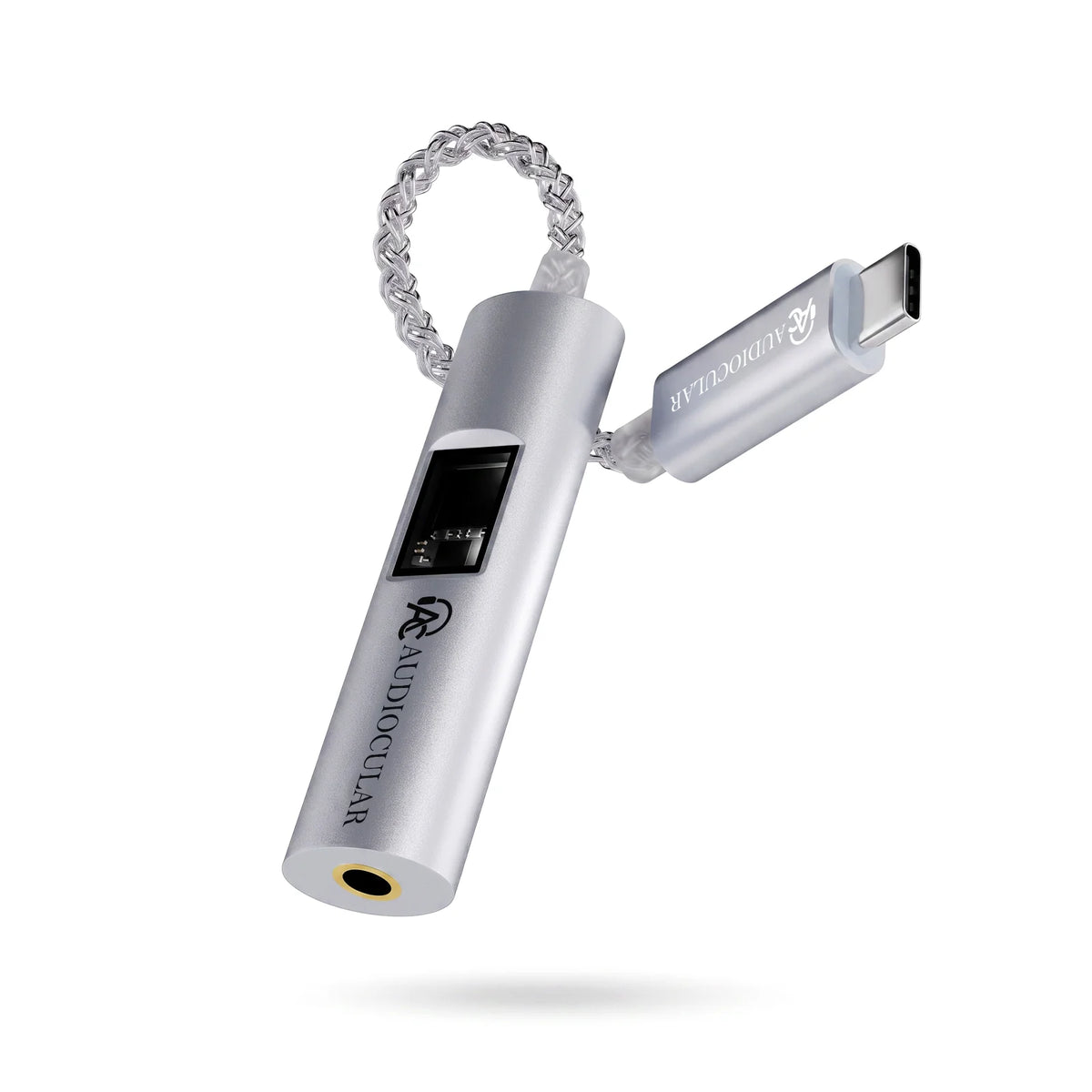
The Audiocular Aura Pro is a dongle DAC that pairs a Cirrus Logic CS43198 converter with an SGM8262 headphone amplifier. The maker rates it at 210 mW typical and up to 235 mW into 32 ohm on the 3.5 mm output, with a 125 dB signal to noise ratio and 125 dB dynamic range. It accepts PCM up to 32 bit and 384 kHz plus DSD64, DSD128 and DSD256, and the stated load range is 16 to 600 ohm. The cable is part of the body, a 4 core silver plated lead, and the output takes both 3 pole and 4 pole plugs, so a headset with a mic works. A small RGB light shows whether you are playing PCM or DSD. Those are the maker’s figures, so treat them as a ceiling, not a bench result.
My take: the Aura Pro is the Type-C DAC I would point most Indian buyers to first, because it covers the widest range of listeners from a single dongle. A sensitive IEM gets a quiet background, a 150 ohm headphone still gets a sensible level, and the 4 pole support means you do not lose calls. It also suits anyone moving from a phone that lost its headphone jack. If your phone is a recent Samsung, Pixel, Xiaomi or iPhone 15 and later, plug it in and it should simply work, with no driver. Where I would pause is a work laptop with locked down USB policies. Test it on the day it arrives rather than the night before a trip.
Audiocular Aura Pro DAC cost of ownership and phone battery
Skip the sticker price, because the real money angle here is what comes after the purchase. A dongle powered from your phone takes its current from the phone battery, and a 235 mW rated amp is not a sipper. Expect the phone to lose battery faster than it would with a lower power dongle, and plan a charge point if you listen for hours on a flight. The warm body is the visible sign of that draw. Because the cable is built in, a frayed lead means replacing the whole unit, so a basic cable strap or a small pouch is the cheapest insurance you can buy. Against the JCally JM20 Max, the Aura Pro costs you more in daily battery but gives more headroom for hard to drive headphones.
Living with the Audiocular Aura Pro: app, heat and the LED
The My Audiocular app gives a 10 band equaliser, a multi band parametric editor, Auto PEQ and custom presets. It runs on Android and as a web app on Windows and macOS, so an iPhone user gets the hardware but not the app. The DAC also has selectable digital filters, which are subtle, so do not expect a different personality from them. Two habits to know about. Expect the unit to warm up after a long session, which is normal for this power class but worth feeling for before you put the phone in a tight pocket. The maker lists no way to switch the RGB indicator off, so it will glow in a dark room or a night flight. A strip of black tape fixes that, and I would not let it decide the purchase.
Audiocular Aura Pro warranty, service and what to check on delivery
The maker states a 12 month warranty. Audiocular sells through Indian audio retailers, so a claim is a call to the seller and not an overseas parcel. Ask the seller for the invoice in writing, because warranty runs from the purchase date and covers manufacturing defects only, not cable damage from a bend or a yank. On delivery, check four things. Plug it into the phone and confirm that it is recognised as a USB audio device. Play a track and check that left and right are balanced. Move the cable gently near the connector and listen for dropouts. Finally, open the app and confirm that your phone model connects. If one of these fails, return it inside the retailer’s replacement window.
Who should buy the Audiocular Aura Pro and who should skip it
The shortfalls are modest. It gets warm, the light is fixed, the cable cannot be swapped, and the app does not run on iOS. Judge distortion by ear in the return window, with your quietest IEM. Against the Audiocular Aura, the Pro costs more and brings the CS43198 chip and a higher rated output. Against the FiiO JA11, it trades volume steps and a tiny body for far more power and an app with real tuning. Buy the Aura Pro if you want one dongle that handles IEMs, a headset mic and mid impedance headphones on Android, Windows or a recent iPhone. Skip it if you only use easy IEMs and care about battery drain or a cool, discreet body.
Key specs
| DAC chip | Cirrus Logic CS43198 |
| Amp | SGM8262 |
| Output power | 210 mW typical, up to 235 mW at 32 ohm |
| SNR and dynamic range | 125 dB typical |
| Formats | PCM 32 bit / 384 kHz, DSD256 |
| Output | 3.5mm single-ended |
| Warranty | 12 months |
| Price on 25 Oct 2026 | ₹2,470 The Audio Store |
Best Measured Dongle
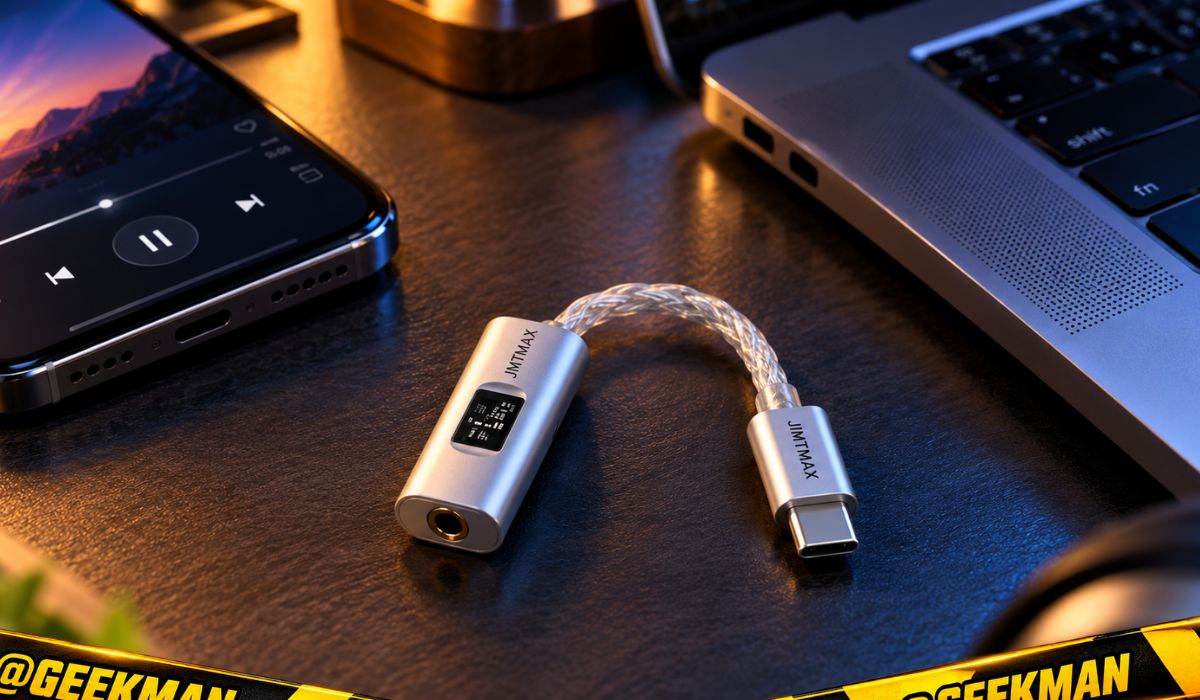
2. JCally JM20 Max
8.1 Overall
8.6 Performance
7.6 Value
8.0 Service
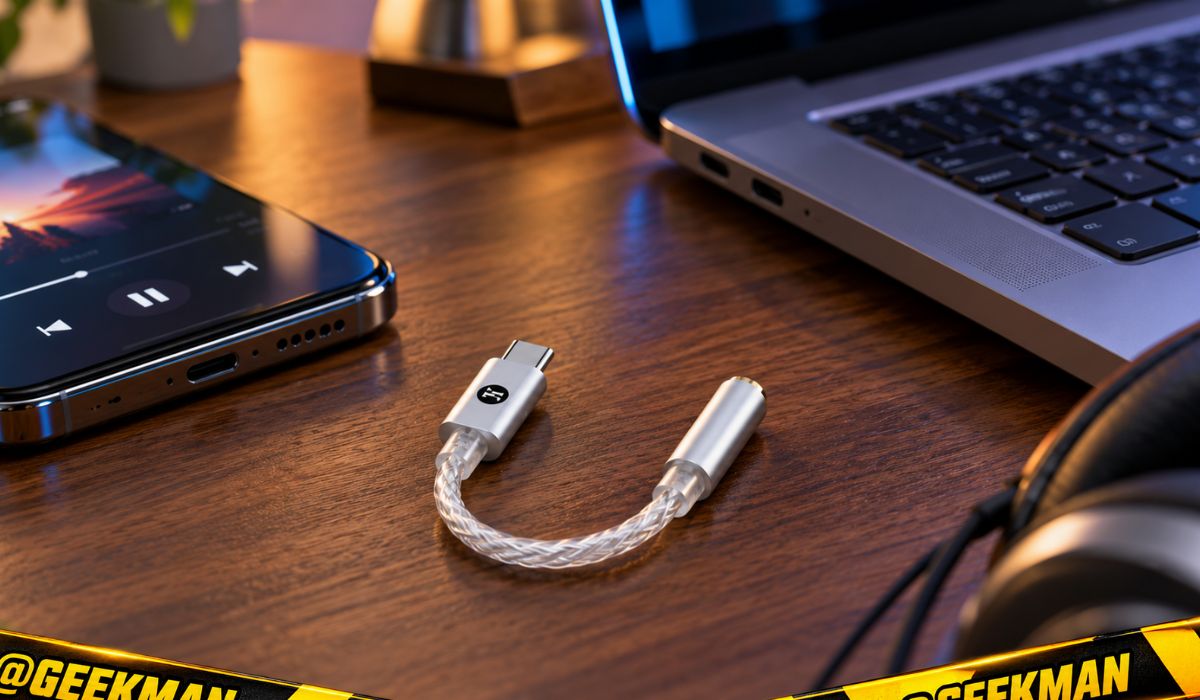
CS43131 DAC · 195 mW at 32 ohm · SINAD 113 dB (independent) · DSD256 · 316 stainless steel
Best for
✓ Buyers who want a dongle with a measurement behind it
✓ IEM and headphone owners up to 600 ohm
✓ Laptop and phone users
Not ideal for
– Buyers who want a balanced output
– Anyone who wants EQ or an app
– Buyers on a tight budget
Verdict: The one dongle here with outside measurements, and they are good. It has no EQ and costs more than the Aura Pro.

JCally - JM20MAX

Up to 6% instant discount on select credit cards +1
- Up to 6% instant discount on select credit cards
- Cashback with Amazon Pay ICICI Bank Credit Cards

Pros and cons
What we like
+ Independent SINAD of 113 dB
+ 195 mW at 32 ohm
+ Metal build
What we don’t like
– No EQ or app
– Costs ₹3,799
– Fixed cable
JCally JM20 Max Type-C DAC: what it is and the real numbers
The JCally JM20 Max is a dual chip dongle that uses a Cirrus Logic CS43131 DAC with an SGM8262 amplifier stage. The maker rates it at 195 mW into 32 ohm and 10.9 mW into 600 ohm, with a signal to noise ratio above 126 dB, dynamic range of 122 dB and crosstalk of minus 140 dB. It decodes PCM to 32 bit and 384 kHz and native DSD256, and supports loads from 16 to 600 ohm. The body is a CNC aluminium tube of about 6.5 g, joined to a spiral 8 core silver plated copper cable with a metal USB plug. An independent measurement site recorded roughly 140 mW at 32 ohm with very low distortion and noise, so real power sits below the maker’s headline but is still generous for IEMs and most headphones.
My take: the JM20 Max is the safest all round pick if you want clean sound with plenty of volume and do not need an app. Pair it with a pair of IEMs and you will use a fraction of the volume range, which is exactly what you want from a quiet amp. It suits a desk setup with a laptop as well as a phone. It does not list a microphone, so I would not buy it for call heavy work or for a headset you game with. For an iPhone, it is a USB-C part only, so it fits an iPhone 15 or later, and you should confirm on delivery that the phone recognises it before the return window closes.
JCally JM20 Max DAC value, battery draw and upgrade path
The money angle is about what you are not paying for. The JM20 Max gives you a respected Cirrus Logic chip, silver plated cable and metal housing without a screen, app or balanced port that you may never use. That keeps the cost of ownership low. Battery draw is moderate because the amp is rated below the top power dongles, so a long flight is less of a worry than with a high power unit. If you later buy a 4.4 mm balanced headphone cable, this dongle is single ended only, so you would be shopping for a new dongle rather than an adapter. That is the one upgrade that costs more than the original purchase, and it is worth planning for.
Living with the JCally JM20 Max: heat, volume and cable
Day to day, the dongle is plug and play with no driver and no app dependence. Volume is controlled from the phone, and the unit is sensitive enough that a quiet IEM may reach a comfortable level in the lower part of the slider, which means less precise control than a dongle with its own volume steps. The body warms up in long sessions, and the spiral cable adds a little weight to the connection, which is something to consider in a loose phone port. The metal plug is built to take wear, and the maker cites a salt spray test and 10,000 plug cycles on the connector. Use the cable clip or a short loop to reduce tugging when you are on the move.
JCally JM20 Max warranty, Headphone Zone returns and checks
The maker’s term is one year against manufacturing defects. In India, JCally products come through importers such as Ferrari Video in Chennai, and Headphone Zone sells the unit with a 7 day exchange for store credit and a 7 day window for reporting defects. Wrong, damaged or missing items must be reported within 24 hours of delivery, so record an unboxing video as soon as the parcel opens. Keep the box, the warranty card and the manual, because exchanges need them. On first use, check the volume feels even on both channels at low settings, check that the dongle is not hissing with a sensitive IEM, and press the cable near the plug to rule out intermittent contact.
Who should buy the JCally JM20 Max and who should skip it
The weak points are plain. There is no microphone listed, no volume control of its own, no balanced output, and a short warranty window from the importer. It also runs warm with long sessions. Against the Audiocular Aura Pro, it has less rated power and no app, but it is cheaper to live with and stays simpler. Against the Truthear KeyX, it is better suited to demanding headphones and has far more power, but it loses the mic and the L shaped body. Buy the JM20 Max if you want a clean, powerful, no fuss dongle for IEMs and headphones on a phone or laptop. Skip it if you take calls through it or want on device volume.
Key specs
| DAC chip | Cirrus Logic CS43131 |
| Output power | 195 mW at 32 ohm, 10.9 mW at 600 ohm |
| SINAD | 113 dB (speakerranking) |
| Formats | PCM 32 bit / 384 kHz, DSD256 |
| Output | 3.5mm single-ended |
| Warranty | 1 year (Headphone Zone offer) |
| Price on 25 Oct 2026 | ₹3,799 Headphone Zone |
Cleanest Listed Distortion
3. Audiocular Aura
8.0 Overall
8.2 Performance
8.2 Value
7.0 Service
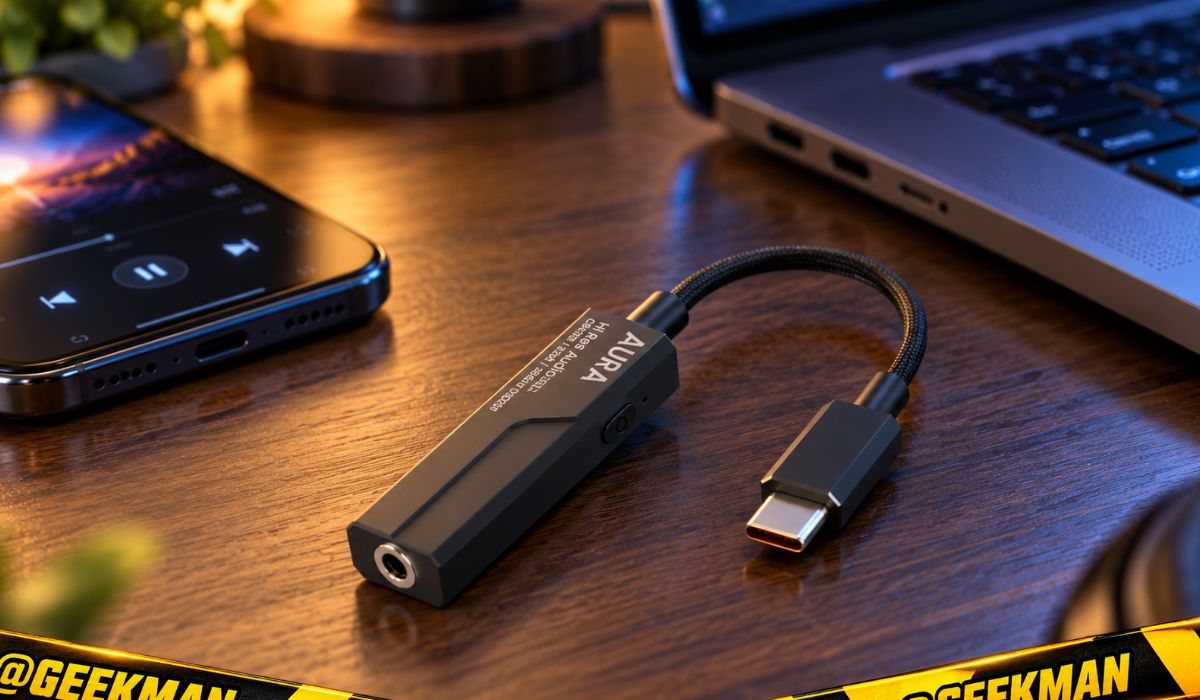
CS43131 DAC · 227 mW at 32 ohm · THD+N -115 dB · DSD256 · App with PEQ
Best for
✓ Buyers who want the Aura Pro family with a different chip
✓ Laptop and phone users who want a listed low distortion
Not ideal for
– Buyers who want to save money (the Aura Pro costs less)
– Anyone who wants a balanced output
Verdict: Close to the Aura Pro on paper. Pick it only if you prefer the CS43131, since the Pro costs ₹350 less.

Audiocular Aura (The Audio Store)
Great Indian Festival Up to 6% instant discount on select credit cards +1
- Up to 6% instant discount on select credit cards
- Cashback with Amazon Pay ICICI Bank Credit Cards
Pros and cons
What we like
+ Listed THD+N of -115 dB
+ 227 mW at 32 ohm
+ PEQ in an app
What we don’t like
– Costs more than the Aura Pro
– No independent measurement found
– 3.5mm output only
Audiocular Aura Type-C DAC: what it is and the real numbers
The Audiocular Aura is the cheaper sibling of the Aura Pro, and it uses a Cirrus Logic CS43131 converter with an SGM8262 amplifier and a CB5100 controller. The maker rates it at up to 227 mW into 32 ohm, with up to 2 V output, signal to noise and dynamic range above 125 dB, and THD plus noise of minus 115 dB. It decodes PCM from 16 bit and 44.1 kHz up to 32 bit and 384 kHz plus DSD64, DSD128 and DSD256, supports 16 to 600 ohm loads, and has a 24 bit and 96 kHz converter for recording. The body is CNC aluminium about 12.5 cm long including the braided 4 core silver plated cable, and the box adds a carry case and a USB-A adapter.
My take: the Aura is the right pick for someone who wants the Audiocular app and the CS43131 sound without paying for the Pro. It sits in the sweet spot for people with a pair of IEMs plus one over ear headphone. The 227 mW rating looks higher than the Pro’s typical figure on paper, so treat the two as close in practical loudness and let chip preference decide. Before ordering, check your own phone against the maker’s compatibility notes, because this model carries a published list of phones that do not work with it, and that list includes recent OnePlus, Realme, Infinix and Motorola models. Skip the unit entirely if your phone is on it.
Audiocular Aura DAC cost of ownership and the phone check
The money angle starts with the compatibility check. A dongle that does not enrol on your phone is a wasted purchase, and the maker itself names models that are not supported, so check before you click buy. Beyond that, the Aura costs less to run than the Pro, though it still draws meaningful power from the phone. A carry case in the box saves you buying one. Over a couple of years, the one repair risk is the fixed cable, so a pouch and a strain loop are the cheapest insurance. If you outgrow single ended output and want a balanced port later, you will be buying again, so decide that now.
Living with the Audiocular Aura: app, mic and cable
The My Audiocular app offers multi band parametric equaliser controls, preset sharing and a community tuning section, and settings are saved on the device itself, which means your tuning follows the dongle when you move to a laptop. The unit is built around a recording converter, but a headset mic path is not promised, so test your own inline mic headset on arrival before you rely on it for calls. The braided TPE jacket is soft and resists tangling better than a bare cable, but it can pick up pocket lint. Volume is controlled from the phone, so a sensitive IEM may sit low on the slider.
Audiocular Aura warranty, service and delivery checks
The maker gives a 12 month warranty, which is better than the three months some imported dongle brands offer. Audiocular sells through Indian retailers, so support is a call or an email instead of an overseas parcel. Warranty covers manufacturing defects only, so a cable damaged by a shut bag or a bent plug is your cost. On delivery, check that the carry case and USB-A adapter are inside, plug the unit into your actual phone and confirm that audio routes through it, test both channels with a left right track, and open the app to confirm that it pairs with your phone. If anything fails, raise the return in writing the same day and keep the box.
Who should buy the Audiocular Aura and who should skip it
The shortfalls: a published list of unsupported phones, a headset mic you must test yourself, a fixed cable, and no hardware volume. Against the Audiocular Aura Pro, you lose the CS43198 chip, the RGB mode light and the listed headset mic, but you keep the app and the same output class. Against the JCally JM20 Max, you gain a carry case in the box and a brand that sells through Indian retailers. Buy the Aura if you want an app driven dongle at a lower spend and your phone is not on the unsupported list. Skip it if you need calls through the dongle or if your phone is a recent OnePlus or Realme model.
Key specs
| DAC chip | Cirrus Logic CS43131 |
| Amp | SGM8262 |
| Output power | 227 mW at 32 ohm (max) |
| THD+N and SNR | -115 dB, above 125 dB |
| Formats | PCM 32 bit / 384 kHz, DSD256 |
| Warranty | 12 months |
| Price on 25 Oct 2026 | ₹2,820 The Audio Store |
Cheapest Branded Dongle
4. FiiO x Jade Audio JA11
Geekman score 7.9/10 · Performance 6.6 · Value 9.0 · Service 8.5
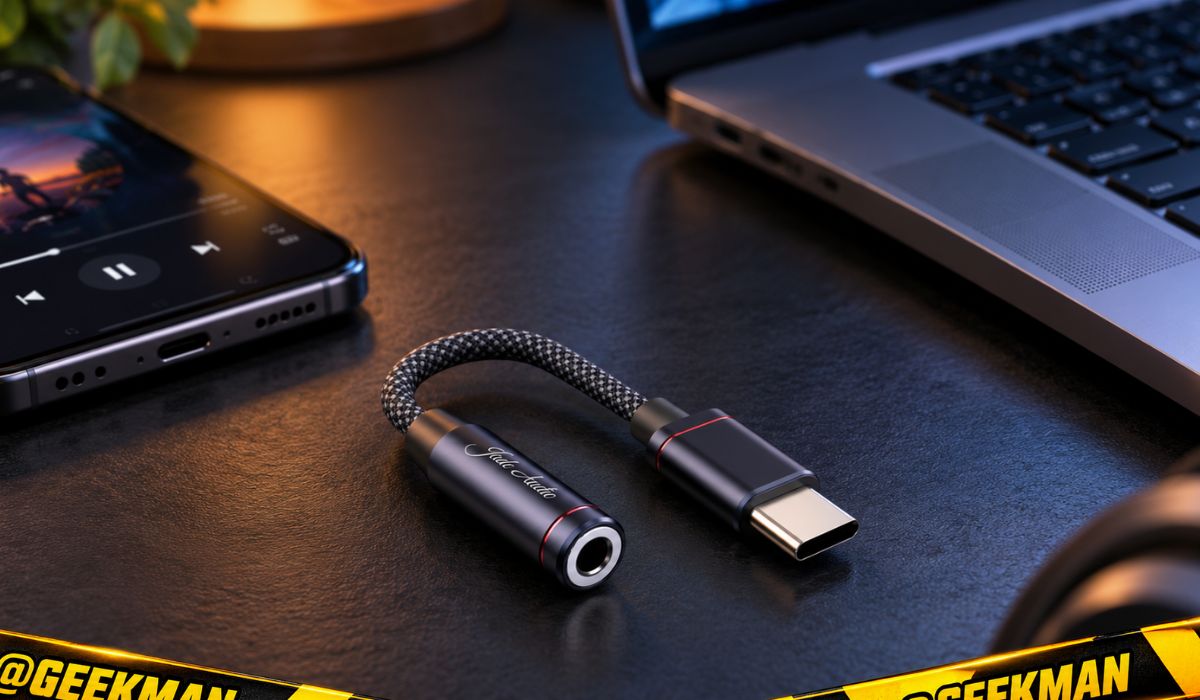
30 mW + 30 mW at 32 ohm · SNR 115 dB or more · DSD128 · PEQ in the FiiO Control app · 1 year warranty
Best for
✓ Buyers who want a known brand under ₹1,000
✓ IEM users
✓ Android users who want PEQ
Not ideal for
– Headphone owners who need power
– iPhone users who want the app
Verdict: The safe cheap pick, with a brand name and service. It lists half the power of the Spark.
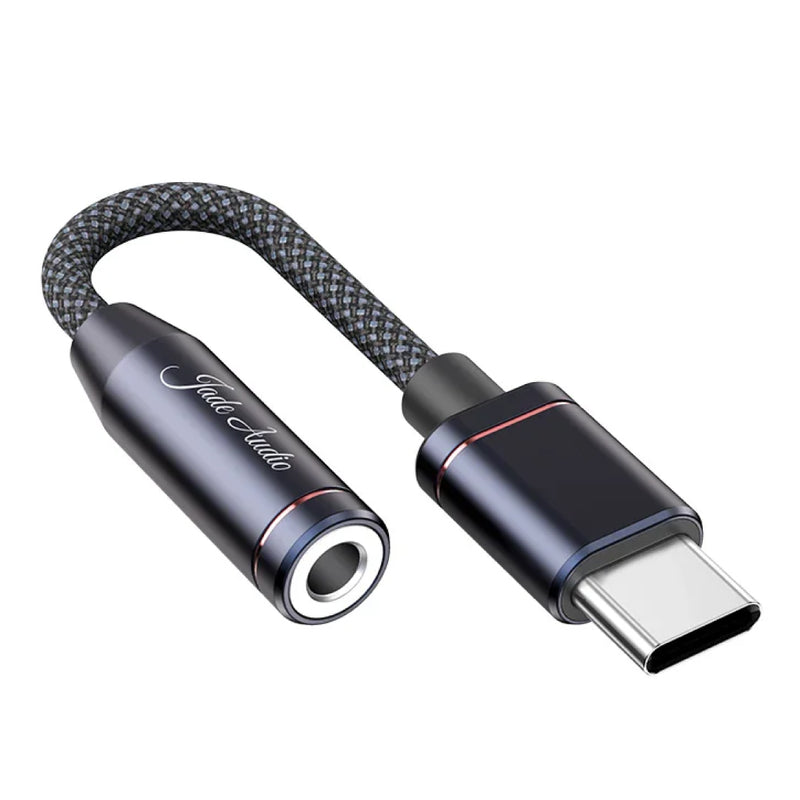
FiiO JA11 (Headphone Zone)
FiiO JA11 Type-C DAC: what it is and the real numbers
The FiiO JA11, sold under the FiiO and JadeAudio banner, is an ultralight dongle of about 5 g. The maker does not name its DAC chip. It rates output at 30 mW or more into 32 ohm, signal to noise of 115 dB or better, noise floor of 1.7 microvolts and output impedance below 0.5 ohm, with distortion under 0.004 percent. It plays PCM up to 32 bit and 384 kHz and DSD128 through DoP, and it can switch between UAC 1.0 and UAC 2.0 modes, which helps with consoles and older gear. The cable is a braided palladium plated copper lead on a matte aluminium magnesium body. There are no buttons on the unit, so every setting lives in the app.
My take: the JA11 is the pick for the person who wants the smallest, lightest, cheapest way to get clean sound from sensitive IEMs. Thirty milliwatts is enough for most single dynamic driver IEMs, and the low noise floor means it stays quiet with the most sensitive ones. It is not the dongle for a 250 ohm headphone or a power hungry planar. For an Android phone it is a very strong value, because the FiiO Control app brings a five band parametric equaliser and 60 volume steps. For an iPhone user it works as a plain converter, but the app tuning is an Android feature, so the extras go to waste.
FiiO JA11 DAC value, battery draw and accessories
Value here is simple. You are paying for a clean low power converter, an app and a tiny body, and nothing extra. Battery draw is low, so the JA11 suits long commutes better than a high power dongle. The cost that catches people is accessories. There is no USB-A adapter in the box, so a laptop with only USB-A ports needs a separate adapter, and Lightning devices need their own cable. Add the price of that small adapter to your plan. Against the JCally JM7 Max, the JA11 asks for less power from the phone, but it also gives you less loudness, so match it to the headphones you actually own.
Living with the FiiO JA11: volume steps, hiss and firmware
Without physical buttons, volume is set from the phone or from the app’s 60 steps, which is finer than a typical phone slider. It does not pop when you plug or unplug IEMs, and it stays cool in long sessions, which is a real daily comfort. The microphone can be turned on or off in the app. One thing to know is that some early units showed channel imbalance on certain phones, which a firmware update to version 1.7 was needed to fix, so update before judging. The braided cable is neat, but the lack of any physical control means you depend on the phone for everything.
FiiO JA11 warranty, India service and delivery checks
FiiO sells in India through distributors and retailers, and the warranty terms depend on the seller, so ask for them in writing and keep the invoice. Buy from an authorised retailer, because grey imports may not be covered. On delivery, check the dongle in your phone and in the FiiO Control app, update the firmware if the app offers it, and test left and right balance at low volume with your most sensitive IEM, since low level balance is where the early firmware problem showed. If your laptop has USB-A only, order the adapter now. Check the cable strain relief by gently flexing near the plug.
Who should buy the FiiO JA11 and who should skip it
The weak points: limited power, no buttons, no stated DAC chip, no adapter in the box, and an Android centred app. Against the Truthear KeyX, the JA11 has an app, 60 volume steps and a lower cost, but it has less power and a less resolving presentation. Against the Audiocular Spark, it costs more but gives you a five band PEQ, 60 volume steps and an app that can update firmware. Buy the JA11 if you own sensitive IEMs, want an app, and value a tiny, cool, low drain body. Skip it if you drive full size headphones, need hardware volume buttons, or want a balanced output for a future upgrade.
Best Under ₹1,100
5. Audiocular Spark
Geekman score 7.8/10 · Performance 6.9 · Value 9.2 · Service 7.0
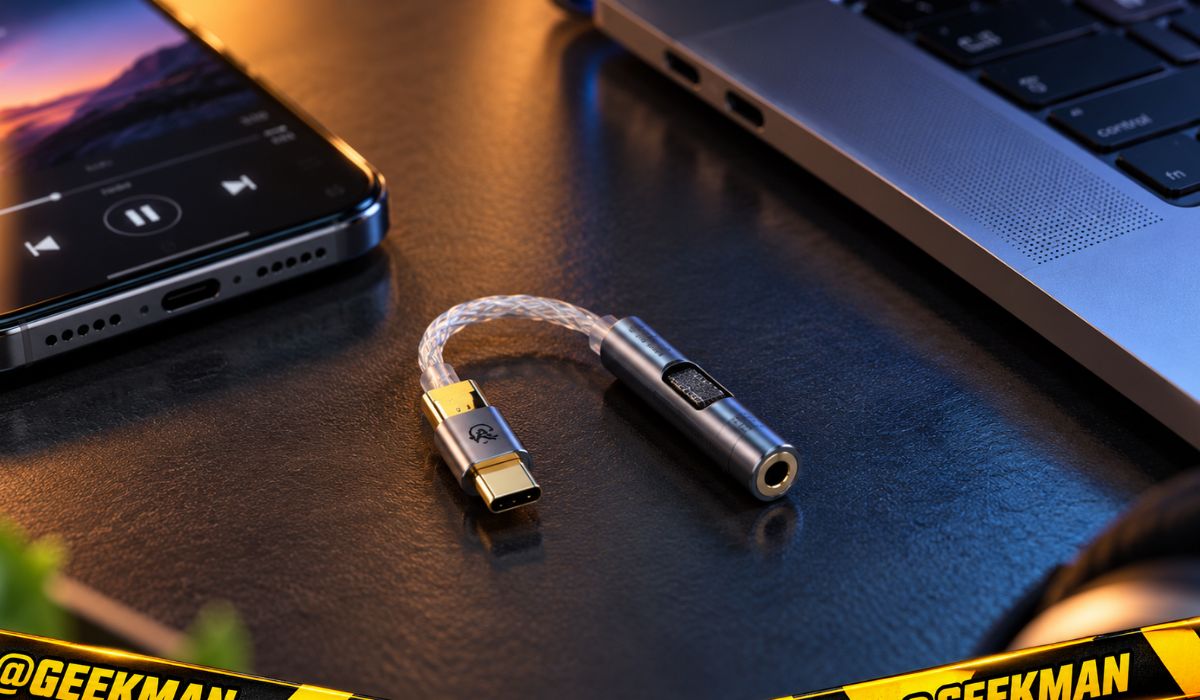
CX31993 DAC · 63 mW at 32 ohm · SNR above 124 dB · PCM 384 kHz · 12 month warranty
Best for
✓ First-time DAC buyers
✓ IEM users on a budget
✓ Buyers who want the lowest price with decent specs
Not ideal for
– Hard-to-drive headphone users
– Buyers who want DSD or EQ
Verdict: The best budget dongle on specs. It costs ₹1,050 and lists twice the power of the FiiO JA11.

Audiocular Spark (The Audio Store)
Great Indian Festival Up to 6% instant discount on select credit cards +1
- Up to 6% instant discount on select credit cards
- Cashback with Amazon Pay ICICI Bank Credit Cards
Audiocular Spark Type-C DAC: what it is and the real numbers
The Audiocular Spark is a small, low power dongle built around a Conexant CX31993 DAC and a MAX97220 headphone amplifier. The maker rates it at 63 mW into 32 ohm, signal to noise above 124 dB and dynamic range above 120 dB. It plays PCM up to 32 bit and 384 kHz and records at 24 bit and 96 kHz. The stated load range is 16 to 32 ohm, which makes it clear this is an IEM and easy headphone dongle, not a tool for hard to drive cans. The cable is 8 strand silver plated copper with a gold plated 3.5 mm jack. The maker gives a 12 month warranty and a 7 day replacement. The spec sheet does not list a microphone.
My take: the Spark is the entry point to this list and a sensible one. If your only goal is to get a clean, loud enough signal into a pair of IEMs from a phone with no headphone jack, this is where I would start. It suits students, commuters and anyone who wants a backup dongle in a bag. It is not the pick if you own a 150 ohm headphone or if you listen at very high volumes, because the rated load range stops at 32 ohm. Think of it as the dongle you would not mind losing, with enough quality to be a real step up from a bare phone adapter.
Audiocular Spark DAC value and what to buy with it
The value story is the cheapest on this list, and the extra cost to keep in mind is minimal. Because it sits near the lower end, you can afford a second one as a spare, which is more sensible than paying for a premium unit you will treat roughly. Battery draw is low at 63 mW, so the phone feels the load far less than with a high power dongle. Retailers also bundle the Spark with IEMs, so check whether a bundle with a pair of Audiocular or KZ earphones works out better than buying the pieces separately. Remember that the bundle quality depends on the IEM, not just the dongle.
Living with the Audiocular Spark: compatibility and consoles
The dongle is plug and play on Type-C Android phones, laptops and tablets, and the maker says no driver is needed. Note that it lacks UAC 1.0 support, so it will not work on a PlayStation 5, and some other consoles that only accept UAC 1.0 will also be out. If you use a game console, this is not the right dongle. Volume is controlled by the source device. The silver plated cable is thin and light, so do not wrap it tightly around the phone. The headset mic is not listed, so for call use with a headset, test your headset on arrival.
Audiocular Spark warranty, returns and delivery checks
The maker’s warranty is 12 months, plus a 7 day replacement through the seller. Keep the invoice and the box until you have used every path you plan to use. On delivery, plug the Spark into your phone, play a left right test track, and listen for hiss with your quietest IEM. Check that the 3.5 mm jack holds your plug firmly and does not wobble. Open the My Audiocular app if you plan to use the equaliser, and confirm that your phone model is accepted. Some phones have a USB audio routing option under developer settings. Leave it set so that audio goes to the dongle.
Who should buy the Audiocular Spark and who should skip it
The shortfalls: only 63 mW, a load range that stops at 32 ohm, no UAC 1.0 mode for consoles, and no listed microphone. Against the Audiocular Aura, the Spark gives up the CS43131 chip, the extra power and the carry case, but it costs much less. Against the JCally JM7 Max, it has less rated power and a smaller feature set, and it is the more modest choice. Buy the Spark if you want a cheap, low drain dongle for IEMs and easy earphones on an Android phone or laptop. Skip it if you own headphones above 32 ohm, if you game on a console, or if you need the dongle to carry a headset mic.
Mid-Price Power Pick
6. JCally JM7 Max
Geekman score 7.8/10 · Performance 7.4 · Value 8.0 · Service 8.0
CX31993 DAC · 118 mW at 32 ohm · SGM8262 amp · Under 1 ohm output impedance · 8-strand cable
Best for
✓ Buyers who want more power than a ₹1,000 dongle
✓ IEM and mid-impedance headphone users
Not ideal for
– Gamers on PS5 or Switch (UAC 2.0 only)
– Buyers who want an app or EQ
Verdict: A sensible middle choice, but the Aura Pro lists twice the power for about the same price.

JCally JM7 Max Type-C DAC: what it is and the real numbers
The JCally JM7 Max uses a Conexant CX31993 DAC with an SGM8262 amplifier. The maker rates it at about 118 mW into 32 ohm with THD plus noise of 0.0025 percent, a signal to noise ratio near 115 dB, a noise floor of 2.5 microvolts and output impedance of about 0.5 ohm. It plays PCM up to 32 bit and 384 kHz, and has a 24 bit, 96 kHz converter for recording, so it supports a microphone for calls and streaming. The cable is 8 core silver plated copper with 448 strands, and the body is a CNC aluminium tube of about 7.2 g. It works with Android, iOS, macOS and Windows 10 or later that supports UAC 2.0, and the maker warns it does not work with UAC 1.0 devices such as the Nintendo Switch or PS5.
My take: the JM7 Max is a good call for buyers who want a microphone capable dongle with decent power at a low price. At 118 mW it drives most IEMs and many lightweight headphones well. It suits a student who uses a headset on calls and online classes, or a mobile gamer on a phone. It is not meant for demanding headphones, because an independent review of the design points out that the chip architecture suits efficient loads and struggles with higher impedance. I would use it with IEMs and portable headphones under about 50 ohm.
JCally JM7 Max DAC value and the cheaper rivals
Here the money angle is about whether you can get the same sound for less. The CX31993 chip is common, and cheaper units with the same chip exist, so the JM7 Max is paying for build quality, the silver plated cable, and the included extras. The box adds a protective cover, a USB adapter and dust liner. That adapter is a small saving for laptop use. Battery draw is moderate, lower than the top power dongles. If you only ever use IEMs, you could spend less on an Audiocular Spark and not feel a big gap, so the extra spend only makes sense if the mic or the extra power matters to you.
Living with the JCally JM7 Max: UAC modes and heat
Daily use is plug and play. There is no app and no physical volume, so the phone controls loudness. The UAC 2.0 only behaviour is the main thing to know: any device that insists on UAC 1.0, which includes some consoles and older laptops, will not recognise it. The aluminium body helps spread heat, and at this power level it should stay comfortable. The cable has a clean braided look, but at 8 core with 448 strands it is a little stiff, and you will feel it when the phone is in a pocket. A protective cover is useful when the dongle shares a bag with keys.
JCally JM7 Max warranty, importer and delivery checks
The maker’s warranty is one year on the main unit, though the USB adapter in the box may carry a shorter term. In India, JCally is handled by importers such as Headphone Zone and Ferrari Video, and warranty claims go through the seller. Ask for the invoice and keep the warranty card. On delivery, check the box contents against the maker’s list, plug the dongle into your phone and test with the mic by recording a short voice note, and play a left right test at low volume. If the mic sounds thin, that is the converter and the phone’s handling, so try a different headset before blaming the dongle.
Who should buy the JCally JM7 Max and who should skip it
The weak points: limited power for demanding headphones, no volume control, and a UAC 2.0 only design. An independent review also notes that the chips are standard and cheaper equivalents exist. Against the Audiocular Spark, the JM7 Max has about twice the rated power and a published mic path, but costs more. Against the FiiO JA11, it is louder and has a mic converter, but it has no app and it is a little heavier. Buy the JM7 Max if you want a mic ready, mid power dongle for IEMs and portable headphones. Skip it if you play on a UAC 1.0 console or if you own full size headphones above 50 ohm.
Choice of 3.5mm or 4.4mm
7. Kiwi Ears AD1 Pro
Geekman score 7.6/10 · Performance 7.0 · Value 8.2 · Service 7.5
30 mW + 30 mW at 32 ohm · SNR 115 dB or more · 3.5mm or 4.4mm version · Web EQ · PCM 384 kHz
Best for
✓ IEM owners with a balanced cable
✓ Buyers who want a small, simple dongle
✓ Mic users (3.5mm version)
Not ideal for
– Hard-to-drive headphone owners
– Buyers who want DSD
– Anyone who wants the most power
Verdict: The cheapest way to get a balanced 4.4mm output, with modest power that suits IEMs.

Kiwi Ears AD1 Pro Type-C DAC: what it is and the real numbers
The Kiwi Ears AD1 Pro is a compact dongle sold in two versions, a 3.5 mm single ended one and a 4.4 mm balanced one. The maker calls it an upgraded DAC chip but does not name the model. It rates output at 30 mW per channel, a total of 60 mW, into 32 ohm at under 1 percent distortion, with a signal to noise ratio of 115 dB or better, THD plus noise under 0.003 percent and a noise floor of about 2 microvolts. It plays PCM from 44.1 kHz to 384 kHz at 32 bit. The mic and in line controls work on the 3.5 mm version. An online equaliser from Kiwi Ears lets you adjust bass, mids and treble. The box holds the unit, a manual and a warranty card.
My take: the AD1 Pro is a sound first dongle for IEM users who want a small, plain unit that does not draw much from the phone. At 30 mW per channel it is not a power dongle, so it drives IEMs and sensitive earphones, not hard loads. I would pick the 3.5 mm version if you want the mic and in line controls to work, and the 4.4 mm version only if you already own a balanced cable. The unnamed chip means I cannot tell you which converter you are buying, which is a reason to treat it as a budget unit and not as a flagship.
Kiwi Ears AD1 Pro DAC value and the two port choice
The cost angle is the choice of port. Pick the 3.5 mm version if you already have single ended IEMs, which is nearly everyone. The 4.4 mm version only pays off with a matching balanced cable, which is an extra cost, and at 30 mW per channel the balanced output does not turn this into a high power amp. The unit draws little from the phone, so battery drain is a non issue. Warranty is short compared with the Audiocular range, so factor in a possible replacement. If you plan to keep a dongle for several years, the longer warranty on rivals is worth more than a small saving here.
Living with the Kiwi Ears AD1 Pro: connector, EQ and volume
The dongle is plug and play with any USB-C phone, tablet, PC or gaming device, and the 3.5 mm version supports play, pause, skip and call answering from an in line remote on Android. Volume is controlled on the phone. The web equaliser works in a browser, which means no app install, but it also means your settings are not stored in the dongle in the way a dedicated app can. The Type-C plug is the weak spot on any slim dongle, so avoid leaving the unit hanging off the phone in a loose pocket. A short extension lead or a right angle adapter will reduce that stress.
Kiwi Ears AD1 Pro warranty, returns and delivery checks
The seller’s terms put the warranty at one year from invoice for manufacturing defects only, with a 7 day replacement through the store. Some sellers quote only three months on adapters like this, so confirm in writing which term your seller honours before you pay. Keep the invoice. On delivery, test both channels at low volume, plug and unplug the connector a few times to feel for a loose fit, and check the in line remote on your own headset if you bought the 3.5 mm version. If you see any wobble in the Type-C plug, return it immediately, because that tends to get worse with use.
Who should buy the Kiwi Ears AD1 Pro and who should skip it
The shortfalls: modest power, an unnamed DAC chip, connector fragility, and a short warranty. Against the FiiO JA11, it has a similar power rating but no app volume steps, so the JA11 usually wins on features. Against the Truthear KeyX, it offers a 4.4 mm option, but gives up the KeyX’s bench figures and tough L shaped body. Buy the AD1 Pro if you want a small, low drain dongle and have a reason to prefer the 4.4 mm balanced variant. Skip it if you want a named chip, a long warranty, or a body that handles rough pockets.
Brand-Name CS43131 With Web EQ
8. Truthear KeyX
Geekman score 7.2/10 · Performance 7.2 · Value 6.8 · Service 8.0
CS43131 DAC · 50 mW or more at 32 ohm · SNR 122 dB · DSD256 · Web EQ with cloud presets
Best for
✓ IEM owners who want a respected brand
✓ Buyers who want EQ without installing an app
✓ Easy-to-drive headphone users
Not ideal for
– Buyers who want high power for harder headphones
– Anyone looking for the lowest price
Verdict: A clean-sounding spec sheet from a known brand, but the listed power is low for ₹3,490.

Truthear KeyX (The Audio Store)
Truthear KeyX Type-C DAC: what it is and the real numbers
The Truthear KeyX is a keychain style DAC with an L shaped body and no cable, so the USB-C plug sits tight against the phone and the 3.5 mm jack points sideways. It uses a Cirrus Logic CS43131 and the maker rates it at 50 mW or more into 32 ohm. Signal to noise and dynamic range are both 122 dB, and THD plus noise is minus 107 dB at 1 Vrms into 32 ohm and minus 112 dB at 2 Vrms into 600 ohm. A bench test on an Audio Precision APX555 recorded a SINAD of 112 dB. It decodes PCM to 384 kHz and 32 bit and DSD256, and the 3.5 mm TRRS port accepts mics. A USB-A adapter ships in the box.
My take: the KeyX is the best pick here for the person who wants to carry a dongle and forget it exists. The L shaped body takes strain off the phone port, and without a cable there is nothing to fray. It is the one I would put in a bag for a daily commute with IEMs. An independent review heard a bright, V shaped tuning, so if you already own bright IEMs, pair it with something warmer. The 50 mW rating is enough for IEMs and portable headphones, but power hungry planar headphones will run into the limit.
Truthear KeyX DAC value, no battery fuss and the keyring
The money angle starts with durability. Because there is no cable, the most common failure on dongles is gone, and that makes the cost of ownership low over several years. Battery draw is light, so you can use it all day. The keyring loop can wear over time, but it is easy to replace. The unit has no volume control, no gain switch, no LED and no balanced output, so you are paying for a clean converter and a tough body, not for features. If you later want a balanced output, you would be buying a new dongle. The included USB-A adapter saves a small extra purchase.
Living with the Truthear KeyX: EQ, mic and handling
Daily handling is simple. Plug it into the phone, plug in the IEMs, and use the phone volume. Parametric equalisation is possible through web tools such as eqtool.com, which lets you correct tuning without installing an app. The 3.5 mm TRRS port supports mics, so a headset works for calls. There is no light, no switch and no display, so you will never need to wonder what state it is in. The L shape means the body sits flush against the back of the phone, which is neat, but a thick phone case can block the plug from seating, so test the fit with your case on before you commit. If it does not seat, use a short USB-C extension or keep a slim case for travel. A KeyX that sits only half in the port will drop audio, and that is the most common way a good dongle gets blamed for a fit problem. Treat the first week as a fitting period.
Truthear KeyX warranty, service and delivery checks
The Indian seller states a one year warranty from invoice date covering manufacturing defects and a 7 day replacement. Truthear is an import brand, so confirm that your seller is an authorised distributor, and keep the invoice and the carton. On delivery, plug it into the phone with your case on and make sure it seats fully, play a test track for left and right balance, and check that the mic works if you plan to use a headset. Check the keyring loop is tight. If the plug feels loose or intermittent, return it within the replacement window, because there is no cable to replace.
Who should buy the Truthear KeyX and who should skip it
The shortfalls: only 50 mW, no hardware volume, no balanced output, and a bright tuning that some listeners find etched and lean. Against the JCally JM20 Max, the KeyX has a mic path and a tougher body but far less power. Against the FiiO JA11, it costs more but offers cleaner measured performance, though it lacks the app and 60 volume steps. Buy the KeyX if you want a tough, compact dongle for IEMs and portable headphones, with mic support and a clean noise floor. Skip it if you own demanding headphones, prefer a warm presentation, or want on device volume or an app.
Compare
Specs side by side
Power at 32 ohm is the figure that matters most for headphones. For IEMs, almost any of these is enough.
| DAC | Chip | Power at 32 ohm | Output | Price |
|---|---|---|---|---|
| Audiocular Aura Pro | CS43198 | 210 to 235 mW | 3.5mm | ₹2,470 |
| JCally JM20 Max | CS43131 | 195 mW | 3.5mm | ₹3,799 |
| Audiocular Aura | CS43131 | 227 mW | 3.5mm | ₹2,820 |
| FiiO JA11 | Not named | 30 mW + 30 mW | 3.5mm | ₹999 |
| Audiocular Spark | CX31993 | 63 mW | 3.5mm | ₹1,050 |
| JCally JM7 Max | CX31993 | 118 mW | 3.5mm | ₹2,399 |
| Kiwi Ears AD1 Pro | Not named | 30 mW + 30 mW | 3.5mm or 4.4mm | ₹1,890 |
| Truthear KeyX | CS43131 | 50 mW or more | 3.5mm | ₹3,490 |
Power figures are the makers’ listed values at 32 ohm. Prices were seen on 25 October 2026 and move daily.
Power
IEMs need little. Headphones of 150 ohm or more need more power. Over 100 mW at 32 ohm is plenty for most.
Noise
A higher signal to noise ratio means less hiss with sensitive IEMs. All eight list 115 dB or more, except where noted.
EQ
The two Audiocular Auras and the FiiO JA11 have EQ in an app. The Truthear KeyX and Kiwi Ears AD1 Pro use a web page.
Consoles
The JM7 Max does not work with the Switch or PS5. Check support before you buy for a console.
The buying guide
How to choose a Type-C DAC
Phone support
Android phones work plug and play. iPhone 15 and later use USB-C too.
Power
Match power to your headphones. IEMs work with any pick here.
Noise
Look for a high SNR if your IEMs are sensitive.
Output
Only the Kiwi Ears AD1 Pro has a 4.4mm version in this list.
Cable
All eight have a fixed cable, so a bent plug can end the dongle.
Warranty
Audiocular gives 12 months, and the others give 1 year.
1 · Do I need a DAC at all?
Not always. A phone with a 3.5mm jack has its own DAC. A phone without one needs an adapter, and a basic adapter measures worse than a good dongle: Speakerranking lists a SINAD of 99 dB for the Apple USB-C dongle and 96 dB for a Samsung one, against 113 dB for the JM20 Max.
2 · Will a DAC change how my IEMs sound?
Mostly no. A good DAC and a basic one sound much alike with IEMs. The gains are lower noise, more headroom for harder headphones, and EQ. I do not claim a sound difference between these dongles.
3 · Why is the Aura Pro ahead of the JM20 Max?
It lists more power, a similar noise figure and EQ, and costs ₹1,329 less. The JM20 Max has the only outside measurement I found, so it ranks second.
4 · Which one works with an iPhone?
iPhone 15 and later have USB-C and work with USB audio class dongles. Check the seller’s compatibility note before you buy. Our Type-C earphones for iPhone guide lists wired options.
Skipped questions
Questions other Type-C DAC guides skip
1 · Do I need a Type-C DAC at all?
If your phone has no headphone jack, you need some adapter, and a proper DAC dongle gives you more power and cleaner sound than a basic cable. If your phone has a jack, the gain is smaller. A dongle will not turn cheap earphones into expensive ones, but it will fix weak output and add features like EQ.
2 · Will a dongle drain my phone battery?
A little. Dongles take their power from the phone, and the more power your headphones ask for, the more battery goes. For IEMs the extra drain is small. If battery life matters on long trips, keep the volume sensible and avoid hard-to-drive headphones.
3 · What does 195 mW at 32 ohm mean for me?
It is the output power at a standard load. For almost all IEMs and most headphones, the figures in this list are far more than you need, so volume is not a problem. Extra power matters for hard-to-drive headphones, and for clean volume headroom on a noisy train.
4 · Will these work with my iPhone?
Many work with a USB-C iPhone, but not every dongle is supported. Older iPhones need a Lightning adapter. Some iPhones show a power warning with higher-power dongles. Check the brand’s compatibility note before you order, and keep the invoice in case it does not work.
5 · Is DSD256 something I should care about?
Probably not. DSD files are rare, and most people stream music in compressed formats. A dongle with DSD support is not worse, but it is a spec you can ignore. Look at the noise level, volume control and how the dongle behaves with your phone instead.
6 · What do EQ and Auto PEQ do on the Audiocular Aura Pro?
EQ lets you adjust bass and treble. Auto PEQ applies a setting made for a chosen IEM, so it sounds closer to a target sound. It is a nice way to tune a pair you already own. It needs the brand’s app, so check that your phone is supported.
7 · Why does my IEM hiss with some dongles?
Sensitive IEMs pick up the small noise in any dongle. A model with a lower noise floor helps, which is what a high signal-to-noise figure tells you. If you hear hiss when nothing is playing, try a lower gain setting or another dongle.
8 · Will it work with my laptop, PC or a console?
Most dongles are plug-and-play on Android, Windows and Mac, because they follow standard USB audio, so a laptop for work and a phone for music can share one. Consoles vary a lot, so check your exact model with the brand before you buy.
9 · Can I use the mic and buttons for calls?
On the picks that support them, yes. The Audiocular Aura Pro lists a mic and inline controls. Support depends on the dongle’s jack and on your headphones using a compatible plug. If calls matter, check the spec sheet.
Other DACs I looked at
FiiO KA11 (₹2,999 at Headphone Zone). Sold out on 25 October 2026. A reviewer lists more power than the JM20 Max.
JCally JM6 Pro (₹1,699). CX31993 with 60 mW and a 124 dB SNR. The Spark lists more power for less.
KZ AM02 (₹1,250). Lists 27 mW, a 105 dB SNR and THD+N of -85 dB, weaker than the Spark on every figure.
Audiocular Note (₹1,460). KT02H20 with 105 mW and a 100 dB SNR, and listed sold out at The Audio Store.
Simgot GEW1 (₹2,090). A gaming sound card with a 48 kHz DSP, not a hi-res music DAC.
The verdict
Which Type-C DAC should you buy?
Best value: Audiocular Aura Pro, at ₹2,470. Check price
Best measured: JCally JM20 Max, at ₹3,799. Check price
Best budget: FiiO JA11, at ₹999. Check price
Best cheap with power: Audiocular Spark, at ₹1,050. Check price
Best mid-price: JCally JM7 Max, at ₹2,399. Check price
Best balanced option: Kiwi Ears AD1 Pro, at ₹1,890. Check price
Not sure? Buy the Audiocular Aura Pro for ₹2,470, or the Spark for ₹1,050 if you only drive IEMs.
More buying guides from Geekman
Best Type-C DAC FAQ
What is the best Type-C DAC in India?
The Audiocular Aura Pro at ₹2,470 has the best specs per rupee, with 210 to 235 mW at 32 ohm listed. The JCally JM20 Max at ₹3,799 is the best if you want an outside measurement.
What is the best Type-C DAC under ₹1,500?
The Audiocular Spark at ₹1,050 lists 63 mW and a 124 dB SNR, and the FiiO JA11 at ₹999 lists 30 mW per channel and has PEQ.
Is a Type-C DAC worth it for IEMs?
It helps with phones that have no 3.5mm jack and gives lower noise. It rarely changes the sound much. See our best IEM in India guide.
Does a Type-C DAC work with iPhone?
iPhone 15 and later have USB-C, and USB audio class dongles generally work. Check the seller’s note for the model you buy.
What is the difference between a DAC and an amp?
A DAC converts digital audio to analog. An amp makes the signal strong enough to drive headphones. Dongles combine both. See our best portable DAC amp guide for stronger ones.
Which DAC supports DSD?
The Aura Pro, Aura, JM20 Max, Truthear KeyX and FiiO JA11 list DSD. The Spark and Kiwi Ears AD1 Pro do not list it.
Do these drain my phone battery?
They draw a small current from the phone. Higher power models draw more, and I did not measure the drain.
Which DAC has EQ?
The two Audiocular Auras and the FiiO JA11 have app EQ. The Truthear KeyX and Kiwi Ears AD1 Pro use web EQ.
What warranty do they have?
Audiocular gives 12 months, and JCally, FiiO, Truthear and Kiwi Ears list 1 year. Keep the invoice.
Where should I buy?
The Audio Store and Headphone Zone sell these with a brand warranty. Check stock, because some models show only a few units.