
Short answer: The Samsung S95H is the best 65 inch TV in India: a bright, glare-free OLED with 70W sound and 165 Hz. The LG C5 OLED 65 is the best value OLED, with Dolby Vision and four 144 Hz ports. For far less, the Xiaomi S Mini LED 65 gives 384 dimming zones and bright HDR, and at 75 inch the TCL Q6C 75 is my pick.
A 65 inch screen fills your view, so the panel shows its strengths and its flaws more than at any smaller size. I ranked eight 65 inch TVs by picture first and added the four best 75 inch sets for bigger halls. The trap here is paying big-screen money for a 60 Hz panel with no local dimming, and several popular 65s are exactly that, with ‘120 Hz’ or ‘Mini LED’ printed on the box. TV prices change every week during sales, so live prices sit in the buy buttons, not in the text. Updated on 28 November 2026.

Quick picks
| Pick | TV | Best for |
|---|---|---|
| Best overall | Samsung S95H 65 | A living room with big windows or bright lights where glossy OLEDs show reflections |
| Best value OLED | LG C5 OLED 65 | A big living room where you sit 8 to 10 feet away and want a 65 inch OLED |
| Brightest picture | Samsung QN90F 65 | South- or west-facing living rooms where afternoon sun hits the screen |
| Best Sony picture | Sony Bravia 5 65 | Cricket and DTH viewers who want Sony’s upscaling and natural colours |
| Best value Mini LED | Xiaomi S Mini LED 65 | A bright 65 inch hall setup where daytime viewing matters as much as night |
| Best for gaming | Hisense E8S 65 | PS5 or PC gamers moving to 65 inches who want native 144 Hz |
| Cheapest with real zones | TCL C6KS 65 | Families moving to 65 inches who want real local dimming without paying Xiaomi S 65 money |
| Sony with native 120 Hz | Sony Bravia 3 II 65 | PS5 owners who want 4K 120 and VRR on every HDMI port |
| Best 75 inch | TCL Q6C 75 | A big hall where a 75 inch screen fits and you want Mini LED HDR, not a plain QLED |
| Best 75 inch value | Xiaomi S Mini LED 75 | A big hall where you want a 75 inch screen that still looks punchy in daylight |
| Cheapest 75 inch at 144 Hz | Hisense E8S 75 | Gamers who want a 75 inch screen with native 144 Hz for less than the TCL Q6C 75 |
| 75 inch Sony | Sony Bravia 2 II 75 | Large halls where a 75 inch suits the seating distance and people watch from the sides |
Tap a name to jump to its review. Ranked by Geekman Score, best first.
TV finder
Answer 3 quick questions, get your top 3
Not sure which one? Start with Samsung S95H 65, LG C5 OLED 65, Samsung QN90F 65.
How I ranked them
The Geekman Score
Geekman has reviewed TVs, soundbars and gadgets for over 10 years. For this list I went through every 65 and 75 inch TV worth buying sold in India, on the big stores and on the brands’ own pages, and dug into what decides whether a TV still feels like a good buy after two years: real brightness and contrast, whether the panel is truly 120 Hz or only claims it, how the smart OS holds up with the RAM it has, sound, warranty and how far the brand’s service reaches. I read owner feedback for common failures and checked independent reviews and lab measurements wherever they exist. Every TV gets a Geekman Score out of 10: picture counts the most (45%), then features and gaming (20%), value (20%) and service (15%).
See all Geekman Scores
| # | TV | Picture | Features | Service | Value | Score |
|---|---|---|---|---|---|---|
| 1 | Samsung S95H 65 | 9.1 | 9.0 | 9.2 | 9.6 | 9.2 |
| 2 | LG C5 OLED 65 | 8.5 | 8.8 | 8.7 | 9.6 | 8.8 |
| 3 | Samsung QN90F 65 | 8.3 | 8.4 | 9.2 | 9.6 | 8.7 |
| 4 | Sony Bravia 5 65 | 7.9 | 8.0 | 9.0 | 9.6 | 8.4 |
| 5 | Xiaomi S Mini LED 65 | 7.6 | 6.8 | 8.0 | 9.6 | 7.9 |
| 6 | Hisense E8S 65 | 7.0 | 7.7 | 7.5 | 9.6 | 7.7 |
| 7 | TCL C6KS 65 | 7.1 | 6.6 | 7.8 | 9.6 | 7.6 |
| 8 | Sony Bravia 3 II 65 | 6.6 | 8.1 | 9.0 | 7.8 | 7.5 |
| 9 | TCL Q6C 75 | 7.9 | 8.2 | 7.8 | 5.2 | 7.4 |
| 10 | Xiaomi S Mini LED 75 | 7.7 | 6.8 | 8.0 | 6.4 | 7.3 |
| 11 | Hisense E8S 75 | 7.0 | 7.7 | 7.5 | 7.0 | 7.2 |
| 12 | Sony Bravia 2 II 75 | 6.7 | 7.1 | 9.0 | 6.6 | 7.1 |
The reviews
Best 65 inch and 75 inch TVs in India: 12 picks reviewed
Best overall
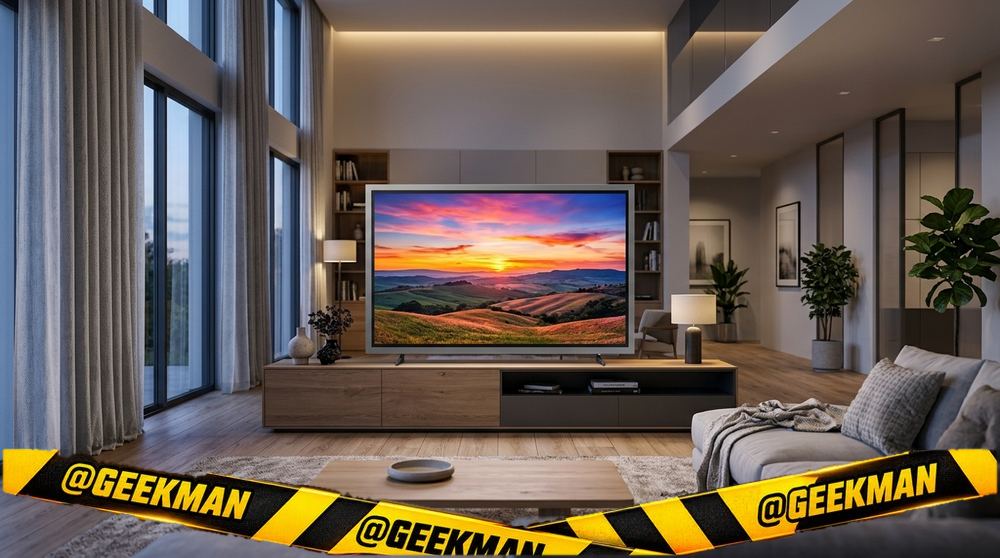
1. Samsung S95H 65 inch 4K OLED Glare Free Tizen TV (QA65S95HXULXL)
9.2Geekman Score
9.1 Picture
9.0 Features
9.2 Service
9.6 Value
The best picture in this list for a bright Indian living room: a glare-free QD-OLED at 65 inch with 165 Hz and 70W sound.
Glare-free QD-OLED · 165 Hz · 70W 4.2.2 · No Dolby Vision
Best for
✓ A living room with big windows or bright lights where glossy OLEDs show reflections
✓ Buyers who want the best picture money can buy at 65 inch and will not miss Dolby Vision
✓ PC and console gamers who want 165 Hz on all four HDMI ports with very low lag
Skip if
• Dolby Vision matters to you (the LG G5 55 and C6 55 support it)
• You watch mostly in a pitch-dark room and want the deepest blacks with lights on (glossy LG OLEDs keep blacks deeper in lit rooms)
• Your budget is closer to a 55 inch OLED (the LG C6 55 gives most of the experience for far less)
My take: The S95H is the 2026 version of the S95F, which lab tests found to be the brightest, least reflective OLED of its year, with about 2,100 nits on small windows and lag near 5 ms. The matte glare-free screen makes windows and ceiling lights almost vanish. The catches are no Dolby Vision, slightly lifted blacks under strong room light, and a price at the top of the market. No lab figures exist yet for the S95H itself, so the numbers here are from the S95F.


Samsung 65 inches OLED 4K Samsung Vision AI Smart TV QA65S95HXULXL

Up to 4% instant discount on select Credit Cards & SBI Debit Cards +1
- Up to 4% instant discount on select Credit Cards & SBI Debit Cards
- No Cost EMI on select cards
Pros and cons
What I like
+ Glare-free matte screen that kills window reflections
+ Predecessor measured about 2,100 nits
+ 165 Hz on four HDMI 2.1 ports with very low lag
+ 70W 4.2.2 speakers, best built-in sound here
What I don’t like
• No Dolby Vision
• Blacks look slightly grey under strong room light
• Top-of-market price
My full review: who it suits, what it is like and how it compares
Who should buy it. A family with a big, bright living room who wants a 65 inch screen and the best picture available, and is fine with HDR10 and HDR10+ instead of Dolby Vision. It also won a major annual TV shootout as the top TV of 2026, according to reviewers of its sibling S90H. If your budget is lower, the C6 55 is the better value.
Picture in a real living room. Its predecessor measured about 2,100 nits on 2% and 10% windows and over 700 nits in SDR real scenes, which is too bright for most people indoors. QD-OLED colour stays rich even in bright highlights. The matte screen is the real reason to buy it: direct reflections from windows and tube lights mostly disappear instead of floating over the picture. The trade-off is that under strong light the blacks look charcoal rather than inky. Close the curtains at night and that goes away. Viewing angles are excellent, with little shift until very wide seats.
Smart features and speed. It runs Tizen on Samsung’s NQ4 AI Gen3 chip, with Bixby and Alexa built in and a solar-charged remote. Tizen is feature rich but cluttered, with ads, sponsored tiles and a free channel app that can auto-play with sound. Samsung’s upscaling is sharp, but smoothing of blocky, low-bitrate streams and DTH feeds is weaker than LG and Sony. Some reviewers suggest pairing it with a streaming box for the smoothest app playback.
Gaming and PS5. All four HDMI 2.1 ports take 4K up to 165 Hz, and the S95F measured just over 4 ms at 165 Hz and around 5 ms at 120 Hz. VRR, ALLM and FreeSync Premium Pro are supported, and Samsung’s Game Bar puts frame rate and settings on one screen. There is no Dolby Vision gaming, which only matters on Xbox. Like any OLED, keep static HUDs and logos in mind if one game runs for hours daily.
Build, ports and service. Sound is 70W 4.2.2 channel with Dolby Atmos and Object Tracking Sound Plus, the strongest built-in audio in this list, though a big Samsung soundbar still adds real bass. The 2026 design uses a metal frame meant to look good on a wall; its feet work on a table but the look divides opinion. It weighs about 21 kg without stand. Warranty is 1 year comprehensive plus 1 year on the panel, backed by Samsung’s wide service network.
Samsung S95H 65 or LG C5 OLED 65? The S95H has a matte glare-free screen, 70W 4.2.2 channel sound and 165 Hz, and its predecessor measured about 2,100 nits. The C5 has Dolby Vision, deeper blacks in a lit room and four 144 Hz ports, for much less money. If your TV faces a window, the S95H is worth it. In a room you can control, the C5 gives you most of the picture and keeps Dolby Vision.
Samsung S95H 65 or Samsung QN90F 65? Both have matte screens and four HDMI 2.1 ports up to 165 Hz, and neither has Dolby Vision. The S95H is an OLED with perfect blacks and 70W sound. The QN90F is a Mini LED that measured about 2,086 nits and has no burn-in risk, but its game mode is weaker and it costs nearly as much. For films, the S95H. For a TV that shows news all day, the QN90F.
Key specs
| Screen | 65 inch 4K OLED, glare-free matte finish |
| Panel and backlight | QD-OLED, self-lit pixels |
| Refresh rate (native) | 165 Hz |
| HDR | HDR10, HDR10+, HLG (no Dolby Vision) |
| Brightness | About 2,100 nits on 10% window (measured on the S95F) |
| Smart OS | Tizen, NQ4 AI Gen3 |
| RAM / storage | Not stated |
| Sound | 70W, 4.2.2 channel, Dolby Atmos, OTS+ |
| Ports | 4 HDMI 2.1 (4K 165 Hz, VRR, ALLM, eARC), 2 USB-A, Ethernet |
| Warranty | 1 year comprehensive + 1 year panel |
| Model code | QA65S95HXULXL |
Best value OLED
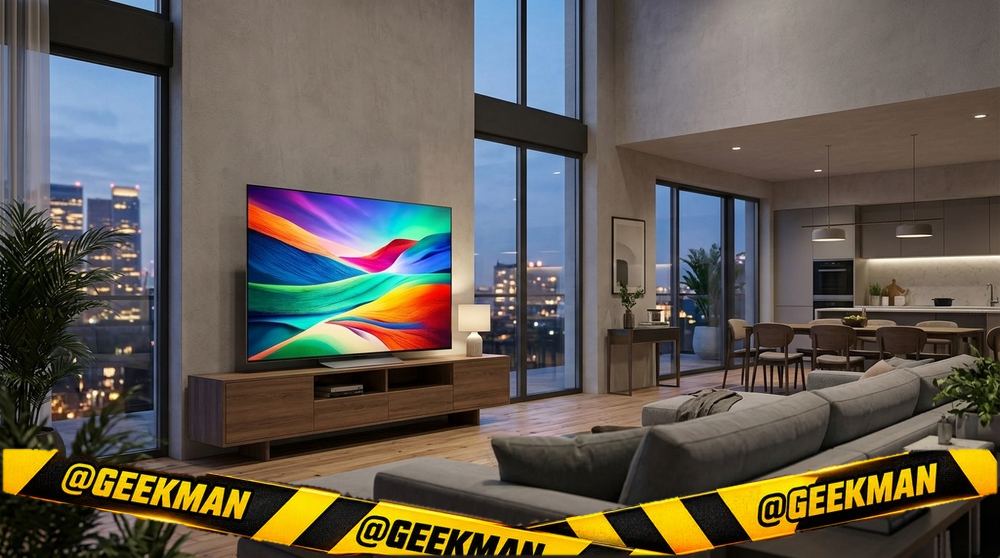
2. LG OLED evo C5 65 inch 4K webOS TV (OLED65C56LA)
8.8Geekman Score
8.5 Picture
8.8 Features
8.7 Service
9.6 Value
Last year’s C series in the big 65 inch size: Dolby Vision, four HDMI 2.1 ports and bright SDR, at a lower price than a new 65 inch OLED.
65 inch OLED · Dolby Vision · 4x HDMI 2.1 · 2025 model
Best for
✓ A big living room where you sit 8 to 10 feet away and want a 65 inch OLED
✓ Gamers who want four HDMI 2.1 ports at 4K 144 Hz with very low lag
✓ Buyers who watch a lot of DTH, cable and older content, where LG’s upscaling is strong
Skip if
• You can find the C6 65 within a small gap (the 2026 model is brighter in HDR and has cleaner gradients)
• Your room has a bright window facing the screen (the Samsung S95H 65 handles glare far better)
• You want deep, full sound from the TV itself (40W needs a soundbar at 65 inch)
My take: The C5 is a big step over the C4: lab measurements found around 1,300 nits on a 2% window and close to 600 nits in SDR real scenes, which makes it bright enough for a well-lit room. At 65 inch it is the sensible older-year OLED buy. The one thing to check is firmware, because at launch HDR10 content showed banding in dark scenes that kept reviewers from recommending it until LG patched it.
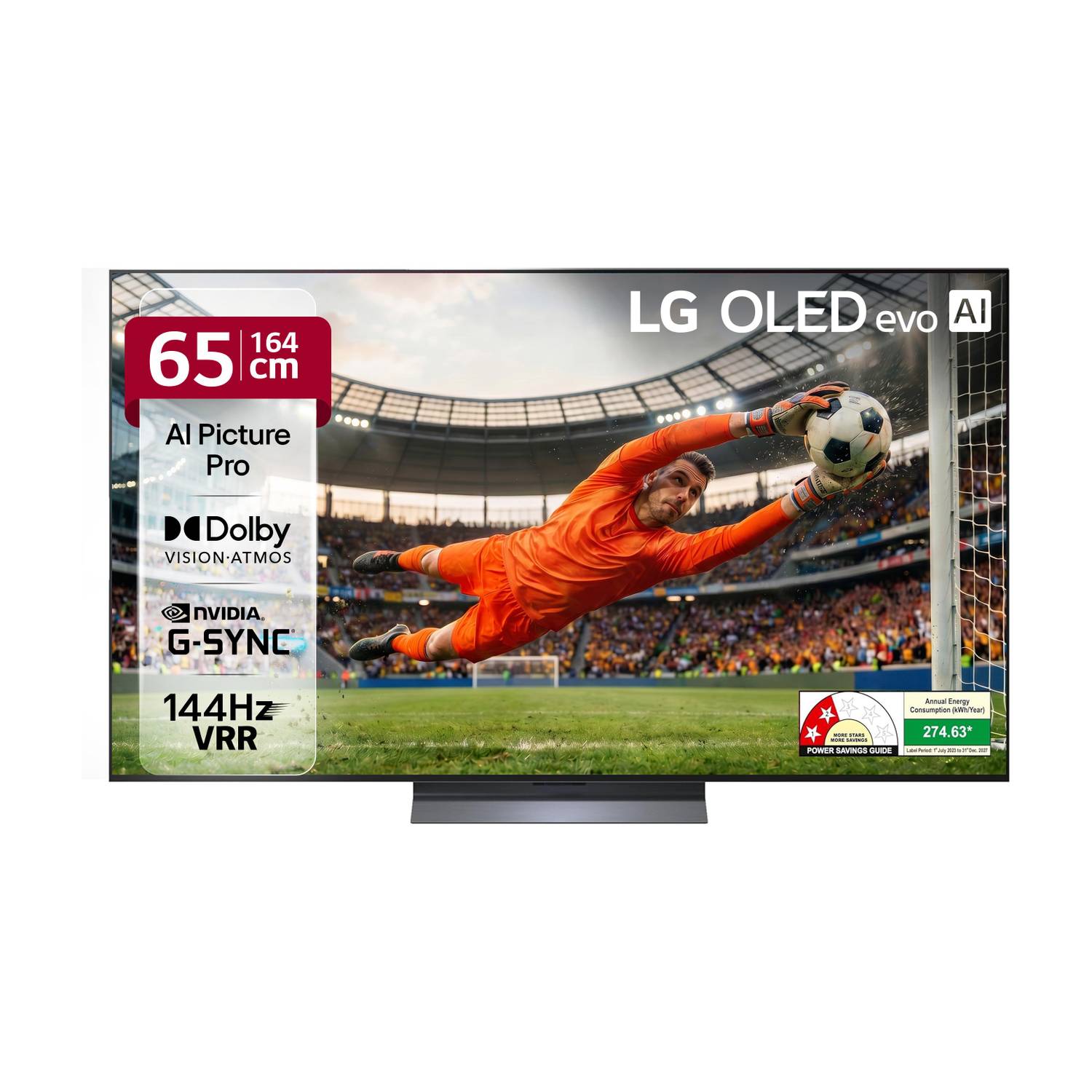
LG evo AI C5 164 cm (65 inch) OLED Ultra HD (4K) Smart WebOS TV with Alpha 9 AI Processor 4K Gen8 Brightness Booster AI Picture Pro Dolby Vision AI Sound Pro (Virtual 11.1.2ch Up-mix) Dolby Atmos Up to 144Hz Variable Refresh Rate 40W Sound Output 2.5 GB RAM 16 GB ROM Nvidia G-Sync & AMD Freesync Compatible

Up to 5% off with Flipkart Axis & Flipkart SBI Credit Cards Details
- Up to 5% off with Flipkart Axis & Flipkart SBI Credit Cards
Pros and cons
What I like
+ Big 65 inch OLED with Dolby Vision at a lower price than the 2026 model
+ Very bright SDR for an OLED
+ Four HDMI 2.1 ports at 4K 144 Hz
+ Strong upscaling of TV channels
What I don’t like
• HDR10 banding issue at launch; needs updated firmware
• Reflections visible with a window opposite
• Game mode loses HDR brightness
My full review: who it suits, what it is like and how it compares
Who should buy it. A family that wants a 65 inch OLED for movies, cricket and a console, and would rather save money with a 2025 model than pay for the newest one. It suits rooms with curtains or indirect daylight. If the 2026 C6 65 shows up close in price, buy that instead; it is brighter and handles gradients better.
Picture in a real living room. Blacks are perfect and there is no blooming at all, so dark films look excellent. HDR brightness came close to last year’s flagship G4 in lab tests, and SDR is unusually bright for a mid-range OLED, so daytime viewing holds up. Reflection handling is only average: a window opposite will show in dark scenes, though the blacks themselves stay black with the lights on. Colours are accurate but not as rich as QD-OLED in bright reds and yellows. Some units show a slight green tint from the side, which varies by panel.
Smart features and speed. webOS 25 stayed fast for reviewers over six months, with no lag in menus and quick input switching. Upscaling of 1080p and low-quality streams is a real strength, which matters for TV channels and older shows. The weak points are the Magic Remote pointer, which not everyone likes, and ads on the home screen. LG dropped DTS passthrough on its 2025 models.
Gaming and PS5. Four full HDMI 2.1 ports run 4K at up to 144 Hz with VRR, G-Sync and FreeSync Premium, and lag is very low at 60, 120 and 144 Hz. The game mode loses a fair bit of HDR brightness compared with Filmmaker mode, so games look less punchy than movies. The HDR10 banding issue at launch hit PS5 owners hardest, since the PS5 uses HDR10 only; update the firmware before judging it. Static HUD dimming kicks in during long sessions, which is burn-in protection doing its job.
Build, ports and service. It is slim and looks clean on a wall or a wide table. Sound is 40W 2.2 channel with down-firing woofers: dialogue is clear, but a 65 inch screen deserves a soundbar. LG service covers most of India. Check the warranty terms on the invoice, since this older model does not carry the C6’s 3-year cover.
LG C5 OLED 65 or Samsung QN90F 65? These cost about the same. The C5 is the OLED with Dolby Vision, perfect blacks and very low lag. The QN90F is brighter and its matte screen suits a sunny hall, but its blacks get worse in game mode and it has no Dolby Vision. In a dark or mixed room, take the C5. For a bright room with lots of daytime TV, the QN90F.
LG C5 OLED 65 or Sony Bravia 5 65? The C5 is better for films and gaming, with OLED contrast and four HDMI 2.1 ports at 4K 144 against two at 120 Hz on the Sony. The Bravia 5 is the safer choice for long hours of DTH, news and cricket, since Mini LED avoids burn-in and Sony’s upscaling cleans up low-quality channels. The Sony also costs less.
Key specs
| Screen | 65 inch 4K OLED evo |
| Panel and backlight | WOLED, self-lit pixels, glossy screen |
| Refresh rate (native) | Up to 144 Hz |
| HDR | Dolby Vision, HDR10, HLG |
| Brightness | About 1,300 nits on a 2% window; close to 600 nits SDR real scenes (measured) |
| Smart OS | webOS 25, Magic Remote |
| RAM / storage | Not stated |
| Sound | 40W, 2.2 channel, Dolby Atmos |
| Ports | 4 HDMI 2.1 (4K 144 Hz, VRR, ALLM, eARC), USB, optical, Ethernet |
| Warranty | 1 year standard; check seller for extensions |
| Model code | OLED65C56LA |
Brightest picture
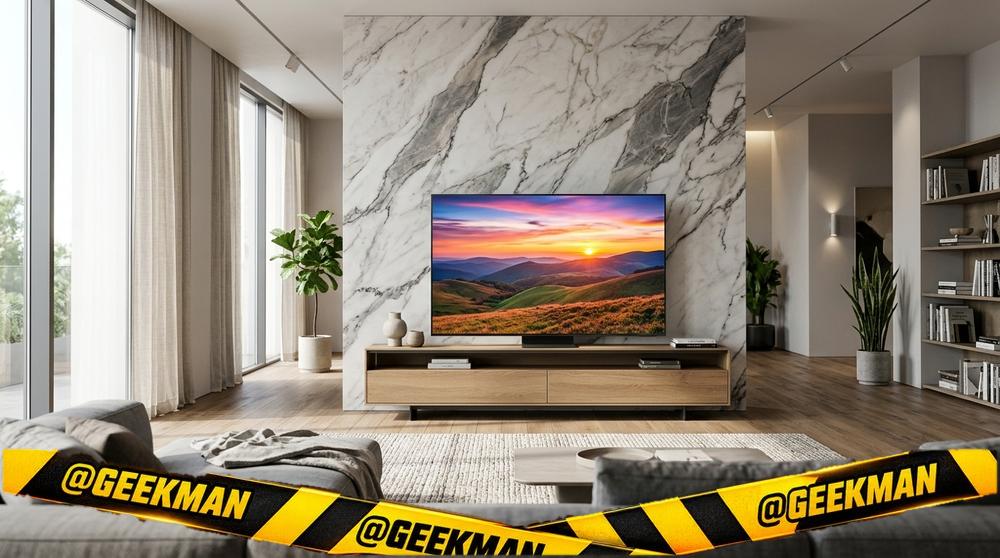
3. Samsung Neo QLED QN90F 65 inch 4K Mini LED Tizen TV (QA65QN90FAULXL)
8.7Geekman Score
8.3 Picture
8.4 Features
9.2 Service
9.6 Value
The brightest Mini LED here, with a matte glare-free screen and 165 Hz, for a sunny 65 inch living room and burn-in-free gaming.
About 2,086 nits · Matte screen · 165 Hz · No Dolby Vision
Best for
✓ South- or west-facing living rooms where afternoon sun hits the screen
✓ Heavy gamers who leave HUDs and menus on screen for hours and want no burn-in worry
✓ Daytime sports and cricket watchers who want a very bright, punchy picture
Skip if
• You want Dolby Vision (the Sony Bravia 5 65 has it with more accurate colour)
• You watch mostly in a dark room (an OLED like the LG C5 65 has far better blacks and no blooming)
• Your sofa is very wide, since the VA panel loses colour from the side
My take: The QN90F is the bright-room specialist. Lab measurements found about 2,086 nits on a 10% window and over 1,000 nits in SDR real scenes, and its matte coating handles windows and lights extremely well without lifting blacks much. All four HDMI ports run 4K 165 Hz. The catches are no Dolby Vision, some blooming in dark scenes, and black levels and zone transitions that get worse in game mode.
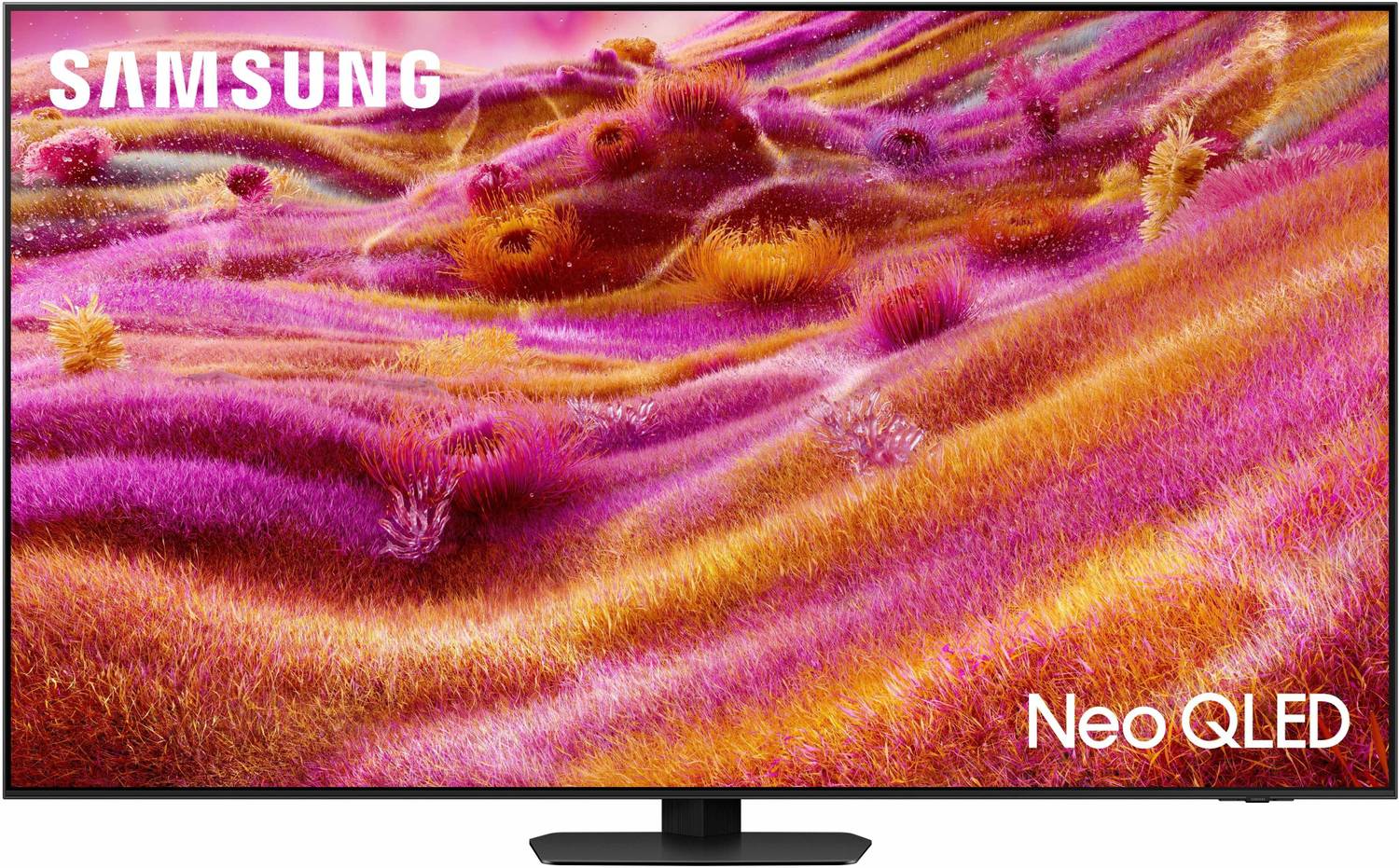
Samsung Mini-LED 163 cm (65 inch) QLED Ultra HD (4K) Smart Tizen TV
Up to 5% off with Flipkart Axis & Flipkart SBI Credit Cards Details
- Up to 5% off with Flipkart Axis & Flipkart SBI Credit Cards
Pros and cons
What I like
+ About 2,086 nits measured, the brightest here
+ Matte glare-free screen for sunny rooms
+ Four HDMI 2.1 ports at 4K 165 Hz, no burn-in risk
+ 60W 4.2.2 sound with Atmos
What I don’t like
• No Dolby Vision
• Game mode worsens blacks and zone transitions
• VA viewing angles; some blooming in dark scenes
My full review: who it suits, what it is like and how it compares
Who should buy it. A family with a bright 65 inch living room, lots of daytime sports and a console that runs for hours. It is also the safest choice here for heavy static content, since Mini LED has no burn-in risk. Dark-room movie lovers are better served by an OLED, and Dolby Vision fans by the Sony Bravia 5 65.
Picture in a real living room. Brightness is the headline: about 2,086 nits measured on a 10% window, small highlights near 1,900 nits in another lab, and around 600 nits even in fully bright scenes. SDR holds above 1,000 nits in real scenes, more than any room needs. The matte screen reduces direct reflections strongly and copes well with mixed lighting, though dark colours lose some saturation in very bright rooms. Blacks are deep and blooming is controlled, but a bright object on black still shows a halo, most visible in end credits and space scenes. Colours are punchy, though out-of-box accuracy was rated mediocre. It is a VA panel, so off-axis viewers see some wash-out.
Smart features and speed. Tizen on the NQ4 AI Gen3 chip stayed fast for a reviewer over a full year, with an AI button, Copilot and the Samsung Art Store, which lets it work as an art TV. The solar-charged remote is excellent. Upscaling of old content is good; smoothing of blocky streams is only okay. The home screen has ads, there is no Dolby Vision, no DTS passthrough, and Dolby Digital Plus 7.1 is downmixed to 5.1.
Gaming and PS5. All four HDMI 2.1 ports support 4K up to 165 Hz with VRR, and lag measured about 9.5 ms. Samsung’s Game Bar is easy to use. The weak spot is game mode itself: lab tests found worse black levels, slower backlight response and trails behind fast objects, and pixel transitions are only mediocre for an LCD. A reviewer suggested setting local dimming to Standard in games for a better balance. The big plus is zero burn-in risk with static HUDs.
Build, ports and service. The panel is slim, about 1.1 inches deep, with a premium finish, though the table stand is plain. Sound is 60W 4.2.2 channel with Dolby Atmos and Object Tracking Sound Plus, which does follow movement on screen and is better than most TVs, but a 65 inch screen still deserves more bass. Samsung’s India page lists 2 years warranty (1 year standard plus 1 year on the panel), and service reach is wide.
Samsung QN90F 65 or Sony Bravia 5 65? The QN90F is far brighter, about 2,086 nits against about 913 on the Bravia 5’s 55 inch sibling, and adds a matte screen and four HDMI 2.1 ports. The Sony has Dolby Vision, better accuracy out of the box and stronger upscaling for DTH, and it costs less. For a very bright room, the Samsung. For cricket and old shows in natural colour, the Sony.
Samsung QN90F 65 or Xiaomi S Mini LED 65? The QN90F is a premium Mini LED with 165 Hz, 60W sound and far more brightness. The Xiaomi costs less than half as much and has 384 zones, Dolby Vision and about 977 nits HDR measured on its 55 inch sibling, but it runs at 60 Hz with a slow 2GB interface. If gaming and glare control matter, buy the Samsung. For OTT on a budget, the Xiaomi.
Key specs
| Screen | 65 inch 4K Neo QLED Mini LED, matte glare-free |
| Panel and backlight | VA panel, full-array Mini LED with quantum dot (zones not stated) |
| Refresh rate (native) | Up to 165 Hz |
| HDR | HDR10, HDR10+, HLG (no Dolby Vision) |
| Brightness | About 2,086 nits on 10% window; over 1,000 nits SDR (measured) |
| Smart OS | Tizen, NQ4 AI Gen3 |
| RAM / storage | Not stated |
| Sound | 60W, 4.2.2 channel, Dolby Atmos, OTS+ |
| Ports | 4 HDMI 2.1 (4K 165 Hz, VRR, ALLM, eARC), USB, optical, Ethernet |
| Warranty | 2 years (1 year + 1 year panel) |
| Model code | QA65QN90FAULXL |
Best Sony picture
4. Sony Bravia 5 65 inch 4K Mini LED Google TV (K-65XR50)
8.4Geekman Score
7.9 Picture
8.0 Features
9.0 Service
9.6 Value
The most accurate Mini LED here, with Sony’s processing for cricket and DTH, in a 65 inch size for big living rooms.
Mini LED · Dolby Vision · Native 120 Hz · Sony upscaling
Best for
✓ Cricket and DTH viewers who want Sony’s upscaling and natural colours
✓ A big living room where you sit 8 to 10 feet away and want a 65 inch with low blooming
✓ PS5 owners who want Sony’s Auto HDR Tone Mapping and Auto Genre mode
Skip if
• You want the brightest Mini LED at 65 inch (the Samsung QN90F 65 measured more than twice as bright)
• You want four HDMI 2.1 ports for several consoles (only two here; the Sony Bravia 3 II has four)
• Your seating is very wide, since the VA panel loses colour from the side
My take: The Bravia 5 is the Mini LED I’d pick for picture quality rather than spec sheets. On the 55 inch, lab measurements found about 913 nits, a 0.22 nit black and an HDR colour error of only 2.8, with very little blooming, and the 65 inch uses the same hardware with more zones. Sony’s upscaling is the best in this class for set-top box channels. The catches: only two of its four HDMI ports are HDMI 2.1, sound is a modest 40W, and brightness is well below the Samsung QN90F.
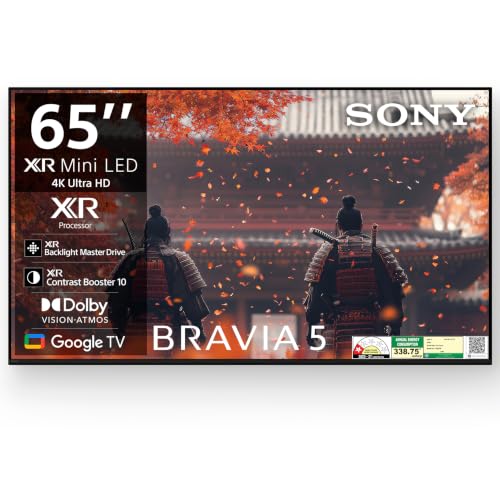
Sony 164 cm (65 inches) Smartchoice BRAVIA 5 4K Ultra HD Smart Mini LED Google TV K-65XR50
Up to 4% instant discount on select Credit Cards & SBI Debit Cards +1
- Up to 4% instant discount on select Credit Cards & SBI Debit Cards
- No Cost EMI on select cards
Pros and cons
What I like
+ Very accurate picture: HDR colour error about 2.8 measured
+ Very low blooming for a Mini LED
+ Best-in-class upscaling for DTH and cricket
+ Dolby Vision plus PS5 features
What I don’t like
• Only two HDMI 2.1 ports, one shared with eARC
• Dimmer than the Samsung QN90F; glossy screen
• 40W sound has light bass
My full review: who it suits, what it is like and how it compares
Who should buy it. A family that watches a lot of DTH, cricket and OTT on a big screen and wants a natural, accurate picture with Sony service. The 65 inch suits viewing distances of roughly 8 to 10 feet. If your room gets strong afternoon sun, the brighter, matte Samsung QN90F 65 handles glare better.
Picture in a real living room. Measured on the 55 inch, it reached about 913 nits on a 25% window and about 710 on 10%, with a 0.22 nit black and native contrast around 3,229:1. Blooming is very low; reviewers saw almost no halo in bloom tests and on dark logo screens. Colours lean warm and natural rather than pumped up, and Dolby Vision content looks excellent. It is a VA panel, so viewing from the far end of a sofa shows some loss of colour and brightness. In a sunny room it is less bright than the Samsung QN90F, and its screen is not matte, so draw the curtains for afternoon matches. Motion is good, though one reviewer saw some judder and ghosting in fast scenes.
Smart features and speed. Google TV runs smoothly here, with 3GB RAM and 32GB storage, though the base is Android TV 12. You get every Indian app, Chromecast, AirPlay 2, hands-free Google Assistant with a mic switch, and the Sony Pictures Core app with IMAX Enhanced films. Netflix calibrated mode and Voice Zoom 3 for clearer dialogue are useful touches. The remote has shortcut keys but no backlight, and there are three different buttons that open settings.
Gaming and PS5. It is a native 120 Hz panel with VRR, ALLM, PS5 Auto HDR Tone Mapping, Auto Genre mode and Dolby Vision support. Only HDMI 3 and 4 run 4K 120, and HDMI 3 is also the eARC port, so a PS5 plus a soundbar plus a second console needs planning. There is no 144 or 165 Hz mode for PC. For casual and story games it looks premium; for competitive shooters an OLED is faster.
Build, ports and service. Bezels are slim and the metal frame feels solid. Sony ships the TV without a stand in the box: at installation you choose either the table stand or a wall mount at no extra cost, and the feet sit close together, so a small table works. Sound is 40W from four speakers with clear mids but light bass; plan a soundbar. Sony’s current offer gives 2 years comprehensive warranty, and its service network is wide, though one owner reported a slow response on a dead pixel claim.
Sony Bravia 5 65 or Xiaomi S Mini LED 65? Both are Mini LEDs with Dolby Vision and Google TV. The Sony has 120 Hz, 3GB RAM, more accurate colour and much better processing, plus Sony service and 2 years of cover on the current offer. The Xiaomi is 60 Hz and slow to navigate, but it publishes 384 zones and costs about half as much. Pay for the Sony if you watch a lot of DTH and want a smooth interface.
Key specs
| Screen | 65 inch 4K Mini LED |
| Panel and backlight | VA panel, full-array Mini LED local dimming (zones not stated by Sony) |
| Refresh rate (native) | 120 Hz |
| HDR | Dolby Vision, HDR10, HLG |
| Brightness | About 913 nits 25% window, 0.22 nit black (measured on 55 inch) |
| Smart OS | Google TV (Android TV 12) |
| RAM / storage | 3GB / 32GB |
| Sound | 40W, 2 channel, 2 full range + 2 tweeters, Dolby Atmos, DTS:X |
| Ports | 4 HDMI (2 x HDMI 2.1 4K 120, one eARC), 2 USB, optical, Ethernet |
| Warranty | 2 years comprehensive (current offer) |
| Model code | K-65XR50 |
Best value Mini LED
5. Xiaomi TV S Mini LED 65 inch 2026 (L65MC-IN)
7.9Geekman Score
7.6 Picture
6.8 Features
8.0 Service
9.6 Value
The best picture for the money at 65 inches: 384 published dimming zones and real daylight punch, but a 60 Hz panel and slow-ish software.
384 zones · Dolby Vision · 60 Hz panel · Google TV
Best for
✓ A bright 65 inch hall setup where daytime viewing matters as much as night
✓ Netflix, Prime Video and JioHotstar watchers who want Dolby Vision and HDR10+ with deep night-time blacks
✓ Families who watch from straight in front of the TV and want room-filling sound without a soundbar on day one
Skip if
• You own a PS5 and want 4K 120 games (the panel is 60 Hz; the TCL Q6C or Hisense E8S have native 144 Hz)
• Your sofa wraps around the TV and people watch from the sides (the VA panel washes out off-angle)
• You hate any lag in menus (2 GB RAM; the Hisense E8S or TCL Q6C run smoother)
My take: At 65 inches this is the one I’d buy for picture per rupee. You get 384 published dimming zones, the same bright QD Mini LED tuning that measured about 977 nits HDR on the 55 inch, Dolby Vision and 34W of sound. Know what you give up: the panel is 60 Hz, the “120 Hz” mode is DLG at lower resolution, and the 2 GB RAM makes the interface stutter at times.
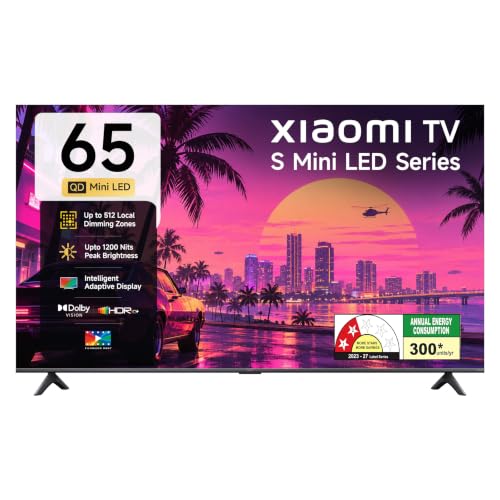
Xiaomi (165 cm) 65 inch S 4K QD-Mini LED | Dolby Vision| Upto 512 Dimming Zones | 34W Speakers | 120Hz DLG | Gemini AI | Google TV | L65MC-IN
Lowest price
Up to 4% instant discount on select Credit Cards & SBI Debit Cards +1
- Up to 4% instant discount on select Credit Cards & SBI Debit Cards
- No Cost EMI on select cards
Up to 5% off with Flipkart Axis & Flipkart SBI Credit Cards Details
- Up to 5% off with Flipkart Axis & Flipkart SBI Credit Cards
Pros and cons
What I like
+ 308/384/512 real dimming zones published by size
+ Bright: measured about 977 nits HDR on the 55 inch
+ Deep blacks at night with low blooming
+ Dolby Vision, HDR10+ and 34W quad speakers
What I don’t like
• 60 Hz panel; “120 Hz” is DLG at lower resolution
• 2 GB RAM brings occasional lag
• Narrow viewing angles and only one HDMI 2.1 port
My full review: who it suits, what it is like and how it compares
Who should buy it. Someone moving up to 65 inches who wants the best picture they can get before 1 lakh, mostly for OTT, movies and cricket. It fits a living room where you sit about 8 to 10 feet away. If you game on a PS5 at 120 fps, the Hisense E8S 65 at a similar price is the better match.
Picture in a real living room. This is a VA panel with a quantum dot Mini LED backlight and 384 dimming zones on the 65 inch (more than the 55 inch’s 308). Reviewers measured the 55 inch at about 492 nits in SDR and 977 nits in HDR, and with the windows open in daylight the picture stayed bright and clear. At night a full black screen looked almost switched off, and blooming around bright objects was lower than on the Sony Bravia 2 II. SDR colours are rich out of the box; in HDR they look slightly under-saturated, and raising saturation by about 10% fixes that. Detail is sharp, and upscaling of older TV content came close to Sony. The weak point is viewing angle: from the side of the sofa colours fade by a noticeable amount.
Smart features and speed. It runs Google TV on Android 14 with Xiaomi’s PatchWall and over 200 free live channels, so every major app is there and sideloading works. The hardware is the limit: a Cortex-A55 chip with 2 GB RAM. Owners and reviewers describe it as fine most of the time, with small lags when switching heavy apps, occasional jittery navigation, and the launcher sometimes restarting when you move between Google TV and PatchWall. Storage is 32 GB. The Bluetooth remote has number keys, voice and quick settings. Over a few years, 2 GB RAM is the part most likely to annoy you; a streaming stick is the cheap fix.
Sound. Four speakers (two tweeters and two full-range drivers) give 34W with Dolby Audio and DTS:X. Reviewers found it comfortably loud for a 200 sq ft room, with clear dialogue, a bit of bass and no distortion. One lab review found the bass thin on the 75 inch. The eARC port passes Dolby Atmos to a soundbar according to the brand’s spec, though one reviewer reported no Atmos passthrough on their unit, so test it early if you plan an Atmos bar.
Gaming and PS5. The panel is native 60 Hz. The “120 Hz” on the box is DLG (dual line gate), which gives 120 fps only at lower resolution, and there is no full VRR. ALLM is supported. For 4K 60 console games it is fine, but it is the wrong TV if you want PS5 games at 4K 120. Only one of the three HDMI ports is HDMI 2.1, and that port is also the eARC port, so a soundbar and a console end up sharing the good port.
Xiaomi S Mini LED 65 or Hisense E8S 65? The Xiaomi has the better picture, with 384 published zones and brighter HDR. The Hisense has native 144 Hz, two HDMI 2.1 ports and loud 61W Devialet sound with a built-in sub, but undisclosed zones and VIDAA software. For movies and OTT, the Xiaomi. For PS5 or loud sound without a soundbar, the Hisense.
Key specs
| Screen | 65 inch 4K (3840 x 2160) |
| Panel and backlight | VA panel, QD Mini LED, 384 local dimming zones |
| Refresh rate (native) | 60 Hz (DLG 120 Hz at lower resolution, MEMC) |
| HDR | Dolby Vision, HDR10+, HDR10, HLG |
| Brightness | 1,200 nits claimed; 55 inch measured about 977 nits HDR, 492 nits SDR |
| Smart OS | Google TV (Android 14) with PatchWall |
| RAM / storage | 2 GB / 32 GB |
| Sound | 34W, 4 speakers, Dolby Audio, DTS:X |
| Ports (HDMI incl. 2.1/eARC, USB) | 3 HDMI (1 HDMI 2.1 with eARC), 2 USB 2.0, optical, 3.5 mm, LAN |
| Warranty | 1 year + 1 year on panel; extended offers vary |
| Model code | L65MC-IN |
Best for gaming
6. Hisense E8S 65 inch 4K Mini LED VIDAA TV (65E8S)
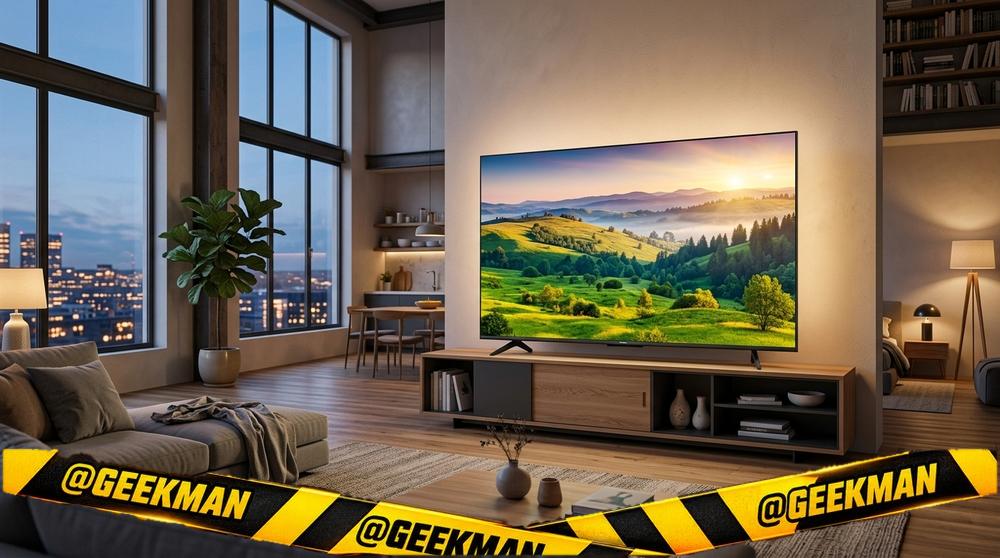
7.7Geekman Score
7.0 Picture
7.7 Features
7.5 Service
9.6 Value
Native 144 Hz and 61W Devialet sound at 65 inches: the gaming pick next to the brighter, 60 Hz Xiaomi S.
Native 144 Hz · 61W with subwoofer · Dolby Vision IQ · VIDAA
Best for
✓ PS5 or PC gamers moving to 65 inches who want native 144 Hz
✓ Families who want strong TV speakers with real bass and no soundbar
✓ Viewers who like natural, accurate colours more than a showroom look
Skip if
• Your room is very bright and you want maximum HDR punch (the Xiaomi S Mini LED 65 is brighter with 384 published zones)
• You need VLC, Spotify or sideloaded apps (VIDAA has a smaller app store; Google TV sets like the TCL Q6C avoid this)
• You plan to connect a soundbar and two consoles (only two HDMI ports are 2.1, and one of them is the eARC port)
My take: I’d pick the E8S when you want a 2026 Mini LED that does gaming and sound well without a soundbar. The panel is native 144 Hz, it supports VRR, ALLM and FreeSync Premium, and the 61W Devialet-tuned system with a built-in subwoofer is loud without distortion. At 65 inches it is the gaming alternative to the Xiaomi S 65, which has the better picture but only 60 Hz. Hisense does not publish the zone count, and reviewers found it well-rounded rather than bright.

Hisense 164 cm (65 Inches) ULED MiniLED Smart AI TV and World Fastest OS - VIDAA | 144Hz Game Mode | 61W Speakers (Built-in Subwoofer) | 65E8S (Black)
Lowest price
Up to 4% instant discount on select Credit Cards & SBI Debit Cards +1
- Up to 4% instant discount on select Credit Cards & SBI Debit Cards
- No Cost EMI on select cards
Up to 5% off with Flipkart Axis & Flipkart SBI Credit Cards Details
- Up to 5% off with Flipkart Axis & Flipkart SBI Credit Cards
Pros and cons
What I like
+ Native 144 Hz with VRR, ALLM and FreeSync Premium
+ 61W Devialet sound with a built-in subwoofer
+ Natural colours and steady brightness
+ Fast VIDAA with JioHotstar and free channels
What I don’t like
• Zone count not published; not the brightest Mini LED
• Only two HDMI 2.1 ports, one shared with eARC
• VIDAA app store is smaller than Google TV’s
My full review: who it suits, what it is like and how it compares
Who should buy it. Someone going to 65 inches who games on a PS5 or PC and doesn’t want to buy a soundbar straight away. It fits a living room 8 to 10 feet from the sofa. If gaming does not matter to you, the Xiaomi S 65 gives a brighter picture with more published zones at similar money.
Picture in a real living room. On an 85 inch sibling, a reviewer measured about 550 nits in a 10% window and about 400 nits full screen, holding steady without dimming, plus around 8,000:1 native contrast and 89% DCI-P3 in SDR. Hisense claims 500 nits typical and up to 700 peak in India. Blacks are rich in a dark room and the panel is uniform, with only slight darkening at the corners. Blooming is present but well cleaned up, and gets worse from the side; the picture holds up to about 50 degrees off-centre. Colours are Pantone-validated and natural. One Indian reviewer found HDR colours a little dull for Indian tastes out of the box, so expect to adjust saturation or try Dolby Vision Custom. The semi-matte screen cuts reflections better than a glossy one but is not fully matte.
Smart features and speed. VIDAA sets up in minutes through a phone app and is fast: Netflix starts playing quickly and the interface moves without lag. You get Netflix, Prime Video, JioHotstar, Zee5, SonyLIV and a lot of free live channels, plus continue-watching rows pulled from the apps. Alexa and Google Home can control the TV, and VIDAA Voice works hands-free. The weak side is the smaller app store compared with Google TV, and one reviewer found the remote’s pause key did nothing in an app, so OK had to do the job. Storage is 16 GB; Hisense does not state the RAM.
Gaming and PS5. The panel is native 144 Hz with VRR, ALLM and AMD FreeSync Premium. A PS5 runs 4K 120 games smoothly, and a PC can use 144 Hz. Reviewers saw no major ghosting. Of the four HDMI ports, two are HDMI 2.1 and two are 4K 60 HDMI 2.0, and the eARC port is one of the 2.1 pair. Connect a soundbar there and you are left with one full-speed port for a console.
Build, ports and service. Sound is where the E8S stands apart. The 61W system has a built-in subwoofer and Devialet tuning, and reviewers found it loud and punchy with very little distortion at high volume, so for news, serials and most movies you can skip the soundbar. The stand feet feel sturdy and alloy-like, the power cord is detachable, and the bezels are thin. Ports are 4 HDMI, 2 USB 2.0, LAN, optical, antenna and satellite. The 65 inch weighs about 17.6 kg without the stand. Warranty is 1 year comprehensive. One owner reported slow after-sales service on a remote replacement within warranty, so check Hisense service near you.
Hisense E8S 65 or TCL C6KS 65? The E8S is the gaming choice, with native 144 Hz, VRR and 61W sound. The C6KS costs less, publishes 312 zones, runs Google TV and carries 2 years of warranty against 1 year on the Hisense, but its panel is 60 Hz. If you own a console, take the Hisense. For OTT on Google TV, the TCL.
Key specs
| Screen | 65 inch 4K (3840 x 2160) |
| Panel and backlight | Hi-QLED Mini LED, full-array local dimming (zones not published), 8,500:1 native contrast claimed |
| Refresh rate (native) | 144 Hz, VRR, ALLM, FreeSync Premium |
| HDR | Dolby Vision IQ, HDR10+ Adaptive, HDR10, HLG |
| Brightness | 500 nits typical / 700 peak claimed; about 550 nits measured on an 85 inch sibling |
| Smart OS | VIDAA |
| RAM / storage | RAM not stated / 16 GB |
| Sound | 61W with built-in subwoofer, Devialet tuned, Dolby Atmos |
| Ports (HDMI incl. 2.1/eARC, USB) | 4 HDMI (2 HDMI 2.1, one with eARC; 2 HDMI 2.0), 2 USB 2.0, optical, LAN |
| Warranty | 1 year comprehensive |
| Model code | 65E8S |
Cheapest with real zones
7. TCL C6KS 65 inch 4K QD-Mini LED Google TV (65C6KS)
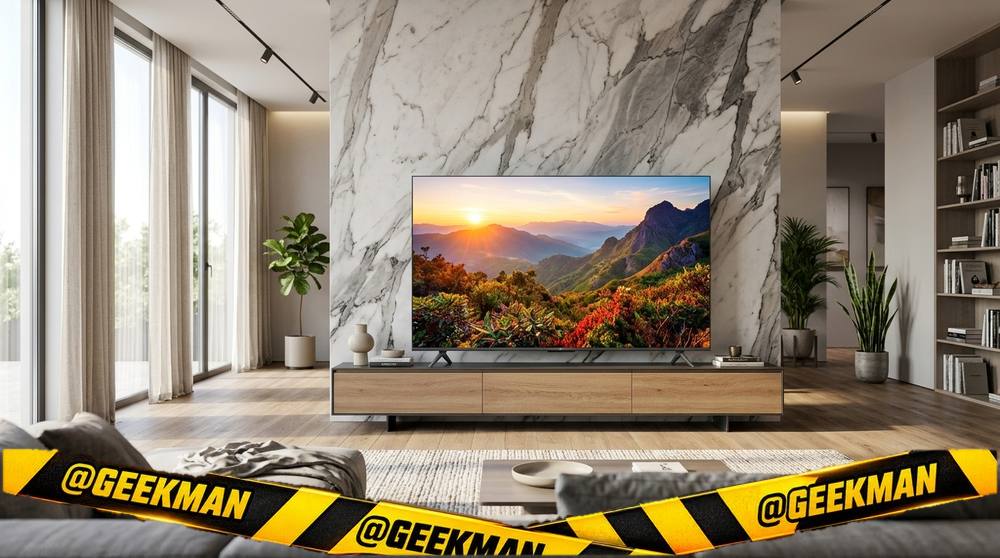
7.6Geekman Score
7.1 Picture
6.6 Features
7.8 Service
9.6 Value
The cheapest 65 inch here with a published zone count (312), Dolby Vision and 40W Onkyo sound, for movie fans rather than gamers.
312 zones · Dolby Vision · 40W Onkyo 2.1 · 60 Hz panel
Best for
✓ Families moving to 65 inches who want real local dimming without paying Xiaomi S 65 money
✓ OTT and movie viewers who want Dolby Vision, HDR10+ and good built-in sound
✓ Buyers who want a 2-year warranty on a big screen
Skip if
• You want 4K 120 for a PS5 (spec sheets list a 60 Hz panel; the Hisense E8S 65 has native 144 Hz)
• Your room is bright and you want the most dimming zones at 65 inches (the Xiaomi S 65 has 384)
• You need a fast interface for years to come (spec sheets list 2 GB RAM)
My take: I’d look at the 65C6KS if you want a 65 inch with a real, published number of dimming zones for the least money. You get 312 zones, Dolby Vision, HDR10+, IMAX Enhanced and a 40W Onkyo 2.1 system with a subwoofer, on Google TV with a 2-year warranty. Don’t confuse it with the C6K: spec databases list this one as a 60 Hz panel with 2 GB RAM and 16 GB storage, so it is not a 144 Hz gaming set.
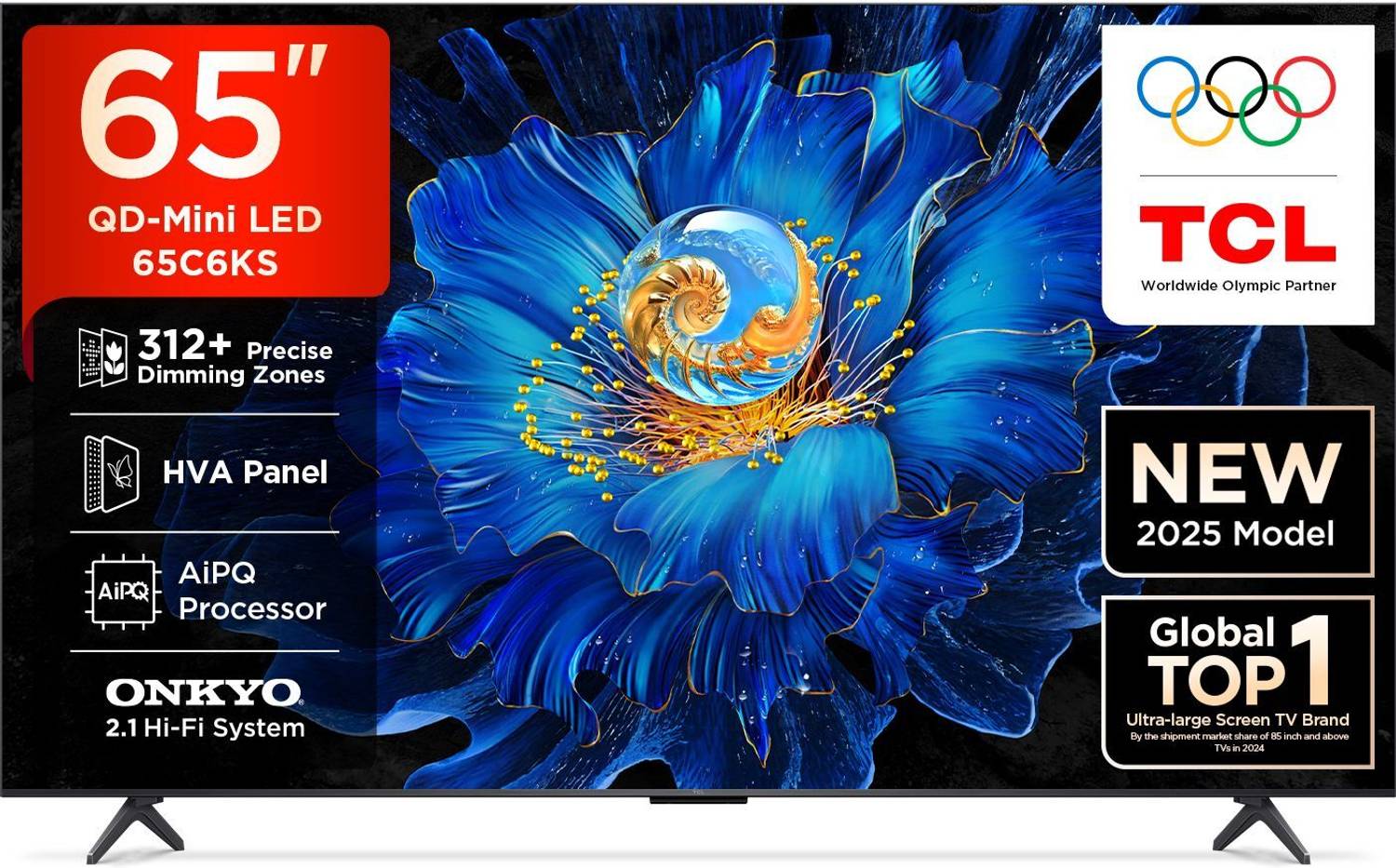
TCL C6KS 164 cm (65 inch) Ultra HD (4K) Mini LED Smart Google TV with High HDR Brightness | 312+ Dimming Zones | AiPQ Processor | Dolby Vision-Atmos 40 W | ONKYO 2.1 Hi-Fi System | IMAX Enhanced
Up to 5% off with Flipkart Axis & Flipkart SBI Credit Cards Details
- Up to 5% off with Flipkart Axis & Flipkart SBI Credit Cards
Pros and cons
What I like
+ 312 published dimming zones at 65 inches
+ Dolby Vision, HDR10+ and IMAX Enhanced
+ 40W Onkyo 2.1 with subwoofer
+ 2-year warranty
What I don’t like
• 60 Hz panel per spec sheets; not a 4K 120 TV
• 2 GB RAM listed; slow boot
• Very reflective screen
My full review: who it suits, what it is like and how it compares
Who should buy it. A family that wants a 65 inch Mini LED for OTT, movies and TV, and doesn’t game at high frame rates. It suits a hall where you sit 8 to 10 feet away. It sits below the Xiaomi S 65 on zones and brightness, and below the Hisense E8S 65 on gaming, but undercuts both on price.
Picture in a real living room. With 312 dimming zones and a quantum dot Mini LED backlight, you get a clear step up in contrast over a regular QLED: blacks get deeper at night and HDR highlights stand out. Dolby Vision, HDR10+ and HLG are all supported. An owner of a 65 inch from this TCL family, after a year, rarely set brightness above 50 to 60% even 12 feet back, and found upscaling of older shows acceptable. His main complaint was reflections: switched off, the screen acts like a mirror, and an open window opposite can wash the picture out. Place it away from direct light. Brightness for this exact model is not published.
Smart features and speed. It runs Google TV, so every major app is available. Spec databases list 2 GB RAM and 16 GB storage, less than the 3 GB of the C6K and Q6C, so expect occasional slowdowns with heavy apps. An owner of a 65 inch in this family reported about half a minute to boot and load apps, an Android 14 update in late 2026, and one glitch where the Google account was erased after setup was skipped at first boot, so sign in on the first setup screen.
Sound. The 40W Onkyo 2.1 system pairs two 10W speakers with a 20W subwoofer, with Dolby Atmos support. The long-term owner found it good enough to skip a soundbar, with sound modes that change little. For a big hall and action films, a soundbar still helps.
Build, ports and service. Bezels are thin, but the body is thick; on a typical wall mount it sticks out about 4 to 5 inches. Power enters on one side and all ports on the other, so plan socket placement. Spec sites list a 60 Hz panel with VRR support in some modes, so treat it as a 4K 60 TV for consoles. Warranty is 2 years. TCL service has mixed reports, so check coverage before ordering.
TCL C6KS 65 or Xiaomi S Mini LED 65? Both are 60 Hz Mini LEDs on Google TV with 2GB RAM. The Xiaomi has more zones, 384 against 312, and its 55 inch sibling measured bright HDR. The TCL costs a bit less and has a 40W Onkyo 2.1 system with a sub and a 2-year warranty, but its screen is very reflective. For picture, the Xiaomi. For sound and warranty, the TCL.
Key specs
| Screen | 65 inch 4K (3840 x 2160) |
| Panel and backlight | QD Mini LED, 312 local dimming zones |
| Refresh rate (native) | 60 Hz per spec databases |
| HDR | Dolby Vision, HDR10+, HDR10, HLG, IMAX Enhanced |
| Brightness | Not stated |
| Smart OS | Google TV |
| RAM / storage | 2 GB / 16 GB per spec databases |
| Sound | 40W Onkyo 2.1 (2x 10W + 20W sub), Dolby Atmos |
| Ports (HDMI incl. 2.1/eARC, USB) | 3 to 4 HDMI (spec sources differ), USB, LAN |
| Warranty | 2 years |
| Model code | 65C6KS |
Sony with native 120 Hz
8. Sony Bravia 3 II 65 inch 4K Google TV (K-65XR30M2)
7.5Geekman Score
6.6 Picture
8.1 Features
9.0 Service
7.8 Value
A Sony with native 120 Hz on all four HDMI ports and a matte screen for bright rooms, best for daytime viewing and gaming at 65 inch.
Native 120 Hz · 4x HDMI 2.1 · Matte screen · No local dimming
Best for
✓ PS5 owners who want 4K 120 and VRR on every HDMI port
✓ Bright living rooms with wide seating, where its matte screen and wide viewing angle help
✓ Buyers who want Google TV with Sony service rather than a lesser-known brand
Skip if
• You watch films at night with the lights off: there is no local dimming, so blacks look grey (the Sony Bravia 5 or an OLED suits you better)
• You want HDR highlights that really pop (the Samsung QN90F 65 is several times brighter)
• You want good built-in sound (20W is basic)
My take: The Bravia 3 II fixes the old Bravia 3’s biggest problem: every size is now native 120 Hz, and all four HDMI ports are full HDMI 2.1 with 4K 120, VRR and ALLM. Colours are accurate and upscaling is very good. The big catch is that it has no local dimming at all, so dark scenes look grey in a dark room and HDR is only about 520 nits. Reviewers found the 65 inch uses an IPS-type panel with a matte anti-glare screen, which makes it a bright-room and gaming TV more than a movie TV.

Sony 164 cm (65 inches) Smartchoice BRAVIA 3II Ultra HD Smart LED Google TV K-65XR30M2
Up to 4% instant discount on select Credit Cards & SBI Debit Cards +1
- Up to 4% instant discount on select Credit Cards & SBI Debit Cards
- No Cost EMI on select cards
Pros and cons
What I like
+ Native 120 Hz with four full HDMI 2.1 ports
+ Accurate Sony colours and strong upscaling
+ About 9.8 ms input lag measured
+ Matte anti-glare screen on the 65 inch
What I don’t like
• No local dimming; blacks look grey in the dark
• Only about 520 nits HDR measured
• 20W sound
My full review: who it suits, what it is like and how it compares
Who should buy it. Someone with a bright, wide living room who wants a 65 inch Sony for daytime TV, sports and console gaming. It is not a dark-room movie TV. For the money, the Sony Bravia 5 65 gives real Mini LED dimming if your budget stretches.
Picture in a real living room. Colours are the strength: reviewers measured close to 95% of the P3 colour range with accurate tones out of the box, and skin looks natural. HDR brightness measured about 520 nits, so sunlight and explosions look flatter than on a good Mini LED. It uses frame dimming, where the whole backlight dims together, so there is no blooming but blacks look dark grey in a dark room. On the 65 inch, reviewers found an IPS-type panel with a matte anti-glare screen that turns lamps and windows into a soft haze, with good viewing angles for wide sofas. The matte finish lifts blacks a little with lights on. Very bright scenes can overexpose and lose detail on faces.
Smart features and speed. It runs Google TV on Android 14 with Sony’s XR processor, and reviewers found it fast to boot, quick to open apps and smooth to switch between them. You get AirPlay, Google Cast, far-field mics with a mute switch, Wi-Fi 6 and Bluetooth 5.3. The new remote has a finder button on the TV that makes it beep, which is handy. Sony has not stated how many years of OS updates it will get, and Google TV shows ads on the home screen.
Gaming and PS5. All four HDMI ports are full HDMI 2.1 with 4K 120, VRR and ALLM, which even Sony’s pricier sets do not offer. Input lag measured about 9.8 ms, fine for competitive shooters. PS5 owners get Auto HDR Tone Mapping and Auto Genre mode, and Xbox owners get Dolby Vision gaming. Two setup notes: turn on Enhanced HDMI signal format for the console input, or 4K 120 may not switch on, and there is no 1440p support for PC. Motionflow can cause a slight triple-ball effect in cricket; turning it down fixes that.
Build, ports and service. Most of the body is metal with slim bezels. Sony does not put a stand in the box: the technician installs either the table stand or a wall mount for free. On the 65 inch the feet sit wide, about 49 inches apart, so measure your table. Sound is 20W from two speakers with clear dialogue and little bass. Sony’s current offer is 2 years comprehensive warranty. A few owners reported a cloudy patch in dark scenes and slow after-sales help, so check the panel on a dark scene during installation.
Sony Bravia 3 II 65 or Sony Bravia 5 65? The Bravia 3 II has native 120 Hz on all four HDMI 2.1 ports and Sony processing, but no local dimming, about 520 nits measured and 20W sound. The Bravia 5 adds full-array Mini LED dimming, much brighter HDR and 40W speakers, with two 4K 120 ports. If you are already spending this much on a Sony, stretch to the Bravia 5.
Key specs
| Screen | 65 inch 4K LED |
| Panel and backlight | IPS-type panel, matte anti-glare (per reviewers), direct LED with frame dimming, no local dimming |
| Refresh rate (native) | 120 Hz |
| HDR | Dolby Vision, HDR10, HLG |
| Brightness | About 520 nits HDR (measured) |
| Smart OS | Google TV (Android 14), XR processor |
| RAM / storage | Not stated |
| Sound | 20W, 2 speakers, Dolby Atmos, DTS |
| Ports | 4 HDMI 2.1 (4K 120, VRR, ALLM, one eARC), 2 USB (one USB 3.0), optical, Ethernet |
| Warranty | 2 years comprehensive (current offer) |
| Model code | K-65XR30M2 |
Best 75 inch
9. TCL Q6C 75 inch 4K QD-Mini LED Google TV (75Q6C)
7.4Geekman Score
7.9 Picture
8.2 Features
7.8 Service
5.2 Value
The best 75 inch under 1 lakh: 512+ zones, native 144 Hz and real HDR brightness, at a size where most rivals are 60 Hz.
Native 144 Hz · Dolby Vision IQ · 512+ zones · Google TV
Best for
✓ A big hall where a 75 inch screen fits and you want Mini LED HDR, not a plain QLED
✓ PS5 and PC gamers who want native 144 Hz, VRR and FreeSync Premium
✓ Buyers who want Google TV with 3 GB RAM and a 2-year warranty
Skip if
• You watch a lot of fast cricket or football (reviewers saw doubled balls and weak sports motion; a Sony handles motion better)
• You want the lowest price for a 75 inch with 144 Hz (the Hisense E8S 75 costs less, with undisclosed zones)
• You need more than two 4K 120 ports or more than one USB port
My take: If you want a 75 inch TV under 1 lakh that does both HDR movies and 4K 120 gaming, this is it. The 512+ zone figure actually applies to the 75 inch, it runs at native 144 Hz with VRR and FreeSync Premium, and it has Dolby Vision IQ and 46W Onkyo sound. Most 75 inch TVs at this money are 60 Hz. Expect the same TCL weak spots: average sports motion, a slow wake-up, one USB port and only two full-speed HDMI ports.

TCL 189 cm (75 Inches) Smartchoice 4K UHD Smart QD-Mini LED Google TV | 144Hz Refresh Rate | 3GB RAM | 46W Onkyo 2.1 | Upto 512+ Zones | IMAX Enhanced | 75Q6C
Up to 4% instant discount on select Credit Cards & SBI Debit Cards +1
- Up to 4% instant discount on select Credit Cards & SBI Debit Cards
- No Cost EMI on select cards
Pros and cons
What I like
+ Native 144 Hz with VRR, FreeSync Premium and ALLM
+ Measured about 705 to 984 nits
+ Dolby Vision IQ, HDR10+, 46W Onkyo 2.1
+ 3 GB RAM, Google TV, 2-year warranty
What I don’t like
• Weak motion in fast sports; slow wake-up
• Only two full HDMI 2.1 ports and one USB
• Mixed TCL service and installation reports
My full review: who it suits, what it is like and how it compares
Who should buy it. A family with a big hall, seating about 10 feet or more away, that wants a cinema-sized screen with proper HDR and gaming support. If you mostly watch cricket and news, a cheaper 60 Hz 75 inch may do; if gaming at 144 Hz matters, this is the one. It is also the size where TCL’s 512+ zone claim actually holds up.
Picture in a real living room. This is where the 512+ zone claim fits: the 75 inch is the size with over 500 dimming zones, so dimming control is better than on the 55 inch. Lab measurements of the series show about 705 nits in Filmmaker mode and about 984 nits in Standard, which is enough for a bright hall. Dolby Vision IQ, HDR10+ and IMAX Enhanced are supported. The HVA panel gives deep blacks, but viewing angles are average, some black crush shows in very dark scenes and the screen is reflective. Fast sports motion is the weakest area; reviewers saw doubled balls in cricket.
Smart features and speed. Google TV runs on a quad-core chip with 3 GB RAM and 32 GB storage, and day to day it feels smooth. Two owner complaints come up: the TV takes 35 to 40 seconds to wake before the remote responds, and apps reload when you switch between them. It launched on Android TV 12, and owners reported an Android 14 update in late 2026. Hands-free voice, AirPlay and screen mirroring are built in. Wi-Fi is 5, not 6.
Gaming and PS5. The panel is native 144 Hz with VRR, ALLM and AMD FreeSync Premium. A PS5 runs 4K 120 with VRR working, and a PC can push 4K 144. Lab measurements put input lag at about 13.6 ms. Of the four HDMI ports, only two support full 4K 144 bandwidth, so plan which ports the console and soundbar use.
Build, ports and service. Bezels are slim and the build is solid, but at 75 inches you should plan a wall mount and professional installation. The 46W Onkyo 2.1 system with a subwoofer and Dolby Atmos is clear and punchy, though a hall this size benefits from a soundbar. There is only one USB port. Warranty is 2 years on-site. TCL service has mixed reports, including slow installation, so check coverage near you before ordering.
TCL Q6C 75 or Xiaomi S Mini LED 75? Both have 512 zones and Dolby Vision on Google TV. The TCL adds native 144 Hz with VRR, 3GB RAM, 46W Onkyo sound with a sub and a 2-year on-site warranty. The Xiaomi is 60 Hz with 2GB RAM, and one review of the 75 inch noted HDR banding. For a living room with a PS5, the TCL is the easy choice.
Key specs
| Screen | 75 inch 4K (3840 x 2160) |
| Panel and backlight | HVA panel, QD Mini LED, 512+ local dimming zones |
| Refresh rate (native) | 144 Hz, VRR, ALLM, FreeSync Premium |
| HDR | Dolby Vision IQ, HDR10+, HDR10, HLG, IMAX Enhanced |
| Brightness | About 705 nits (Filmmaker) to 984 nits (Standard) measured |
| Smart OS | Google TV |
| RAM / storage | 3 GB / 32 GB |
| Sound | 46W Onkyo 2.1 with subwoofer, Dolby Atmos, DTS Virtual:X |
| Ports (HDMI incl. 2.1/eARC, USB) | 4 HDMI (2 with full HDMI 2.1 4K 144, one eARC), 1 USB, optical, LAN, satellite |
| Warranty | 2 years on-site |
| Model code | 75Q6C |
Best 75 inch value
10. Xiaomi TV S Mini LED 75 inch 2026 (L75MC-IN)
7.3Geekman Score
7.7 Picture
6.8 Features
8.0 Service
6.4 Value
A huge, bright 75 inch Mini LED with 512 real dimming zones for far less than the big brands, if you can live with 60 Hz and 2 GB RAM.
512 zones · Dolby Vision · 60 Hz panel · Google TV
Best for
✓ A big hall where you want a 75 inch screen that still looks punchy in daylight
✓ Netflix, Prime Video and JioHotstar watchers who want Dolby Vision and HDR10+ with deep night-time blacks
✓ Families who watch from straight in front of the TV and want room-filling sound without a soundbar on day one
Skip if
• You own a PS5 and want 4K 120 games (the panel is 60 Hz; the TCL Q6C or Hisense E8S have native 144 Hz)
• Your sofa wraps around the TV and people watch from the sides (the VA panel washes out off-angle)
• You hate any lag in menus (2 GB RAM; the Hisense E8S or TCL Q6C run smoother)
My take: For a 75 inch Mini LED with a published 512 zones, nothing on this list costs less with this much brightness. Outlets that reviewed the 75 inch call it the value pick in its size. The catch is the same as the smaller models, plus one more: 60 Hz only, 2 GB RAM, and some reviewers saw HDR banding and judder in camera pans on the 75 inch. Gamers should look at the TCL Q6C 75 instead.
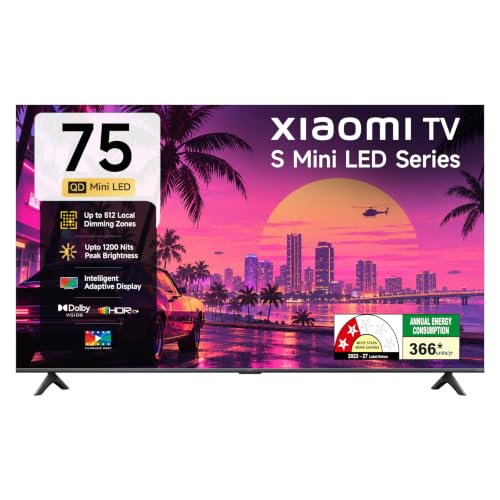
Xiaomi (189 cm) 75 inch S 4K QD-Mini LED | Dolby Vision| Upto 512 Dimming Zones | 34W Speakers | 120Hz DLG | Gemini AI | Google TV | L75MC-IN
Lowest price
Up to 4% instant discount on select Credit Cards & SBI Debit Cards +1
- Up to 4% instant discount on select Credit Cards & SBI Debit Cards
- No Cost EMI on select cards
Up to 5% off with Flipkart Axis & Flipkart SBI Credit Cards Details
- Up to 5% off with Flipkart Axis & Flipkart SBI Credit Cards
Pros and cons
What I like
+ 308/384/512 real dimming zones published by size
+ Bright: measured about 977 nits HDR on the 55 inch
+ Deep blacks at night with low blooming
+ Dolby Vision, HDR10+ and 34W quad speakers
What I don’t like
• 60 Hz panel; “120 Hz” is DLG at lower resolution
• 2 GB RAM brings occasional lag
• Narrow viewing angles and only one HDMI 2.1 port
My full review: who it suits, what it is like and how it compares
Who should buy it. A large hall, 10 feet or more from the sofa, where a 75 inch screen makes sense and the budget is around 1 lakh. It is a movie and OTT TV first. If gaming is a big part of your use, the TCL Q6C 75 gives you native 144 Hz at about the same money.
Picture in a real living room. This is a VA panel with a quantum dot Mini LED backlight and 512 dimming zones on the 75 inch (the full 512 the box advertises). Reviewers measured the 55 inch at about 492 nits in SDR and 977 nits in HDR, and with the windows open in daylight the picture stayed bright and clear. At night a full black screen looked almost switched off, and blooming around bright objects was lower than on the Sony Bravia 2 II. SDR colours are rich out of the box; in HDR they look slightly under-saturated, and raising saturation by about 10% fixes that. Detail is sharp, and upscaling of older TV content came close to Sony. The weak point is viewing angle: from the side of the sofa colours fade by a noticeable amount. On the 75 inch, one lab review also noted HDR banding and judder in slow pans.
Smart features and speed. It runs Google TV on Android 14 with Xiaomi’s PatchWall and over 200 free live channels, so every major app is there and sideloading works. The hardware is the limit: a Cortex-A55 chip with 2 GB RAM. Owners and reviewers describe it as fine most of the time, with small lags when switching heavy apps, occasional jittery navigation, and the launcher sometimes restarting when you move between Google TV and PatchWall. Storage is 32 GB. The Bluetooth remote has number keys, voice and quick settings. Over a few years, 2 GB RAM is the part most likely to annoy you; a streaming stick is the cheap fix.
Sound. Four speakers (two tweeters and two full-range drivers) give 34W with Dolby Audio and DTS:X. Reviewers found it comfortably loud for a 200 sq ft room, with clear dialogue, a bit of bass and no distortion. One lab review found the bass thin on the 75 inch. The eARC port passes Dolby Atmos to a soundbar according to the brand’s spec, though one reviewer reported no Atmos passthrough on their unit, so test it early if you plan an Atmos bar.
Gaming and PS5. The panel is native 60 Hz. The “120 Hz” on the box is DLG (dual line gate), which gives 120 fps only at lower resolution, and there is no full VRR. ALLM is supported. For 4K 60 console games it is fine, but it is the wrong TV if you want PS5 games at 4K 120. Only one of the three HDMI ports is HDMI 2.1, and that port is also the eARC port, so a soundbar and a console end up sharing the good port.
Xiaomi S Mini LED 75 or Hisense E8S 75? The Xiaomi publishes 512 zones and has the wider app choice of Google TV. The Hisense costs less, runs at native 144 Hz and has 61W Devialet sound with a sub, but its zones are undisclosed and the warranty is 1 year. For films, the Xiaomi. For console gaming and loud sound, the Hisense.
Key specs
| Screen | 75 inch 4K (3840 x 2160) |
| Panel and backlight | VA panel, QD Mini LED, 512 local dimming zones |
| Refresh rate (native) | 60 Hz (DLG 120 Hz at lower resolution, MEMC) |
| HDR | Dolby Vision, HDR10+, HDR10, HLG |
| Brightness | 1,200 nits claimed; 55 inch measured about 977 nits HDR, 492 nits SDR |
| Smart OS | Google TV (Android 14) with PatchWall |
| RAM / storage | 2 GB / 32 GB |
| Sound | 34W, 4 speakers, Dolby Audio, DTS:X |
| Ports (HDMI incl. 2.1/eARC, USB) | 3 HDMI (1 HDMI 2.1 with eARC), 2 USB 2.0, optical, 3.5 mm, LAN |
| Warranty | 1 year + 1 year on panel; extended offers vary |
| Model code | L75MC-IN |
Cheapest 75 inch at 144 Hz
11. Hisense E8S 75 inch 4K Mini LED VIDAA TV (75E8S)
7.2Geekman Score
7.0 Picture
7.7 Features
7.5 Service
7.0 Value
A 75 inch with native 144 Hz and 61W sound for noticeably less than the TCL Q6C 75, if you accept undisclosed zones and VIDAA.
Native 144 Hz · 61W with subwoofer · Dolby Vision IQ · VIDAA
Best for
✓ Gamers who want a 75 inch screen with native 144 Hz for less than the TCL Q6C 75
✓ Families who want strong TV speakers with real bass and no soundbar
✓ Viewers who like natural, accurate colours more than a showroom look
Skip if
• Your room is very bright and you want maximum HDR punch (the TCL Q6C 75 and Xiaomi S 75 are brighter with published zone counts)
• You need VLC, Spotify or sideloaded apps (VIDAA has a smaller app store; Google TV sets like the TCL Q6C avoid this)
• You plan to connect a soundbar and two consoles (only two HDMI ports are 2.1, and one of them is the eARC port)
My take: I’d pick the E8S when you want a 2026 Mini LED that does gaming and sound well without a soundbar. The panel is native 144 Hz, it supports VRR, ALLM and FreeSync Premium, and the 61W Devialet-tuned system with a built-in subwoofer is loud without distortion. At 75 inches it undercuts the TCL Q6C 75 by a fair margin. Hisense does not publish the zone count, and reviewers found it well-rounded rather than bright.

Hisense 189 cm (75 Inches) ULED MiniLED Smart AI TV and World Fastest OS - VIDAA | 144Hz Game Mode | 61W Speakers (Built-in Subwoofer) | 75E8S (Black)
Up to 4% instant discount on select Credit Cards & SBI Debit Cards +1
- Up to 4% instant discount on select Credit Cards & SBI Debit Cards
- No Cost EMI on select cards
Pros and cons
What I like
+ Native 144 Hz with VRR, ALLM and FreeSync Premium
+ 61W Devialet sound with a built-in subwoofer
+ Natural colours and steady brightness
+ Fast VIDAA with JioHotstar and free channels
What I don’t like
• Zone count not published; not the brightest Mini LED
• Only two HDMI 2.1 ports, one shared with eARC
• VIDAA app store is smaller than Google TV’s
My full review: who it suits, what it is like and how it compares
Who should buy it. A big hall where a 75 inch screen fits, with a console in the mix and no plans for a soundbar. At about 25 kg without the stand, it needs a sturdy wall or a wide, solid table. If you want the strongest picture at 75 inches and can spend a little more, the TCL Q6C 75 has 512+ zones and a brighter panel.
Picture in a real living room. On an 85 inch sibling, a reviewer measured about 550 nits in a 10% window and about 400 nits full screen, holding steady without dimming, plus around 8,000:1 native contrast and 89% DCI-P3 in SDR. Hisense claims 500 nits typical and up to 700 peak in India. Blacks are rich in a dark room and the panel is uniform, with only slight darkening at the corners. Blooming is present but well cleaned up, and gets worse from the side; the picture holds up to about 50 degrees off-centre. Colours are Pantone-validated and natural. One Indian reviewer found HDR colours a little dull for Indian tastes out of the box, so expect to adjust saturation or try Dolby Vision Custom. The semi-matte screen cuts reflections better than a glossy one but is not fully matte.
Smart features and speed. VIDAA sets up in minutes through a phone app and is fast: Netflix starts playing quickly and the interface moves without lag. You get Netflix, Prime Video, JioHotstar, Zee5, SonyLIV and a lot of free live channels, plus continue-watching rows pulled from the apps. Alexa and Google Home can control the TV, and VIDAA Voice works hands-free. The weak side is the smaller app store compared with Google TV, and one reviewer found the remote’s pause key did nothing in an app, so OK had to do the job. Storage is 16 GB; Hisense does not state the RAM.
Gaming and PS5. The panel is native 144 Hz with VRR, ALLM and AMD FreeSync Premium. A PS5 runs 4K 120 games smoothly, and a PC can use 144 Hz. Reviewers saw no major ghosting. Of the four HDMI ports, two are HDMI 2.1 and two are 4K 60 HDMI 2.0, and the eARC port is one of the 2.1 pair. Connect a soundbar there and you are left with one full-speed port for a console.
Build, ports and service. Sound is where the E8S stands apart. The 61W system has a built-in subwoofer and Devialet tuning, and reviewers found it loud and punchy with very little distortion at high volume, so for news, serials and most movies you can skip the soundbar. The stand feet feel sturdy and alloy-like, the power cord is detachable, and the bezels are thin. Ports are 4 HDMI, 2 USB 2.0, LAN, optical, antenna and satellite. The 75 inch weighs about 25 kg without the stand. Warranty is 1 year comprehensive. One owner reported slow after-sales service on a remote replacement within warranty, so check Hisense service near you.
Hisense E8S 75 or TCL Q6C 75? Both run at native 144 Hz with two HDMI 2.1 ports. The TCL publishes 512+ zones and has Google TV with 3GB RAM and a 2-year warranty. The Hisense is cheaper and louder at 61W, but its zones are not disclosed and VIDAA has a smaller app store. If the price gap is small, take the TCL.
Key specs
| Screen | 75 inch 4K (3840 x 2160) |
| Panel and backlight | Hi-QLED Mini LED, full-array local dimming (zones not published), 8,500:1 native contrast claimed |
| Refresh rate (native) | 144 Hz, VRR, ALLM, FreeSync Premium |
| HDR | Dolby Vision IQ, HDR10+ Adaptive, HDR10, HLG |
| Brightness | 500 nits typical / 700 peak claimed; about 550 nits measured on an 85 inch sibling |
| Smart OS | VIDAA |
| RAM / storage | RAM not stated / 16 GB |
| Sound | 61W with built-in subwoofer, Devialet tuned, Dolby Atmos |
| Ports (HDMI incl. 2.1/eARC, USB) | 4 HDMI (2 HDMI 2.1, one with eARC; 2 HDMI 2.0), 2 USB 2.0, optical, LAN |
| Warranty | 1 year comprehensive |
| Model code | 75E8S |
75 inch Sony
12. Sony Bravia 2 II 75 inch 4K Google TV (K-75S25BM2)
7.1Geekman Score
6.7 Picture
7.1 Features
9.0 Service
6.6 Value
A 75 inch Sony for families who want natural colour, clean upscaling and Sony service on a huge screen, not local dimming or 120 Hz.
X1 processor · Natural colour · 4 HDMI · Google TV
Best for
✓ Large halls where a 75 inch suits the seating distance and people watch from the sides
✓ Families who watch a lot of set-top box TV and cricket and want it upscaled cleanly
✓ Buyers who trust Sony’s processing and service more than Mini LED spec sheets
Skip if
• You want the best picture for the money at 75 inch (the TCL Q6C 75 has 512 dimming zones and 144 Hz for less)
• You watch films in a dark room (no local dimming; the whole backlight dims at once)
• You want Dolby Vision or 120 Hz gaming (it has neither; look at the Sony Bravia 3 II or TCL Q6C 75)
My take: The Bravia 2 II 75 is the Sony you buy for its processing and its name. Colours stay natural, the X1 chip and X-Reality Pro clean up TV channels and online video well, and the Google TV interface is smooth. But at 75 inch the limits are easy to see: 60 Hz, no Dolby Vision, and only frame dimming, so blacks turn grey in a dark room. Mini LED TVs at a lower price beat it on brightness, contrast and gaming.
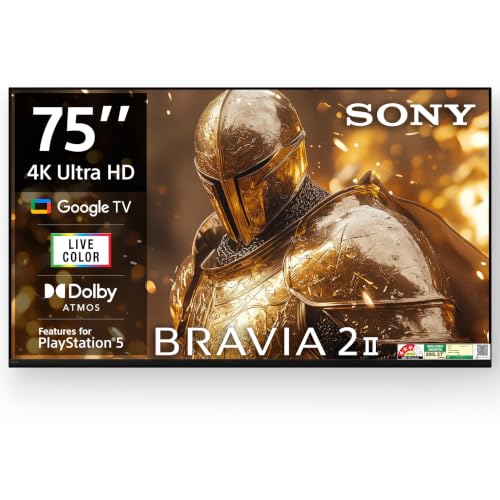
SONY BRAVIA 2 II 189.3 cm (75 inch) Ultra HD (4K) LED Smart Google TV
Up to 4% instant discount on select Credit Cards & SBI Debit Cards +1
- Up to 4% instant discount on select Credit Cards & SBI Debit Cards
- No Cost EMI on select cards
Lowest price
Up to 5% off with Flipkart Axis & Flipkart SBI Credit Cards Details
- Up to 5% off with Flipkart Axis & Flipkart SBI Credit Cards
Pros and cons
What I like
+ Natural colour and Sony’s strong upscaling
+ Smooth Google TV and four HDMI ports
+ Sony build and service
+ Loud, clear 20W Atmos speakers
What I don’t like
• 60 Hz, no Dolby Vision, no local dimming at 75 inch
• Costs more than better-specified Mini LED rivals
• 16GB storage on Android 12
My full review: who it suits, what it is like and how it compares
Who should buy it. A household with a big hall that wants a 75 inch from a brand it trusts, and cares more about natural colour and clean TV channels than HDR peaks. It runs Sony’s X1 processor with 4K X-Reality Pro upscaling, Google TV, four HDMI ports and 20W open-baffle speakers with Dolby Atmos. The panel is 60 Hz and the backlight has no zones. If you want the best 75 inch picture for the money, the TCL Q6C 75 (512 zones, 144 Hz) costs less; if you want a Sony with 120 Hz, the Bravia 3 II is the one.
Picture in a real living room. Reviewers measured the Bravia 2 II at about 367 nits in SDR and 369 in HDR, though the measured unit’s size was not stated, and Sony doesn’t publish figures for the 75 inch. In a lit room with windows open it stays clearly visible, and it handled glare better than budget Samsung and LG sets. Colours are close to natural with real skin tones, which matters more on a screen this big. The weak point is contrast: there are no local dimming zones, only frame dimming where the whole backlight dims together, so black bars and night scenes look grey with the lights off, and Mini LED sets show far less of that. Sony doesn’t state the panel type for the 75 inch. Upscaling is a real strength: old cable channels, 720p online videos and 1080p all look sharper and cleaner, and fast cricket shows no trailing balls.
Smart features and speed. Google TV on the X1 chip with 2.5GB RAM is smooth: apps like Netflix and JioHotstar open and switch without real delay, Chromecast and AirPlay 2 work well, and the quick settings menu is handy. It is on Android 12 while some cheaper rivals ship Android 14, and storage is 16GB with only about 4.8GB free after setup, so be selective with apps. Sony adds Sony Pictures Core with movie credits, the Bravia Connect phone app, PS Remote Play and a power-on volume setting. The remote is a compact Bluetooth one with Google Assistant on a button; there is no hands-free voice.
Sound. Two 10W open-baffle speakers give 20W with Dolby Atmos and DTS:X. Loudness and treble clarity are excellent for a TV, but at 75 inch the sound is small for the picture. One reviewer found the balance uneven in action scenes, where music and effects drown dialogue, and noticed distortion above about 80% volume; another found it loud and clean with little bass. For a hall that suits a 75 inch, a soundbar on the HDMI eARC port is close to essential.
Build, ports and service. The frame is metal with slim bezels on three sides and a small chin, the back is metal with a plastic centre, and the table stand is new and sturdy (not metal). All ports sit on one side: four HDMI with HDMI 2.1 features (eARC on HDMI 3, ALLM on all), two USB 2.0, optical, LAN and two antenna inputs, with Wi-Fi 6 and Bluetooth 5.3; there is no headphone jack. Gaming tops out at 4K 60 with ALLM and no VRR, which works well for casual PS5 play. Sony’s standard warranty is one year; a two-year comprehensive offer ran on purchases through 30 November 2026, so check which applies when you buy. Sony’s service is strong in metros and tier 1 and 2 cities, and installation with a stand or wall mount is free.
Sony Bravia 2 II 75 or TCL Q6C 75? The Sony is for people who trust Sony processing and service. Its upscaling of SD and HD channels is among the best in budget TVs, and its interface is smooth. It is 60 Hz with no local dimming or Dolby Vision, at about 367 nits. The TCL costs less and has 512+ zones, Dolby Vision and 144 Hz, so on picture it wins clearly.
Key specs
| Screen | 75 inch 4K (3840 x 2160) |
| Panel and backlight | Direct LED with frame dimming, no local dimming zones |
| Refresh rate (native) | 60 Hz (ALLM, no VRR) |
| HDR | HDR10, HLG (no Dolby Vision, no HDR10+) |
| Brightness | About 367 nits SDR / 369 HDR (measured, size not stated) |
| Smart OS | Google TV (Android 12), X1 processor |
| RAM / storage | 2.5GB / 16GB |
| Sound | 20W 2.0 open baffle, Dolby Atmos, DTS:X |
| Ports | 4 HDMI (HDMI 2.1 features, eARC on HDMI 3), 2 USB 2.0, optical, LAN; Wi-Fi 6, Bluetooth 5.3 |
| Warranty | 1 year standard; 2 years comprehensive on the Oct-Nov 2026 offer |
| Model code | K-75S25BM2 |
Best 75 inch TVs
If your sofa sits 9 feet or more from the wall, 75 inch is worth the jump. Most affordable 75 inch TVs are 60 Hz with weak or no dimming, so I kept only four that do something well. The TCL Q6C 75 is the one that combines 512+ real zones with native 144 Hz.
| Pick | TV | Why |
|---|---|---|
| Best 75 inch | TCL Q6C 75 | Real zones and native 144 Hz |
| Best value | Xiaomi S Mini LED 75 | 512 zones, bright HDR |
| Cheapest 144 Hz | Hisense E8S 75 | Strong sound, zones undisclosed |
| Sony pick | Sony Bravia 2 II 75 | Processing and service, 60 Hz |
If you game on a PS5, only the TCL Q6C 75 and Hisense E8S 75 in this group run 4K at 120 Hz.
Popular 65 and 75 inch TVs I would skip (and why)
These show up often at 65 and 75 inch. Each one asks big-screen money for a panel that does less than its label says.
Samsung M2 65 and 75. Sold as Mini LED, but the panel runs at 50 Hz and has no local dimming. On a screen this big the missing dimming shows as grey blacks across the whole picture.
Sony Bravia 3 K-65S30B. The 2024 model with a 60 Hz panel. The Bravia 3 II replaced it with native 120 Hz on four HDMI 2.1 ports.
TCL T6D 65. 60 Hz and about 350 nits, at roughly the price of the TCL C6KS 65, which has 312 dimming zones.
TCL 65P71K and 75P71K. The ‘120Hz VRR’ in their names does not match the 60 Hz panel in their spec sheets. I skip any TV where the box and the specs disagree.
Compare all 12 at a glance
| TV | Size | Panel | Native refresh | HDR | OS | Sound | Warranty |
|---|---|---|---|---|---|---|---|
| Samsung S95H 65 | 65″ 4K | QD-OLED | 165 Hz / 4x HDMI 2.1 | HDR10+ | Tizen · not stated | 70W 4.2.2 | 1 year + 1 year panel |
| LG C5 OLED 65 | 65″ 4K | OLED | 144 Hz / 4x HDMI 2.1 | Dolby Vision | webOS · not stated | 40W 2.2 | 1 year standard (check seller |
| Samsung QN90F 65 | 65″ 4K | Mini LED (full array, zones not stated) | 165 Hz / 4x HDMI 2.1 | HDR10+ | Tizen · not stated | 60W 4.2.2 | 1 year + 1 year panel |
| Sony Bravia 5 65 | 65″ 4K | Mini LED (full array, zones not stated) | 120 Hz / 2x HDMI 2.1 | Dolby Vision | Google TV · 3GB | 40W 2.0 | 2 years (current offer) |
| Xiaomi S Mini LED 65 | 65″ 4K | QD-Mini LED (384 zones) | 60 Hz | Dolby Vision, HDR10+ | Google TV · 2GB | 34W, 4 speakers | 1 year + 1 year panel (offers |
| Hisense E8S 65 | 65″ 4K | QD-Mini LED (full array, zones not stated) | 144 Hz / 2x HDMI 2.1 | Dolby Vision, HDR10+ | VIDAA · not stated | 61W 2.1 with sub | 1 year |
| TCL C6KS 65 | 65″ 4K | QD-Mini LED (312 zones) | 60 Hz | Dolby Vision, HDR10+ | Google TV · 2GB | 40W 2.1 with sub | 2 years |
| Sony Bravia 3 II 65 | 65″ 4K | LED | 120 Hz / 4x HDMI 2.1 | Dolby Vision | Google TV · not stated | 20W 2.0 | 2 years (current offer) |
| TCL Q6C 75 | 75″ 4K | QD-Mini LED (full array, 512+ zones) | 144 Hz / 2x HDMI 2.1 | Dolby Vision, HDR10+ | Google TV · 3GB | 46W 2.1 with sub | 2 years |
| Xiaomi S Mini LED 75 | 75″ 4K | QD-Mini LED (512 zones) | 60 Hz | Dolby Vision, HDR10+ | Google TV · 2GB | 34W, 4 speakers | 1 year + 1 year panel (offers |
| Hisense E8S 75 | 75″ 4K | QD-Mini LED (full array, zones not stated) | 144 Hz / 2x HDMI 2.1 | Dolby Vision, HDR10+ | VIDAA · not stated | 61W 2.1 with sub | 1 year |
| Sony Bravia 2 II 75 | 75″ 4K | LED | 60 Hz | HDR10 | Google TV · 2.5GB | 20W 2.0 | 1 year (2 years on Oct-Nov 202 |
Native refresh is what the panel really runs at. Many budget TVs print “120 Hz” on the box using motion smoothing on a 60 Hz panel, so trust this column, not the title.
The buying guide
How to choose a 65 inch or 75 inch TV
Sit 6.5 to 8 feet away
That range suits a 65 inch 4K screen. If your sofa is 9 feet or more from the wall, a 75 inch will feel right.
Glare grows with size
A bigger screen catches more window light. The Samsung S95H and QN90F have matte screens, while most others here are glossy.
Zones decide contrast
The Xiaomi S 65 publishes 384 zones and the TCL C6KS 312. Hisense does not publish a count for the E8S, so its dimming is harder to judge.
60 Hz is fine for films
The Xiaomi S, TCL C6KS and Sony Bravia 2 II 75 run at 60 Hz. That is enough for OTT and cricket, but not for PS5 at 120 fps.
Check the wall
The 65 inch picks weigh roughly 16 to 21 kg without a stand and the 75s up to 25 kg. Mount them on a solid wall with proper anchors.
Open the box with the installer
Big panels get damaged in transit more often. Check the screen with the installer present before you sign anything.
1 · Screen size: how big for your room
A simple rule for 4K: sit about 1 to 1.5 times the screen diagonal away. That means a 43 inch TV works from about 4 to 6 feet, a 55 inch from 5.5 to 7 feet and a 65 inch from 6.5 to 8 feet. Most Indian living rooms have the sofa 8 to 10 feet from the wall, which is why a 55 inch is the sweet spot for most families, and a 43 inch often feels small there after a month.
For bedrooms with the bed 5 to 7 feet away, 32 to 43 inch is right. If the TV goes on a wall unit, measure the width of the niche, not just the wall. A 55 inch TV is about 123 cm wide, a 43 inch about 96 cm and a 65 inch about 145 cm.
2 · LED, QLED, Mini LED or OLED: what changes the picture
LED is the standard LCD with a backlight. QLED adds a quantum dot layer for richer colours, but a cheap QLED with a dim backlight still looks like a plain LED. Mini LED uses thousands of tiny LEDs split into dimming zones, so bright highlights and dark scenes sit side by side without grey blacks. OLED lights every pixel on its own, which gives perfect blacks and the best movie picture in a dark room.
Watch the fine print. Some TVs sold as “Mini LED” have no local dimming at all, and some “QLED” claims are only marketing. Look for a stated number of dimming zones and real brightness figures. A VA panel gives deeper blacks than an IPS panel, while IPS keeps colours better when you watch from the side of the sofa.
3 · Real 120 Hz vs “120 Hz” on the box
Almost every budget and mid-range TV has a 50 or 60 Hz panel, even when the box says 120 Hz. Those labels come from motion smoothing (MEMC), “HSR” or “DLG” tricks that halve the resolution. For TV channels, cricket and Netflix, a good 60 Hz panel is fine.
Real (native) 120 or 144 Hz matters for PS5, Xbox and PC gaming, and makes fast sports look cleaner. Check the spec sheet for “native refresh rate”, HDMI 2.1 ports and VRR. If the brand only says “motion rate” or “game accelerator”, assume 60 Hz.
4 · Brightness, HDR10, HDR10+ and Dolby Vision
HDR badges mean little on a dim panel. Under about 400 nits, HDR movies look flat or even darker than normal video, whatever the logo says. From around 600 nits with local dimming, HDR starts to look like what you see in a showroom.
Dolby Vision is supported by Netflix, Prime Video and Apple TV for many titles, and HDR10+ by Prime Video. Samsung TVs skip Dolby Vision and use HDR10+ instead. If your room gets strong daylight, prioritise brightness and an anti-glare screen over extra HDR logos.
5 · For PS5 and Xbox: HDMI 2.1, VRR and ALLM
For 4K at 120 fps on a PS5 you need a native 120 Hz panel and at least one HDMI 2.1 port with 4K 120 support. VRR keeps motion smooth when the frame rate drops, and ALLM switches the TV to game mode automatically.
Input lag under about 15 ms feels instant. OLED TVs and most real 144 Hz Mini LED TVs reach that in game mode. Use the HDMI 2.1 port for the console, and the eARC port for a soundbar, which is often the same port on cheaper models, so check before you buy.
6 · TV speakers vs a soundbar
TV speaker wattage is a weak guide. A thin TV with 20W often sounds clearer than a budget TV with 40W of boomy speakers. Dialogue clarity at normal volume is what matters for news and serials.
If you watch movies or sport often, plan a soundbar from day one. A soundbar under ₹10,000 with HDMI ARC beats the speakers of almost every TV here. See my soundbar under 10,000 and best soundbar guides.
7 · Warranty, installation and service in your city
Most TVs carry 1 year of warranty, and some brands add a year on the panel (the costliest part to replace). Register the TV on the brand site right after installation, because some extended warranties need it within days. Keep the invoice.
Samsung, LG and Sony have the widest service reach in small towns. Xiaomi, TCL, Hisense and Acer cover most cities. Licensee brands sold mainly on one store (Motorola, realme TechLife, Thomson, Kodak, Blaupunkt, iFFALCON) use partner service, which is usually fine in big cities but slower elsewhere. Use a spike guard or stabiliser outlet; voltage spikes kill TV power boards more than anything else.
Questions other guides skip
1 · Will an OLED TV get burn-in?
For normal mixed viewing, burn-in is rare on current OLEDs, which shift pixels and refresh panels automatically. It can happen if a news channel logo or a game HUD sits on screen for many hours every day. If that is your use, a Mini LED is the safer choice.
2 · Is a 65 inch TV too big for a 10 by 12 feet room?
Usually not. In a room that size the sofa tends to sit 8 to 10 feet from the TV wall, which suits 65 inch well. Go smaller only if you sit closer than 6 feet.
3 · Should I buy the LG C5 65 or wait for the C6 65?
The C6 65 was not in stock at my last check, so the C5 is the smart buy right now. It has Dolby Vision, four 144 Hz ports and only slightly less brightness than the C6. Install the latest firmware after setup, since early units showed banding in dark HDR10 scenes.
4 · Is the TCL C6KS the same TV as the C6K?
No. The C6KS 65 has 312 zones, a 60 Hz panel, 2GB RAM and 40W sound. The C6K, also sold as Q6C, has 144 Hz, 3GB RAM and 46W. Check the exact model code before you pay.
5 · Is a 120 Hz TV worth it for normal TV and Netflix?
Not really. Movies and shows are 24 to 60 frames per second, so a good 60 Hz panel shows them fully. Real 120 Hz helps fast sport a little and matters mainly for PS5, Xbox and PC gaming.
6 · Is the wall mount included, and who installs it?
Most brands include a wall bracket or table stand and book a free or paid installation visit after delivery. Check the box contents on the product page. If the store sends its own installer, ask for the brand engineer instead so the warranty is not questioned later.
Also consider
Xiaomi X Pro 65: a solid 60 Hz 65 inch for less than any pick above, fine for OTT and cricket. It is not a Mini LED, so it trails the Xiaomi S and TCL C6KS on contrast.
LG QNED82 65: the brand-safe option with native 120 Hz and LG service. Its 55 inch sibling showed no full-array dimming and about 350 nits, so I would not pay its price for picture.
iFFALCON 65U65: the cheapest 65 inch I would look at if screen size is all you want. Ignore the ‘120Hz VRR’ on its box, because the panel is 60 Hz.
More from Geekman
More TV and home theatre guides
Best TV in IndiaBest TV under 50,000Best 55 inch TVBest OLED TVBest Mini LED TVBest TV for PS5Best soundbar under 20,000Best Dolby Atmos soundbar
FAQs
Which is the best 65 inch TV in India?
The Samsung S95H OLED, for its bright glare-free screen, 165 Hz and 70W sound. If you want Dolby Vision at a lower price, the LG C5 OLED 65 is the better value.
Which is the best 65 inch TV under ₹1 lakh?
The Xiaomi S Mini LED 65 for picture, with 384 zones and about 977 nits HDR measured on its 55 inch sibling. Gamers should take the Hisense E8S 65, which has native 144 Hz and 61W sound.
Which is the best 65 inch TV under ₹70,000?
The TCL C6KS 65. It is the cheapest 65 inch here with published dimming zones (312), and it runs Google TV with a 2-year warranty. Its panel is 60 Hz, so it suits OTT and cricket more than PS5.
Which is the best 65 inch TV under ₹60,000?
The Xiaomi X Pro 65, a 60 Hz 4K TV on Google TV. Under ₹50,000 the iFFALCON 65U65 is the floor, and it is also 60 Hz whatever its box says.
Should I buy a 65 inch or a 75 inch TV?
Go by distance. At 6.5 to 8 feet, 65 inch is right. At 9 feet or more, a 75 inch looks the way a 55 inch looks from a normal distance, and the TCL Q6C 75 is the one I would buy.
Is OLED worth it at 65 inch?
Yes, if you watch films in the evening and the budget allows. At this size the perfect blacks and side-angle colour of the S95H or LG C5 are easy to see. For daytime viewing in a bright room, the Samsung QN90F Mini LED gets brighter.
Which 65 inch TV is best for PS5?
The LG C5 OLED 65, with four HDMI 2.1 ports at 4K 144 and very low lag. On a smaller budget, the Hisense E8S 65 has native 144 Hz and Dolby Vision on two HDMI 2.1 ports.
Which is the best 75 inch TV in India?
The TCL Q6C 75, with 512+ real zones and native 144 Hz. The Xiaomi S 75 also has 512 zones but runs at 60 Hz. If Sony service matters most, the Bravia 2 II 75 is the safe but slower choice.
My final picks at 65 and 75 inch
Best overall: Samsung S95H 65, bright glare-free OLED with 70W sound. Check price
Best value OLED: LG C5 OLED 65, Dolby Vision and four 144 Hz ports. Check price
Brightest picture: Samsung QN90F 65, about 2,086 nits measured and a matte screen. Check price
Best value Mini LED: Xiaomi S Mini LED 65, 384 zones and bright HDR for much less. Check price
Best 75 inch: TCL Q6C 75, real zones and native 144 Hz. Check price
At this size, spend on the panel before anything else. If you can stretch, an OLED like the S95H or LG C5 is the 65 inch I would keep for years. If not, the Xiaomi S 65 gives you real dimming for far less, and the TCL Q6C 75 is the big-screen pick.