
Before buying any water purifier in India, check these 5 things in order: (1) Your water source TDS using a TDS meter (₹200-300 on Amazon). (2) Whether the purifier’s internal design is simple and open — can you or a local technician change filters yourself? (3) Annual service/AMC cost, not just the MRP. (4) Whether it uses standard-size filters available in the aftermarket. (5) Tank material — stainless steel lasts longer and is more hygienic than plastic. Get these five right, and you’ll save ₹10,000–₹20,000 over 5 years compared to someone who just bought based on brand name.
1. What Is the Real Cost of a Water Purifier in India?
The biggest mistake buyers make: comparing MRP instead of total ownership cost.
Purifier Purchase Price
(one-time)
Service + Filters + AMC
(over 5-7 years)
When people buy a water purifier, they compare prices — ₹12,000 vs ₹15,000 vs ₹18,000 — and pick the cheaper one. That’s the first mistake. The purchase price is maybe 30-40% of what you’ll actually spend over the purifier’s lifetime.
Let’s do the math. You buy a purifier for ₹15,000. Every year, you spend ₹4,000 on AMC or filter changes. Over 5 years, that’s ₹20,000 in service — more than the purifier itself. Over 7-8 years (a typical purifier lifespan), you’re looking at ₹28,000-40,000 just in maintenance.
One-time purchase
Annual AMC / service
Total 5-year ownership
This is what we call Total Cost of Ownership (TCO) — and it’s the number you should compare, not MRP.
I’ve seen ₹9,000 purifiers with ₹5,000/year AMC and ₹17,000 purifiers with only ₹2,500/year maintenance. In 3 years, the “expensive” purifier actually becomes cheaper. Always calculate the 5-year cost before deciding.
2. What Is TDS and How Much TDS Is Safe for Drinking Water?
TDS is the first thing to check — but most people misunderstand what the number actually means.
How to Check Your Water TDS at Home
Buy a TDS meter from Amazon (₹200-300). Dip it in your water, wait 3 seconds, read the number. That’s your TDS in ppm (parts per million). Do this for all your water sources — municipal tap, borewell, tanker.
Low TDS
UV+UF may work*
Medium TDS
RO + UV recommended
High TDS
RO is mandatory
Why “Below 200 TDS Doesn’t Need RO” Is a Dangerous Myth
This is one of the most common and most dangerous pieces of advice online. Many people (and even technicians) say: “Your TDS is 180, you don’t need RO. Just use UV.”
This is not entirely true. A TDS meter only measures total dissolved solids. It does not tell you what those solids are. Your water can show 180 ppm and still contain traces of lead, arsenic, mercury, or fluoride — extremely harmful even in tiny amounts. Only an RO membrane can remove these dissolved heavy metals.
If you’re on borewell water or in areas with known heavy metal contamination (many parts of Rajasthan, Gujarat, West Bengal, Punjab, UP), you need RO regardless of TDS number. If on clean municipal supply with TDS under 200 and no contamination, UV+UF can work. When in doubt, get a basic water lab test (₹500-1,000) — gives clarity for years.
What Is Adaptive TDS in Newer Water Purifiers?
Some newer purifiers like Atomberg Intellon and Urban Company Native automatically sense input water TDS and adjust purification intensity — using more RO power for high TDS and blending more bypass water when TDS is low. Genuinely useful if your water source fluctuates between seasons (municipal in monsoon, borewell in summer).
3. Which Is Better for Home — RO, UV, or UF Water Purifier?
Three purification technologies, one goal. But they work very differently — and each solves a different problem.
RO (Reverse Osmosis)
Removes: Dissolved salts, heavy metals (lead, arsenic, fluoride), hardness, pesticides
Needs: Electricity, wastes some water
Best for: Borewell, tanker, TDS >300 ppm
UV (Ultraviolet)
Removes: Bacteria, viruses (kills, doesn’t filter out)
Needs: Electricity, clear water input
Best for: Municipal water with microbial risk
UF (Ultrafiltration)
Removes: Bacteria, cysts, suspended particles (not dissolved solids)
Needs: No electricity required
Best for: Low TDS municipal water
RO is the heavy lifter — pushes water through a semi-permeable membrane, strips almost everything including some good minerals (that’s why TDS controllers exist). UV sterilizes but doesn’t filter — dead bacteria stay in the water, just harmless now. UF is a fine physical sieve — blocks bacteria but can’t touch dissolved salts or heavy metals. The advantage: works without electricity.
For most Indian homes, go with RO + UV + UF combo. Yes, RO wastes some water, but the protection against heavy metals is worth it. You can always add a TDS controller to retain minerals. Better safe than sorry — especially when your family’s health is involved.
4. Why Does Internal Design Matter More Than Brand Name?
This is probably the most important practical advice in this entire guide — and almost no other buying guide mentions it.
Open the back panel or top cover of the purifier. Can you clearly see the filters, tubes, and connections? Can you identify which filter is which? Can you disconnect a tube and replace a filter without special tools or a brand technician?
If yes — that’s a good purifier from a serviceability standpoint. If the internals are tightly packed, proprietary, or sealed with special clips — that’s a red flag for long-term cost.
Local RO tech visit
+ aftermarket parts
Brand technician visit
+ branded parts only
Many modern purifiers look sleek and compact — beautiful in the kitchen. But that compact design means everything is crammed inside: custom-size filters, inaccessible tubes, impossible to upgrade later (adding copper or alkaline cartridge). A slightly larger, open-frame purifier saves you thousands in the long run. Choose function over form.
Think of it like this: a simple-design purifier is like a standard car — any mechanic services it. A sealed-design purifier is like a luxury car — only the authorized dealership has the right tools. Both work great when new. The difference shows in Year 2 and beyond.
5. How Do Filter Size and Filter Life Affect Long-Term Cost?
This is where smart buyers save the most money — the aftermarket filter game.
Why Bigger Filters Are Genuinely Better
Standard 10″ sediment filter
(Aftermarket, universal)
Proprietary compact filter
(Brand-only, locked in)
How to Evaluate Filter Life Properly
Brands advertise filter life in months — “change every 6 months.” But actual life depends on water usage and quality. The better metric: check filter life in litres. A good sediment filter handles 4,000-6,000 litres. An RO membrane handles 6,000-12,000 litres. Newer models from Urban Company Native, V-Guard, and Livpure now offer 12,000-litre membranes — effectively 2 years between membrane changes.
How to Use Aftermarket Filters to Save Money
Most standard-size inline filters (sediment, carbon, UF) are universal across brands. An inline sediment filter costs ₹50-100. An inline carbon filter costs ₹60-120. A standard 80 GPD RO membrane costs ₹800-1,200. But these only fit if your purifier uses standard sizes and standard push-fit connectors.
Before buying, ask the seller: “Can I use aftermarket filters in this purifier?” Or search YouTube for filter replacement videos of that model. If people are easily changing filters themselves in videos — great. No DIY videos found? Usually means the internals are not user-friendly.
6. What Is a TDS Controller and Do I Need One?
RO strips out bad AND good minerals. The TDS controller fixes this. Every RO purifier needs one — and if yours doesn’t have it, you can add one for ₹50-200.
Manual TDS Controller (MTDS)
Screw-based valve — you turn it to adjust mix ratio. Kent calls it “TDS Controller,” Aquaguard calls it “MTDS.” Same thing, different brand name.
Automatic TDS Controller
Sensors detect input TDS and auto-adjust. Found in Atomberg Intellon, Kent Grand Star, Native M2. Great for fluctuating water sources.
Aftermarket TDS Controller
Your purifier doesn’t have one? Buy aftermarket for ₹50-200 on Amazon. Push-fit connectors. 10-minute install. Brilliant money-saving hack.
Aim for 50-150 ppm output TDS for drinking water. Below 30 ppm = flat, tasteless, mineral-stripped. Above 200 ppm defeats the purpose of RO. Check with a ₹200 TDS meter after adjusting the controller — do it once and you’re set until your input water source changes.
7. Is Steel Tank Better Than Plastic Tank in a Water Purifier?
Where your purified water sits before you drink it — the tank material matters more than you think.
More durable · Resists bacteria · No micro-cracks · Handles heat · +₹2K-5K
Food-grade safe · Lighter · Cheaper · Can scratch over time · Clean regularly
What Tank Size Do You Need?
Family of 2-3
Family of 3-4 (standard)
Family of 5+ / heavy use
Joint family / Office
Other Build Quality Checks
Check body thickness — thick ABS or thin flimsy material? Tube fittings — push-fit (easy to maintain) or hard-crimped (hard to replace)? Faucet — metal or cheap plastic? These details determine how the purifier holds up after 2-3 years of daily use.
8. Are Copper, Alkaline, and Mineral Cartridges Worth Buying?
Brands list them as three features. Reality: there’s massive overlap — and a ₹300 aftermarket cartridge gives you all three.
Why Mineral and Alkaline Are the Same Thing in Most Purifiers
This is the biggest confusion in the water purifier market right now. Every brand lists “Alkaline” and “Mineral” separately on the spec sheet. Some claim “RO + UV + UF + Copper + Alkaline + Mineral” — six features! Impressive?
Not really. Because the alkaline cartridge and mineral cartridge are, in most cases, the same physical component.
Inside both: mineral balls — calcium, magnesium, tourmaline, maifan stone. When RO water passes through, two things happen simultaneously: minerals get added back AND pH rises from acidic (~6.5) to alkaline (~7.5-8.5). One cartridge, one process, two results. That’s why honest aftermarket sellers label theirs “Mineral/Alkaline Cartridge.”
Kent calls it “Mineral RO Technology.” Aquaguard calls it “Mineral Guard.” Urban Company lists “Alkaline + Mineraliser.” Different names — same cartridge of mineral balls that adds minerals + raises pH. When a brand lists “Alkaline + Mineral” as two separate features, it’s marketing to pad the spec sheet.
What Does Each Cartridge Type Actually Do?
Mineral / Alkaline
Adds calcium, magnesium, potassium. Raises pH to 7.5–8.5.
The one cartridge you genuinely need after RO. Fixes flat, dead-tasting water. Adds minerals AND makes water mildly alkaline — in one single step.
Aftermarket: ₹150–400
Copper
Infuses trace copper ions. Antimicrobial + Ayurvedic.
Genuine antimicrobial properties — well documented in Ayurveda and modern studies. But quantity from cartridges is small. Nice daily supplement, not transformative.
Aftermarket: ₹200–500
Zinc / B12
Trace zinc. Some claim B12 enrichment.
Newest marketing trend. Zinc has antioxidant benefits but minimal quantity. B12 claims questionable — doesn’t dissolve well in cartridge form. Don’t buy for this.
Aftermarket: ₹200–400
How Much Can You Save with Aftermarket Cartridges?
What brands do: Sell separate branded cartridges. Replacement cost: ₹800-2,000 per cartridge.
What the aftermarket offers: A single “3-in-1” or “4-in-1” combo cartridge — copper + alkaline + mineral (sometimes zinc) — for ₹200-500 on Amazon. Same push-fit connectors. Fits most branded purifiers.
| Brand Cartridge | Aftermarket Combo | |
|---|---|---|
| What you get | Separate branded cartridges | Single 3-in-1 (copper + alkaline + mineral) |
| Cost per piece | ₹800–₹2,000+ | ₹200–₹500 |
| Replace every | 6–12 months | 6–12 months (same) |
| Compatibility | Only that brand/model | Universal standard inline |
| Installation | Brand tech (₹300–800 visit) | DIY 2 min — push-fit, no tools |
| 5-year total | ₹4,000–₹10,000+ | ₹1,000–₹2,500 |
The Smart Upgrade Strategy — Buy Simple, Add Later
Don’t choose a purifier just because it lists “Copper + Alkaline + Mineral + Zinc + B12” on the box. A ₹20,000 purifier with five buzzwords but sealed design costs far more over 5 years than a ₹13,000 purifier with simple internals where you add a ₹300 aftermarket combo yourself.
9. How Much Does Water Purifier AMC Cost in India?
For many brands, the purifier is the bait. The AMC is the real business. Here are the actual numbers.
What Different AMC Plans Include
Basic
Service visits only
Mid-range
Service + some filters
Comprehensive
Filters + membrane (maybe)
What the Fine Print Hides in AMC Plans
Many “comprehensive” plans exclude the most expensive parts: RO membrane (₹1,200-2,500), pump (₹1,500-2,500), and electrical components. You pay ₹4,000 for AMC, then membrane replacement is ₹2,000 extra. “Free service in first year” often means free labour only — filters charged separately. Always read inclusions and exclusions before signing.
Real AMC Costs by Brand (2026)
| Brand | Annual AMC | Note |
|---|---|---|
| Kent | ₹3,000–5,000/year | Widest service network in India; AMC often excludes membrane & pump |
| Aquaguard (Eureka Forbes) | ₹3,000–5,800/year | Strong urban coverage; weaker in tier-2/3 cities; multiple AMC tiers |
| Havells | ₹2,500–4,500/year | Decent service; 1yr warranty standard; filters not always covered |
| AO Smith | ₹3,500–6,000/year | Premium pricing; excellent build; limited service in small towns |
| Pureit (HUL) | ₹2,500–4,000/year | Good pan-India coverage; 2yr filter life on newer models |
| Livpure | ₹2,000–3,500/year | Most affordable branded AMC; service delays in some cities |
| Atomberg (Intellon) | ₹0 for 2 years; ~₹1,500/yr after | No AMC — pay only for parts needed; app tracks filter health |
| V-Guard | ₹0 for 2 years (unconditional) | 2yr unconditional warranty covers everything + 2 scheduled visits |
| Blue Star | ₹2,500–4,000/year | Reliable service; good build quality; copper models popular |
| UC Native (Urban Company) | ₹2,500/2yr · ₹4,500/2yr post-warranty | Most predictable pricing; everything included; urban-focused |
How to Skip Brand AMC and Save ₹5,000-15,000 Over 5 Years
Brand AMC
Self-managed
(local tech + aftermarket)
If your purifier has simple internals, skip brand AMC. Local RO tech visit: ₹200-400. Aftermarket filters: ₹50-150. Even aftermarket RO membrane: ₹800-1,200. Over 5 years, you save ₹5,000-15,000. This is why choosing simple internals is so important.
10. What Is a Pre-Filter and Why Is It Important for Water Purifiers?
₹300-500. Five minutes to install. Extends your purifier’s life by months. The best ROI upgrade in this entire guide.
Pre-filter cost (one-time)
RO membrane life increase
Over 3 years from fewer replacements
If your water comes from borewell or tanker (common in Gujarat, Rajasthan, parts of South India), a pre-filter is not optional. This water carries heavy sediment that clogs internal filters within weeks. Consider a two-stage pre-filter (sediment + carbon) for maximum protection.
11. How Much Water and Power Does an RO Purifier Waste?
Power consumption is negligible. Water wastage is the real concern — and there are proven solutions.
Power Consumption — Not a Factor
Most RO purifiers consume 25-60 watts — like a CFL bulb. Running 1-3 hours daily costs ₹30-80/month. The difference between 25W and 60W models is ₹15-20/month. Don’t let this influence your purchase.
Water Wastage — This Matters
Family uses (purified)
Water wasted by standard RO
How to Reduce Water Wastage
12. Can I Change Water Purifier Filters Myself at Home?
Yes — if you choose the right purifier. Self-service is the single biggest long-term money saver.
What You Can Do Yourself (No Tools Needed)
What Needs a Technician
Electrical issues — SMPS/adapter failure, UV lamp failure, pressure pump problems. These need testing equipment. Local RO technician: ₹200-500 plus parts (vs ₹800-1,500+ from brand).
How to Check If a Purifier Is DIY-Friendly Before Buying
Easy to Open?
Basic screws — not tamper-proof or sealed clips?
Filters Visible?
Clearly accessible and logically arranged inside?
Push-Fit Connectors?
Standard 1/4″ push-fit — not crimped or custom?
Standard Filter Size?
Universal sizes that aftermarket replacements fit?
The Golden Rule of Water Purifier Buying
Choose a purifier you can open, understand, and fix — yourself or through any local RO technician. The moment you’re locked into brand-only service, your costs go up and your freedom goes down.
13. Final Water Purifier Buying Checklist for India
Everything we covered, distilled into one table. Screenshot this or bookmark it before you shop.
| What to Check | Why It Matters |
|---|---|
| Water TDS (use a meter) | Determines RO vs UV+UF. Don’t guess — measure. ₹200 meter. |
| Water Source | Borewell/tanker = RO mandatory. Municipal low TDS = UV+UF may work. |
| Internal Design — Open? | Simple = cheap DIY service + aftermarket filters + upgradeable. Sealed = brand-locked. |
| Filter Sizes — Standard? | Standard = ₹50-150 aftermarket. Proprietary = ₹200-500 brand-only. |
| Filter Life (in Litres) | Higher capacity = fewer replacements = lower annual cost. |
| AMC/Service Cost | ₹3K/year AMC = ₹15K in 5 years. Always ask for the 5-year number. |
| TDS Controller | Essential for retaining minerals post-RO. Aftermarket: ₹50-200 if missing. |
| Tank — Steel or Plastic? | Steel = more hygienic + durable. Plastic = lighter + cheaper. Both work. |
| Tank Size | Family of 3-4: 8L. Larger: 10-12L. Heavy usage: 15L. |
| Pre-Filter | ₹300-500 extends purifier life by months. Essential for borewell water. |
| Water Recovery % | Higher = less waste. Look for 50%+ or recirculation technology. |
| Service in Your Area | Great purifier is useless if no one services it locally. Check first. |
| Upgradeable? | Simple design = add copper/alkaline/mineral cartridges anytime. Sealed = never. |
In the next section, we’ll cover which water purifier brands are actually worth buying in India right now according to Geekman, followed by our top 4-5 recommended purifiers with real-world testing experience. Stay tuned.
Remember This One Thing
The best water purifier in India is not the one with the most features or the biggest brand name. It’s the one that gives you clean, healthy water at the lowest total cost over its lifetime — and the one you can maintain without being dependent on anyone.
Simple. Open. Serviceable. Upgradeable. That’s the formula.
Your family’s health depends on the water quality. Your wallet depends on the choices you make today.
14. Which Water Purifier Brand Should You Trust in India?
There is no single “best brand.” The right brand depends on your priorities — service network, maintenance cost, innovation, or build quality. Here’s Geekman’s honest tier list.
Geekman has personally tested and reviewed water purifiers from Kent, Atomberg, UC Native, and Livpure. Other brands are ranked based on extensive research, user feedback, and service cost analysis. This is not a sponsored list — no brand has paid for placement.
Geekman Trusts Most
Solid Brands, Worth Considering
Premium / Niche
If Someone Says “Bhai Just Tell Me Which Brand” — Geekman’s 3 Picks
🏠 For Most Indian Families → Kent — Widest service reach. Even your parents in a small town will find a Kent technician. The safe, reliable pick.
💰 For Long-Term Savings → Atomberg Intellon — Zero AMC, adaptive tech. Over 5 years, save ₹8,000-10,000 vs traditional brands. The smart pick.
🧘 For Zero Headache Ownership → UC Native — Fixed ₹2,500/2yr, everything included. Never think about maintenance again. The convenience pick.
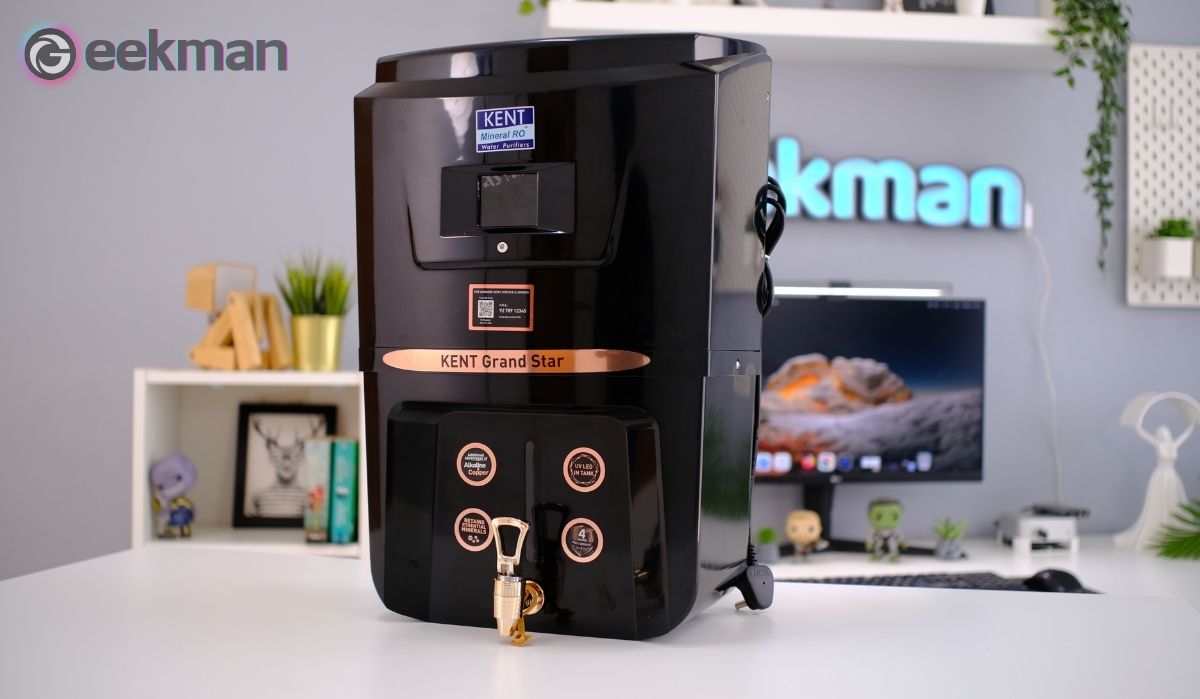
15. Geekman’s Top 7 Best Water Purifiers in India (2026)
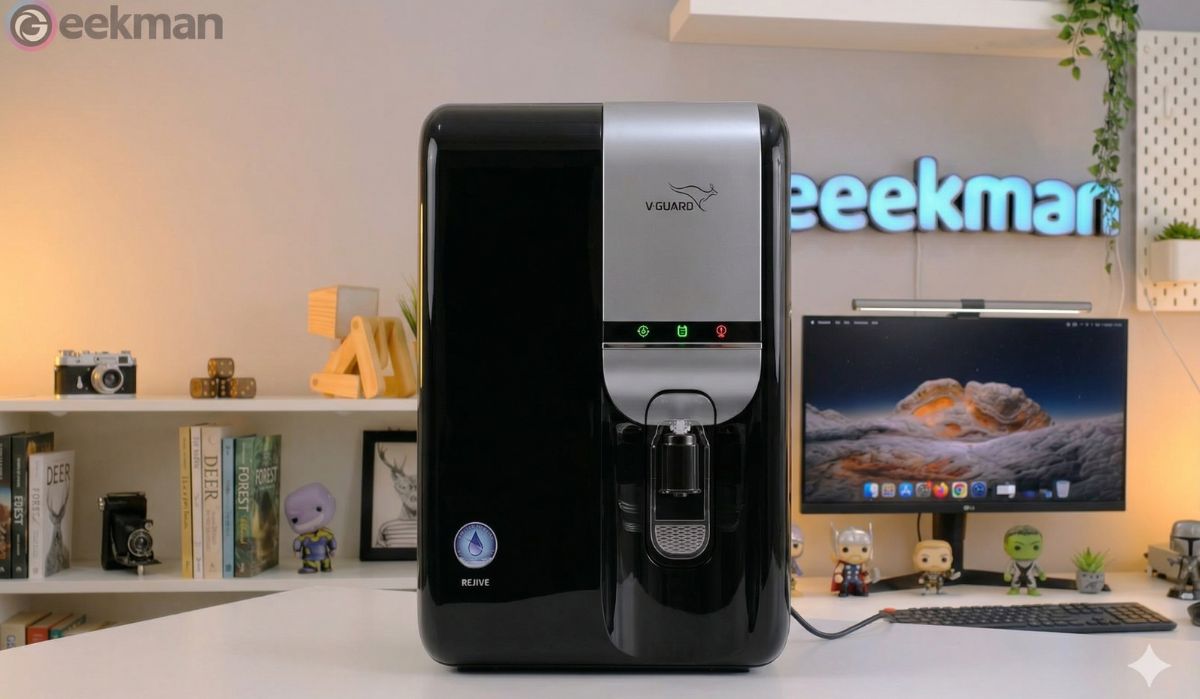
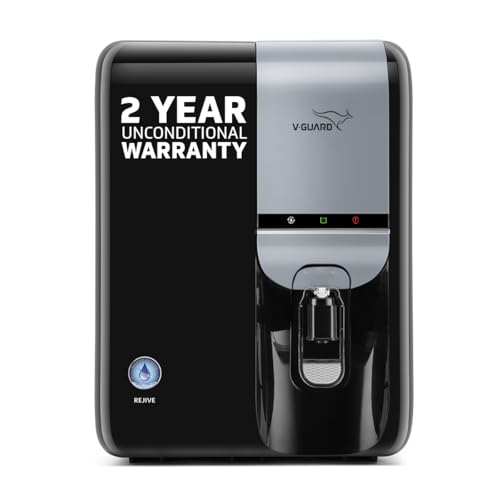
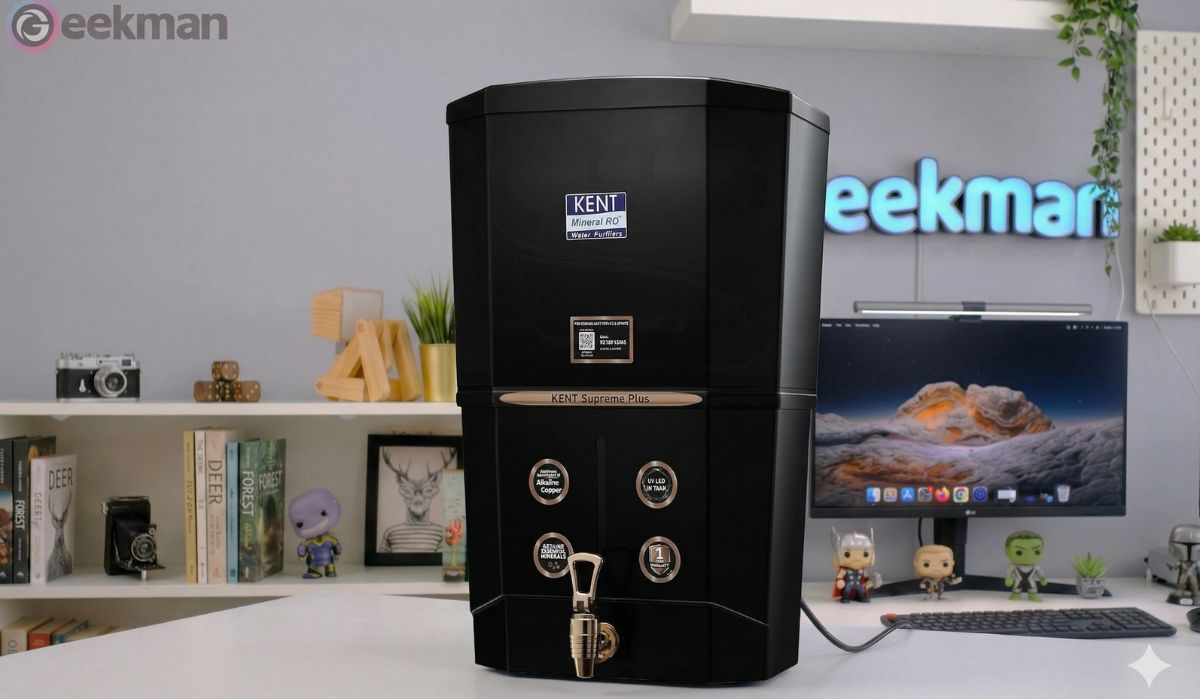
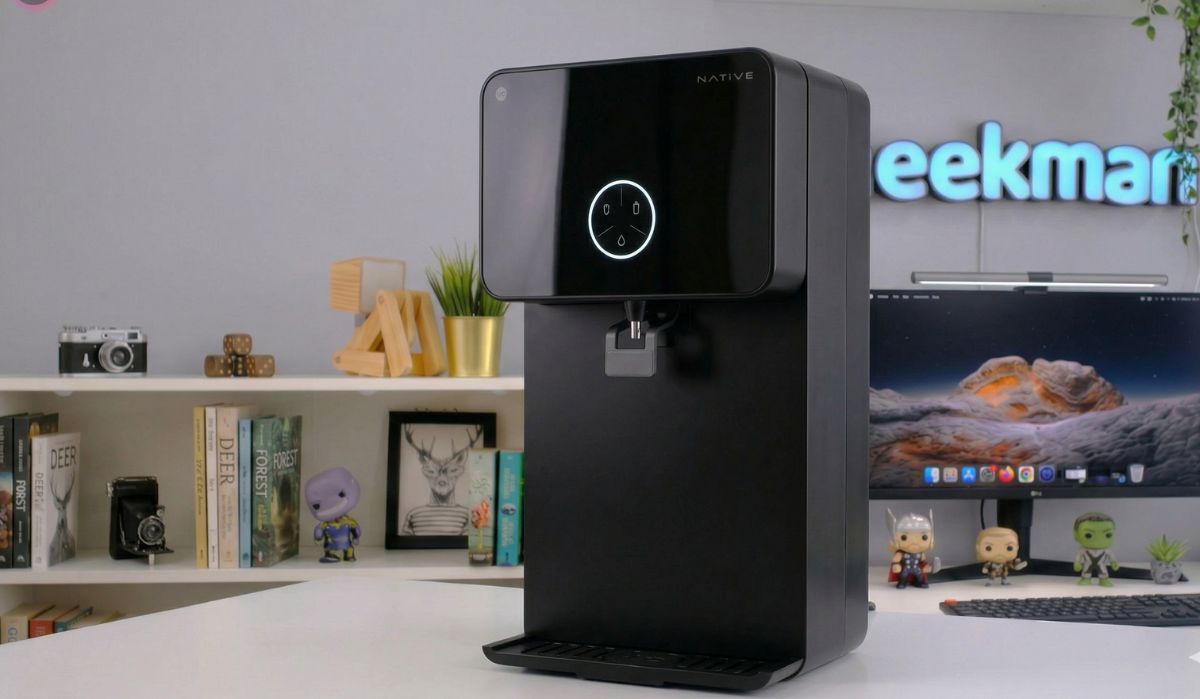
Every purifier here meets every criterion from our buying guide — alkaline, mineral, TDS control, good warranty, genuine value. No filler picks.



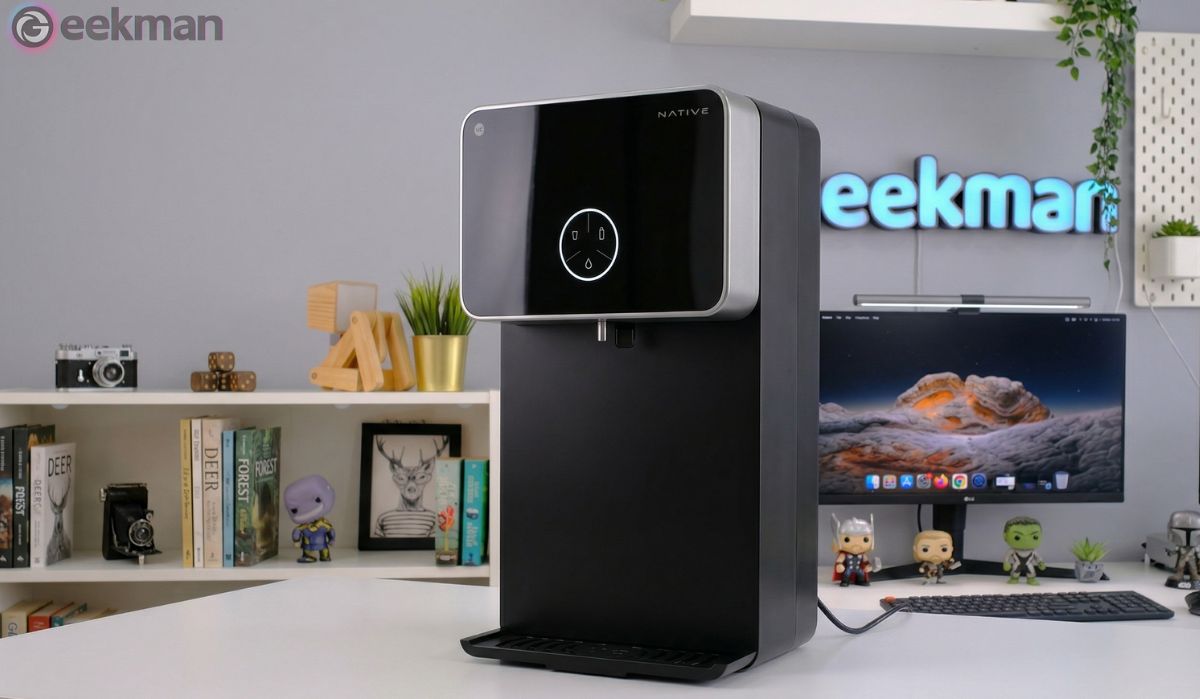

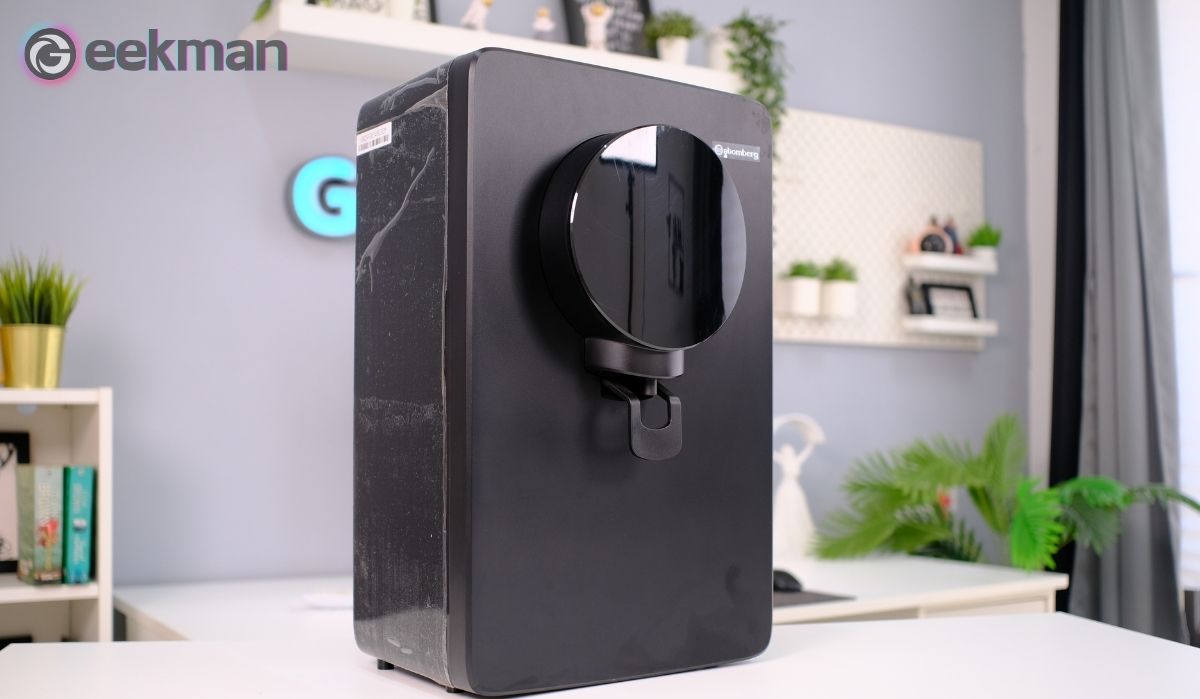
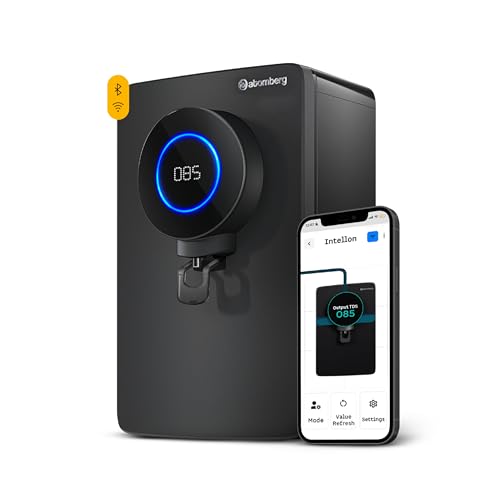
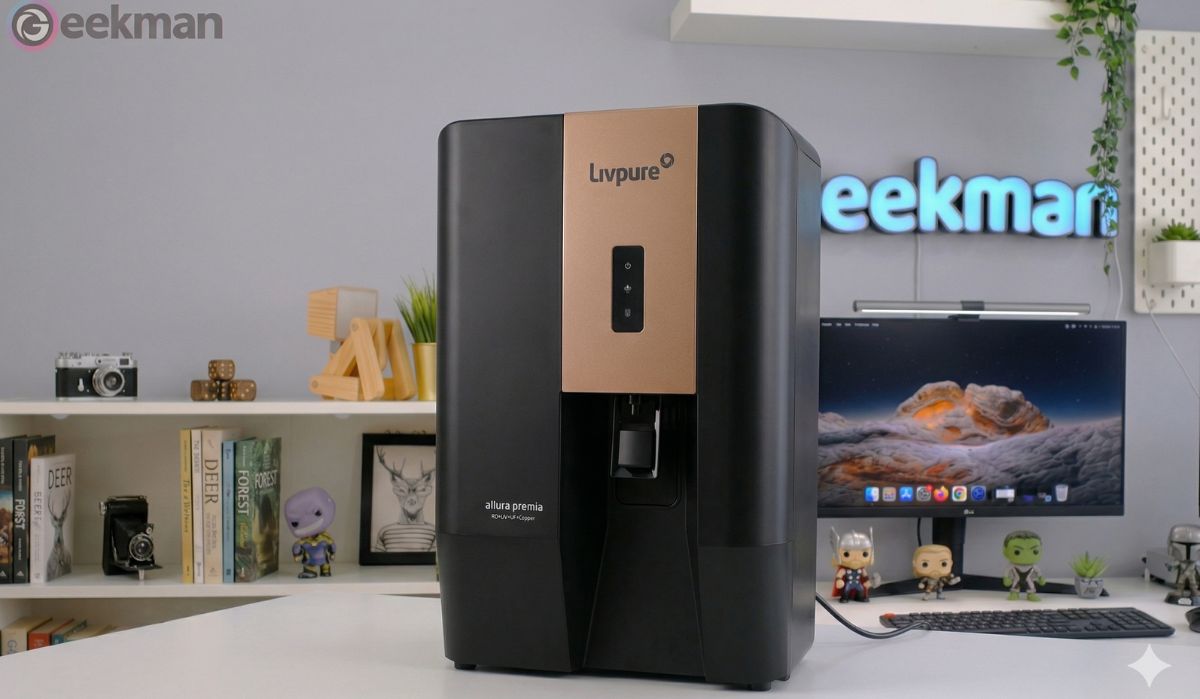


How to Choose from These 7
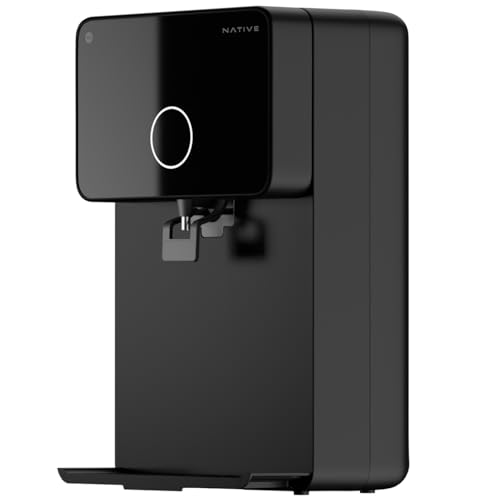
Want the best Kent flagship? → Kent Grand Star. Smart features + zero hassle? → UC Native M2 Pro. Smartest tech + lowest 5-year cost? → Atomberg Intellon. Everything at best price? → Livpure Allura Premia. Need stainless steel tank? → V-Guard Rejive 2X. Kent at lower budget? → Kent Supreme Plus. Tight budget, full features? → UC Native M1.
Every purifier passes every criterion from our buying guide. No wrong choice — just the right choice for your situation.
Check your water TDS first (₹200 meter). Confirm the brand has service in your area. Calculate 5-year total cost. And read our full buying guide above so you know exactly what to look for.
Frequently Asked Questions — Water Purifier Buying Guide India
Quick answers to the most common questions Indian buyers ask before buying a water purifier.
It depends on your water source and TDS. For borewell or high TDS water (above 300 ppm), an RO+UV+UF purifier is recommended. For clean municipal water with TDS below 200 and no heavy metal risk, UV+UF can work. Always calculate the 5-year total cost of ownership — not just MRP.
Not necessarily, but TDS alone doesn’t confirm safety. A TDS meter cannot detect heavy metals like lead, arsenic, or fluoride. If you’re on borewell or in a known contamination area, RO is recommended regardless of TDS. For confirmed clean municipal supply, UV+UF may suffice.
The purchase price is only 30-40% of total cost. With annual AMC/service of ₹3,000-6,000, the 5-year total ownership ranges from ₹35,000 to ₹55,000. Smart buyers reduce this to ₹25,000-35,000 by choosing purifiers with simple internals and using aftermarket parts.
In most purifiers, they are the same physical component. Both use mineral balls (calcium, magnesium, tourmaline) that add minerals AND raise pH simultaneously. Brands list them separately for marketing. A single aftermarket combo cartridge (₹200-500) provides both functions.
AMC ranges from ₹0 to ₹6,000/year. Kent: ₹3K-5K, Aquaguard: ₹3K-5.8K, Havells: ₹2.5K-4.5K, AO Smith: ₹3.5K-6K, Pureit: ₹2.5K-4K, Livpure: ₹2K-3.5K, Blue Star: ₹2.5K-4K. Zero-AMC: Atomberg (₹0/2yr), V-Guard (₹0/2yr), UC Native (₹2,500/2yr). Self-managed service using local technicians costs ₹1,500-2,500/year.
Yes, if your purifier has standard push-fit connectors and standard-size filter housings. Changing inline filters takes 5 minutes, no tools needed. Aftermarket filters cost ₹50-150 each. Even RO membrane replacement is DIY-doable. Choose a purifier with open, accessible internals.
Stainless steel (304-grade) is more durable, resists bacterial growth better, and handles Indian summer temperatures well. ABS food-grade plastic is safe but can develop micro-scratches over time. Steel adds ₹2,000-5,000. Both are acceptable — steel is better for long-term hygiene.
A TDS controller mixes pre-filtered bypass water with RO water to restore beneficial minerals. Every RO purifier needs one. It comes in manual (MTDS, screw-based) or automatic types. If your purifier doesn’t include one, add an aftermarket TDS controller for ₹50-200.
Standard RO wastes 2-3 litres per litre purified. A family using 15L/day wastes 30-45L. Solutions: recirculation tech (Kent Zero Wastage), high recovery models (60-70%), adaptive purification (Atomberg), or simply collecting reject water for mopping, plants, and flushing.
Copper has genuine antimicrobial properties supported by Ayurveda and some modern research. But the trace amount from purifier cartridges is small — it’s a mild supplement, not a treatment. Don’t buy a purifier only for copper. Add an aftermarket copper combo cartridge (₹200-500) to any purifier instead.
A pre-filter (₹300-500) installs before the purifier and catches large sediment, sand, and rust. It extends internal filter life from 12 to 18-24 months — saving ₹2,000-5,000 over 3 years. It’s essential for borewell and tanker water, and strongly recommended for all water sources.
For brand-managed maintenance, Atomberg Intellon (₹0 for 2 years) and V-Guard (₹0 for 2 years unconditional) offer the lowest cost. UC Native offers ₹2,500 for 2 years all-inclusive. For self-managed maintenance, any purifier with simple open internals and standard filters can be maintained for ₹1,500-2,500/year using local RO technicians and aftermarket parts.