
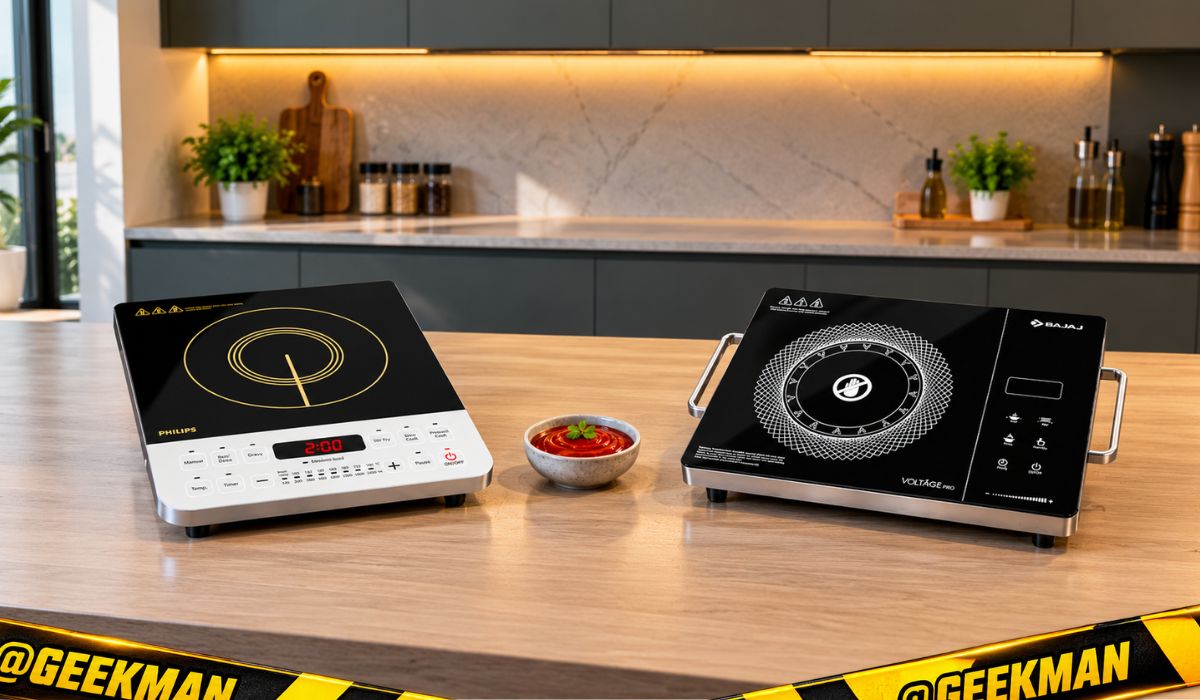
Short answer: buy induction if you can use induction-ready pans. It heats faster, wastes less electricity and the glass stays cooler. Buy infrared only if you want to keep using every pan you already own, like aluminium, copper and glass, and you accept a higher power bill and a hot glass top.
Geekman has covered consumer tech for over 10 years, and this guide is built the way our buying guides always are: research first, then a hard look at the numbers. I compared how each type heats, which utensils work, the electricity each uses and the safety trade-offs, and then matched that to the cooktops we rank. One thing to know first: infrared cooktops sold in India are radiant cooktops, not induction.
The difference
Induction vs infrared cooktop: what actually differs
🧲
Heating
Induction heats the pan. Infrared heats an element and the glass.
🍳
Utensils
Induction needs magnetic pans. Infrared takes any flat pan.
⚡
Efficiency
About 85-90% for induction, about 70-80% for infrared.
🔥
Hot glass
Infrared glass stays hot for a while after switch-off.
Induction works with a coil that makes a magnetic field. That field heats a magnetic pan directly, and the glass only warms from the pan. A radiant “infrared” cooktop has a resistive heating element under the glass. The element heats first, then the glass, then the pan. That is why it takes any flat pan, and why it stays hot after you switch it off.
Which utensils work on each
| Utensil | Induction | Infrared |
|---|---|---|
| Induction-ready stainless steel | Works | Works |
| Cast iron kadhai or tawa | Works | Works |
| Iron tawa (flat) | Works | Works |
| Plain aluminium pan | Does not work | Works |
| Copper-bottom pan | Does not work | Works |
| Glass or ceramic vessel | Does not work | Works |
| Clay (matka) pot | Does not work | Works, with care |
| Round-bottom kadhai | Does not sit properly | Does not sit properly |
Magnet test for induction: if a fridge magnet sticks firmly to the bottom of the pan, it will work. Both types need a flat base.
Running cost: which one costs more
Heating 1 litre of water from 25°C to 100°C needs about 0.087 units (kWh) of heat. At roughly 85 to 90 percent efficiency, induction needs about 0.1 unit from the wall. At roughly 70 to 80 percent, a radiant cooktop needs about 0.11 to 0.12 units. The gap looks small for one litre. It adds up over a month.
| Cooking per day | Induction (units, cost) | Infrared (units, cost) | Difference per month |
|---|---|---|---|
| 1 hour | 30 units, ₹210 | 36 units, ₹252 | ₹42 |
| 2 hours | 60 units, ₹420 | 72 units, ₹504 | ₹84 |
| 3 hours | 90 units, ₹630 | 108 units, ₹756 | ₹126 |
Example at ₹7 a unit, assuming an average draw of about 1,000W for induction and 1,200W for infrared while cooking. Your own numbers will differ with the pan, preset and tariff slab. At two hours a day, the gap comes to roughly ₹1,000 a year.
Safety, socket and glass
Use a proper socket
A 2000W cooktop draws about 8.7 amps at 230V, and a 2200W one about 9.6 amps. A 5 or 6 amp socket cannot carry that. Use a 15 or 16 amp socket with proper wiring, and do not run either type through an extension board.
The glass stays hot on infrared
After you switch off a radiant cooktop, the element and the glass stay hot for a while. On induction, the glass only warms from the pan, so it cools faster. If you have small children or pets, that is a real point for induction.
Pacemakers and implanted devices
Induction makes a magnetic field near the surface. If you have a pacemaker or another implanted device, ask your doctor and follow the maker’s guidance before using one.
Cracked glass
On both, a dropped heavy pan or an empty pan left heating can crack the glass. Treat the top gently and do not slide heavy pans across it.
Induction vs infrared at a glance
| Induction | Infrared (radiant) | |
|---|---|---|
| How it heats | Magnetic field heats the pan | Element heats the glass, then the pan |
| Utensils | Magnetic, flat base only | Any flat-bottom pan |
| Efficiency | About 85-90% | About 70-80% |
| Monthly cost (2 hours a day, ₹7) | About ₹420 | About ₹504 |
| Glass after switch-off | Warm from the pan | Stays hot for a while |
| Fan noise | Cooling fan runs | Some models have a fan |
| Power draw | 2000W-2100W, about 8.7-9 amps | 2000-2200W, about 8.7-9.6 amps |
| Warranty on our picks | 1 year | 1 year on most, 2 on some |
Who should buy which
Which should you buy: induction or infrared
Buy induction if you cook daily, want the lower bill, have or will buy induction-ready pans, or have small children at home.
Buy infrared if you want to keep using aluminium, copper and glass pans, cook only occasionally, or do not want to buy any new cookware.
Buy neither if your socket is a 5 or 6 amp one and you cannot change it, or your inverter is small.
Hostel room or backup: either works. Infrared is easier if you have only a few pans, and induction costs less if you cook often.
Our top picks for each type
These four come from our full rankings. Open the best induction cooktop guide or the best infrared cooktop guide for all eight picks in each.
Best Induction Pick
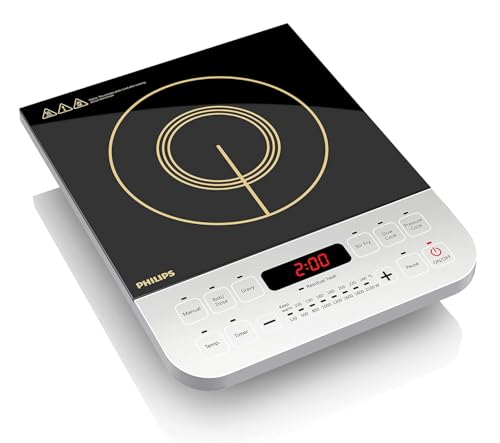
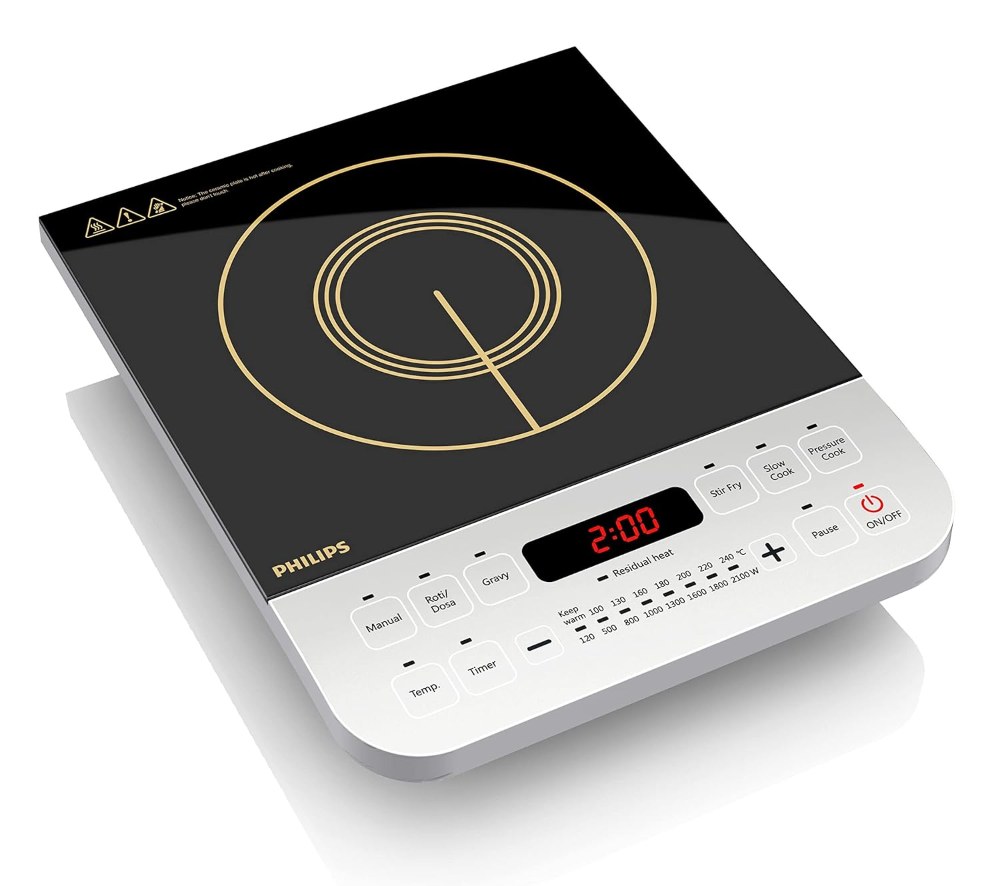
1. Philips Viva HD4928/01
8.5 Overall
8.8 Performance
8.0 Value
8.8 Service
Our top induction pick: 2100W, five Indian presets and a brand with service almost everywhere.
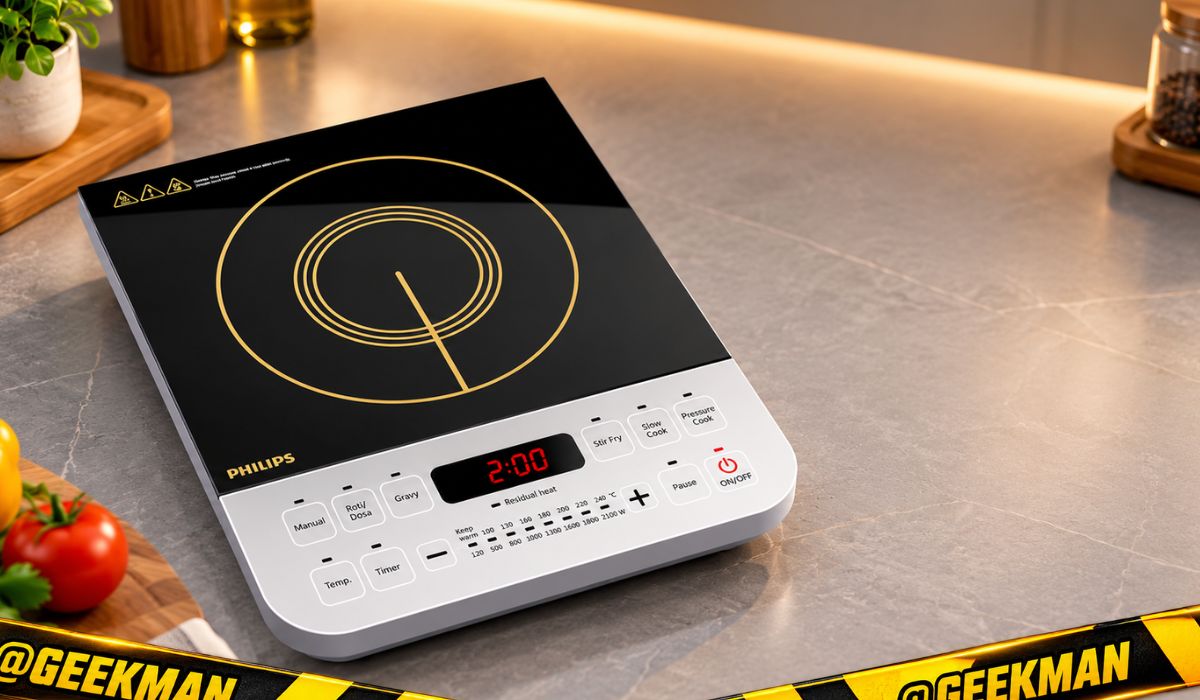
Induction · 2100W · 5 Indian presets · Vessel detection
Best for
✓ Homes with induction-ready pans
✓ Quick, efficient daily cooking
Not ideal for
– Homes that want to use every old pan
– Very tight budgets
Verdict: Pick this if you are happy to use induction-ready cookware.


Pros and cons
What we like
+ Fast
+ Simple controls
+ Wide service
What we don’t like
– Needs induction-ready pans
Full review
This is the induction cooktop I would point most people to. It heats fast, the panel is simple and Philips service is easy to find. Read the full ranking in our best induction cooktop guide.
Why it makes the cut. A 2100W coil, five Indian presets, a timer and vessel detection with auto switch-off. In a published watt-meter test it boiled a litre of water the fastest of the six induction cooktops compared.
Philips Viva HD4928/01 vs the competition. Prefer more presets for less? The Prestige PIC 16.0 Plus is our value pick.
Key specs
| Type | Induction |
| Power | 2100W |
| Presets | 5 Indian presets |
| Warranty | 1 year on the spec sheet |
Best Induction Value
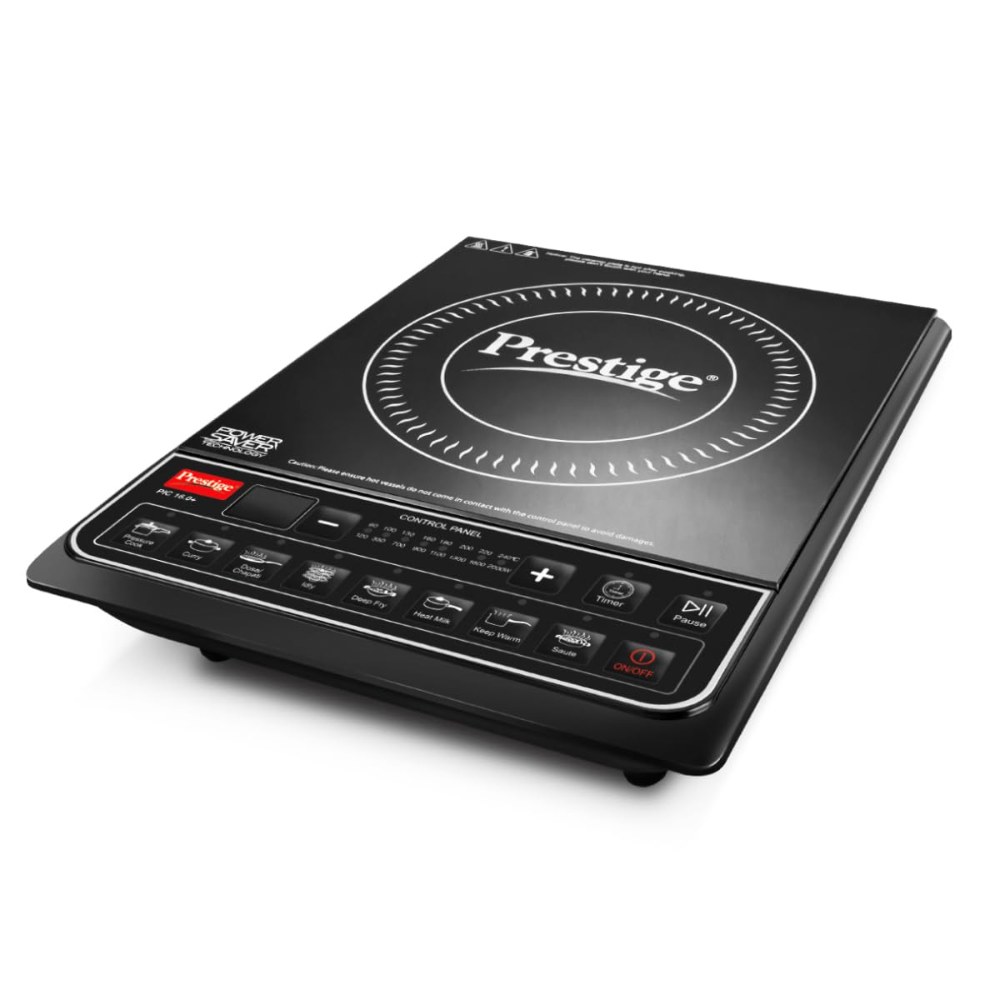
2. Prestige PIC 16.0 Plus
8.4 Overall
8.2 Performance
8.6 Value
8.4 Service
Eight Indian presets, a voltage regulator and surge protection at a sensible price.
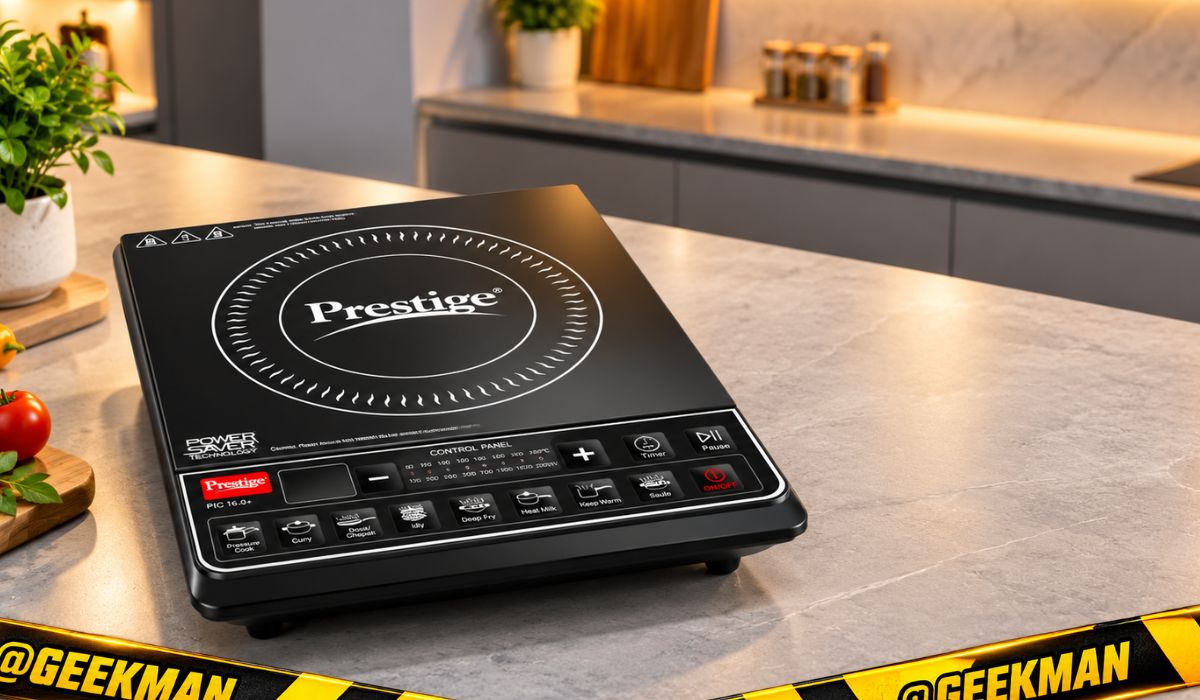
Induction · 2000W · 8 presets · Surge protection
Best for
✓ Families who want more presets
✓ Homes with unstable voltage
Not ideal for
– People who want to use any pan
Verdict: The value pick if you go induction.

Pros and cons
What we like
+ Eight presets
+ Surge protection
+ Service network
What we don’t like
– Needs induction-ready pans
Full review
If you decide on induction and want more features for the money, this is the one. It lists 2000W, eight Indian presets, 4 kV surge protection and a voltage regulator.
Why it makes the cut. Prestige service is easy to find, the presets suit Indian cooking and the protection helps in homes where the voltage swings.
Prestige PIC 16.0 Plus vs the competition. For the fastest, simplest panel, pick the Philips Viva HD4928/01.
Key specs
| Type | Induction |
| Power | 2000W |
| Presets | 8 Indian presets |
| Warranty | 1 year |
Best Infrared Pick
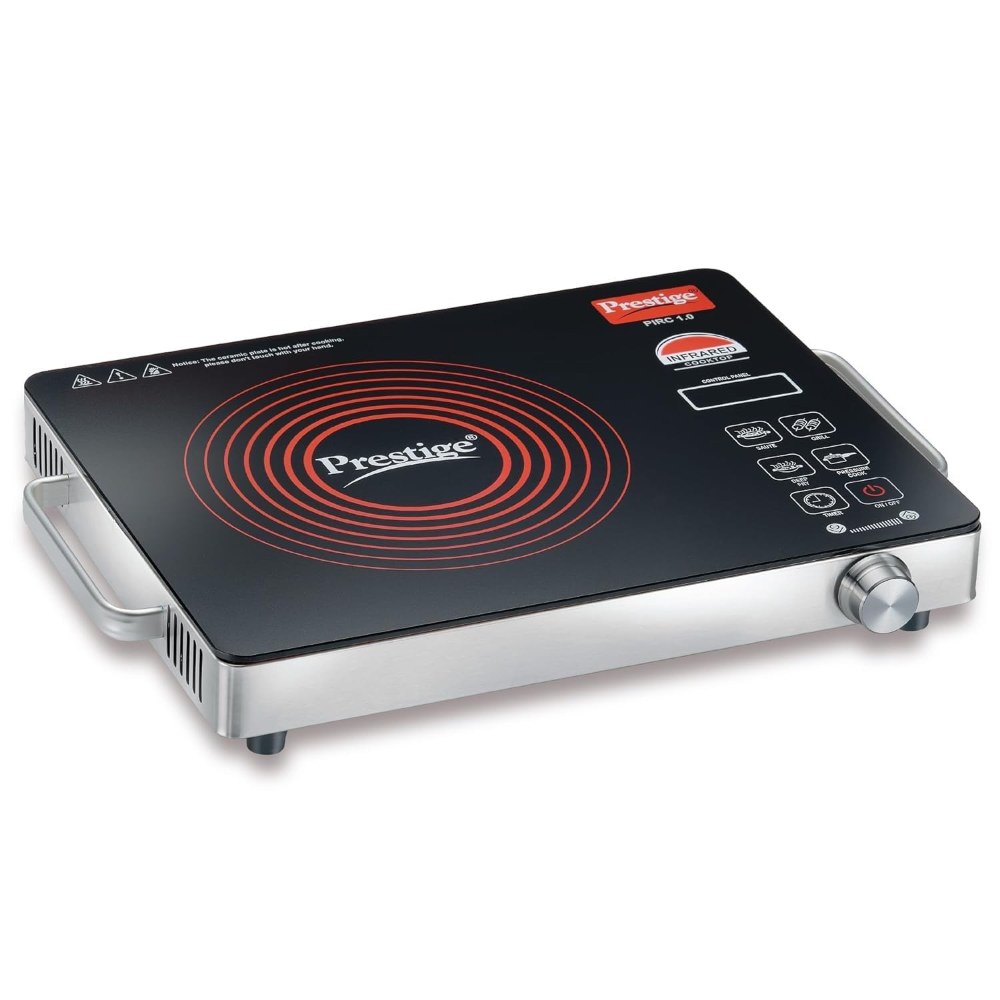
3. Prestige PIRC 1.0
8.1 Overall
8.4 Performance
7.6 Value
8.6 Service
Our top infrared pick: 2200W, ceramic glass, touch plus knob controls and BIS certification.
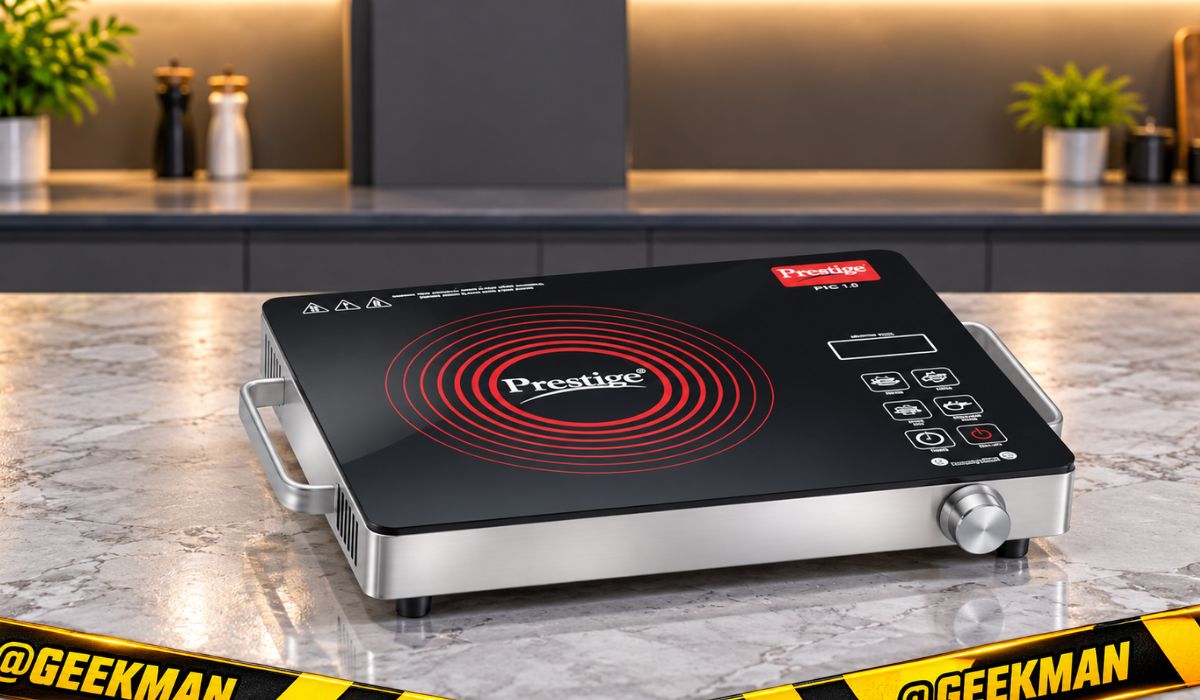
Infrared (radiant) · 2200W · 4 presets · BIS certified
Best for
✓ Homes with aluminium, copper and glass pans
✓ Cooks who like a knob
Not ideal for
– Anyone who wants the lowest bill
– Homes with small children near the stove
Verdict: Pick this if you want to keep your old utensils.

Pros and cons
What we like
+ Any flat pan works
+ BIS certified
+ Prestige service
What we don’t like
– Uses more power than induction
– Glass stays hot after switch-off
Full review
If your kitchen is full of aluminium and copper pans, infrared saves you from buying new cookware. The Prestige PIRC 1.0 is the one I would start with. Read the full ranking in our best infrared cooktop guide.
Why it makes the cut. A 2200W radiant cooktop with touch and a knob, four smart presets and a timer. It draws about 9.6 amps, so it needs a proper 15 amp socket.
Prestige PIRC 1.0 vs the competition. For a grill in the box and more power steps for less, the Bajaj IRX 220F is the alternative.
Key specs
| Type | Infrared (radiant) |
| Power | 2200W |
| Presets | 4 smart presets |
| Warranty | 1 year |
Best Infrared Value
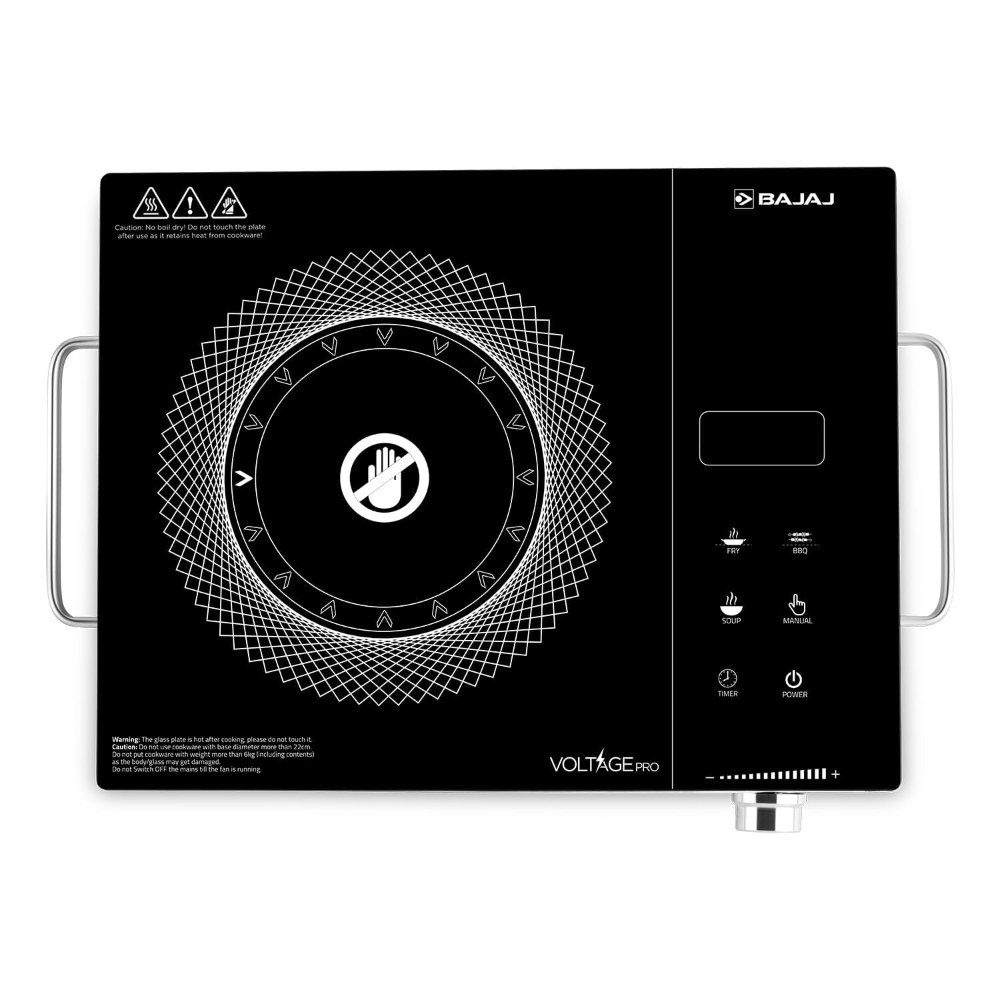
4. Bajaj IRX 220F
8.0 Overall
8.0 Performance
8.0 Value
8.2 Service
Eleven power levels, three presets and a BBQ grill with skewers in the box.
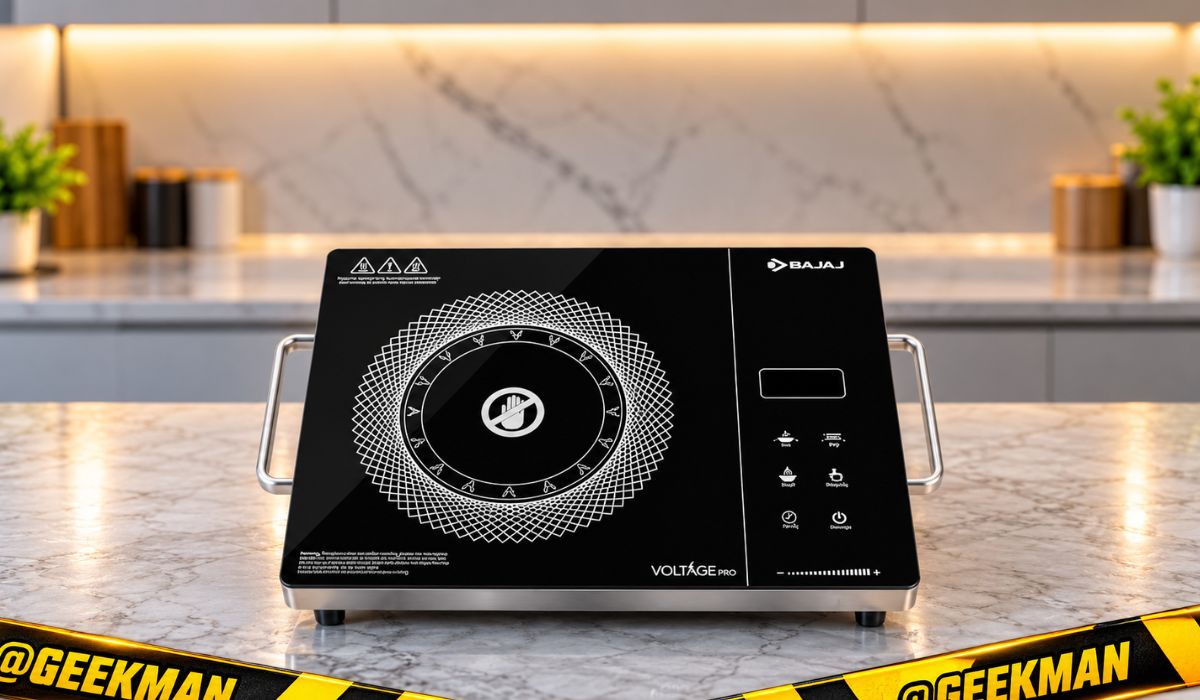
Infrared (radiant) · 2200W · 11 power levels · Grill included
Best for
✓ Buyers who want a grill
✓ Fine control of heat
Not ideal for
– People who want many presets
Verdict: The value pick if you go infrared.
Pros and cons
What we like
+ Grill in the box
+ Eleven power levels
+ Light
What we don’t like
– Only three presets
– Glass needs careful handling
Full review
The Bajaj IRX 220F gives you 2200W, eleven power levels, touch plus knob controls and a grill with two skewers for a friendlier price than the Prestige.
Why it makes the cut. It is light at about 2.1 kg, has three presets (fry, simmer, BBQ) and a digital display.
Bajaj IRX 220F vs the competition. For a bigger service network and BIS certification, pick the Prestige PIRC 1.0.
Key specs
| Type | Infrared (radiant) |
| Power | 2200W |
| Power levels | 11 |
| Warranty | 1 year |
The verdict
The verdict
Best induction: Philips Viva HD4928/01, for fast, simple cooking. Check price
Best induction value: Prestige PIC 16.0 Plus, for presets and protection. Check price
Best infrared: Prestige PIRC 1.0, for any flat pan and simple controls. Check price
Best infrared value: Bajaj IRX 220F, for a grill and eleven power levels. Check price
If you are unsure, buy induction and two induction-ready pans. You will spend less on electricity and the glass will be safer to live with. Choose infrared only if keeping your old pans matters more.
More buying guides from Geekman
Best induction cooktop in India
Best infrared cooktop in India
Induction vs infrared cooktop FAQ
Which is better, induction or infrared cooktop?
For most homes, induction is better: it heats faster, wastes less electricity and the glass stays cooler. Infrared is better if you want to use every pan you already own, such as aluminium, copper and glass.
Is an infrared cooktop cheaper to run than induction?
No. Induction turns about 85 to 90 percent of the electricity into heat in the pan, while radiant infrared is closer to 70 to 80 percent. For the same cooking, infrared draws more units.
Can I use aluminium utensils on an induction cooktop?
Not unless the base has an induction plate. Induction needs a magnetic, flat base. Use the magnet test: if a fridge magnet sticks firmly to the bottom, the pan works.
Do I need new utensils for induction?
Maybe. Steel pans with an induction base, cast iron and iron tawas work. Plain aluminium, copper, glass and clay do not. Many people buy two or three induction-ready pans and keep the rest for gas.
Is infrared cooktop safe?
It is safe with the basics: a proper 15 or 16 amp socket, a flat pan and no touching the glass until it has cooled. The glass stays hot after switch-off, so be careful around children.
Which cooktop heats faster, induction or infrared?
Induction heats the pan directly and is usually quicker. A radiant infrared cooktop has to heat the element and the glass first, so it takes longer to respond when you raise or lower the heat.
Which uses more electricity, induction or infrared?
Infrared. In our example of two hours of cooking a day at ₹7 a unit, induction costs about ₹420 a month and infrared about ₹504. Your own use will vary.
Can I use a round-bottom kadhai on either?
No. Both need a flat base to sit on the glass. Use a flat-bottom kadhai or tawa.
Can I use these on a 6 amp socket?
No. A 2000W cooktop draws about 8.7 amps and a 2200W one about 9.6 amps at 230V. Use a 15 or 16 amp socket with proper wiring, and do not use an extension board.
Is induction or infrared better for roti and dosa?
Either works with a flat tawa. Induction needs an iron or induction-base tawa, and infrared works with any flat tawa. You cannot puff a roti directly over the heat on either, as you would on gas.
Which is better for a small family or hostel room?
For occasional cooking, either works. If you only have a few pans and want zero extra cookware cost, infrared is easier. If you will cook daily, induction is cheaper to run.
Does infrared cooktop work in a power cut or with an inverter?
Both draw 2000W or more, which is too much for most home inverters. Check your inverter rating before using either on backup.