
Search best earbuds under 10000 in India right now and you’ll mostly land on shopping category pages and one or two single-product reviews dressed up with a “best of” headline. That’s the gap this guide is built to close. Every earbud below actually competes in this exact price band in 2026, not a tier above or below it, and we’re not pretending any of them is perfect.
We shortlisted eight pairs, from a dual-driver Hi-Res option with genuine LDAC and aptX Lossless support to the only pair here with a wireless-charging case, and cross-checked every ANC number, battery claim, and app feature against independent lab testing and real buyer feedback from people who’ve actually lived with these earbuds past the unboxing. Where a brand’s spec sheet didn’t match what people actually experience, we say so directly instead of repeating the marketing copy. If you just want the shortlist, jump to the comparison table below; if you want to know exactly who each pick is (and isn’t) built for, keep reading.
TL;DR Quick Summary
- EarFun Air Pro 4 Plus: dual-driver Hi-Res sound, LDAC + aptX Lossless, up to 50dB ANC, none of it common at this price
- Best Sound & ANC: OnePlus Buds Pro 3: dual DAC, Dynaudio tuning, feature-loaded HeyMelody app
- Best ANC Value & Brand Trust: Sony WF-C710N: the ANC-per-rupee pick, Sony’s app polish, no surprises
- Top ANC Consensus Pick: OnePlus Buds 4: 84% measured noise reduction, lightest fit in the OnePlus pair
- Best Value: Realme Buds Air 8 Pro: claimed 55dB ANC, VPU call mic tech, most features for the money
- Best Solid All-Rounder: Samsung Galaxy Buds3 FE: ANC that beats Samsung’s own pricier Buds3 Pro (Galaxy phones only
- Best Design & LDAC on a Budget: Nothing Ear (a): LDAC support most rivals this price skip, standout looks
- Best Wireless-Charging Case: JBL Live Beam 3: the only pair here with a Qi charging case, plus a touchscreen on the case itself
QUICK VERDICT
QUICK VERDICT
The under ₹10000 earbuds segment in India has quietly become the most competitive price band in audio right now. Brands are stuffing dual-driver setups, 50dB+ ANC claims, and Hi-Res codecs into earbuds that cost a third of what a flagship pair does. That’s good news for buyers, but it also means the spec sheets have gotten harder to trust at face value. Not every “50dB ANC” claim measures the same in the real world, and not every “Hi-Res” codec actually works with your phone.
We went through independent lab data, cross-checked it against real buyer feedback and community reports, and read through the actual complaints, not just the marketing copy, for all eight of these earbuds before ranking them. Where a brand’s claim didn’t match what testing actually measured, we’re telling you that directly instead of repeating the spec sheet.
If you want the strongest ANC on the market, the best sound signature for critical listening, or just a reliable all-rounder that won’t give you connection headaches six months in, there’s a pick below for you. We’re upfront about who each one is not for too.
Geekman’s Picks For The Best Earbuds Under 10000 in India (2026)
EarFun Air Pro 4 PlusBest Value Earbuds Under 10000
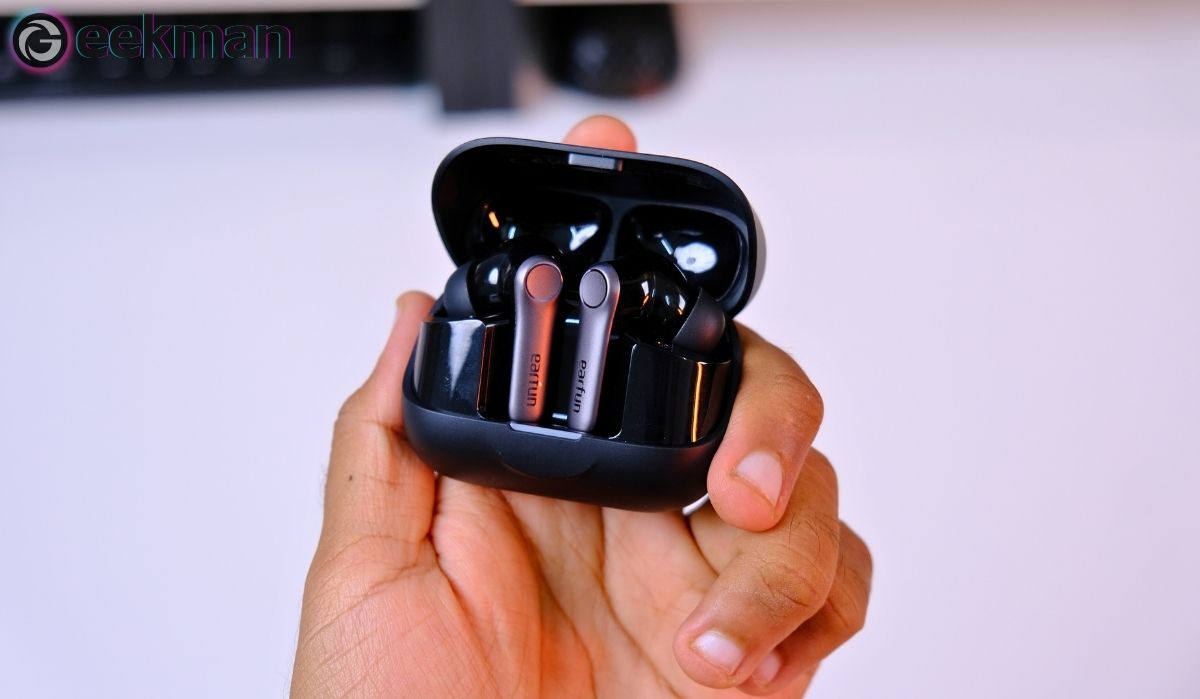
Buy. I paid for this unit myself, no review sample, no brand partnership, which matters more than usual here: the most-watched Air Pro 4+ review on YouTube is an openly sponsored partnership with EarFun, and viewers have said so, loudly, in the comments. I’m not calling that review dishonest. I just want you to know exactly whose money bought the pair you’re about to read about, before you trust what I say about the sound, the ANC, or the mic.
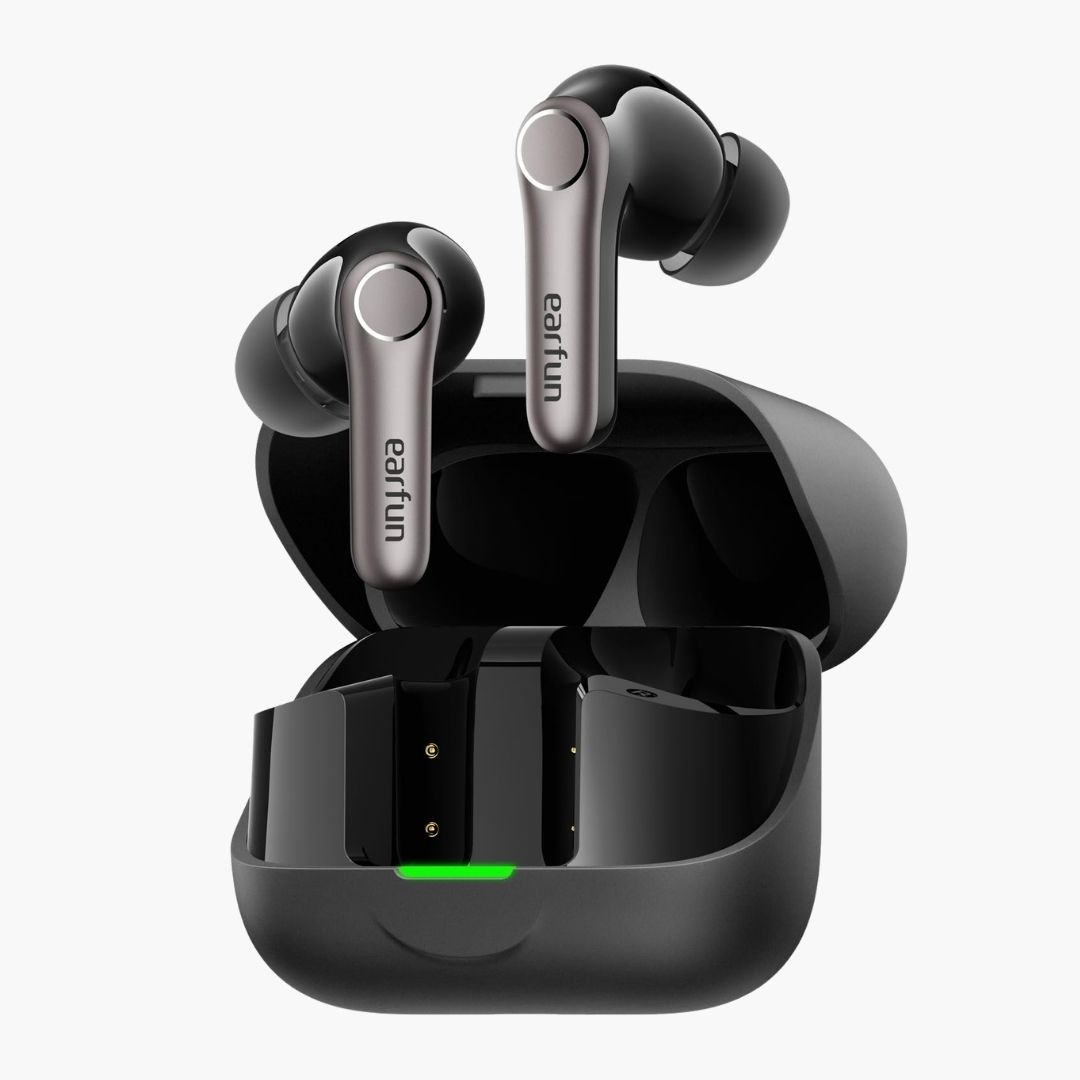
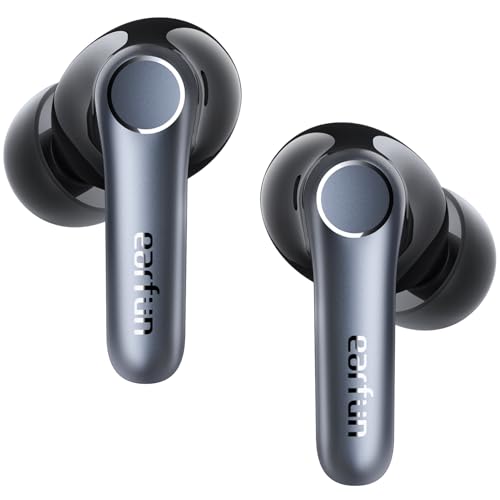
EarFun built the Air Pro 4 Plus around a 10mm dynamic driver paired with an ultra-light FeatherBA balanced-armature driver. That dual-driver, Hi-Res-certified combo is genuinely rare under ₹10,000, and honestly rare at this price point anywhere in the world.
Build & Comfort
The stem design is standard EarFun fare, nothing radical, but owners consistently describe it as comfortable for extended wear. It sits in a shallow, low-risk in-ear shape rather than a deep-insertion fit, which usually means an easier first-time fit across different ear shapes. If you prefer a locked-in seal for workouts, though, keep that in mind before you buy.
EarFun now sells three very similarly-named earbuds, the Air Pro 4i, the regular Air Pro 4, and this Air Pro 4 Plus, and the naming confuses more buyers than it should. Quick version: the Plus is the one built for people who actually care about audio. It pairs a 10mm dynamic driver with an ultra-light FeatherBA balanced-armature driver, a genuine dual-driver hybrid setup, on top of the same 50dB adaptive ANC and aptX Lossless plus LDAC codec stack the regular Air Pro 4 already ships with. What the Plus actually adds over the base model is the second driver, the newer Bluetooth 6.0 radio, and a dust-rated IP55 shell instead of the base model’s water-only IPX5.
Build & Comfort
The earbud shells are unchanged from the regular Air Pro 4, same shape, same in-ear silhouette, so comfort is decent rather than class-leading. I didn’t have any issue running two to three hours straight, but the OnePlus pair sits more comfortably in my ears over longer sessions. Where EarFun actually improved things is the charging case: it now opens vertically, roughly 80 degrees, and feels properly solid, dense, well-hinged, no creak, a big step up from the regular Air Pro 4’s case, which always felt a little hollow for the price. The one upgrade I wanted and didn’t get: the earbuds carry an IP55 dust-and-water rating, but the case itself has no water resistance rating at all.
Sound Quality
This is where the Air Pro 4 Plus actually earns its price. EarFun tunes its own drivers rather than licensing someone else’s, and it shows the moment you compare this against the regular Air Pro 4’s single dynamic driver, the difference in bass control, treble detail, and soundstage separation is immediately audible, not a marketing footnote. It also runs aptX Lossless and LDAC simultaneously, and lets you toggle aptX Adaptive and aptX Adaptive Lossless independently, three real quality settings instead of one blanket Hi-Res on/off switch.
The overall tuning is warm and balanced, with real sub-bass depth that doesn’t turn muddy, more restrained than the artificially boosted low end on the OnePlus Buds 4 or Realme Buds Air 8 Pro. Vocals and mids are the real strength here, clear and detailed without getting buried, and treble stays detailed without turning bright enough to cause fatigue on long sessions. With 10+ EQ presets and a full custom EQ on top, this is genuinely one of the most enjoyable-tuned budget earbuds I’ve used, which isn’t something I say often about anything under ₹10,000.
ANC & Features
The 50dB adaptive hybrid ANC comes with a manual transparency mode and automatic level adjustment. I tested it both outdoors in traffic and indoors against a running fan, and in both cases it cut roughly 70% of ambient noise, engine drone and fan hum specifically, not sudden sharp sounds like a door slam. That’s a real improvement over the regular Air Pro 4, but I’ll be straight with you: it isn’t the best in this price bracket. The Realme Buds Air 8 Pro and both OnePlus pairs currently cancel more noise than this. EarFun is an audio-first brand, and ANC has never been the thing they chase hardest.
Battery & Mic
EarFun’s own listing claims up to 12 hours per charge with ANC off (54 hours total with the case) and up to 8 hours with ANC on (36 hours total). Company battery claims are close to useless without knowing the test conditions, so here’s exactly how I tested it: aptX Lossless enabled, ANC off, volume at 60%. Under those conditions I got roughly 6.5 hours out of the earbuds alone, putting total battery with the case at approximately 42-45 hours, short of the marketing number, but still solid for a Hi-Res codec running the whole time. Turn on ANC or keep Hi-Res codecs running constantly and expect roughly 30% less. Fast charging and wireless charging on the case are both supported, which none of the other India-priced competitors in this exact bracket currently offer.
On the mic: 6 microphones plus ENC 3.0, clean and easy to understand indoors, with some ambient noise leaking through outdoors in windier conditions. I’ve seen comments elsewhere calling this mic “trash,” and after actually testing it myself, I don’t think that’s fair, though it doesn’t match a Galaxy Buds or AirPods mic array either.
vs The Competition
If you’re specifically shopping for low-latency mobile gaming, Bluetooth 6.0 plus aptX Lossless is close to the best case you can make under ₹10,000, I didn’t notice perceptible input lag in casual or competitive play, and the dedicated gaming mode drops it further. Against the OnePlus pair, this wins clearly on codec depth (LDAC and aptX Lossless vs. LHDC 5.0 only) but loses on ANC strength and fit comfort. Against the Realme Buds Air 8 Pro, it’s the same story, weaker ANC, stronger codec support. Against the JBL Live Beam 3, this is the only one of the two with proper LDAC plus aptX, though the JBL’s touchscreen case and wireless charging are things this pair doesn’t fully match, EarFun does support wireless charging on the case here too, just without the screen.
Show more +Pros & Cons
Specifications
- Driver: 10mm dynamic + FeatherBA balanced armature (dual-driver, Hi-Res certified)
- Bluetooth: 6.0
- Codec: aptX Lossless, aptX Adaptive, Snapdragon Sound, LDAC
- Battery: ~6.5h tested (ANC off, aptX Lossless, 60% volume) · ~42-45h total tested with case · 12h/54h claimed (ANC off)
- Charging: USB-C + Qi wireless (case)
- Water Resistance: IP55 (earbuds only, case has no rating)
- ANC: 50dB adaptive hybrid claimed · ~70% ambient noise cut in real-world testing (traffic + fan)
- Other Features: 6-mic ENC 3.0 calling, Auracast, LE Audio, AI translation, dual-device pairing, low-latency gaming mode



![EarFun [2025 VGP Winner] Air Pro 4+ Adaptive Hybrid Noise Cancelling Wireless Earbuds Bluetooth 6.0,Qualcomm Snapdragon Sound, aptX Lossless,LDAC Hi-Res Audio, 6 Mics AI CVC Call,54H Playtime](https://m.media-amazon.com/images/I/31J8WA+GZ7L._SL500_.jpg)
![EarFun [2025 VGP Winner] Air Pro 4+ Adaptive Hybrid Noise Cancelling Wireless Earbuds Bluetooth 6.0,Qualcomm Snapdragon Sound, aptX Lossless,LDAC Hi-Res Audio, 6 Mics AI CVC Call,54H Playtime, White](https://m.media-amazon.com/images/I/31CcC7SLjqL._SL500_.jpg)
OnePlus Buds Pro 3Best Sound & ANC
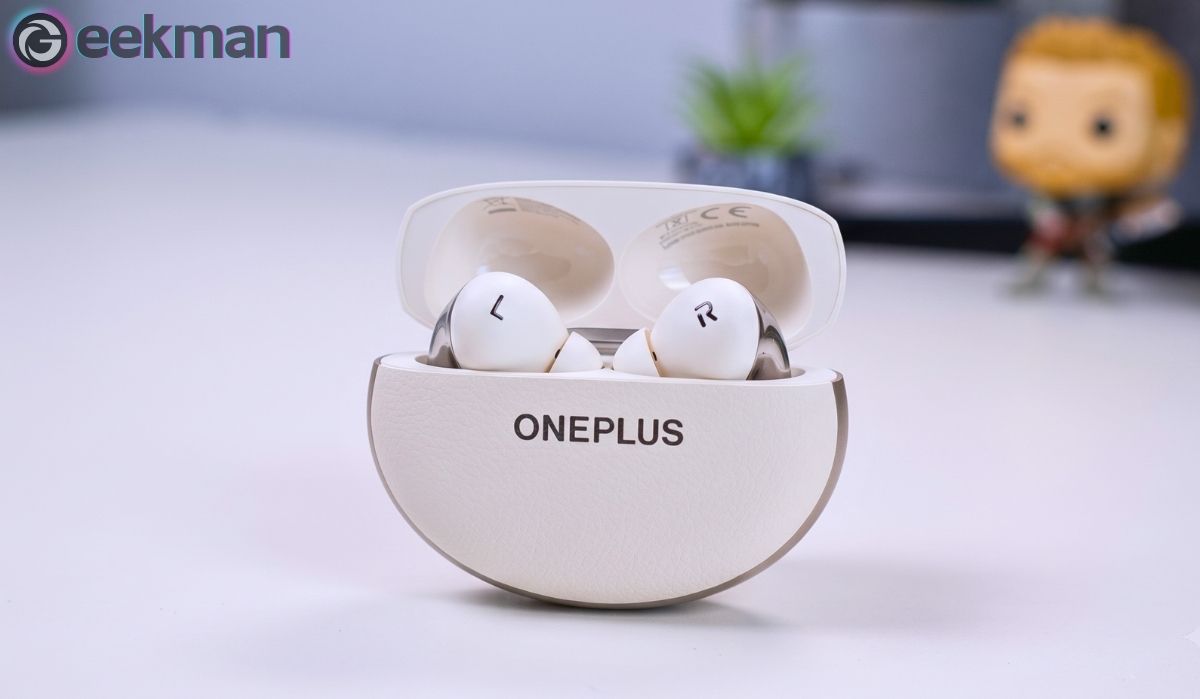
Buy with a price caveat, current India street price is hovering around ₹10,000-10,600 (launch was ₹11,999, discounts have pushed it down but never quite under ₹10K consistently). If you catch it below ₹10,000 in a sale, this is the most feature-dense earbud in this comparison, hands down. If treble fatigue over long sessions bothers you, get an in-store listen first.
OnePlus rebuilt the Buds Pro 3 around an 11mm dynamic woofer + 6mm balanced-armature tweeter with dual DACs (one per driver), Dynaudio-tuned, plus a 3-mic array with a VPU (Voice Pick Up bone conduction sensor) for calls. On paper it’s easily the most premium driver stack in this comparison, matched only by the EarFun Air Pro 4+.
Build & Comfort
At 4.8g per earbud, this is the lightest and most comfortable pair in the OnePlus lineup, pressure-relief vents actually work, no ear-canal fatigue after 3+ hours. The faux-leather textured case is genuinely premium in a way none of the other seven cases here match. IP55 covers earbuds against sweat and light rain. Available in Midnight Opus (matte black), Lunar Radiance (white), and Sapphire Blue depending on region. Downside: the matte black finish attracts fingerprints and grime remarkably fast, and the earbuds are hard to distinguish from the case in dim light.
Sound Quality
Here’s where the reviews genuinely split. Out of the box, the default “Balanced” preset is anything but, a fairly typical V-shape with hefty low-end boost and piercing sharp highs. Bass has real slam and rumble, treble is detailed but can feel fatiguing over long sessions. A post-launch firmware update reportedly nerfed the best-sounding “Dynaudio” preset, introducing a strange bump in the upper bass/lower mids that makes vocals sound uncomfortably forward. My honest read after cross-checking multiple deep reviews: the drivers themselves are genuinely capable (bass is punchy without bleeding into mids, treble has real extension, and the mid-range has good dynamics with clear vocals when EQ’d properly), but you’ll want to spend 10 minutes with the 6-band custom EQ before you consider these “tuned right.” Turn treble down a notch or two, keep BassWave at default, and this becomes one of the best-sounding earbuds in the comparison.
ANC & Features
50dB adaptive ANC across three levels (Faint/Moderate/Loud) plus a Smart mode that auto-adjusts. In real-world testing, this is genuinely flagship-level ANC, effectively tunes out voices, traffic, and background noise, with real-time wind adaptation. Keyboard clicks and some sharp high-frequency sounds still leak through, but that’s true of every earbud here. Transparency mode is decent but doesn’t amplify voices as clearly as Sony’s or Samsung’s, so if you rely on hearing your surroundings, that’s a compromise. The HeyMelody app is easily the most feature-dense in this comparison: 6-band custom EQ, Golden Sound hearing-profile test (personalizes tuning to your ears), spatial audio with head tracking, Bluetooth LE audio, gaming mode, gesture customization, OHealth posture monitoring, and Zen Mode Air white-noise generator. LHDC 5.0 codec works properly only on OnePlus/Oppo/Realme/select Xiaomi phones.
Battery & Mic
Rated 10h ANC off / 6h ANC on (AAC), dropping to 5h on LHDC with ANC. Total with the case: 43h claimed. Fast charging is genuinely fast, 10 minutes gives 13 hours combined playback. No wireless charging on the case, an odd omission at this price. On calls: 3-mic + VPU bone-conduction system delivers clear voice pickup indoors, and outdoor performance holds up surprisingly well thanks to the bone conduction sensor. However, and this matters, there’s a recurring pattern of owner complaints around disconnects, one earbud dropping out of ANC mode, and touch controls failing after extended use. Make sure your unit is on the latest firmware right out of the box, or you may be one of the unlucky ones.
vs The Competition
Against the OnePlus Buds 4 (sibling): Pro 3 has better ANC-on battery life, dual-DAC hardware advantage, and the faux-leather premium case; Buds 4 has stronger raw ANC (55dB vs 50dB) at half the price. Against the Sony WF-C710N: Pro 3 wins on features and driver hardware; Sony wins on ANC-per-rupee and cross-platform reliability. Against the EarFun Air Pro 4+: EarFun wins on codec depth (aptX Lossless + LDAC) and case build; Pro 3 wins on comfort. Against the Realme Buds Air 8 Pro: Pro 3 has more feature depth in the app; Realme has a stronger call mic (bone-conduction VPU) at a lower price.
Show more +Pros & Cons
Specifications
- Driver: 11mm dynamic + 6mm balanced armature, dual DAC, Dynaudio tuning
- Bluetooth: 5.4
- Codec: SBC, AAC, LHDC 5.0
- Battery: ~10h ANC off / ~6h ANC on (AAC) · up to 43h claimed total with case
- Charging: USB-C, 10 min = 13h claimed
- Water Resistance: IP55
- ANC: Up to 50dB claimed, adaptive, 3 levels + Smart mode
- Other Features: 6-band EQ, spatial audio, gaming mode, in-ear detection, gesture controls


Sony WF-C710NBest ANC Value & Brand Trust
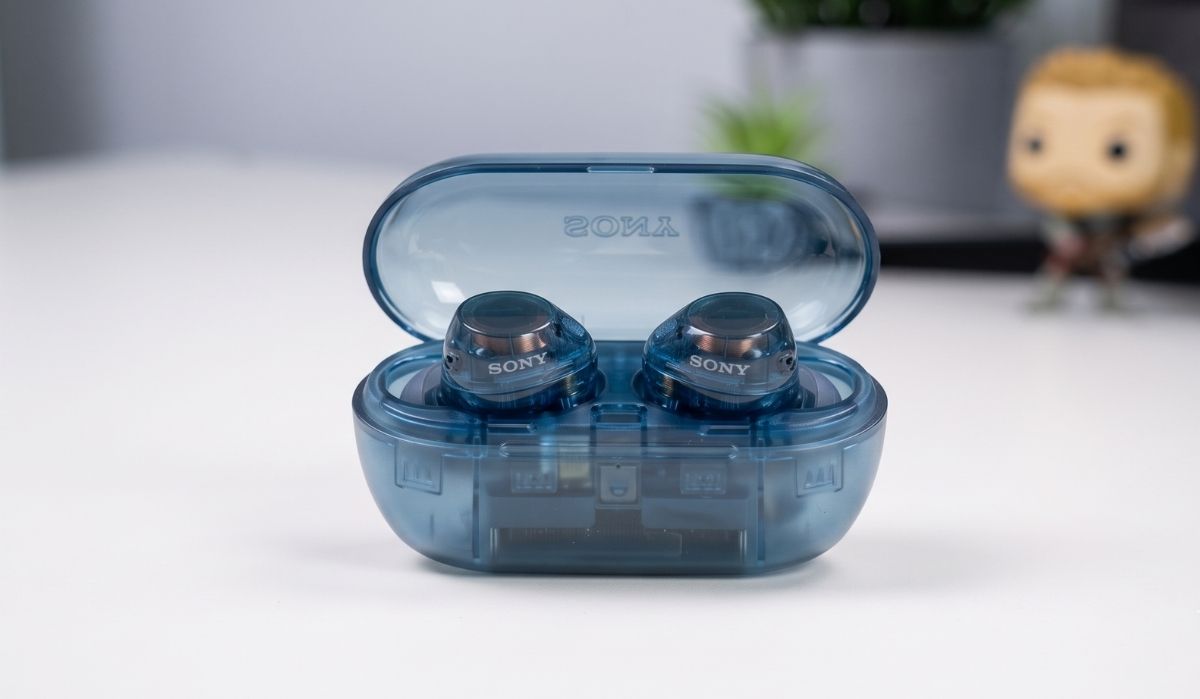
Buy. At ₹8,990 (launched India July 2025), this is the one pair on this list where ANC quality feels like it belongs on a ₹15,000+ product. Also validated by Google’s own AI Overview as a top pick under ₹10,000, alongside the OnePlus Buds 4. If you want ANC that just works without fussing with codecs or app settings, stop reading and buy this.
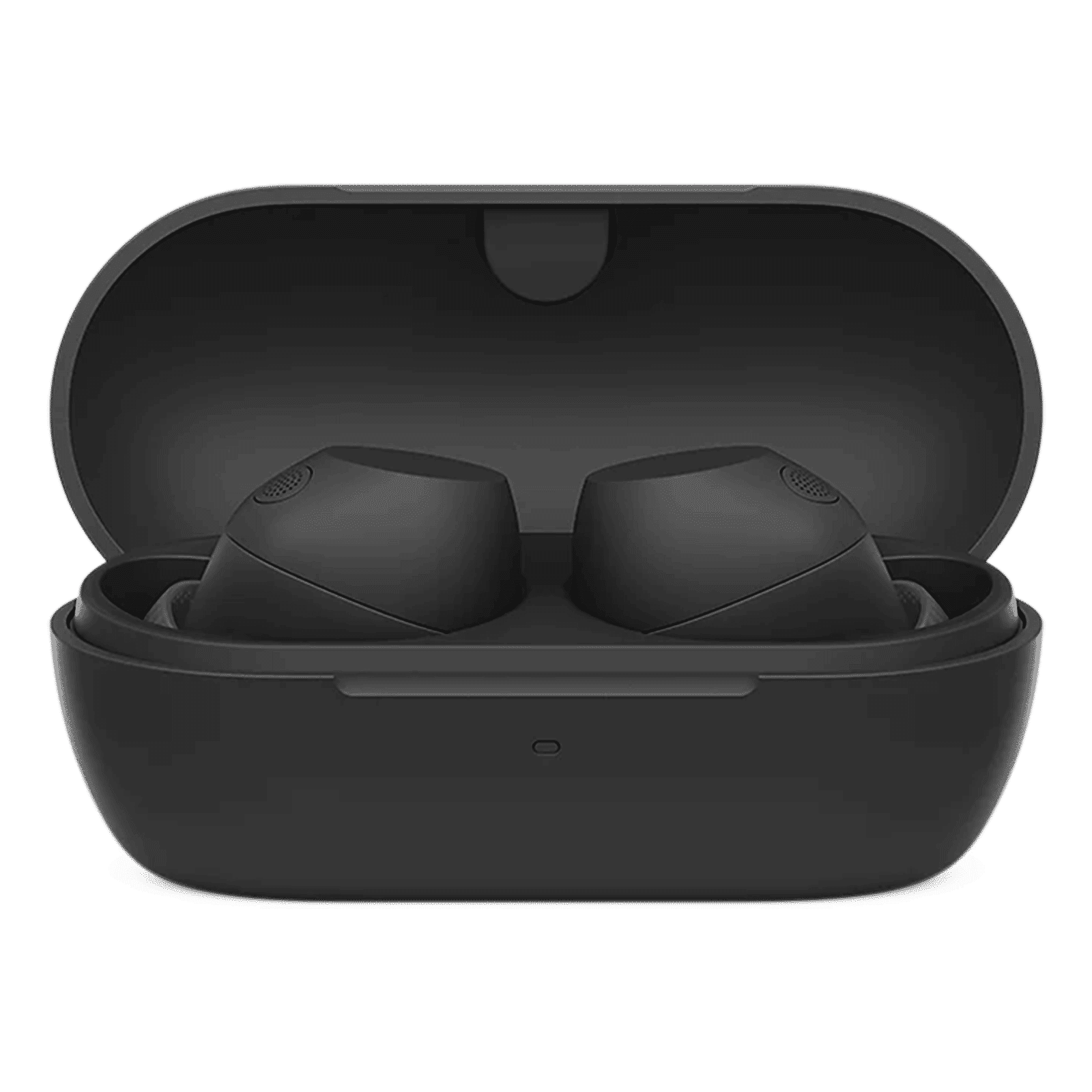
Sony fitted the WF-C710N with a single 5mm dynamic driver covering 20Hz-20kHz, backed by DSEE audio upscaling and a Dual Noise Sensor system that pairs feedforward and feedback mics with adaptive processing. No LDAC, no aptX, only SBC and AAC, which sounds like a red flag until you actually listen.
Build & Comfort
At 5g per earbud with an in-ear silhouette Sony’s carried across three generations now, comfort is easily the best in this comparison, worn for 4-5 hour flights without pressure fatigue. Four colours in India: Black, White, Pink, and the standout translucent Glass Blue which genuinely looks great in person. Downsides: only 3 ear-tip sizes (M, L in box; S small), no stability wings, no IP rating above IPX4. Case is plastic and feels a touch cheap for the price. Not a workout pair, this is a commute-and-office earbud.
Sound Quality
This is where the WF-C710N surprised me most. Testing shows bass is genuinely punchy and controlled, not muddy, with real weight in the sub-100Hz range, better than the WF-C700N it replaces. The one measured weakness: a ~14dB dip around 10kHz in the treble region, so cymbals and upper harmonics lose some sparkle, noticeable if you’re an audiophile, invisible in casual listening. Mids stay clear and dynamic without shouting. Sony’s DSEE upscaling makes a real difference on lower-bitrate YouTube and Spotify content, and the 5-band EQ plus 8 presets in the Sound Connect app let you dial back the bass or push the treble if you want. Bass Boost adds roughly 10dB in sub-bass if you’re a bass head.
ANC & Features
Real measured ANC hits ~30dB of low-frequency reduction (traffic drone, AC hum, engine noise), which is genuinely close to what a Bose QuietComfort Earbud II delivers at 3x the price. Passive isolation adds another ~40dB in high frequencies. It won’t beat the OnePlus Buds 4’s raw 55dB claim on paper, but in real-world Mumbai/Delhi commute conditions, the difference between them is smaller than the spec sheet suggests. The Sound Connect app is Sony’s polished, mature ecosystem app: Adaptive Sound Control auto-switches ANC/Ambient based on activity (walking, at desk, in transit), 20-level ambient tuning, Voice Passthrough (auto-pauses music when it detects you’re talking), and 360 Reality Audio with an ear-shape scan. Multi-point works reliably across two devices simultaneously.
Battery & Mic
Sony rates 8.5h with ANC on, 30h total with the case. Actual measured runtime came in at 9h 25m single charge with ANC on, exceeding the on-paper claim, uncommon at this price. 10-minute fast charge adds 60 minutes of playback. No wireless charging on the case, though. On calls, Sony’s AI-enhanced Precise Voice Pickup with wind noise reduction is a genuine step up from the WF-C700N, indoor calls sound clear and natural, and outdoors on windy streets your voice stays intelligible while background gets suppressed. One caveat: in loud environments (traffic, cafe), the mic can make you sound slightly robotic as it trims background noise aggressively. Still usable, still better than most rivals here except the Realme 8 Pro.
vs The Competition
Against the OnePlus Buds 4 (₹5,999): Buds 4 has stronger paper ANC and dual-driver sound; Sony wins on app maturity, cross-platform stability, and comfort. Against the Realme Buds Air 8 Pro: Sony’s ANC is more consistent in real-world testing; Realme wins on call mic and codec (LHDC 5.0). Against the EarFun Air Pro 4+: EarFun wins outright on sound quality and codec depth; Sony wins on ANC-per-rupee and iPhone compatibility. Against the Nothing Ear (a): Sony’s ANC is meaningfully stronger (30dB measured vs Nothing’s ~25dB peak) and Sony’s app runs circles around Nothing X.
Show more +Pros & Cons
Specifications
- Driver: 5mm dynamic, 20Hz–20kHz
- Bluetooth: 5.3
- Codec: SBC, AAC
- Battery: 8.5h rated / 9h25m measured (ANC on) · ~30h total with case
- Charging: USB-C, quick-charge, no wireless
- Water Resistance: IPX4
- ANC: Dual Noise Sensor tech, ~30dB low-frequency blocking
- Other Features: Adaptive Sound Control, 5-band EQ, 360 Reality Audio ear-scan


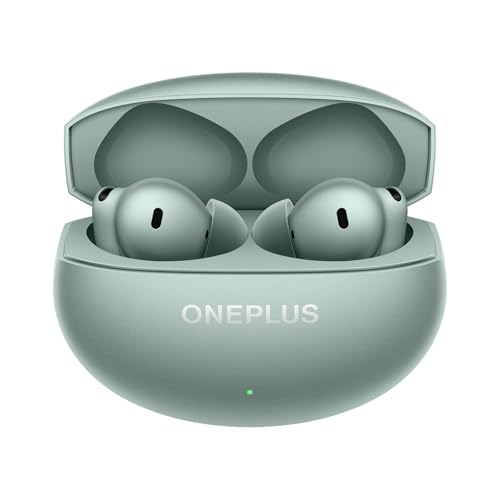
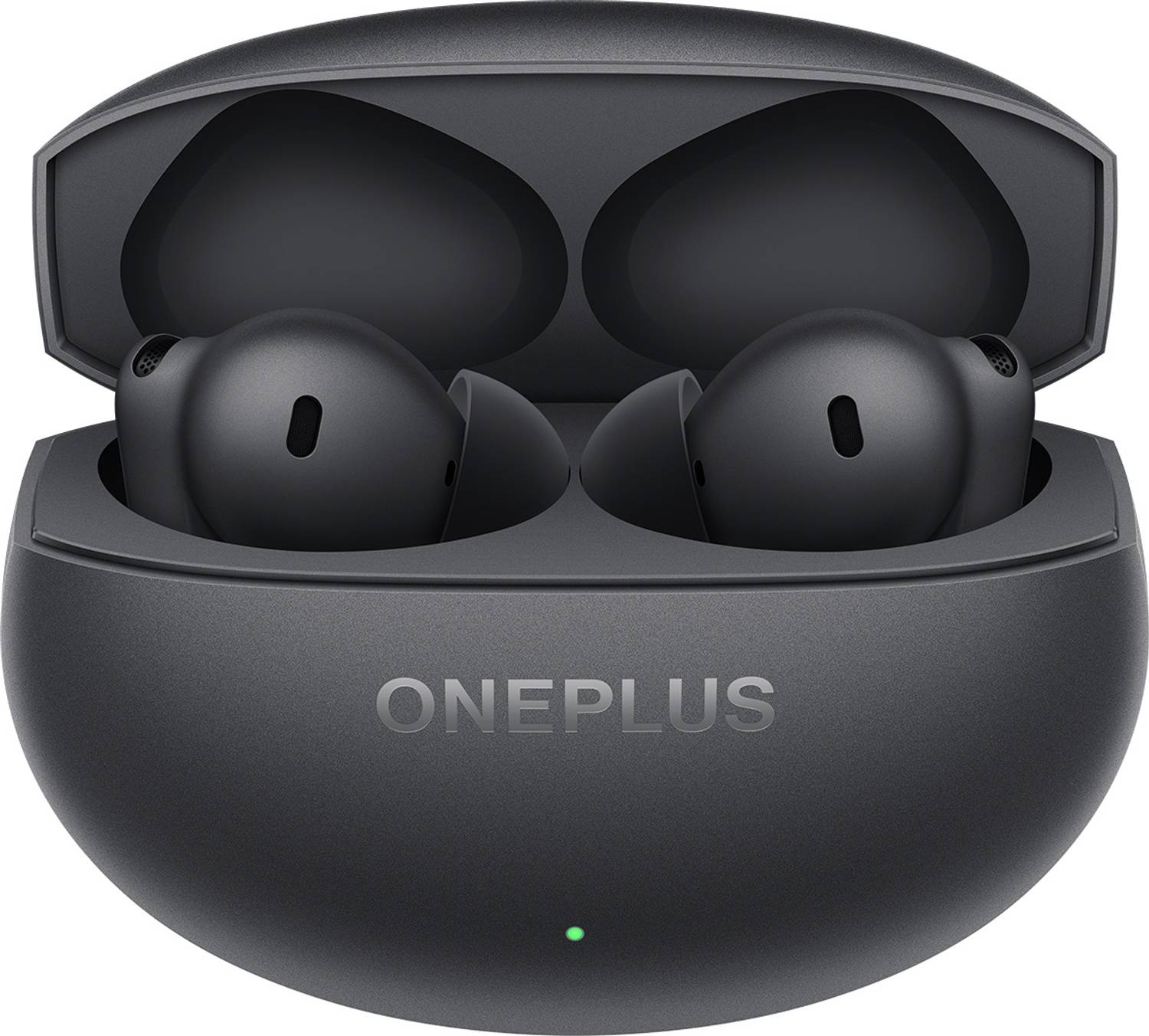
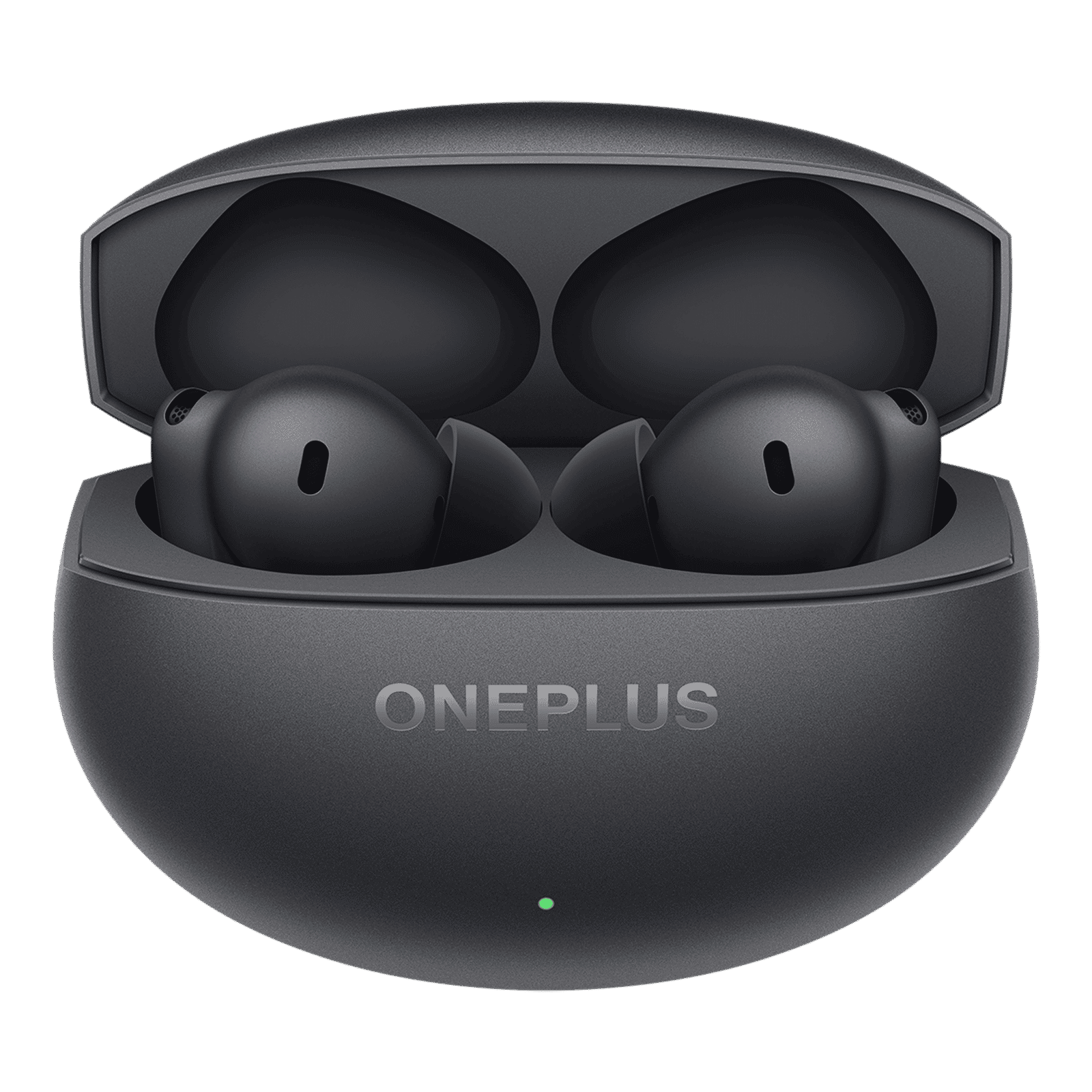
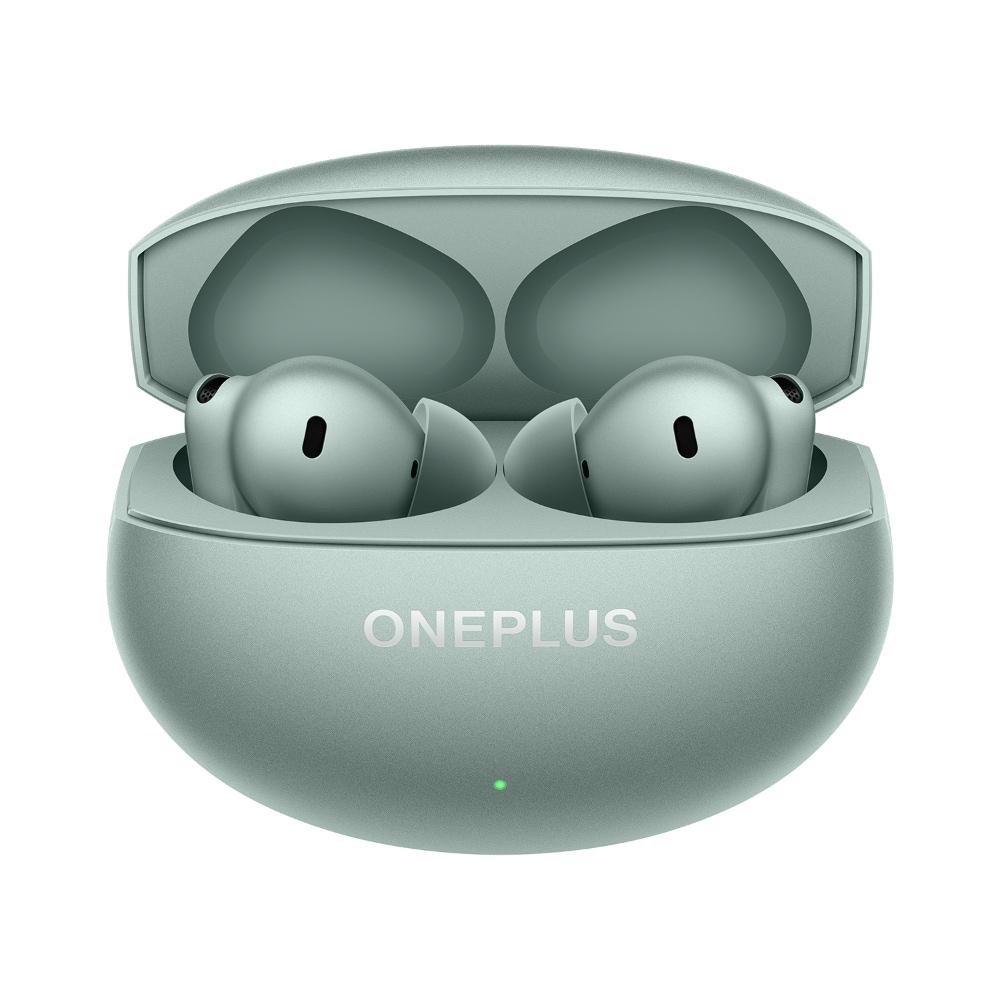
OnePlus Buds 4Best Budget Earbuds
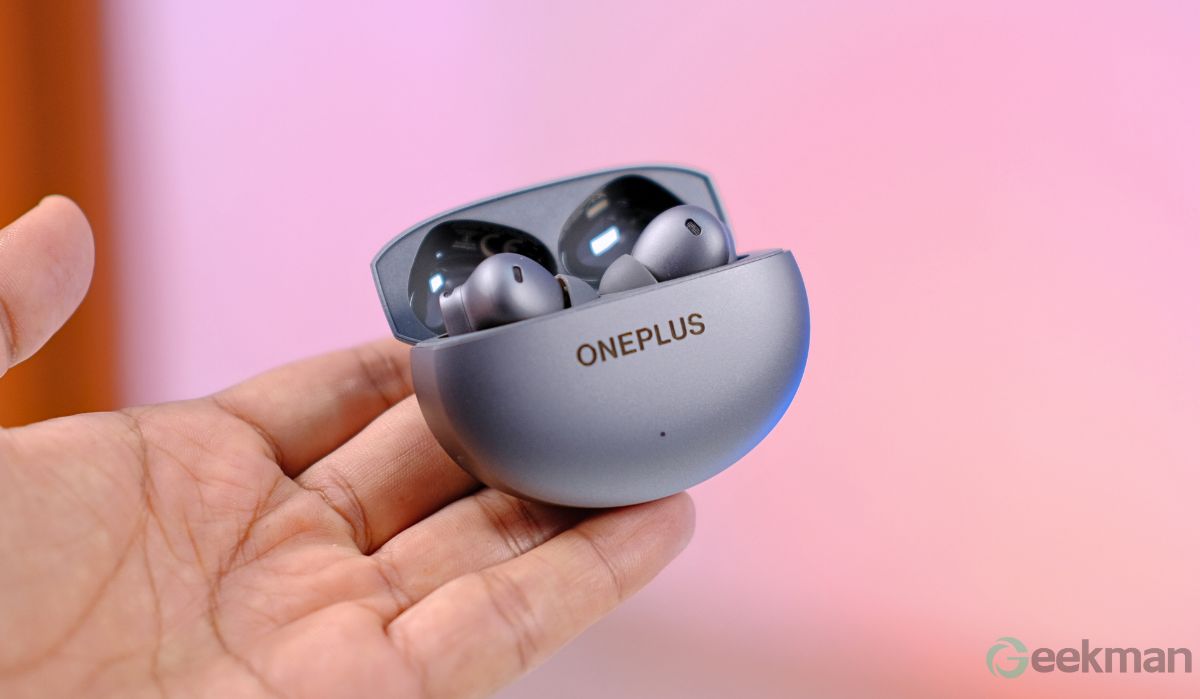
Buy. Genuinely one of the best all-rounders in its price segment, around ₹5,999, often ₹5,500 with bank offers. Real competition is the Realme Buds Air 7 Pro at a similar price, comes down to personal taste.
Coaxial dual-driver setup, a 12mm woofer plus 6mm tweeter, each with its own DAC, 15Hz-40kHz range, LHDC 5.0. Hard to find this kind of hardware elsewhere at this price.
Build & Comfort
Design and build track the pricier Buds Pro 3 closely, a similar premium experience for less. Slim, pebble-shaped case with a matte metallic finish. Each earbud is ~4.7g, comfortable for 3-4 hours, secure fit through gym sessions. IP55 covers the earbuds, but the case still has no water protection, a miss OnePlus could have fixed. One control I like: swipe-for-volume on the stem, works smoothly here unlike the same feature on the Realme Buds Air 7 Pro.
Sound Quality
Loud and clear even at 50% volume. Bass is punchy, detailed, well-controlled, real subwoofer-like rumble without overpowering the mids. Vocals come through natural; sub-mids occasionally get nudged by the bass, easily fixed with EQ. Treble stays clean without turning sharp. Overall energetic and fun, and even balanced-sound listeners like me won’t be disappointed once you’ve spent a few minutes in the equalizer.
ANC & Features
The clear highlight: up to 55dB across a range up to 5500Hz, highest in this segment, tested indoors and outdoors, best ANC at this price. Four adjustable levels, and Adaptive ANC genuinely works, ramps up on its own when a mixer grinder starts nearby. Response is a touch slower than AirPods Pro. Runs through HeyMelody (or system settings on OnePlus/Oppo/Vivo): touch customization, dual-pairing, in-ear detection, camera control, 360 Audio, Golden Sound, gaming mode. One annoyance: disconnect/reconnect sometimes resets Hi-Res Audio, Golden Mode, and 360 Audio.
Battery & Mic
Tested over three days, ANC off, Hi-Res on: roughly 5-6 hours per charge. Both off, close to the claimed 11 hours. Case adds up to ~30h total, and fast charging gets 11h from a 10-minute top-up. On calls: claimed 200% better voice cancellation over Buds 3, and there’s a real difference, clear indoors without raising your voice, decent outdoors without eliminating everything.
vs The Competition
The Realme Buds Air 7 Pro is the one genuine rival, similar price and features. OnePlus edges it on design polish and ANC; Realme sells slightly cheaper with a more balanced, natural tuning versus the Buds 4’s heavier bass. The CMF Buds 2 Plus isn’t a serious contender at this level. The Oppo Enco Air 3 Pro has a lovely balanced signature but can’t match this on ANC or battery, and stock is hit or miss. Against the EarFun Air Pro 4 Plus: wins on ANC and mic, gives up codec depth and outright sound refinement.
Show more +Pros & Cons
Specifications
- Driver: 12mm dynamic woofer + 6mm flat tweeter, dual DAC (coaxial)
- Bluetooth: 5.4
- Codec: SBC, AAC, LHDC 5.0 (up to 1 Mbps)
- Battery: ~5-6h tested (ANC + Hi-Res on) · ~11h claimed (ANC + Hi-Res off) · ~30h total with case tested
- Charging: USB-C only, no wireless · 10 min fast-charge ≈ 11h playback
- Water Resistance: IP55 (earbuds); case has no rating
- ANC: Up to 55dB claimed across ~5500Hz range · Adaptive ANC, 4 manual levels
- Other Features: Swipe volume control, 47ms gaming mode, 360 Audio, Golden Sound, camera control, dual-device pairing


Realme Buds Air 8 ProBest Value
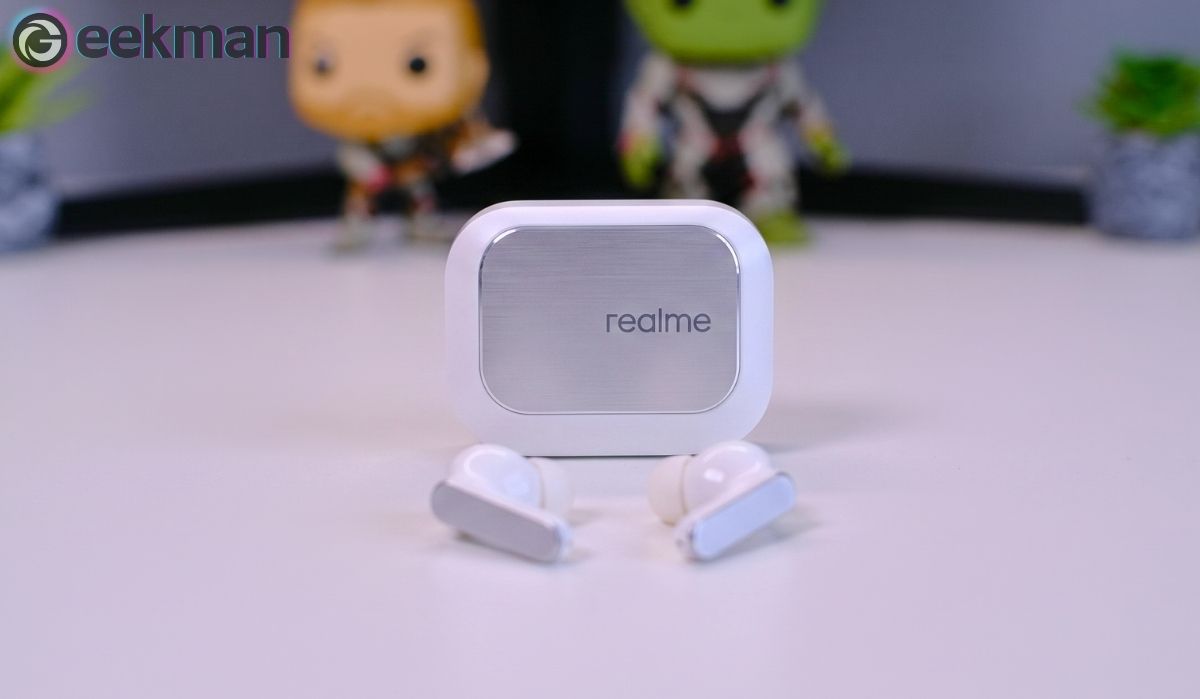
Buy for the call quality alone, which is genuinely the best in this comparison, plus you get 55dB ANC, LHDC 5.0, and 50h battery for ₹6,999 (bank-offer price closer to ₹6,000). Double-check you’re buying the 8 Pro, not the older Realme Buds Air 7 Pro, retailers mix these up frequently and Google’s AI Overview also confuses them. Also worth noting: Google AI Overview cites the Realme Buds Air 7 Pro as a top pick under ₹10K, so the 8 Pro (which supersedes it) is the current version to buy.
Realme built the Buds Air 8 Pro around a dual-driver setup: 11mm dynamic bass driver + 6mm micro-planar tweeter, each with its own DAC, covering 20Hz-40kHz with Hi-Res LHDC 5.0 certification. On paper, the driver hardware matches the OnePlus Buds Pro 3 for less than half the price.
Build & Comfort
At 4.8g per earbud with 590mAh case, this is one of the lightest pairs in the comparison, comfortable for 3-4 hour stretches. The rounded stem design actually makes them comfortable when lying on your side, uncommon at any price. However, the glossy piano-black finish on the case and earbud stems shows fingerprints and smudges instantly. IP55 covers earbuds against dust and sweat. Available in Master Black and Master White only, the non-Pro Buds Air 8 comes in Gold, Dark Grey, and Purple, so if you see those colours listed, you’re looking at the wrong model.
Sound Quality
The dual-driver setup delivers full, warm, and rather bass-forward tuning out of the box, warmth over clarity, so much so that some reviewers describe it as “dark-sounding” compared to the regular Buds Air 8 or the older 7 Pro. Sub-bass rumbles deep, thick, and full on tracks like James Blake’s “Limit to Your Love”, almost in-your-face at higher volumes. Mid-bass has real slam without holding back, drum kicks land with authority. Vocals sound warmer than natural, which fits Bollywood and hip-hop beautifully (dhol beats, tabla, Punjabi bass tracks all hit hard), but neutral-sound listeners will want to reach for the EQ. Realme includes four EQ modes (Clear Vocals, Nature Balance, Clear Bass, Bass Boost) plus a custom equalizer, and switching to Clear Vocals opens up the mids meaningfully. Highs are safe (not sharp, not particularly extended), which suits long listening sessions. LHDC 5.0 works properly on Realme, Oppo, OnePlus, and select Xiaomi/iQOO devices, meaningful detail improvement over AAC on compatible phones.
ANC & Features
55dB adaptive ANC across ~5,000Hz bandwidth, tested in metro commutes and traffic, and it holds up genuinely well, on par with or slightly ahead of the OnePlus Buds Pro 3 in real-world testing. Not quite as consistent as the Sony WF-C710N in absorbing constant low-frequency drone, but stronger in the mid-range where voices sit. There’s a Bluetooth 6.1 spec on the box (though some regional listings still show 5.4, worth confirming on your unit’s retail box). Standout features: slide-touch volume control on the stem (works reliably here, unlike the same feature on the older 7 Pro), Mindflow white-noise mode, triple-device multipoint (rare, most rivals cap at two), Google Fast Pair, gaming mode (~45ms latency), AI translation across 32 languages. One caveat some reviewers flagged: mild ear “cabin pressure” fatigue after extended ANC use, common with strong ANC systems but worth knowing if you’re sensitive.
Battery & Mic
Realme claims 50h total (AAC, ANC off) / 36h (LHDC, ANC off) / 27h (AAC, ANC on) / 20h (LHDC, ANC on). Measured runtime with ANC on, LHDC codec, moderate volume: roughly 6.5h per single charge, ~5h if you’re pushing LHDC hard. Fast charge is impressive, 10 minutes adds ~11h combined playback. No wireless charging on the case, expected at this price. On calls, this is where the Buds Air 8 Pro genuinely wins. Six total microphones (three per earbud) plus a dedicated bone-conduction Voice Processing Unit (VPU) that picks up jaw vibrations, resulting in call quality that’s dramatically clearer than every other earbud in this comparison, even in loud metro/traffic environments. One reviewer described it as “sounding like I was in a quiet office” while calling from a crowded Delhi metro. If you take a lot of calls, this alone makes the Buds Air 8 Pro worth buying over anything else here. Software friction: the realme Link app forces sign-in, carries in-app ads, and the “Ask AI” assistant is buggy. LHDC has been reported to disconnect specifically when the app is running in the background.
vs The Competition
Against the OnePlus Buds 4 (₹5,999): Realme wins on call mic (bone-conduction VPU) and battery; OnePlus wins on ANC strength and cleaner default sound. Against the OnePlus Buds Pro 3 (₹10K+): matches or beats on ANC, wins on mic and price, loses on app depth and comfort. Against the EarFun Air Pro 4+ (₹7-8K): EarFun wins on codec depth (aptX Lossless + LDAC vs LHDC only) and refined tuning; Realme wins on ANC and call mic. Against the Sony WF-C710N: Realme wins on features, driver depth, and mic; Sony wins on ANC consistency and app maturity.
Show more +Pros & Cons
Specifications
- Driver: 11mm dynamic bass + 6mm micro-planar tweeter, coaxial dual-DAC, 20Hz-40kHz
- Bluetooth: 6.1 with triple-device multipoint (some listings show 5.4, confirm on your box)
- Codec: SBC, AAC, LHDC 5.0 (24-bit/192kHz, up to 1 Mbps)
- Battery: ~6.5h tested (LHDC + ANC on) · up to 50h claimed total (AAC, ANC off)
- Charging: USB-C only, no wireless · 10 min fast-charge = ~11h combined
- Water Resistance: IP55 (earbuds only)
- ANC: Up to 55dB adaptive across ~5,000Hz bandwidth
- Other Features: Triple-mic + bone-conduction VPU (best-in-class call quality), slide-touch volume, Mindflow white-noise, AI translation (32 languages), gaming mode (~45ms), Google Fast Pair, 4 EQ presets + custom EQ

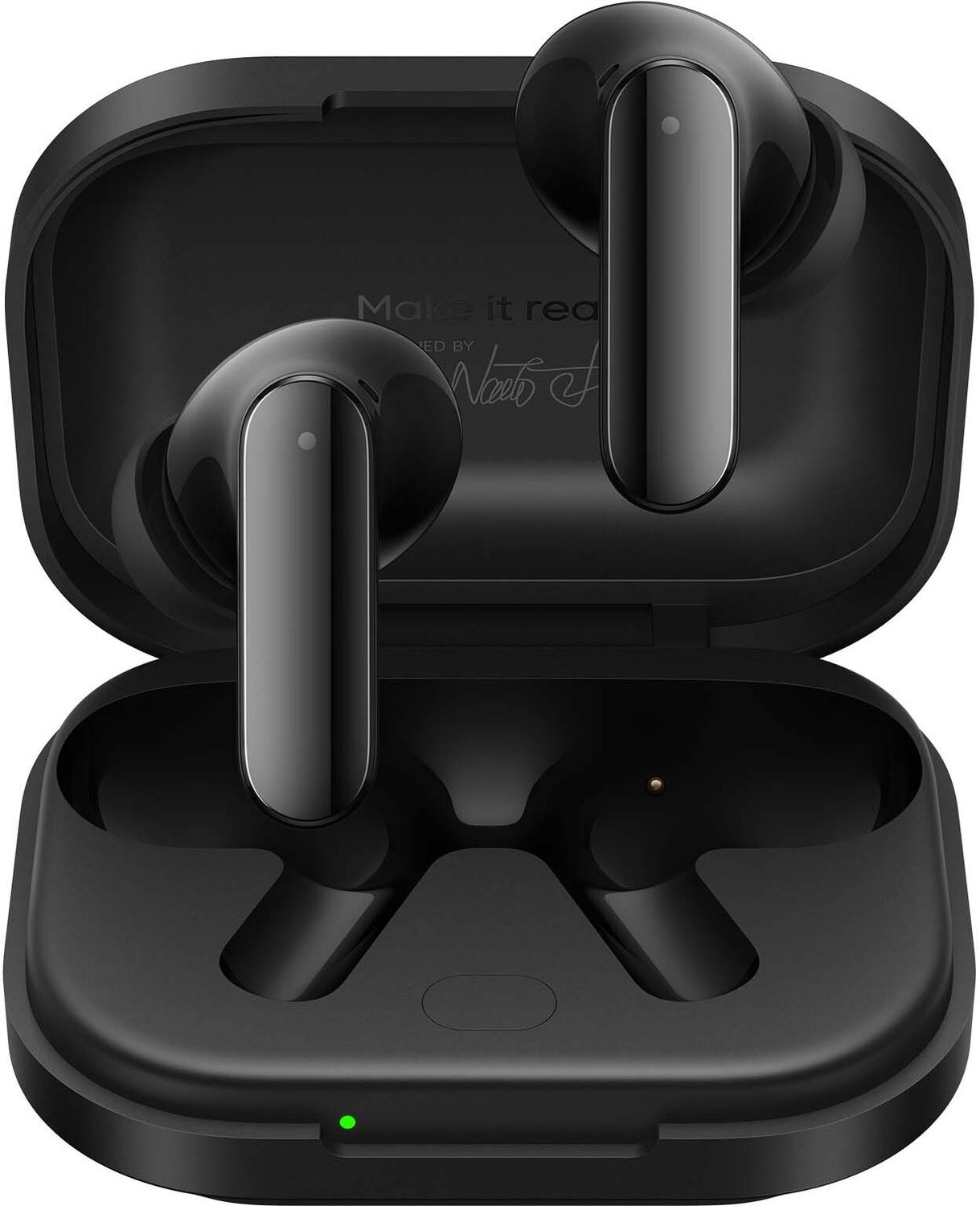
Samsung Galaxy Buds3 FESolid All-Rounder
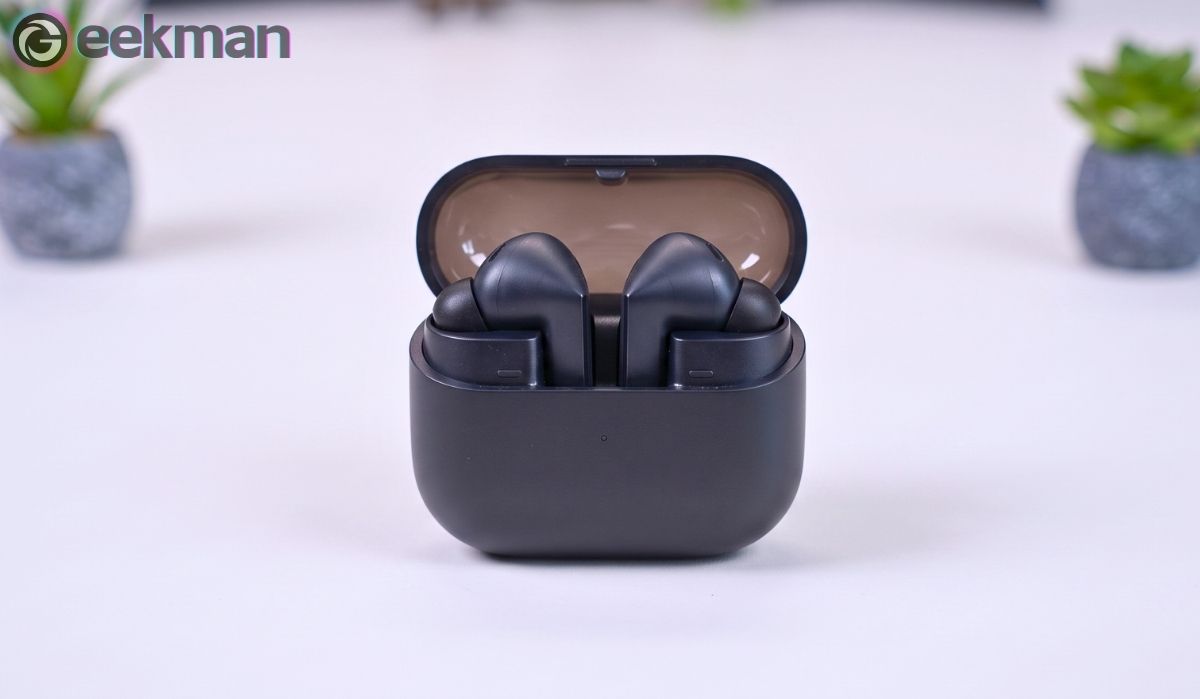
Buy if you own a Samsung Galaxy phone, at ₹12,999 launch price (bank offers regularly bring it under ₹10,000, and paired with a Galaxy phone purchase you get ₹4,000 in launch benefits), you’re getting genuinely surprising ANC that some testers rate above Samsung’s own pricier Buds3 Pro. Skip immediately if you’re on iPhone, without the Galaxy Wearable app you’re using ₹150 earbuds as basic Bluetooth headphones with no EQ, no ANC controls, and none of the AI features that justify the price.
Samsung fitted the Buds3 FE with a single 11mm dynamic driver (this info leaked from teardowns, Samsung doesn’t officially disclose driver size, a real transparency gap at this price). The “blade” stem design borrows from the pricier Buds3 Pro, but the FE returns to sealed silicone tips, which is easily the smartest decision Samsung made here.
Build & Comfort
At 5g per earbud with a compact 33.8×18.0×21.1mm shell, the Buds3 FE is comfortable for extended wear, sealed tips give noticeably better isolation and fit stability compared to the standard Buds3’s controversial open design. The matte black or gray finish resists fingerprints well, and the case is compact enough for jeans pockets. IP54 rating (dust + splash resistance) is a genuine upgrade over the original Buds FE’s IPX2 drip-only spec. Colours in India: Graphite (black) and Gray. The pinch-and-swipe stem controls need slightly more pressure than expected, and if you’re not careful, applying that pressure can shift the earbud in your ear.
Sound Quality
Warm, balanced tuning with punchy but controlled mid-bass, this is actually a slightly better-sounding pair than Samsung’s more expensive Buds3 Pro in most testing. Sub-bass rumbles clean and deep without lingering longer than it should, mid-bass gives you meaningful thump on drum kicks and electronic tracks, and the mids retrieve real center-detail on vocal tracks. Warm character overall, so if you like bright/analytical sound, you’ll want to reach for the EQ. Samsung’s Galaxy Wearable app provides a 9-band custom EQ plus 6 presets (Dynamic, Clear, Bass Boost, Treble Boost, Vocal, Soft), and the Dynamic preset genuinely opens things up. 360 Audio with head tracking works properly across compatible Samsung Galaxy content. Downside: only supports SBC, AAC, and Samsung’s proprietary SSC (Samsung Seamless Codec, requires a Galaxy phone to activate), no LDAC or LHDC, so Android Hi-Res on non-Samsung phones is out.
ANC & Features
Genuinely surprising ANC, real-world testing shows it slightly outperforms Samsung’s own pricier Buds3 Pro in some situations, with cleaner sound stage and less ANC bleed. Not class-leading against Sony or Bose flagships, but very competitive with the Sony WF-C710N and OnePlus Buds 4 in this price band. ANC can be adjusted from the app or lock screen. However, there’s no true adaptive ANC (only static Low/Medium/High levels), and wind noise can leak through during outdoor calls. Transparency mode has improved over previous Galaxy Buds but still has slight static noise, and voices can sound faintly robotic. Galaxy AI features via the Galaxy Wearable app: Gemini voice commands (hands-free), real-time Interpreter live translation, Bixby integration, Crystal Clear Call machine-learning voice isolation, Voice Detect (pauses music when you speak). Auto Switch works seamlessly across Galaxy devices (phone-to-tablet-to-Buds), but there’s no true multipoint outside Samsung’s ecosystem, so switching between a Galaxy phone and a non-Samsung laptop is manual.
Battery & Mic
Samsung claims 6h with ANC on, 8.5h with ANC off, 24h total (ANC on) / 30h total (ANC off) with case. Measured runtime came in around 5h 45m with ANC on daily commute testing, close to but slightly below the on-paper claim. No wireless charging (a real omission at this price), no cable in the box either (Samsung’s cost-cutting move). 10-minute fast charge adds 1 hour of playback. On calls, the 3-mic + Crystal Clear Call ML system does a solid job indoors, voice sounds natural and clear, but outdoor performance struggles more in wind than the Realme Buds Air 8 Pro’s bone-conduction system or Sony’s AI voice pickup.
vs The Competition
Against the OnePlus Buds 4: FE wins on comfort and ecosystem features (if you’re on Samsung); Buds 4 wins on ANC strength, price, and cross-platform support. Against the Sony WF-C710N: comparable ANC in real-world use, Sony wins on comfort, battery life, and cross-platform stability; Samsung wins on ecosystem integration (Galaxy AI, Auto Switch). Against the Nothing Ear (a): Samsung wins on ANC and build; Nothing wins on codec (LDAC) and price. Against Samsung’s own Buds3 Pro (₹18,000+): Buds3 FE actually delivers better sound and comparable ANC for ~₹5,000-6,000 less, an easier recommendation than the Pro.
Show more +Pros & Cons
Specifications
- Driver: Single 11mm dynamic (undisclosed by Samsung, confirmed via teardowns), 20Hz-20kHz
- Bluetooth: 5.4 (Auto Switch across Galaxy devices, no true multipoint outside Samsung ecosystem)
- Codec: SBC, AAC, SSC (Samsung Seamless Codec, Galaxy phones only)
- Battery: ~5h 45m tested (ANC on) · 6h claimed · 24-30h total with case
- Charging: USB-C only (no cable in box), no wireless · 10 min fast-charge = 1h playback
- Water Resistance: IP54 (dust and splash)
- ANC: Static Low/Medium/High levels (no adaptive) · tests slightly ahead of Samsung Buds3 Pro
- Other Features: 9-band custom EQ + 6 presets, 360 Audio with head tracking, Galaxy AI (Gemini, Interpreter live translation, Bixby), Crystal Clear Call ML, Voice Detect, Auto Switch


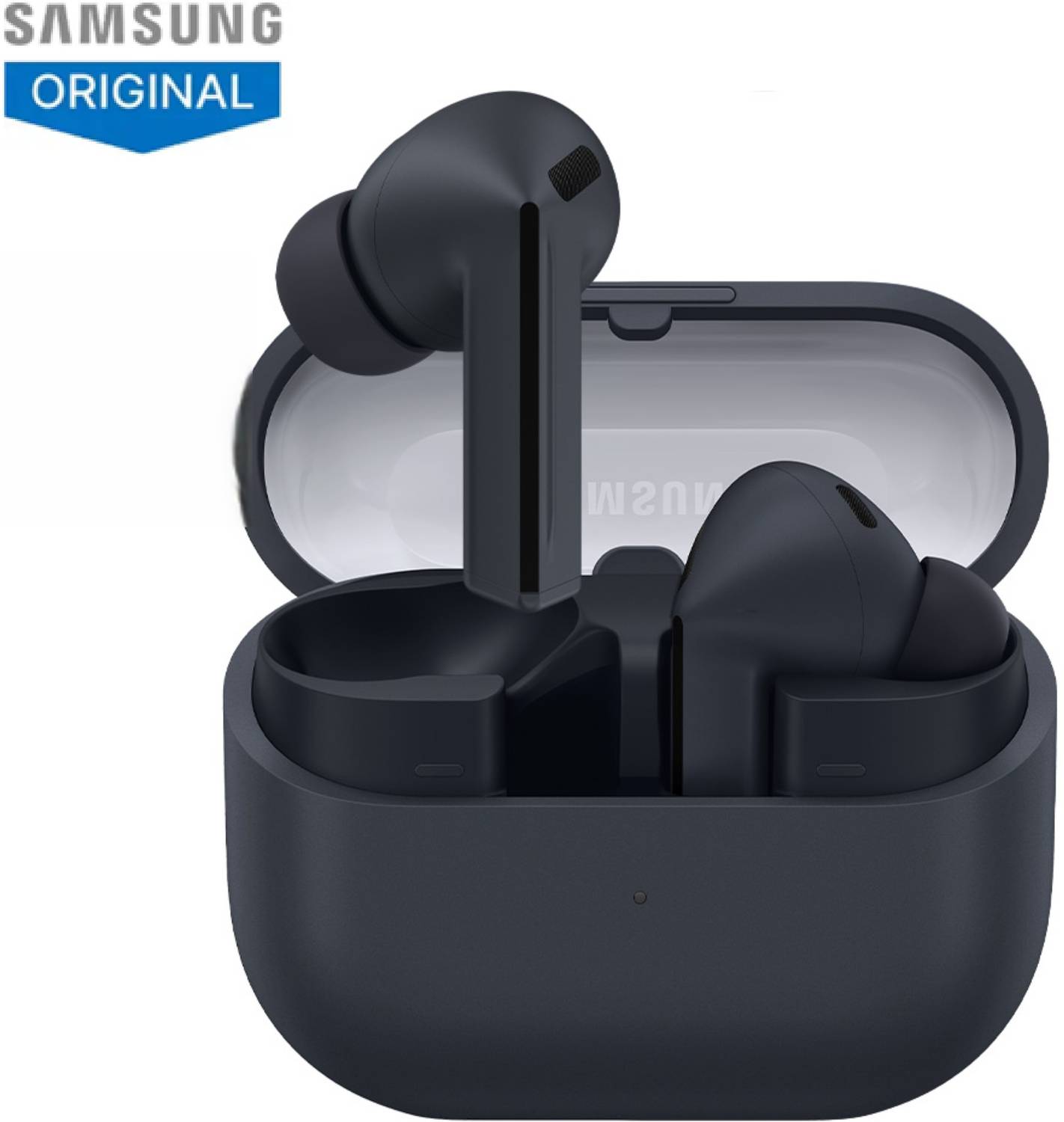
Nothing Ear (a)Best Design & LDAC on a Budget
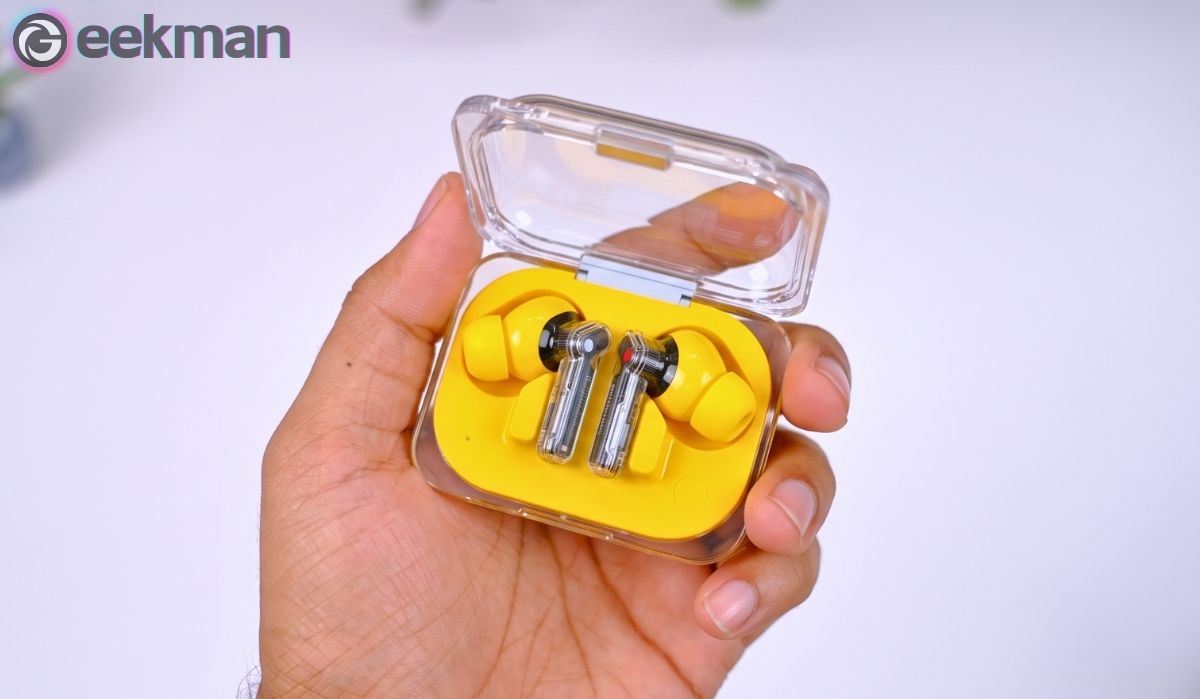
Buy for the design and LDAC support (both rare at ₹7,999 India MRP), but go in with tempered expectations on ANC and mid-range detail. If bass response and looking different in a crowd matter more than critical listening accuracy, this is easily the coolest earbud in the entire comparison. If sound purity is priority #1, spend the same money on the EarFun Air Pro 4+ or add ₹1,000 for the Sony WF-C710N.
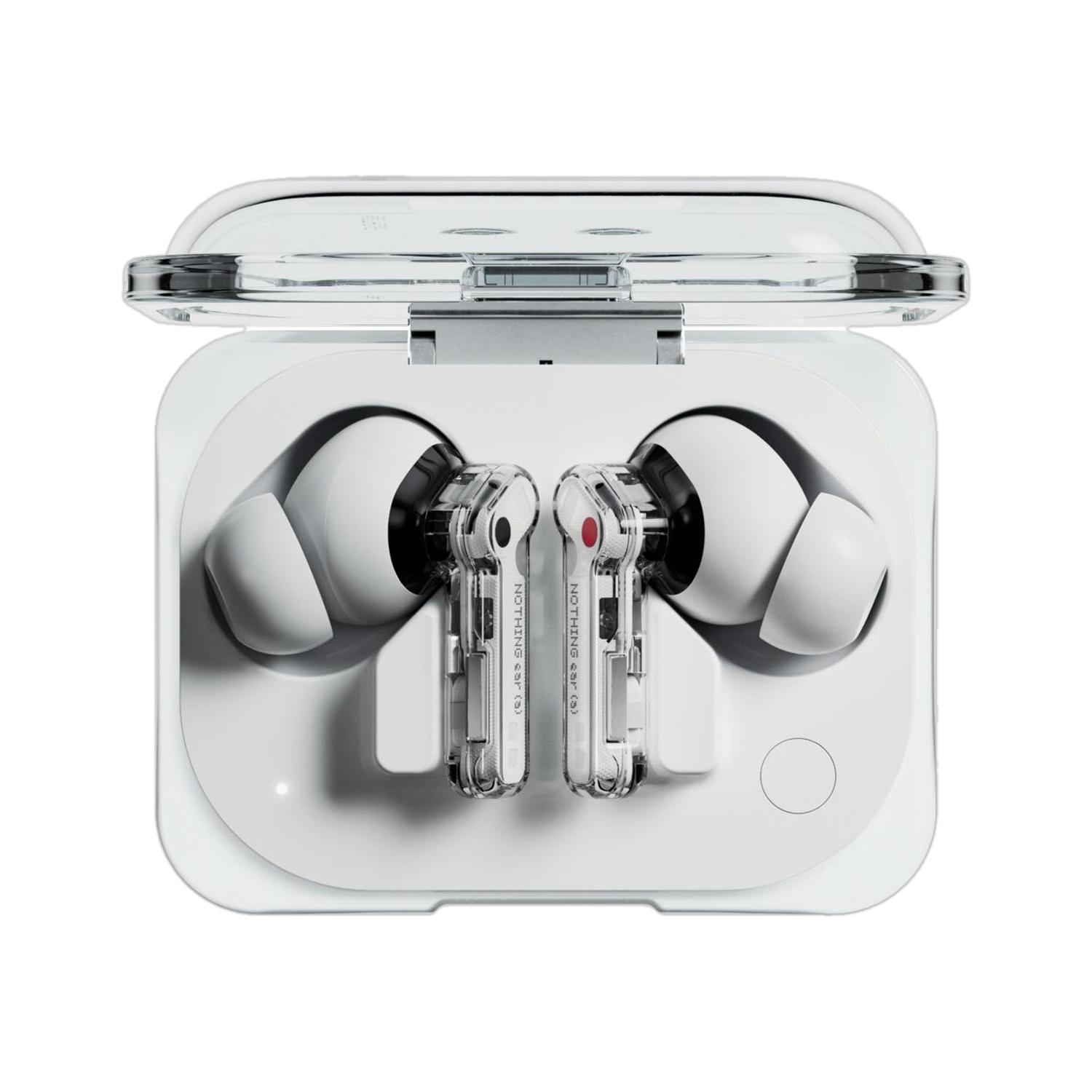
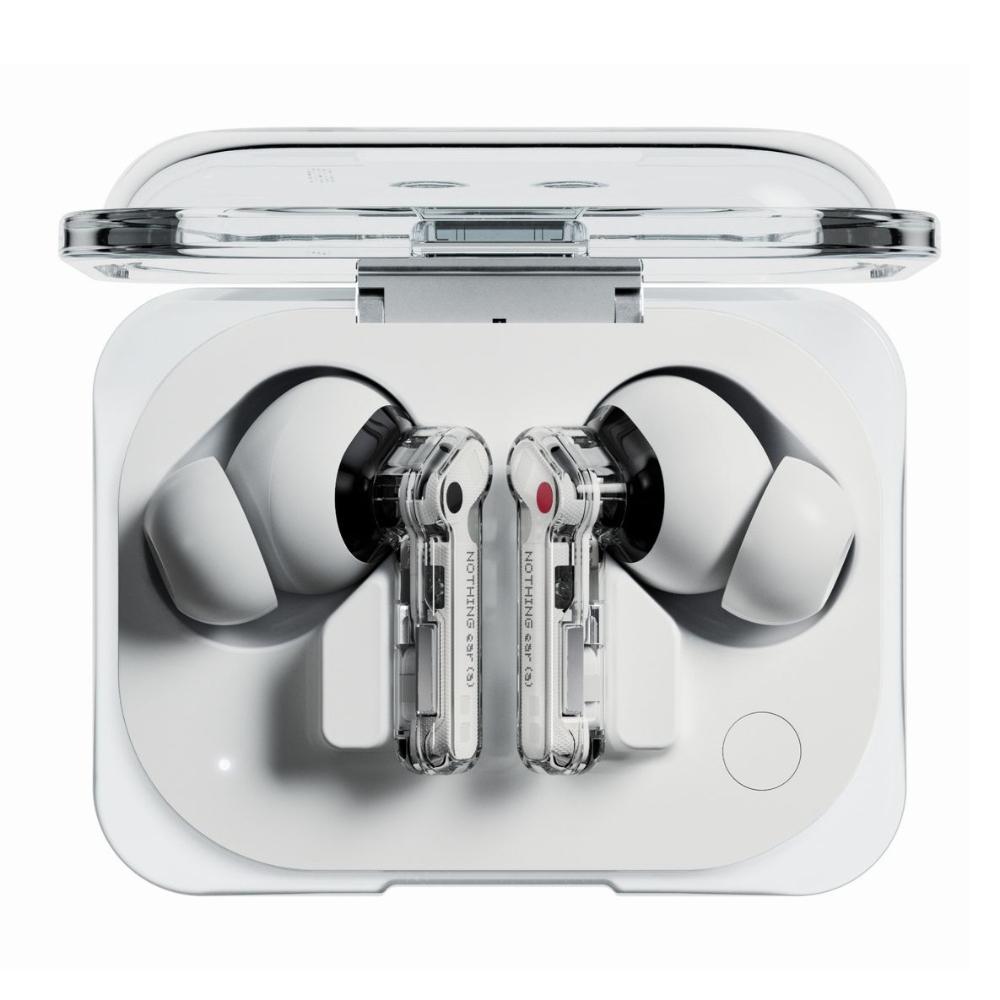
Nothing built the Ear (a) around an 11mm dynamic driver with LDAC codec support (up to 990 kbps, 32-bit/96kHz on compatible Android phones) plus a Smart ANC algorithm that continuously checks your ear seal and adjusts ANC intensity. The transparent case + Yellow/White/Black colourway is genuinely the most distinctive design in this entire comparison, people will stop and ask what they are.
Build & Comfort
At 4.8g per earbud (~49g total with case), it’s light and comfortable for long sessions without deep insertion, helped by pressure-sensitive stem controls that respond well and can be customized per bud in the Nothing X app. The bubble-transparent case is bold and instantly recognizable, but the plastic feels less premium than Sony’s or Samsung’s cases, and the case creaks under pressure, some owners worry it might break with a hard drop. The Yellow variant is genuinely eye-catching in a way no other earbud here comes close to. IP54 on earbuds, IPX2 on case (case isn’t sweat/splash proof). Three ear-tip sizes in box.
Sound Quality
The most polarizing sound signature in this comparison. Measured frequency response shows sub-bass boosted well beyond neutral, mids under-emphasized in the crucial 200-500Hz range (where guitars, male vocals, and instrument body live), and a significant drop-off in highs above 8kHz (cymbals, air, sparkle). Translation: bass slams hard and low but mid-range detail feels recessed, and the treble sounds soft or rolled-off. If you love a V-shaped, bass-forward, dark tuning, this suits you perfectly, Bollywood, hip-hop, EDM all sound impactful. If you listen to acoustic, jazz, classical, or vocal-forward music, you’ll notice the mid-range hollowness immediately. The 3-band EQ in the Nothing X app is more limited than the 6-9 band EQs on OnePlus, Realme, and Samsung, so you can’t fine-tune to fix these dips. LDAC support does add real detail on compatible Android phones, but LDAC can’t fix a driver tuning issue. The Bass Enhance slider (5 levels) adds even more sub-bass emphasis at max, useful for bass-heads, painful for anyone else.
ANC & Features
Nothing markets 45dB peak ANC across the frequency range, real-world measured ANC peaks around 25dB, on average reducing environmental noise by roughly 57%. That’s meaningfully less than the OnePlus Buds 4’s 55dB claim (also measured lower but genuinely strong), Sony WF-C710N’s 30dB measured, and Samsung Buds3 FE’s testing. Adaptive ANC mode adjusts continuously based on your environment, but it doesn’t match the class leaders. Fine for daily metro/traffic use, not fine if you’re specifically buying for ANC. Nothing X app offers a Personal Sound Profile via Mimi Hearing test (personalizes tuning to your hearing), fit test, find-my-earbuds, gaming mode with low latency, dual connection (multipoint across two devices, works reliably), and Bass Enhance slider. The app is minimalist and easy to use, but genuinely less feature-dense than HeyMelody (OnePlus) or Galaxy Wearable (Samsung).
Battery & Mic
Tested at 8h 49m on a single charge with ANC on (impressive, one of the longest single-charge runtimes here), up to 42.5h total claimed with the case. No wireless charging on the case (again, expected at this price). Fast charging is decent, 10 minutes adds 10 hours combined playback. On calls, three microphones per earbud handle voice pickup and call noise suppression, and testing shows clear voice quality indoors and reasonable outdoor performance, though not at Realme Buds Air 8 Pro’s bone-conduction level. One recurring owner complaint: scattered connection stutters and micro-drops in busy, Bluetooth-dense environments (crowded metros, food courts, airports).
vs The Competition
Against the EarFun Air Pro 4+ (₹7-8K): EarFun wins outright on sound quality (aptX Lossless + LDAC + refined tuning), ANC verification, and build quality; Nothing wins on design distinctiveness alone. Against the Sony WF-C710N: Sony wins on ANC, mid-range detail, and app maturity; Nothing wins on LDAC codec and design. Against the OnePlus Buds 4 (₹5,999): OnePlus wins on ANC, sound refinement, and value; Nothing wins on codec (LDAC vs LHDC) and looks. Against the JBL Live Beam 3: JBL wins on codec + battery + features; Nothing wins on price and portability. Against the Samsung Buds3 FE: comparable class overall, Samsung wins on ANC and warmth, Nothing wins on codec and iPhone/cross-platform usability.
Show more +Pros & Cons
Specifications
- Driver: 11mm dynamic
- Bluetooth: 5.3 with dual-device multipoint
- Codec: SBC, AAC, LDAC (990 kbps, 32-bit/96kHz)
- Battery: 8h 49m tested (ANC on) · up to 42.5h claimed total with case
- Charging: USB-C only, no wireless · 10 min fast-charge = 10h combined
- Water Resistance: IP54 (earbuds), IPX2 (case, not splash-proof)
- ANC: Marketed up to 45dB · measured ~25dB peak · Smart Adaptive ANC
- Other Features: 3-band EQ + presets, Bass Enhance (5 levels), Mimi Hearing personal sound profile, fit test, find-my-earbuds, gaming mode, dual-device connection

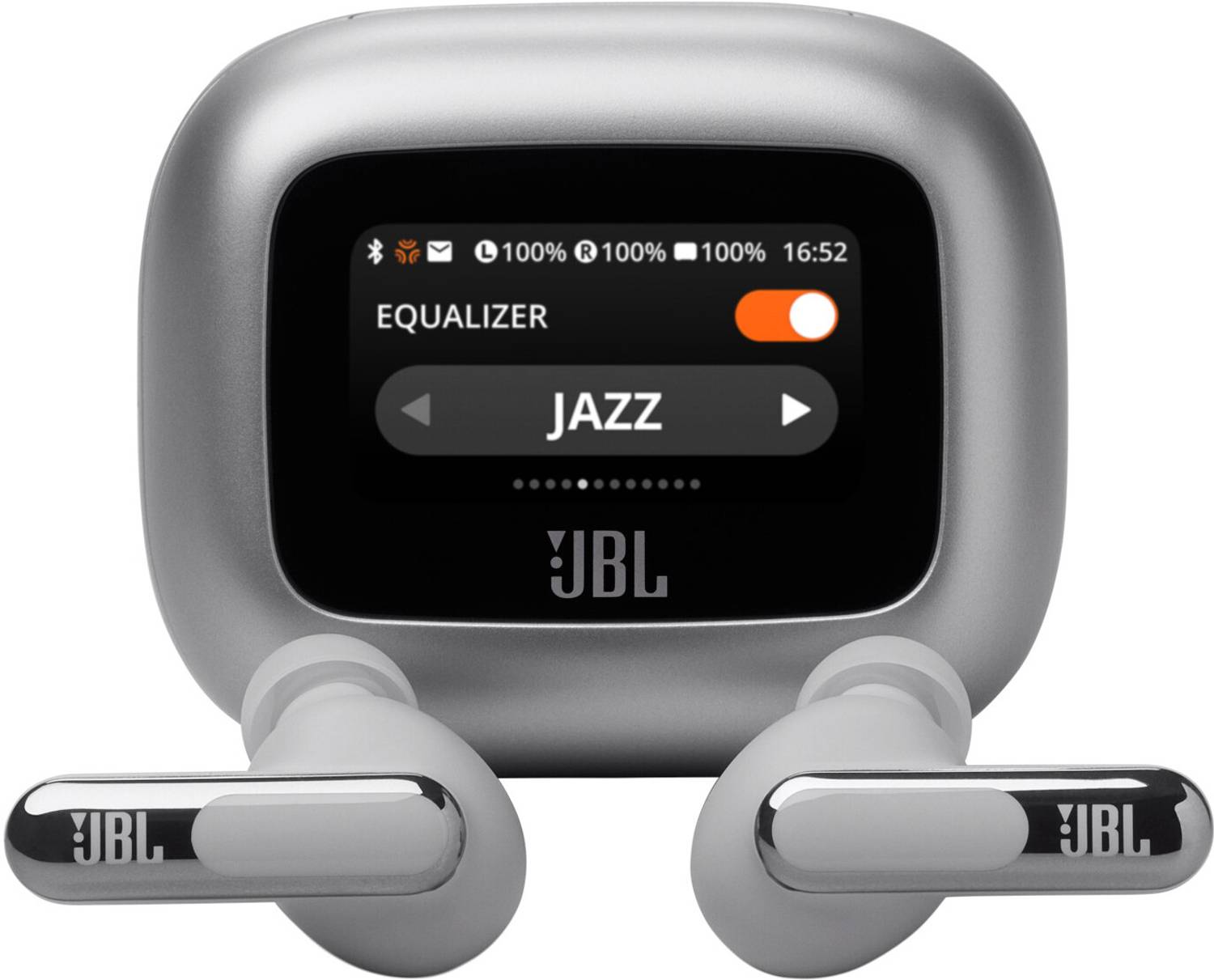
JBL Live Beam 3Best Wireless-Charging Case
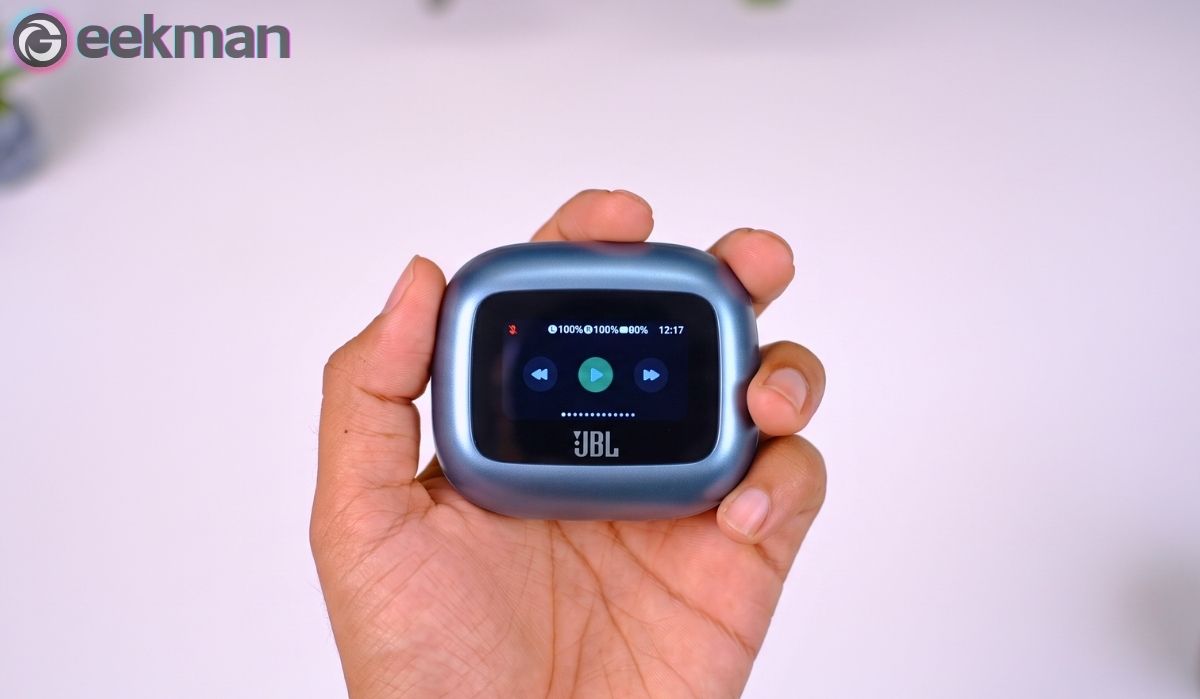
Cautious buy, with the pricing caveat. India street pricing has been drifting between ₹12,000-14,000 (Amazon India ₹13,999 at launch, has dipped to ₹11,999 in Great Indian Festival sales but rarely below ₹10,000). Included here because it’s the only earbud that comes close to this list’s ceiling with genuinely unique features (touchscreen case + Qi charging + LDAC + 48h battery). If you’re strictly under ₹10,000, skip and buy the Sony WF-C710N. If you can stretch and want the coolest case in the entire earbud market right now, this is it.
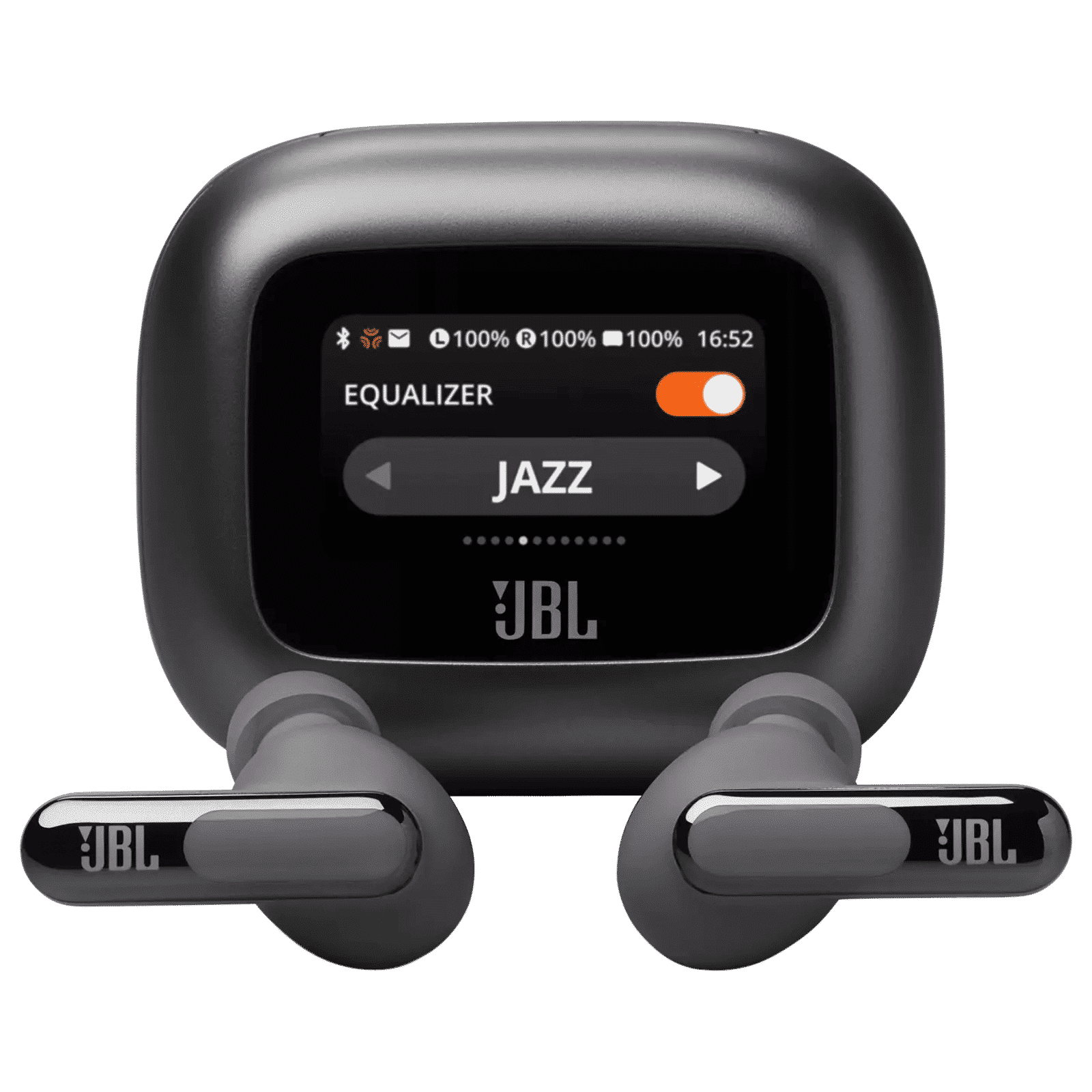
JBL fitted the Live Beam 3 with a 10mm dynamic driver using JBL’s Signature Sound tuning, six beamforming microphones for calls, and four noise-sensing mics for True Adaptive ANC. The centerpiece is a 1.45-inch color touchscreen on the charging case itself, no other earbud in this comparison (or any competitor at this price) has this. Available in Black, Silver, and Beige.
Build & Comfort
At 5g per earbud with a compact-ish case (bigger than most here to accommodate the touchscreen), fit is generally comfortable for 2-3 hour sessions. The shorter ovoid nozzle design suits shallow-fit preferences but if you’re used to deep-insertion (Sony style), you may find these lacking a proper seal. Silicone tips trap heat over long sessions, and the smooth plastic case attracts fingerprints. IP55 covers earbuds against dust and water splash. The 1.45-inch touchscreen case is genuinely useful (not gimmick), lets you adjust EQ, ANC modes, volume, skip tracks, see call notifications and lock-screen images, all without touching your phone. Battery of the case itself lasts weeks per charge for the display.
Sound Quality
JBL’s Signature Sound leans consumer-friendly bass-heavy, with a slight warmth in the mids. Deep bass has real weight and dig, mid-bass is punchy without being overwhelming, and treble is emphasized enough to give tracks like “Blinding Lights” satisfying clarity without being harsh. Mid-range is warm and slightly forward, so vocals and podcasts sound intimate and present. There’s an odd bump in the upper-bass frequencies (250-400Hz range) that can add slight muddiness on bass-heavy tracks, but the 10-band custom EQ + 6 presets in the JBL Headphones app let you clean this up. Personi-Fi feature runs a hearing test and adjusts frequency response to your ears, works well. Spatial audio profiles are available but noticeably weaker than Samsung’s 360 Audio or OnePlus’ spatial mode, feels artificial rather than immersive. LDAC + LC3 codec support means genuine Hi-Res on compatible Android phones and future BT LE Audio compatibility.
ANC & Features
Honest verdict: ANC is the weakest in this comparison. Measured attenuation runs roughly 10-30dB depending on frequency, meaningfully behind Sony (30dB measured), Samsung Buds3 FE, and OnePlus Buds 4. It handles general traffic noise, train rumble, and office chatter well enough, but constant low-frequency drone leaks through more than it does on the class leaders. Four dedicated ANC mics adjust adaptively based on your ear fit, and there are three modes (Everyday, Travel, Focus). The 1.45-inch case touchscreen is the standout feature, again, genuinely useful daily, not gimmick. Other features: Personi-Fi hearing test, Smart Ambient/TalkThru, Private Call Mode (separates mic and audio between the two buds for clearer calls), Hi-Res Audio Wireless certification, dual-device multipoint (works reliably), Fast Pair, OTA firmware updates.
Battery & Mic
JBL rates 12h (ANC off) / 10h (with adaptive ANC) / 9h (adaptive ANC on) per single charge, up to 48h total with the case. Real-world testing lands closer to 8h 13-23m with ANC on, LDAC codec, moderate volume, still class-leading endurance in this comparison. Total 48h with case is genuinely the longest here. Fast charging is decent, 15 min adds 4h. Only pair here with Qi wireless charging on the case, plus USB-C wired. On calls, six beamforming mics with wind and noise reduction handle voice well, testing indoors and outdoors shows people on the other end hear you as if you’re on a normal phone call, above average. Private Call Mode adds an interesting twist for clearer conversations.
vs The Competition
Against the Sony WF-C710N: JBL wins on features (touchscreen case, wireless charging, LDAC, battery); Sony wins on ANC, price, and comfort. Against the OnePlus Buds Pro 3: JBL wins on codec support (LDAC), battery, and case; OnePlus wins on ANC strength and driver hardware. Against the EarFun Air Pro 4+: EarFun wins on sound quality and price; JBL wins on case features (wireless charging + touchscreen). Against the Realme Buds Air 8 Pro: Realme wins on ANC + call mic + price; JBL wins on codec (LDAC + LC3), battery, and case features. If your budget is strictly ₹10K, buy the Sony or OnePlus Buds 4. If you can stretch to ₹12K and want the coolest case, buy this.
Show more +Pros & Cons
Specifications
- Driver: 10mm dynamic, JBL Signature Sound
- Bluetooth: 5.3 with dual-device multipoint, Google Fast Pair
- Codec: SBC, AAC, LDAC, LC3 (Hi-Res Audio Wireless certified)
- Battery: ~8h 13-23m tested (ANC on) · JBL rates 12h ANC off / 10h ANC on · up to 48h total with case (longest here)
- Charging: USB-C + Qi wireless (only pair here with wireless charging) · 15 min fast-charge = 4h
- Water Resistance: IP55 (earbuds only)
- ANC: True Adaptive ANC across 3 modes · ~10-30dB measured (weakest in this comparison)
- Other Features: 1.45″ color touchscreen on charging case, Personi-Fi hearing test, 10-band custom EQ + 6 presets, Smart Ambient/TalkThru, Private Call Mode, spatial audio, OTA firmware updates

Quick Comparison Table — Best Earbuds Under 10000 in India (2026)
| Earbud | Best For | ANC (measured/claimed) | Codec | Battery (total) | India Price |
|---|---|---|---|---|---|
| EarFun Air Pro 4 Plus | Hi-Res sound + best codec support | Up to 50dB | LDAC, aptX Lossless | 54h | ~₹7,000-8,000 |
| OnePlus Buds Pro 3 | Flagship-tier ANC + features | 50dB (adaptive) | LHDC 5.0 | 43h | ~₹10,000-10,600 |
| Sony WF-C710N | ANC-per-rupee + iPhone users | 30dB measured | AAC, SBC | 30h | ₹8,990 |
| OnePlus Buds 4 | Segment-leading ANC, best value | Up to 55dB | LHDC 5.0 | 45h | ₹5,999 |
| Realme Buds Air 8 Pro | Best call mic (bone-conduction VPU) | Up to 55dB | LHDC 5.0 | 50h | ₹6,999 |
| Samsung Galaxy Buds3 FE | Samsung Galaxy owners + AI features | Static, beats Buds3 Pro | AAC, SSC | 24-30h | ~₹12,999 (drops in sales) |
| Nothing Ear (a) | LDAC + standout design | 25dB measured (45dB claimed) | LDAC | 42.5h | ₹7,999 |
| JBL Live Beam 3 | Only Qi wireless + touchscreen case | 10-30dB (weakest) | LDAC, LC3 | 48h | ~₹12,000-14,000 |
FAQ — Best Earbuds Under ₹10000 in India (2026)
Which is the best earbud under ₹10,000 in India in 2026?
Quick answer: For most buyers in 2026, the EarFun Air Pro 4 Plus is my top pick, thanks to its rare Hi-Res codec support (LDAC + aptX Lossless), Bluetooth 6.0, and the highest verified ANC claim at this price. If you want the safest ANC-per-rupee pick with the most mature app experience, the Sony WF-C710N at ₹8,990 is the alternative. If you’re inside the Android/OnePlus ecosystem, the OnePlus Buds 4 at ₹5,999 offers segment-leading 55dB ANC for half the price.
Quick answer: The OnePlus Buds 4 (up to 55dB, tests as the strongest measured ANC at this price) leads on paper and in real-world testing. The Sony WF-C710N follows at ~30dB measured, which sits close to what a Bose QuietComfort Earbuds II delivers at 3x the price. Realme Buds Air 8 Pro (55dB claimed) and Samsung Galaxy Buds3 FE also test strong. Skip the Nothing Ear (a) if ANC is your top priority (marketed 45dB, tests closer to 25dB).
Quick answer: The EarFun Air Pro 4 Plus has the most refined, detailed tuning in this comparison, thanks to its dual-driver setup and LDAC + aptX Lossless codec support. The OnePlus Buds 4 sounds punchy and fun but leans bass-forward. The Sony WF-C710N gets a warm, balanced sound (mild 10kHz treble dip, otherwise excellent). The Realme Buds Air 8 Pro is dark and bass-heavy, great for Bollywood/hip-hop, needs EQ time for balanced sound.
Quick answer: The Realme Buds Air 8 Pro wins outright on call quality, its 6-mic + bone-conduction VPU system delivers voice clarity that’s dramatically better than every other earbud here, even in crowded metros. The Sony WF-C710N‘s AI-enhanced voice pickup is a close second (indoor + light outdoor). The OnePlus Buds 4 and OnePlus Buds Pro 3 also handle calls well thanks to their VPU systems.
Quick answer: Total battery with case: JBL Live Beam 3 leads at 48h claimed (~8h 13-23m tested per single charge). Realme Buds Air 8 Pro follows at up to 50h claimed (AAC, ANC off). OnePlus Buds 4 gets 45h, Nothing Ear (a) gets 42.5h. For single-charge with ANC on: Nothing Ear (a) leads at 8h 49m tested, Sony WF-C710N follows at 9h 25m (beating its own 8.5h claim).
Quick answer: The JBL Live Beam 3 is the only earbud in this comparison with a Qi wireless-charging case (also adds a 1.45-inch touchscreen on the case itself). Caveat: India street price often hovers ₹12,000-14,000, so it needs a sale to actually fit the under-₹10,000 budget. Every other earbud here charges via USB-C only.
Quick answer: None of these are dedicated gaming earbuds (2.4GHz dongle-based Sony INZONE or SteelSeries beat them all on latency). Among general-purpose Bluetooth earbuds here, the OnePlus Buds Pro 3 (94ms), OnePlus Buds 4, and Realme Buds Air 8 Pro (~45ms) offer the lowest-latency gaming modes and work fine for casual mobile gaming. The EarFun Air Pro 4 Plus also has a low-latency mode via aptX Adaptive.
Quick answer: Buy the Buds Air 8 Pro, it’s the current-generation (launched India June 2026) with 55dB ANC, LHDC 5.0, bone-conduction VPU mic, Bluetooth 6.1, and 50h battery. The Buds Air 7 Pro is an earlier model and lacks the mic upgrades and battery gains. Retailers (and Google’s AI search) frequently mix these two up, always confirm the listing explicitly says “8 Pro” before buying, and check the box confirms Bluetooth 6.1.
Quick answer: Yes, several do. EarFun Air Pro 4 Plus supports LDAC + aptX Lossless (most codec-rich here). Nothing Ear (a) and JBL Live Beam 3 support LDAC. The two OnePlus models and Realme Buds Air 8 Pro use LHDC 5.0 (works at full quality on OnePlus/Oppo/Realme/select Xiaomi/iQOO). Sony WF-C710N and Samsung Galaxy Buds3 FE support neither, AAC/SBC only.
Quick answer: Sony WF-C710N and EarFun Air Pro 4 Plus are the two safest iPhone picks, both work fully cross-platform, and iPhone’s AAC codec restriction means you don’t lose anything vs Android on LDAC/LHDC codecs anyway. Skip the Samsung Galaxy Buds3 FE if you’re on iPhone, without the Galaxy Wearable app you drop to basic Bluetooth playback only (no EQ, no ANC controls, no AI features).
Quick answer: The Sony WF-C710N is the strongest all-rounder for metro/traffic commutes, ~30dB measured ANC blocks train drone and engine noise effectively, 9h 25m single-charge lets you commute for days without recharging, and Sony’s app polish means no software friction. Runners-up: OnePlus Buds 4 (stronger ANC on paper) and Realme Buds Air 8 Pro (best call mic for taking calls during commutes).