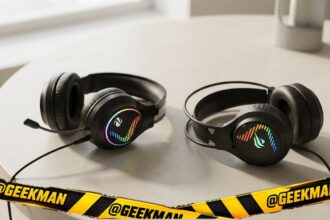

Short answer: The Audio-Technica ATH-M20x is the best starting point for a home studio: clear, accurate and built well. The Sennheiser HD 200 Pro is the alternative with more isolation. For the most open sound on a budget, the Samson SR850. The AKG K72 is the value pick.
You do not need expensive headphones to start recording or editing. Under five thousand there are honest monitor headphones from Audio-Technica, Sennheiser, AKG and Samson. All of them run fine from a laptop or a basic audio interface. Prices change every week during sales, so live prices sit in the buy buttons, not in the text. Updated on 18 November 2026.
Quick picks
| Pick | Headphone | Best for |
|---|---|---|
| Best overall | Audio-Technica ATH-M20x | Beginners starting a home studio or editing setup |
| Best Sennheiser | Sennheiser HD 200 Pro | Beginners who want a Sennheiser for editing and podcasting |
| Best semi-open | Samson SR850 | Budget mixing and listening in a quiet room |
| Best value | AKG K72 | Budget home studios and online classes |
| Best open sound | Koss UR40 | Light, casual listening at home |
| Best for DJ use | OneOdio Pro 10 | Beginner DJs, keyboard players and budget creators |
| Best with interface bundles | FIFINE H8 | Beginner streamers and podcasters using FIFINE gear |
| Creator pick | Maono AU-MH501 | Beginner video editors on a small budget |
| Best budget | AKG K52 | Students and beginners on the smallest budget |
Tap a name to jump to its review. Ranked by Geekman Score, best first.
Headphone finder
Answer 3 quick questions, get your top 3
Not sure which one? Start with Audio-Technica ATH-M20x, Sennheiser HD 200 Pro, Samson SR850.
How I ranked them
The Geekman Score
Geekman has reviewed audio gear for over 10 years. For this list I went through more than 30 studio headphones in this budget sold in India and compared what matters on a desk where you record, edit or mix: how flat or coloured the tuning is, closed or open back, isolation and leakage, impedance and whether a phone or audio interface can drive it, the cable and connector, pad comfort over hours, spare parts and warranty. Every pick gets a Geekman Score out of 10: Sound 35%, Features 25% (cable, isolation, comfort, accessories), Build and service 15% and Value 25%. Scores compare headphones inside this list only.
See all Geekman Scores
| # | Headphone | Sound | Features | Service | Value | Score |
|---|---|---|---|---|---|---|
| 1 | Audio-Technica ATH-M20x | 9.1 | 8.6 | 8.9 | 9.6 | 9.1 |
| 2 | Sennheiser HD 200 Pro | 9.1 | 8.6 | 9.2 | 9.0 | 9.0 |
| 3 | Samson SR850 | 9.0 | 8.4 | 7.7 | 9.6 | 8.8 |
| 4 | AKG K72 | 8.6 | 8.4 | 8.9 | 9.0 | 8.7 |
| 5 | Koss UR40 | 8.4 | 8.0 | 8.9 | 9.3 | 8.6 |
| 6 | OneOdio Pro 10 | 8.2 | 9.0 | 7.7 | 8.9 | 8.5 |
| 7 | FIFINE H8 | 8.3 | 8.9 | 6.5 | 9.2 | 8.4 |
| 8 | Maono AU-MH501 | 8.2 | 8.4 | 6.5 | 9.4 | 8.3 |
| 9 | AKG K52 | 8.4 | 8.2 | 8.9 | 7.5 | 8.2 |
The reviews
Best studio headphones under 5,000: 9 picks reviewed
Best overall
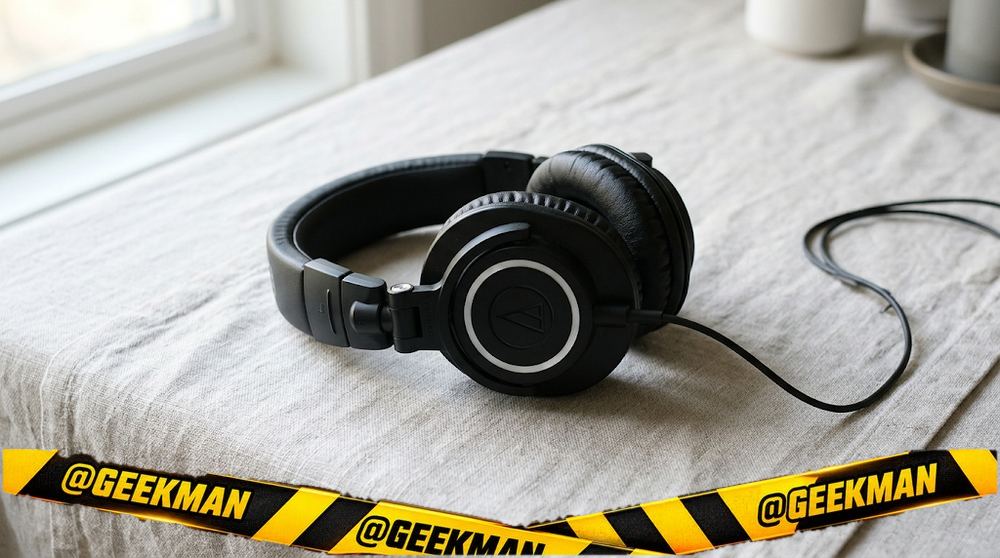
1. Audio-Technica ATH-M20x Studio Monitor Headphones
9.1Geekman Score
9.1 Sound
8.6 Features
8.9 Build & service
9.6 Value
The cheapest proper studio headphone from a big pro brand, honest in the mids and light on the head, but thin in the deep bass.
Over-ear, Wired · 40mm drivers · 47 ohm, no amp needed · 1 year
Best for
✓ Beginners recording vocals, guitar or podcasts at home on a tight budget
✓ Students learning music production who want a flatter sound than consumer headphones
✓ Video editors who need to hear dialogue clearly and plug straight into a laptop or phone
Skip if
• You make bass-heavy music like EDM or hip-hop and need to judge the low end (the ATH-M50x goes deeper)
• You want a cable you can replace when it breaks (the M50x has detachable ones)
• You have large ears or plan 4 to 5 hour sessions (the small, stiff cups get tiring)
My take: The M20x is the honest starter pick. Mids and vocals come through cleanly, the tuning is closer to neutral than most headphones at this budget, and 47 ohm means a phone or laptop drives it fine. The catch is the deep bass, which simply isn’t there below the kick drum, plus a fixed cable and small pads that you will notice after an hour.


Audio Technica ATH-M20x Wired without Mic
 Lowest price
Up to 4% instant discount on select credit cards; cashback on Amazon Pay ICICI cards +1
- Up to 4% instant discount on select credit cards; cashback on Amazon Pay ICICI cards
- No Cost EMI on select cards
Pros and cons
What I like
+ Close to neutral, clear mids for vocals and dialogue
+ Light at about 190 g
+ Easy to drive from a phone or laptop
+ Long 3 m cable with 6.3 mm adapter for studio gear
What I don’t like
• Deep bass rolls off below about 60 Hz
• Fixed cable with an exposed section
• Small, firm vinyl pads get tiring and warm
My full review: who it suits, what it is like and how it compares
Who should buy it. Someone starting out with a USB audio interface, a keyboard or a laptop and a mic, who wants a real monitoring headphone without spending much. It is also a good pick for editing videos or podcasts, where clear speech matters more than rumble. If you already know you need accurate bass for mixing, save up for the ATH-M50x instead.
Sound and accuracy. Measurement-based reviews call it one of the more neutral closed-backs around. Bass is fairly flat down to about 60 Hz and then drops away, so kick drums and bass guitar sound lighter than they really are. Mids are full and clear, which is why vocals and dialogue are easy to judge. Treble is clean with a few small peaks, but nothing harsh. For tracking and rough mixes it is fine; for judging sub-bass you will need a second reference.
Comfort and build. At around 190 g it is light, and the headband padding spreads the pressure well. Clamp is gentle. The weak point is the ear pads: they are firm vinyl, the cups are on the small side and don’t swivel, so larger ears get cramped and you will want a break after an hour or two. In a hot room without AC the vinyl gets sweaty. The body is mostly plastic with metal only in the headband sliders. It feels light rather than premium, but it handles normal knocks.
Cable and connections. The 3 m cable is fixed to the left cup, with a 3.5 mm plug and a 6.3 mm adapter for mixers and interfaces. The length is good at a desk and annoying anywhere else. A short section of exposed wire between the cups is the most likely failure point, and if the cable gets damaged it is a repair job, not a swap. It doesn’t fold and no pouch comes in the box.
Who it is not for. People who want headphones for the metro or travel: it doesn’t fold, the cable is very long and isolation only handles moderate noise. Bass lovers will find it dull. And if you are ready to spend more for a headphone you will keep for years, the M50x gives you detachable cables, folding and deeper bass.
M20x or HD 200 PRO? Buy the M20x if you want to mix or edit, because its mids are more honest. Buy the HD 200 PRO if you mostly practice an instrument or listen for fun: it has more bass, better isolation and a 2-year warranty. Neither cable is detachable.
M20x or SR850? The SR850 is semi-open, so it sounds wider and more airy, with tight bass and detailed mids. The M20x is closed, so it isolates and does not leak into your mic. Take the M20x for recording vocals and the SR850 for editing in a quiet room.
Key specs
| Type | Over-ear, closed-back |
| Connection | Wired |
| Drivers | 40mm |
| Impedance | 47 ohm |
| Noise cancelling | Passive isolation only |
| Microphone | No mic |
| Cable | Fixed 3m straight, left side, 3.5mm with 6.3mm adapter |
| Weight | 190 g |
| Works with | Phones, laptops, audio interfaces, mixers |
| Warranty | 1 year, extendable by registering with Audio-Technica India |
Best Sennheiser
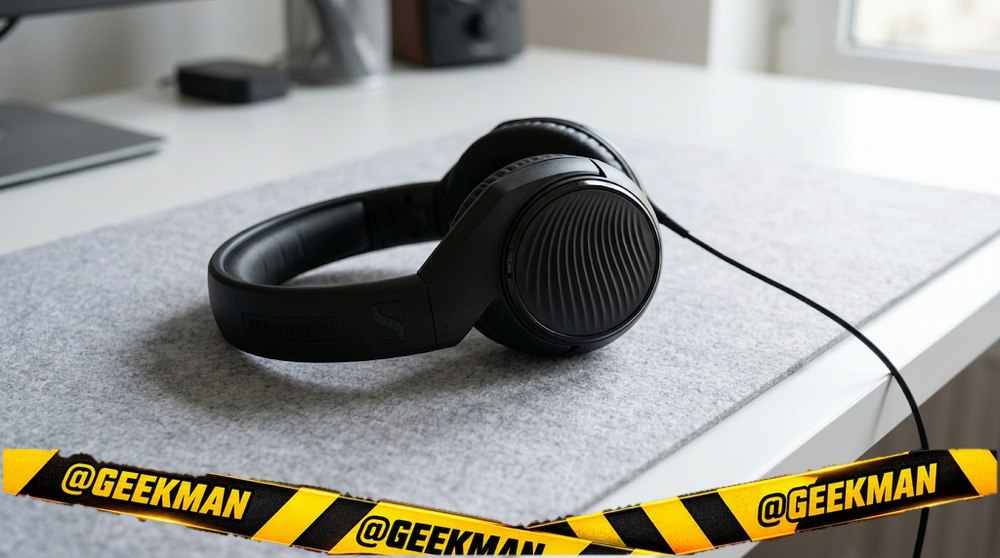
2. Sennheiser HD 200 Pro Studio Headphones
9.0Geekman Score
9.1 Sound
8.6 Features
9.2 Build & service
9.0 Value
Sennheiser’s entry studio headphone with a fun, bass-forward sound, good isolation and a 2-year warranty. Better for practice and enjoyment than for mixing.
Over-ear, Wired · 2 years
Best for
✓ Musicians who practise on a digital piano or e-drums and want good isolation
✓ Casual listeners who want a light, bassy closed-back for home
✓ Live monitoring while recording, where blocking noise matters more than accuracy
Skip if
• You plan to mix or master (the boosted bass and uneven tuning mislead; the ATH-M20x is flatter)
• You are rough on cables (the thin cable is fixed)
• You want a folding headphone for travel
My take: The HD 200 PRO sounds lively and full, isolates well and weighs very little, and Sennheiser backs it with 2 years of warranty in India. The catch is accuracy: measurement-based reviewers found a boosted bass, a dip in the upper mids and uneven left-right balance, so it is a monitoring and practice headphone, not a reference for mixing.

Sennheiser HD 200 PRO Studio Headphone Wired without Mic
Lowest price
Up to 4% instant discount on select credit cards; cashback on Amazon Pay ICICI cards +1
- Up to 4% instant discount on select credit cards; cashback on Amazon Pay ICICI cards
- No Cost EMI on select cards

Up to 5% cashback on Flipkart Axis & Flipkart SBI credit cards Details
- Up to 5% cashback on Flipkart Axis & Flipkart SBI credit cards
Pros and cons
What I like
+ Lively, bass-forward sound
+ Very light at about 187 g
+ Good passive isolation for practice
+ 2-year warranty
What I don’t like
• Not accurate enough for mixing
• Thin fixed cable
• Doesn’t fold
My full review: who it suits, what it is like and how it compares
Who should buy it. A keyboard player, guitarist with an amp sim or drummer on an e-kit who wants something comfortable that blocks the room. It also suits relaxed music listening at home. If your goal is mixing, the ATH-M20x or ATH-M50x will tell you the truth more often.
Sound and accuracy. Reviews agree it is energetic and bass-forward, close to a V shape. Bass is boosted but doesn’t reach the deepest sub-bass, and some find it a bit spongy. Mids are forward and vocals are smooth without hiss, while a dip around 4 kHz softens harsh sounds. One measurement lab found channel balance off by several dB in the bass and said it could not recommend it for production. For pop, rock and practice it is enjoyable.
Comfort and build. It is very light at about 187 g without the cable, and the plush pads leave room for most ears. Some testers found the headband cushion bothersome after an hour, and the synthetic leather gets sweaty in a warm room. The body is all plastic and feels a bit cheap, though the flexible headband should resist snapping. Ear pads are replaceable. It doesn’t fold.
Cable and connections. A fixed 2 m single-sided cable with a 3.5 mm plug and a 6.3 mm adapter for e-pianos and amps. The cable is thin, and if it breaks you need a soldering job. At 32 ohm it runs fine from a phone or laptop.
Who it is not for. Producers who need accurate bass and balance, and anyone who wants to carry headphones every day. For editing voices, the Sony MDR-7506 or ATH-M20x are clearer choices.
HD 200 PRO or M20x? The HD 200 PRO is the more fun and better isolating pair, lighter at about 187 g, with a 2-year warranty. The M20x is the more accurate one for mixing. Pick by your job: practice and enjoyment, Sennheiser; mixing on a budget, Audio-Technica.
HD 200 PRO or AU-MH501? Both isolate well. The Maono is flatter and clearer, and its cups fold flat for one-ear monitoring, but it clamps tight and gets tiring after 3 to 4 hours. The HD 200 PRO is lighter with more bass. For flat sound, Maono; for comfort and fun, Sennheiser.
Key specs
| Type | Over-ear, closed-back |
| Connection | Wired |
| Drivers | Not stated |
| Impedance | 32 ohm |
| Noise cancelling | Passive isolation only |
| Microphone | No mic |
| Cable | Fixed 2m, single-sided, 3.5mm with 6.3mm adapter |
| Weight | About 187 g (203 g with cable) |
| Works with | Phones, laptops, audio interfaces |
| Warranty | 2 years |
Best semi-open
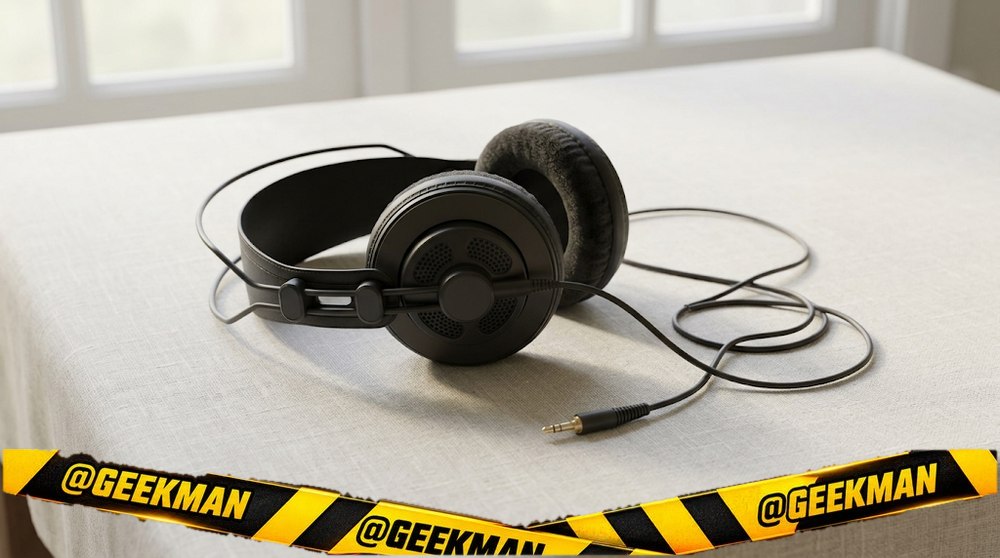
3. Samson SR850 Semi-Open Studio Headphones
8.8Geekman Score
9.0 Sound
8.4 Features
7.7 Build & service
9.6 Value
A semi-open studio headphone with a wide, airy and detailed sound that is rare at this budget, as long as you don’t need isolation.
Over-ear, Wired · 50mm drivers · Check the warranty card
Best for
✓ Home producers who mix in a quiet room and want an open feel
✓ Listeners who find closed headphones stuffy and congested
✓ Anyone who wants detailed mids and treble on a small budget
Skip if
• You record vocals with a mic nearby (it leaks sound into the mic)
• You sit in a noisy room or share space with family (no isolation)
• You want comfort for long sessions (shallow pads; the AKG K52 is easier to wear)
My take: The SR850 gives you a more open, spacious sound than any closed-back at its price, with clear mids and good detail. The trade-offs are real: it leaks both ways, the pads are shallow and warm, the plastic feels cheap and the treble has a bright peak that can tire you on long sessions.

Samson SR850 Studio Wired Over Ear Headphones Without Mic (Black)
Up to 4% instant discount on select credit cards; cashback on Amazon Pay ICICI cards +1
- Up to 4% instant discount on select credit cards; cashback on Amazon Pay ICICI cards
- No Cost EMI on select cards
Pros and cons
What I like
+ Open, spacious sound rare at this budget
+ Clear, detailed mids
+ Comfortable self-adjusting headband
+ Thick, sturdy cable with screw-on adapter
What I don’t like
• No isolation, leaks sound
• Shallow, warm pads
• Bright treble peak can tire you
My full review: who it suits, what it is like and how it compares
Who should buy it. A bedroom producer or music listener with a quiet room who wants a wider sound than the usual closed studio headphone. It is good for checking stereo placement and detail in a mix. If you need to record with headphones on or block noise, choose a closed-back like the ATH-M20x instead.
Sound and accuracy. Reviewers call it balanced with a slight brightness. Bass is tight and controlled but doesn’t go very deep, mids are natural and detailed, and vocals are clear. The treble has a bright peak that adds detail but can fatigue some people after a while. Soundstage is more spacious than closed-backs, though one reviewer felt it was narrower than other semi-opens. Imaging is accurate.
Comfort and build. It weighs about 276 g, and the self-adjusting headband is the comfortable part, with a gentle, even clamp. The cups are shallow, so many ears touch the inside, and the pads trap heat, which means sore, sweaty ears after an hour without AC. Some owners swap in aftermarket pads. The build is all plastic and flexes, but reviewers found it survived drops better than its feel suggests.
Cable and connections. A fixed 2.5 m straight cable, thick and sturdy, with a 3.5 mm plug and a screw-on 6.3 mm adapter. At 32 ohm a phone or laptop drives it without trouble.
Who it is not for. Anyone who needs isolation: people nearby will hear your music and you will hear them. It is not for travel, recording vocals or noisy homes. In India it is sold mainly through music stores and importers, so check the seller’s warranty before buying.
SR850 or M20x? The SR850 has the widest, most detailed sound here, rare for this budget, but it leaks both ways and has a bright treble peak. The M20x is closed and better for recording. Choose the SR850 only if you work in a quiet room and no mic is near.
SR850 or K72? Both have a wide presentation, but the K72’s boxy mids bury vocals while the SR850’s mids stay detailed. The K72 at least isolates a little, while the SR850 leaks both ways. For studio use, the SR850 is the clear pick.
Key specs
| Type | Over-ear, semi-open-back |
| Connection | Wired |
| Drivers | 50mm |
| Impedance | 32 ohm |
| Noise cancelling | Passive isolation only |
| Microphone | No mic |
| Cable | Fixed 2.5m straight, 3.5mm with screw-on 6.3mm adapter |
| Weight | About 276 g |
| Works with | Phones, laptops, audio interfaces |
| Warranty | Check the warranty card |
Best value
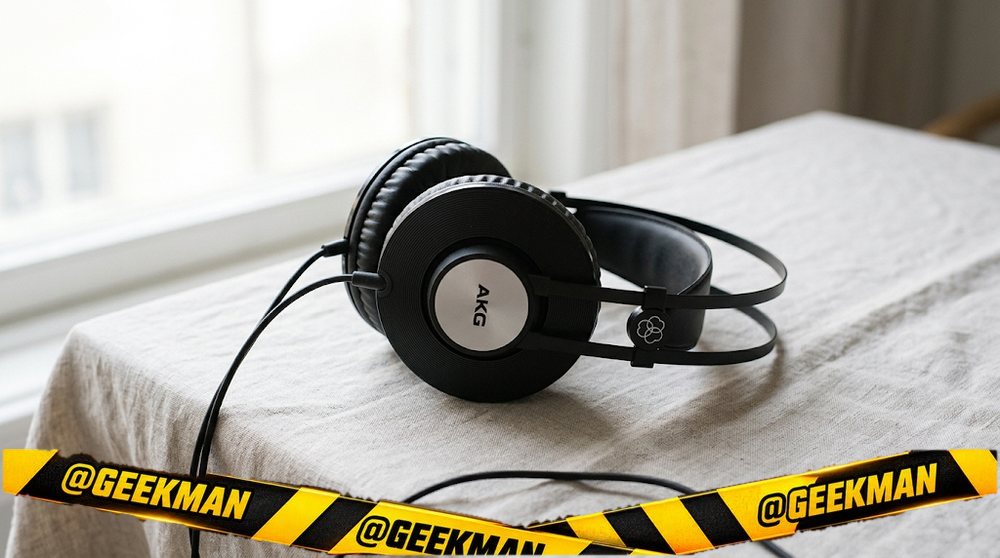
4. AKG K72 Closed-Back Studio Headphones
8.7Geekman Score
8.6 Sound
8.4 Features
8.9 Build & service
9.0 Value
A light, comfortable AKG closed-back with a wide sound, but its boxy mids make it a weaker studio tool than its looks suggest.
Over-ear, Wired · 40mm drivers · 1 year
Best for
✓ Long practice sessions on a keyboard where comfort matters most
✓ Home movie watching and casual listening on a budget
✓ People who like a wide, open presentation from a closed-back
Skip if
• You want accurate vocals for editing or mixing (the Sony MDR-7506 or ATH-M20x are clearer)
• You need isolation for recording or a noisy room
• You want something sturdy to carry around
My take: The K72 is genuinely comfortable thanks to its self-adjusting band and light clamp, and the sound is wide for a closed-back. But reviews disagree sharply on its tuning, and the measured one found loud lower mids and a deep dip in the upper mids that buries vocals. I’d only pick it for comfortable home listening; for studio work the ATH-M20x is the safer buy.

AKG K72 Wired Over_Ear Wired Headphones, Multicolor
Up to 4% instant discount on select credit cards; cashback on Amazon Pay ICICI cards +1
- Up to 4% instant discount on select credit cards; cashback on Amazon Pay ICICI cards
- No Cost EMI on select cards
Pros and cons
What I like
+ Very comfortable self-adjusting headband
+ Light, about 200 g
+ Wide sound for a closed-back
+ Long, thick cable with screw-on adapter
What I don’t like
• Coloured, boxy mids that bury vocals
• Weak isolation
• Flexible plastic build
My full review: who it suits, what it is like and how it compares
Who should buy it. A student or hobbyist who wants a comfortable, cheap headphone for long practice sessions or films at home, and isn’t judging fine detail. At 32 ohm it plugs into any phone, laptop or keyboard.
Sound and accuracy. What Hi-Fi liked its wide, expansive sound and tight bass but called the midrange coloured and boxy. SoundGuys measured it and found the 200 Hz to 1 kHz range too loud, weak bass and upper mids around 3 kHz pushed down by nearly 15 dB, which buries vocals behind guitars. That uneven curve is also hard to fix with EQ. In plain words: pleasant enough for casual listening, unreliable for decisions about vocals.
Comfort and build. This is its strength. The self-adjusting suspension headband spreads pressure well, clamp is light and at about 200 g it is easy to wear all day. The pads are stiff vinyl and a bit uneven, so the seal isn’t great and they get warm. The body is mostly flexible plastic on two steel bands, the cups have some play at the joints and it doesn’t fold. Treat it gently.
Cable and connections. A fixed, thick 3 m single-sided cable with a 3.5 mm plug and a screw-on 6.3 mm adapter. Good for a desk or keyboard, too long for portable use. No mic or remote.
Who it is not for. Anyone editing dialogue, mixing music or recording near a mic. Isolation is weak, so voices and low sounds pass through. If you can add a little to the budget, the Sony MDR-7506 or ATH-M20x will serve studio work much better.
K72 or K52? These two sound similar and both isolate weakly. The K52 is the cheaper one and comes across as more balanced. Unless you prefer the K72’s 3 m cable and suspension headband, take the K52 or move up to the M20x.
Key specs
| Type | Over-ear, closed-back |
| Connection | Wired |
| Drivers | 40mm |
| Impedance | 32 ohm |
| Noise cancelling | Passive isolation only |
| Microphone | No mic |
| Cable | Fixed 3m single-sided, 3.5mm with screw-on 6.3mm adapter |
| Weight | 200 g |
| Works with | Phones, laptops, audio interfaces |
| Warranty | 1 year |
Best open sound
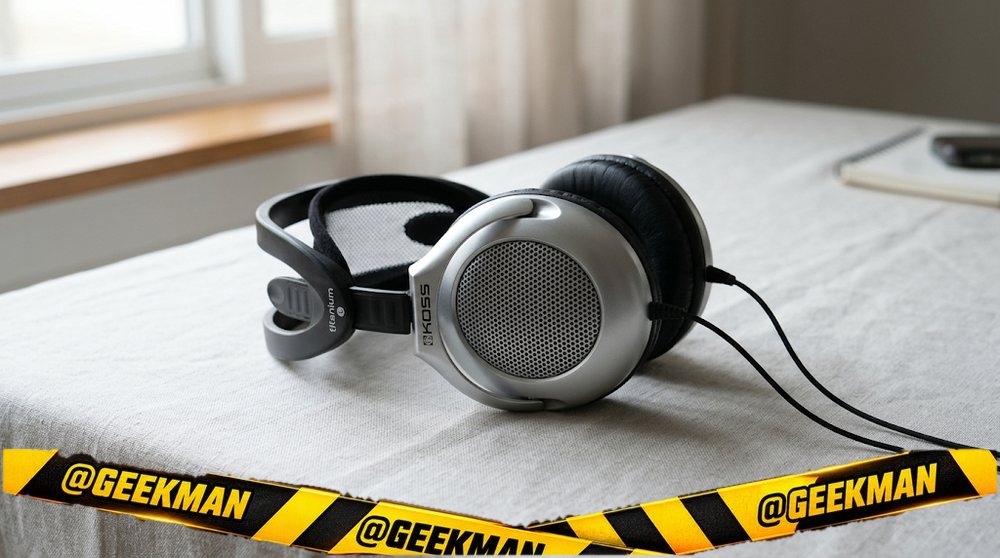
5. Koss UR40 Headphones
8.6Geekman Score
8.4 Sound
8.0 Features
8.9 Build & service
9.3 Value
A light, collapsible Koss for relaxed home listening, with an open feel and full bass. It is not really a studio monitor.
Over-ear, Wired · Collapsible · Check the warranty card
Best for
✓ Casual music and podcast listening at home where leakage doesn’t matter
✓ People who want a very light, airy headphone for hot rooms
✓ Anyone who wants a collapsible full-size headphone for a bag
Skip if
• You need studio monitoring (it is not tuned for it; the ATH-M20x is)
• You share a room or travel by metro (open design leaks and lets noise in)
• You use a laptop at a desk (the dual-entry 1.2 m cable is short and awkward)
My take: The UR40 is comfortable and light, with screened cups that let air through, which helps in warm weather. The sound is warm with ample bass and slightly hollow mids. That makes it a nice casual headphone, but not a monitoring tool, and its open design means no isolation.

Koss UR40 Wired Over The Ear Headphone Without Mic (Silver)
Up to 4% instant discount on select credit cards; cashback on Amazon Pay ICICI cards +1
- Up to 4% instant discount on select credit cards; cashback on Amazon Pay ICICI cards
- No Cost EMI on select cards
Pros and cons
What I like
+ Very light, about 175 g
+ Airy, sweat-friendly open design
+ Full bass for casual listening
+ Collapsible
What I don’t like
• Not accurate enough for studio work
• Leaks sound, no isolation
• Short dual-entry cable, no 6.3 mm adapter
My full review: who it suits, what it is like and how it compares
Who should buy it. Someone who wants an easy, light headphone for music and videos at home and likes a slightly open, airy feel. It collapses for storage and is light enough to wear for long stretches. If you are buying for recording, editing or mixing, pick a real studio model like the ATH-M20x or Sony MDR-7506.
Sound and accuracy. Koss calls it a hybrid: closed leatherette cushions for bass and screened cups that let outside sound in. Reviews describe broad, ample bass with mids that are less present and sometimes a little hollow. That suits relaxed listening to pop and rock but hides the midrange detail you need to check vocals. At 60 ohm it needs more volume than most here, so on some phones you may find it quieter.
Comfort and build. At around 175 g it is one of the lightest full-size headphones you can buy, and the large cups are comfortable for long sessions. The open webbing helps against sweat. Durability reports are mixed, as you would expect from a light, plastic headphone. It collapses into a small bundle for a bag.
Cable and connections. A fixed, straight 1.2 m cable that enters both cups, ending in a 3.5 mm plug. There is no 6.3 mm adapter, so you need one for a mixer or amp. Fine for a phone, short for a desktop setup.
Who it is not for. Anyone who needs isolation or privacy: sound leaks out and noise comes in. Studio users should look elsewhere. In India the warranty runs through Koss’s partner Headphone Zone, so buy from an authorised seller.
UR40 or SR850? The UR40 is a casual home headphone with warm bass and a short dual-entry cable. The SR850 is a real semi-open studio pair with detailed mids and a long cable. For studio work, the SR850; for relaxed listening on the sofa, the light UR40 is fine.
Key specs
| Type | Over-ear, hybrid semi-open (screened cups) |
| Connection | Wired |
| Drivers | Not stated |
| Impedance | 60 ohm |
| Noise cancelling | Passive isolation only |
| Microphone | No mic |
| Cable | Fixed 1.2m straight, dual entry, 3.5mm |
| Weight | 175 g |
| Works with | Phones, laptops, music systems |
| Warranty | 1 year (Koss India, via Headphone Zone) |
Best for DJ use
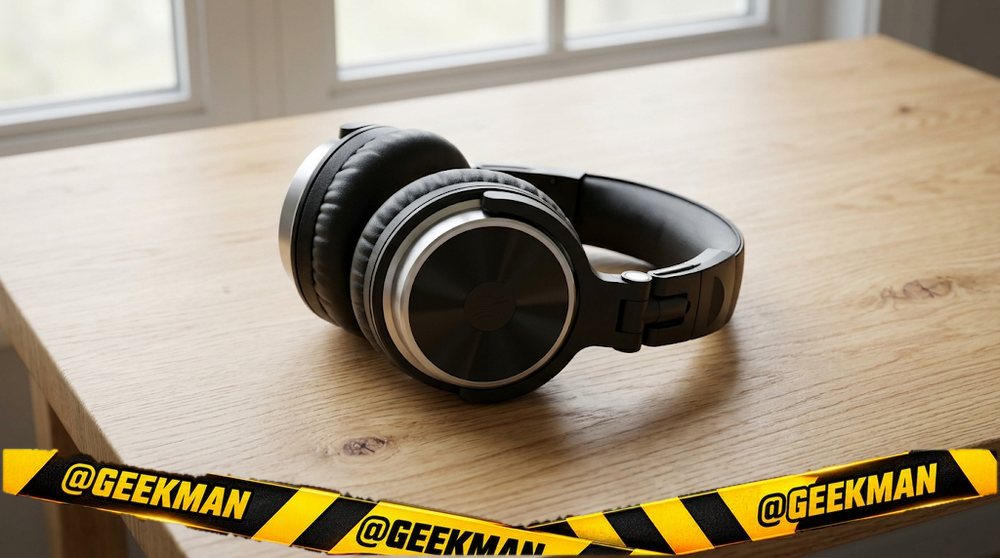
6. OneOdio Pro 10 Studio Headphones
8.5Geekman Score
8.2 Sound
9.0 Features
7.7 Build & service
8.9 Value
A cheap DJ-style headphone with two detachable cables, a mic cable for calls and a punchy sound. Great value if your ears aren’t large.
Over-ear, Wired · 50mm drivers · Inline mic on the short cable · 2 detachable cables · Shared jack for a second headphone · 1 year
Best for
✓ Beginner DJs who want swivelling cups and a coiled cable on a small budget
✓ Students who want one headphone for practice, music and phone calls
✓ Sharing a movie or a track with a friend through the second jack
Skip if
• You have large ears or a big head (the cups sit on the ear and the clamp is firm)
• You need a neutral headphone for mixing (the ATH-M20x is flatter)
• You want a bass-heavy sound (bass is punchy but not huge)
My take: I tested this one, and at its price it is one of the best sounding headphones I have used: tight, punchy bass, clear mids and crisp highs. It folds, the cups swivel for one-ear monitoring and you get two detachable cables, one with a mic. The catch is comfort for large ears; the round cups are small and start to bother after about an hour. My full review has the details.

Oneodio Pro 10 Wired
Lowest price
Up to 4% instant discount on select credit cards; cashback on Amazon Pay ICICI cards +1
- Up to 4% instant discount on select credit cards; cashback on Amazon Pay ICICI cards
- No Cost EMI on select cards
Pros and cons
What I like
+ Punchy, crisp sound for the price
+ Two detachable cables, including one with a mic
+ Folds flat, cups swivel for one-ear monitoring
+ Share port for a second headphone
What I don’t like
• Small cups get uncomfortable for large ears after about an hour
• Firm clamp, plasticky headband that flexes
My full review: who it suits, what it is like and how it compares
Who should buy it. A beginner DJ, a student with a keyboard or a casual listener who wants a do-everything wired headphone at a very low price. The long coiled cable with a 6.3 mm plug suits mixers and keyboards, and the short cable with a mic works for calls on a phone with a 3.5 mm jack. I recommended it as a value pick in my full review.
Sound and accuracy. When I tested it, the sound was tight, punchy bass with crisp, sharp highs and clear mids that don’t irritate, and it stayed easy on the ears over long listening. Bassheads may still want more low end. It is tuned like a DJ headphone, so soundstage is not its focus and it isn’t neutral. Other reviewers describe it as a mild V shape and note some distortion if you push it very loud.
Comfort and build. This is where it falls short for some people. The padding on the cups and headband is thick, but the round cups are small, so larger ears end up resting the cups on the top of the ear. The clamp is on the firm side; extending the headband eases it. If you have large ears, expect to take them off for a few minutes after about an hour. The build is mostly plastic with metal-look accents, and the headband flexes a lot. It folds flat and the cups swivel up to 90 degrees.
Cable and connections. You get two detachable cables. The short one has an inline mic with one button for calls, play and pause, track skip and the voice assistant. The 9.8 ft coiled cable has a 6.3 mm plug on one end and 3.5 mm on the other, so no adapter is needed. There is a 3.5 mm jack on one cup and a 6.3 mm jack on the other, and the spare jack lets a second headphone plug in and share the audio.
Who it is not for. People with large ears or who wear headphones for hours at a stretch, and anyone who needs a flat studio reference. If your budget allows, OneOdio’s own Pro 50 has softer cups and a more balanced sound.
Pro 10 or M20x? I tested the Pro 10 (full review): punchy bass, clear mids and two detachable cables, one with a mic for calls. The M20x is flatter and better for mixing. The Pro 10 has small cups, so large ears get sore after about an hour. For DJ practice and fun, the Pro 10; for studio accuracy, the M20x.
Pro 10 or FIFINE H8? Both come with detachable cables. The H8 is tuned for voice and is lighter, which suits podcasting. The Pro 10 has more bass and an inline mic cable for calls. Voice work, H8; music and DJ use, Pro 10.
Key specs
| Type | Over-ear, closed-back |
| Connection | Wired |
| Drivers | 50mm |
| Impedance | 32 ohm |
| Noise cancelling | Passive isolation only |
| Microphone | Inline mic on the short cable |
| Cable | 2 detachable cables: 2 to 3m coiled 3.5mm to 6.35mm, and 1.2m 3.5mm with mic; shared jack on the cup |
| Weight | About 239 g |
| Works with | Phones, laptops, DJ mixers, keyboards |
| Warranty | 1 year |
Best with interface bundles
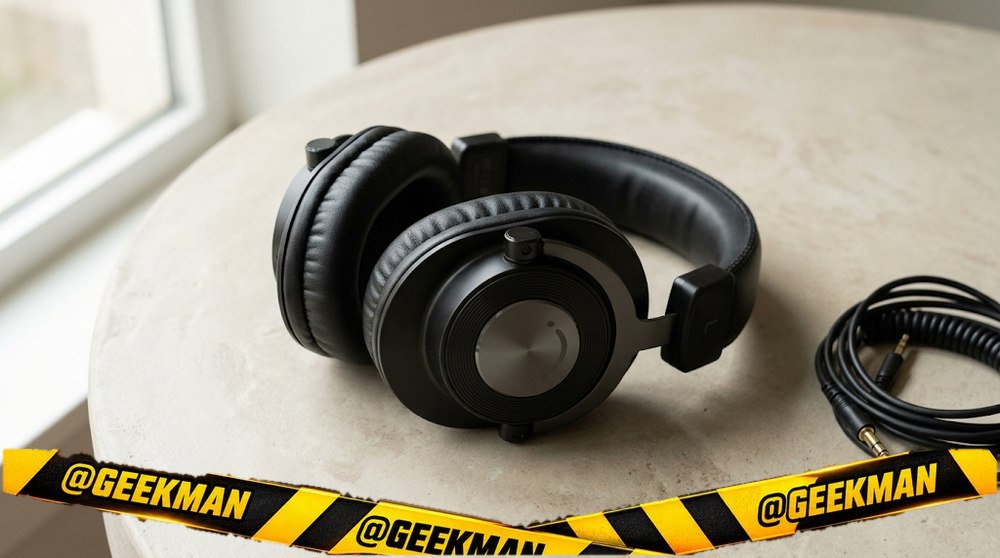
7. FIFINE H8 Studio Monitor Headphones
8.4Geekman Score
8.3 Sound
8.9 Features
6.5 Build & service
9.2 Value
A light, cheap closed-back for podcasting and voice editing, with two detachable coiled cables in the box.
Over-ear, Wired · 50mm drivers · 2 detachable cables · Check the warranty card
Best for
✓ Podcasters and streamers who already use a FIFINE or similar USB mic and want matching monitoring
✓ Beginners editing voice-overs, interviews or video audio on a laptop
✓ People with small to medium heads who want something light
Skip if
• You have a large head or big ears (the shallow cups and tight band suit smaller heads; the Maono AU-MH501 has a deeper seal)
• You need strong isolation for recording next to loud instruments (the HD 280 Pro blocks far more)
• You want bass for casual music listening
My take: For voice work this is a sensible starter pair: the tuning puts voices up front and keeps the treble even, so pops, clicks and harsh S sounds are easy to hear. It is light and the cables are detachable, which is rare at this level. The catch is fit. The pads are shallow, so your ears may touch the drivers, and on bigger heads the seal and isolation drop off.

FIFINE Studio Monitor Headphones for Recording-Over-Ear Wired Headphones for Podcast Monitoring, Streaming Comfortable Equipment with Detachable Cables 3.5mm or 6.35mm Jack, Black, on PC/Mixer-H8
Up to 4% instant discount on select credit cards; cashback on Amazon Pay ICICI cards +1
- Up to 4% instant discount on select credit cards; cashback on Amazon Pay ICICI cards
- No Cost EMI on select cards
Pros and cons
What I like
+ Light at about 265 g
+ Two detachable coiled cables in the box
+ Clear, forward voices for speech editing
+ Easy to drive from a phone or laptop
What I don’t like
• Shallow pads and tight band, better for smaller heads
• Isolation is weak when the seal is poor
• Not a pair for bass or long music sessions
My full review: who it suits, what it is like and how it compares
Who should buy it. Someone starting a podcast, a video channel or a voice-over setup who wants a proper closed-back pair without spending much. It runs straight from a phone, laptop, audio interface or mixer at 32 ohm, so there is nothing extra to buy. If you mostly mix music or want one pair for music, editing and long listening, spend more on the ATH-M30x, Sony MDR-M1 or a Sennheiser.
Sound and accuracy. The tuning is aimed at speech. Voices sit forward and clear, which helps you separate dialogue from background noise when editing. Treble is level and controlled, good for catching mouth clicks and plosives. Bass is not boosted, so a close-mic voice can sound slightly small, and some reviewers found the lower mids a little loose. On loud, busy music the forward mids can get tiring, so this is a voice tool first and a music headphone second.
Comfort and build. At about 265 g it is light, and the matte plastic body is well finished for the money. The headband padding is soft, but it is on the tight side and the leatherette ear pads are shallow, so the drivers can sit very close to your ears. People with larger heads report the cups shifting and the seal weakening. The pads are replaceable, which helps once the leatherette wears, and leatherette gets warm in a room without AC.
Cable, impedance and what it needs to drive it. You get two detachable coiled cables, one 3.5mm to 3.5mm and one 3.5mm to 6.35mm, so it plugs into a phone or laptop as easily as an interface or mixer. A detachable cable means a chewed or snapped cable is a cheap swap, not a dead headphone. The cable enters one cup only, so if your source sits on the opposite side the coil can feel short. At 32 ohm any phone, dongle or laptop drives it loud enough. FIFINE does not publish clear India warranty terms, so check what the seller offers.
H8 or AU-MH501? The Maono isolates better and has the flatter sound. The H8 is lighter and its two coiled cables detach, so a damaged cable does not end it. For podcasting in a noisy home, Maono; for a light pair with spare cables, FIFINE.
Key specs
| Type | Over-ear, closed-back |
| Connection | Wired |
| Drivers | 50mm |
| Impedance | 32 ohm |
| Noise cancelling | Passive isolation only |
| Microphone | No mic |
| Cable | 2 detachable coiled cables up to 3m: 3.5mm to 3.5mm and 3.5mm to 6.35mm |
| Weight | 265 g |
| Works with | Phones, laptops, audio interfaces, mixers |
| Warranty | Not clearly stated by FIFINE; check with the seller |
Creator pick
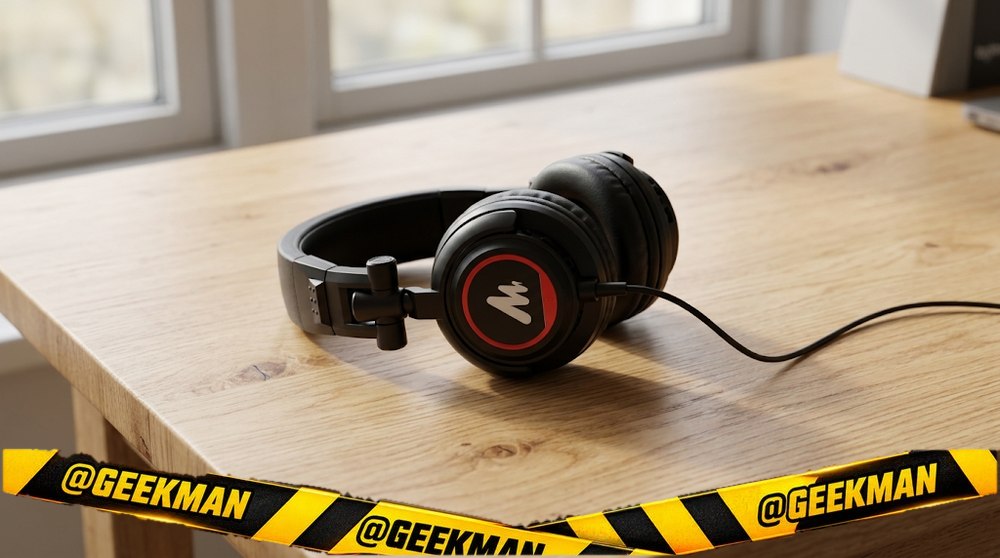
8. Maono AU-MH501 Studio Monitor Headphones
8.3Geekman Score
8.2 Sound
8.4 Features
6.5 Build & service
9.4 Value
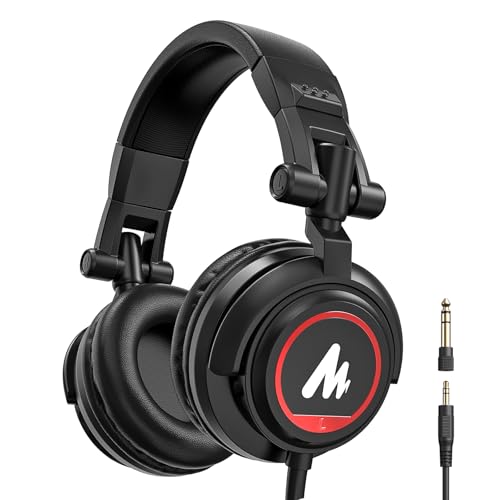
The budget studio pair I’ve used myself: flat, clear sound and better isolation than its price suggests, but a tight fit.
Over-ear, Wired · 50mm drivers · Check the warranty card
Best for
✓ Beginner video editors and content creators who want honest, uncoloured sound
✓ Recording vocals or voice-overs where you need the cans to block the room
✓ Anyone who wants to monitor on one ear (the cups rotate)
Skip if
• You wear headphones for 5 to 6 hours at a stretch (the clamp is tight; the Audio-Technica ATH-M30x is gentler)
• You want bass and sparkle for fun listening
• You want a detachable cable (the FIFINE H8 has two)
My take: I have used this one, and it does the main job right: the sound is flat, clear and free of distortion, with nothing added to make it sound exciting. The build is better than I expected at this level and it isolates well, which matters when you record in a normal Indian room with a fan and traffic outside. My catch is comfort. The fit is tight, and after 3 to 4 hours you’ll want a break.
MAONO AU-MH501 Wired without Mic
Lowest price
Up to 4% instant discount on select credit cards; cashback on Amazon Pay ICICI cards +1
- Up to 4% instant discount on select credit cards; cashback on Amazon Pay ICICI cards
- No Cost EMI on select cards
Pros and cons
What I like
+ Flat, clear, distortion-free sound
+ Good isolation for recording in a noisy room
+ Folding, rotating cups for one-ear monitoring
+ Solid build and a good-quality coiled cable
What I don’t like
• Tight fit, tiring after 3 to 4 hours
• Narrow soundstage
• Cable is not detachable
My full review: who it suits, what it is like and how it compares
Who should buy it. A beginner who edits video or records voice and wants to hear the audio as it really is, without bass boost. In my full review I tested it on a phone, a PC and a Zoom H1 recorder, and it worked well on all of them. It is a studio tool, not a gaming headset: there is no mic. If comfort over very long sessions matters more than isolation, look at the ATH-M30x.
Sound and accuracy. The sound is flat and clear, with no distortion even when it plays loud, and it presents music naturally. Bass is controlled and honest, so bass lovers will find it plain, and the treble does not have the extra sparkle some people like. That is the point for editing: what you hear is close to what you recorded. The soundstage is on the narrow side; a pricier Audio-Technica I compared it with sounded more spacious, and dense orchestral music can lack layering.
Comfort and build. The build surprised me. It is all plastic but feels durable, and the matte finish feels premium. The earcups fold 180 degrees and rotate 90 degrees, so it packs small and you can hold one cup to your ear while monitoring. The soft leatherette pads and tight fit seal well, which is why isolation is good, but that same clamp makes it tiring after 3 to 4 hours. It is also a little heavy for an all-plastic headphone, and people with larger ears may need a few days for the pads to settle.
Cable, impedance and what it needs to drive it. The coiled cable is about 3 m and good quality, and it is fixed to the headphone at one end. The 3.5mm plug has a screw-on 6.35mm adapter that fits well, so you can go from a phone to an interface or mixer without hunting for adapters. It gets loud from a phone or laptop, no amp needed. The fixed cable is the weak point long term: if it gets damaged, it is a repair, not a swap.
AU-MH501 or HD 200 PRO? I have used the AU-MH501 (full review): flat, clear sound and isolation better than its price. The catch is a tight clamp that gets tiring after 3 to 4 hours. If you record in a noisy room, it is my pick here; if you wear headphones all day, look at the lighter HD 200 PRO.
AU-MH501 or FIFINE H8? The Maono isolates better and its cups fold flat for one-ear monitoring. The H8 is lighter and has detachable cables. For vocal recording, the Maono.
Key specs
| Type | Over-ear, closed-back |
| Connection | Wired |
| Drivers | 50mm |
| Noise cancelling | Passive isolation only |
| Microphone | No mic |
| Cable | Fixed coiled cable, about 3m, 3.5mm with screw-on 6.35mm adapter |
| Weight | Not stated |
| Works with | Phones, laptops, audio interfaces |
| Warranty | Check the warranty card |
Best budget
9. AKG K52 Closed-Back Headphones
8.2Geekman Score
8.4 Sound
8.2 Features
8.9 Build & service
7.5 Value
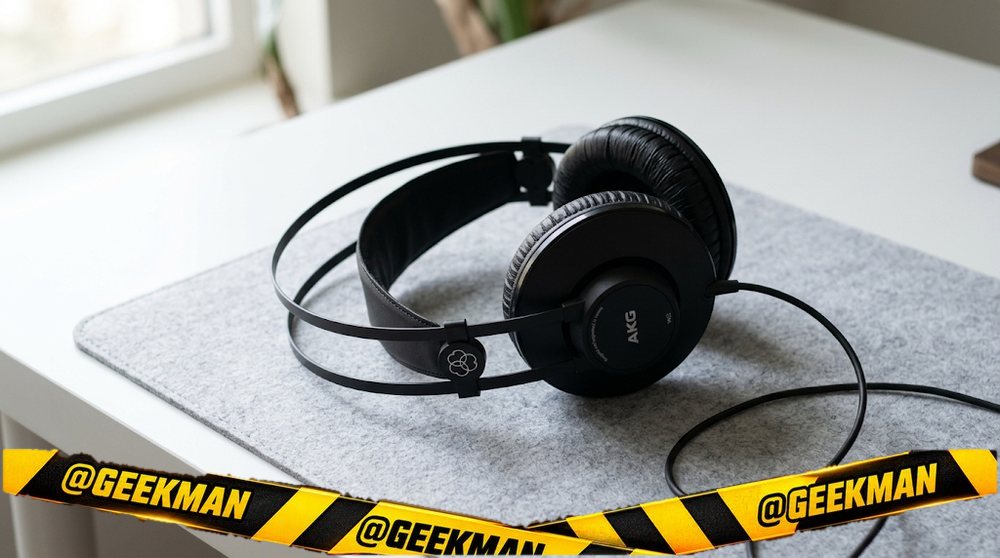
The cheapest AKG closed-back, with big cups and an easygoing, balanced sound that suits practice and home listening more than serious mixing.
Over-ear, Wired · 40mm drivers · 1 year
Best for
✓ Keyboard and e-drum players who want a light, cheap headphone for practice
✓ Beginners editing videos or podcasts at home on a very small budget
✓ People with larger ears who find small-cup budget headphones cramped
Skip if
• You need good isolation for recording vocals near the mic (the loose fit leaks)
• You want to carry it around (it doesn’t fold and the cable is long)
• You can stretch a little (the ATH-M20x is more accurate in the mids)
My take: For the money, the K52 sounds pleasantly balanced: tight bass, no harsh treble and an airy feel for a closed-back. Its big cups and light weight make it easy to wear. The trade-offs are a cheap-feeling build, a fixed cable and a loose fit that lets outside noise in, so treat it as a home practice and editing headphone, not a mixing tool.

AKG K52 Closed-back Wired without Mic
Lowest price
Up to 4% instant discount on select credit cards; cashback on Amazon Pay ICICI cards +1
- Up to 4% instant discount on select credit cards; cashback on Amazon Pay ICICI cards
- No Cost EMI on select cards
Pros and cons
What I like
+ Balanced, non-fatiguing sound for the price
+ Large cups and light weight
+ Easy to drive from any device
+ Snap-on 6.3 mm adapter for keyboards and amps
What I don’t like
• Loose fit means weak isolation
• Basic build and fixed cable
• Doesn’t fold
My full review: who it suits, what it is like and how it compares
Who should buy it. A student with a keyboard, an e-drum kit or a basic audio interface who wants something comfortable and inexpensive for daily practice. It also works for watching films at home or editing on a laptop. At 32 ohm a phone drives it easily.
Sound and accuracy. What Hi-Fi praised it as possibly the best budget headphone they had tested: clean, taut bass that never booms, vocals with some nuance and treble without bright edges, so long sessions don’t tire you. Another studio review found the mids a bit subdued and said it is fine for tracking but not for mixing. My read: it is a pleasant, balanced listen with modest dynamics, not a precise monitor.
Comfort and build. The cups are large and fully enclose the ear, the padding is soft and the whole thing is light, so it is comfortable for hours. The headband self-adjusts on a flexible band rather than notches. The catch is the fit: it can sit loosely, so the cups don’t always seal well. Build is the most basic in AKG’s K52, K72, K92 range, with a thin metal band and thin pad covering. It is fine on a desk, not something to toss in a bag.
Cable and connections. A fixed 2.5 m single-sided cable ends in a 3.5 mm plug with a snap-on 6.3 mm adapter for keyboards and amps. The cable makes some rubbing noise when it brushes your shirt. It doesn’t fold and has no inline remote or mic.
Who it is not for. Anyone recording vocals with the headphones near a mic, or playing next to loud acoustic drums: isolation depends on fit and is weak. It is also not for travel. And if accurate mids for mixing matter, the ATH-M20x is the better entry pick.
K52 or M20x? The K52’s big cups are the more comfortable, and its sound is balanced and easygoing. The M20x has more accurate mids and seals better. For practice and home listening, K52; for tracking and first mixes, M20x.
Key specs
| Type | Over-ear, closed-back |
| Connection | Wired |
| Drivers | 40mm |
| Impedance | 32 ohm |
| Noise cancelling | Passive isolation only |
| Microphone | No mic |
| Cable | Fixed 2.5m single-sided, 3.5mm with snap-on 6.3mm adapter |
| Weight | 200 g |
| Works with | Phones, laptops, keyboards, audio interfaces |
| Warranty | 1 year |
Compare all 9 at a glance
| Headphone | Drivers | Weight | Mic | Warranty |
|---|---|---|---|---|
| Audio-Technica ATH-M20x | 40mm | 190 g | No | 1 year |
| Sennheiser HD 200 Pro | Not stated | No | 2 years | |
| Samson SR850 | 50mm | Not stated | No | Check |
| AKG K72 | 40mm | 200 g | No | 1 year |
| Koss UR40 | 175 g | No | Check | |
| OneOdio Pro 10 | 50mm | Not stated | Built-in | 1 year |
| FIFINE H8 | 50mm | 265 g | No | Check |
| Maono AU-MH501 | 50mm | Not stated | No | Check |
| AKG K52 | 40mm | 200 g | No | 1 year |
Specs from brand pages and the brand’s own product details. Battery figures are brand claims at medium volume; ANC on cuts them.
The buying guide
How to choose budget studio headphones
Best overall
Audio-Technica ATH-M20x.
Isolation
Sennheiser HD 200 Pro.
Open sound
Samson SR850, Koss UR40.
Value
AKG K72, AKG K52.
Closed-back, open-back or semi-open?
Closed-back headphones keep sound in and noise out. Use them for recording vocals, in shared rooms and for commuting.
Open-back headphones let air and sound pass through the cups. They sound wider and more natural, which helps mixing and long listening, but people around you hear your music and you hear the room. Semi-open sits in between.
Impedance: will a phone drive it, or do I need an amp?
Most headphones under 64 ohm play loud enough from a phone dongle, laptop or audio interface. Many 250 to 300 ohm studio headphones (Beyerdynamic DT 770 250 ohm, Sennheiser HD 600) need a headphone amp or a strong interface output to sound full.
Phones with no headphone jack need a USB-C to 3.5mm dongle. A good dongle with a DAC costs little and often sounds better than an old laptop jack.
Comfort in Indian summers: weight, clamp and pads
Under 250 g feels light for long sessions. Above 320 g you notice the weight after an hour or two. Clamp force matters as much as weight: a tight headband gives better isolation but pressure on the jaw and glasses.
Protein leather pads isolate better but get sweaty in summer. Fabric or velour pads breathe better at home. Replaceable pads add years of life, since pads wear out first.
Warranty and service in India
Sony, JBL, Sennheiser, HyperX and Logitech have wide service networks, and HyperX and Logitech give 2 years on many headsets. Indian brands like boAt, Noise and Zebronics mostly give 1 year with pickup service, which works well in big cities.
Earpads and headbands wear first. Brands that sell spare pads (Audio-Technica, Sony, Sennheiser, HyperX) keep a pair alive longer.
Questions other guides skip
1 · Do I need a DAC or amp for studio headphones?
Not for models under about 80 ohm; a laptop, phone dongle or audio interface drives them well. For 250 ohm and above, use an interface with a strong headphone output or a small amp.
2 · My phone has no headphone jack. What do I do?
Use a USB-C to 3.5mm adapter with a built-in DAC. It works with wired headphones and gaming headsets with a mic. For phone gaming, wired through a dongle still beats Bluetooth for delay.
3 · When should I replace earpads?
When they crack, flatten or start to smell. Pads usually last one to two years with daily use. Many brands sell spares, and generic pads fit common sizes.
4 · Do headphones need burn-in?
No. Any change you hear in the first days is mostly your ears getting used to the sound. Just use them normally.
Popular studio headphones I’d skip under 5,000
These keep showing up when people shop for a cheap studio headphone. Each one has a real problem for mixing or editing, and a pick from my list avoids it.
Superlux HD681. It is one of the most popular cheap “studio” headphones, but Stereophile found its treble too harsh to recommend without 7 to 10dB of EQ cut, and Sonarworks measured big differences from one unit to the next. The build is mostly plastic with a fixed cable. The Audio-Technica ATH-M20x is more consistent and easier to trust.
Bluetooth headphones sold as studio headphones. A “studio” label on a wireless pair does not make it a monitor. Bluetooth adds delay and compression, and most of these are tuned for fun rather than accuracy. For recording and editing, the wired AKG K72 is a safe pick from a proper studio brand.
Gaming headsets used for editing. Gaming headsets are tuned for footsteps and bass, and many add virtual surround that changes what you hear. That is the wrong reference for a mix or a podcast edit. The Sennheiser HD 200 Pro is calmer and more even, and it is comfortable for long sessions.
Also consider
Can spend more? See the best studio headphones.
Wired for music? See the best wired headphones.
More from Geekman
More headphone buying guides
Best studio headphonesBest wired headphonesBest headphones under 5,000Best headphones in India
FAQs
Which are the best studio headphones under 5000?
The Audio-Technica ATH-M20x, then the Sennheiser HD 200 Pro and Samson SR850.
Can I mix music on budget headphones?
Yes for learning and demos. Check mixes on speakers or earphones too, since every headphone has its own sound.
Do these need an amp?
No. All of them play loud enough from a laptop, phone dongle or audio interface.
Which is best for video editing?
The ATH-M20x or AKG K72, both closed and comfortable for long edits.
My final picks
Best overall: Audio-Technica ATH-M20x. Check price
Best Sennheiser: Sennheiser HD 200 Pro. Check price
Best open sound: Samson SR850. Check price
Best value: AKG K72. Check price
Start with the ATH-M20x unless you specifically want an open sound. Upgrade later when your ears and room get better.