
That’s a bold claim to open with, so let me get it out of the way first: I think the EarFun Air Pro 4+ could end up being the best value flagship earbuds of 2026, and maybe even 2027. I don’t say that lightly, and I’ll spend this entire review trying to justify it — including the parts where it doesn’t win.
I’m not comparing it directly against the Apple AirPods Pro 3, Samsung Galaxy Buds 3 Pro, or Galaxy Buds 4 Pro, because the price gap is almost double. That’s not a fair fight. But at its actual price, the Air Pro 4+ offers things that nothing else in the Indian market touches right now, and that’s the entire reason this review exists.
I bought this unit myself — no review sample, no brand partnership. That matters more than usual here, because the most-watched Air Pro 4+ review on YouTube is an openly sponsored “partnership” with EarFun, and viewers have said so, loudly, in the comments. I’m not saying that review is dishonest. I’m saying I want you to know exactly whose money bought this pair before you trust a word I write about the sound, the ANC, or the mic.
![EarFun [2025 VGP Winner] Air Pro 4+ Adaptive Hybrid Noise Cancelling Wireless Earbuds Bluetooth 6.0,Qualcomm Snapdragon Sound, aptX Lossless,LDAC Hi-Res Audio, 6 Mics AI CVC Call,54H Playtime](https://m.media-amazon.com/images/I/31J8WA+GZ7L._SL500_.jpg)

![EarFun [2025 VGP Winner] Air Pro 4+ Adaptive Hybrid Noise Cancelling Wireless Earbuds Bluetooth 6.0,Qualcomm Snapdragon Sound, aptX Lossless,LDAC Hi-Res Audio, 6 Mics AI CVC Call,54H Playtime, Blue](https://m.media-amazon.com/images/I/31TuavIGreL._SL500_.jpg)

Earfun Air Pro 4 vs Earfun Air Pro 4+ vs Earfun Air Pro 4i — Which One Should You Actually Buy?
EarFun now sells three earbuds with nearly identical names, and that alone confuses more buyers than it should. Here’s the short version before the long one: the Air Pro 4i is the lightest of the three, the Air Pro 4 is the mainstream pick, and the Earfun Air Pro 4+ is the one built for people who actually care about audio.
| Model | Driver | ANC | Codec support | Bluetooth | Charging case | Best for |
|---|---|---|---|---|---|---|
| Air Pro 4i | Single 11mm titanium-coated driver | 50dB adaptive hybrid ANC | LDAC, SBC (Hi-Res, no aptX) | 5.4 | Wireless charging, IP55 | Budget-first buyers who just want ANC and Hi-Res LDAC that work |
| Air Pro 4 | Single 10mm dynamic driver | 50dB adaptive hybrid ANC | aptX Lossless, aptX Adaptive, LDAC, SBC, LC3 | 5.4 | Wireless charging, older case build, IPX5 | Most people upgrading from wired or entry-level TWS |
| Air Pro 4+ | 10mm dynamic driver + FeatherBA balanced armature (dual driver) | 50dB adaptive hybrid ANC | aptX Lossless, aptX Adaptive, LDAC, SBC, LC3 | 6.0 | Wireless charging, redesigned vertical-opening case, IP55 | Anyone who wants the extra driver’s clarity, the newer Bluetooth radio, or games competitively |
One thing worth clearing up, because it trips people up: aptX Lossless and LDAC support isn’t exclusive to the Plus. Checking EarFun’s own spec sheets, the regular Air Pro 4 already ships with the full aptX Lossless, aptX Adaptive and LDAC stack, and even the entry Air Pro 4i gets LDAC. That’s rare across this whole generation of EarFun earbuds, not just this one model. What the Plus actually adds on top is the second driver, the newer Bluetooth 6.0 radio, and a dust-rated (IP55) shell instead of the base model’s water-only IPX5.
The Air Pro 4i and the base Air Pro 4 are priced close enough that I’d just tell you to go for the Air Pro 4 — the extra spend is small and the driver, Bluetooth version, and dust rating are all better. The real decision most people are stuck on is Air Pro 4 versus Air Pro 4+, so that’s where I’ll spend the rest of this review.
Our original Air Pro 4 review → https://geekman.in/earfun-air-pro-4/
If you already own the Air Pro 4: don’t upgrade. The jump is real but it’s not a 20-25% price difference worth of real — save the money.
If this is your first pair under ₹10,000: get the Air Pro 4+ instead of the regular Air Pro 4. The difference in what you get for a modest extra spend is too large to ignore.

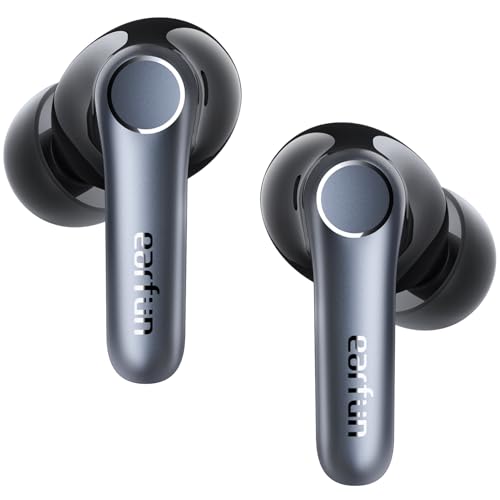
Design, Build and the Charging Case (Finally, an Upgrade That Matters)
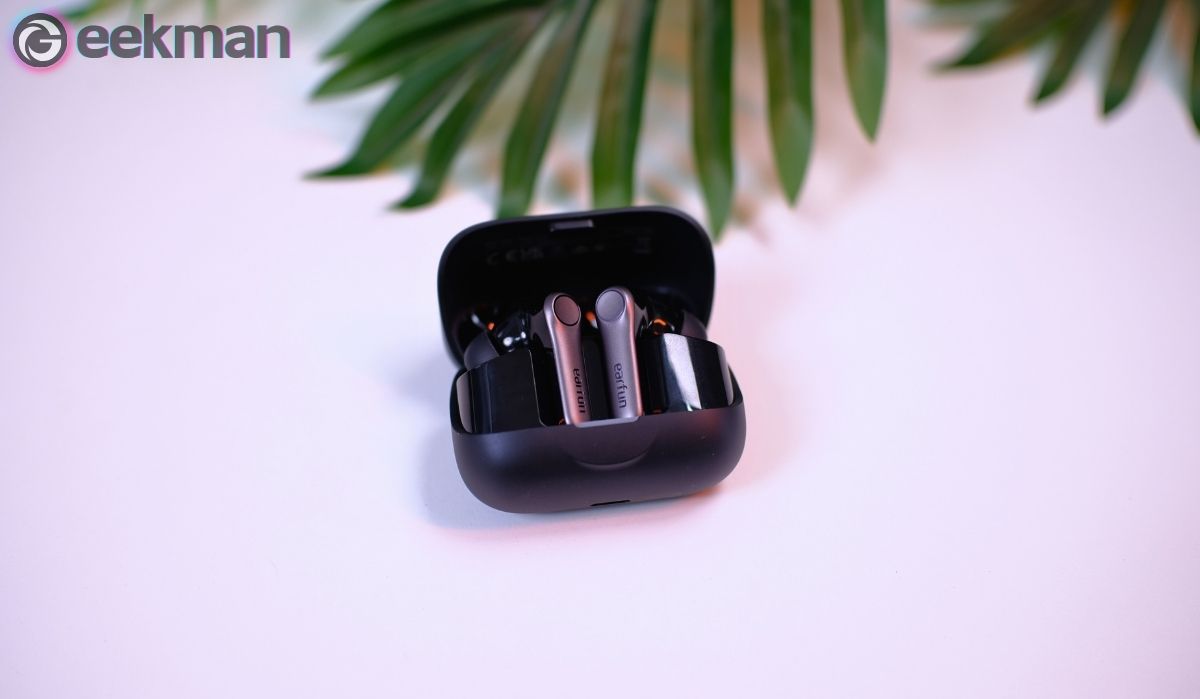
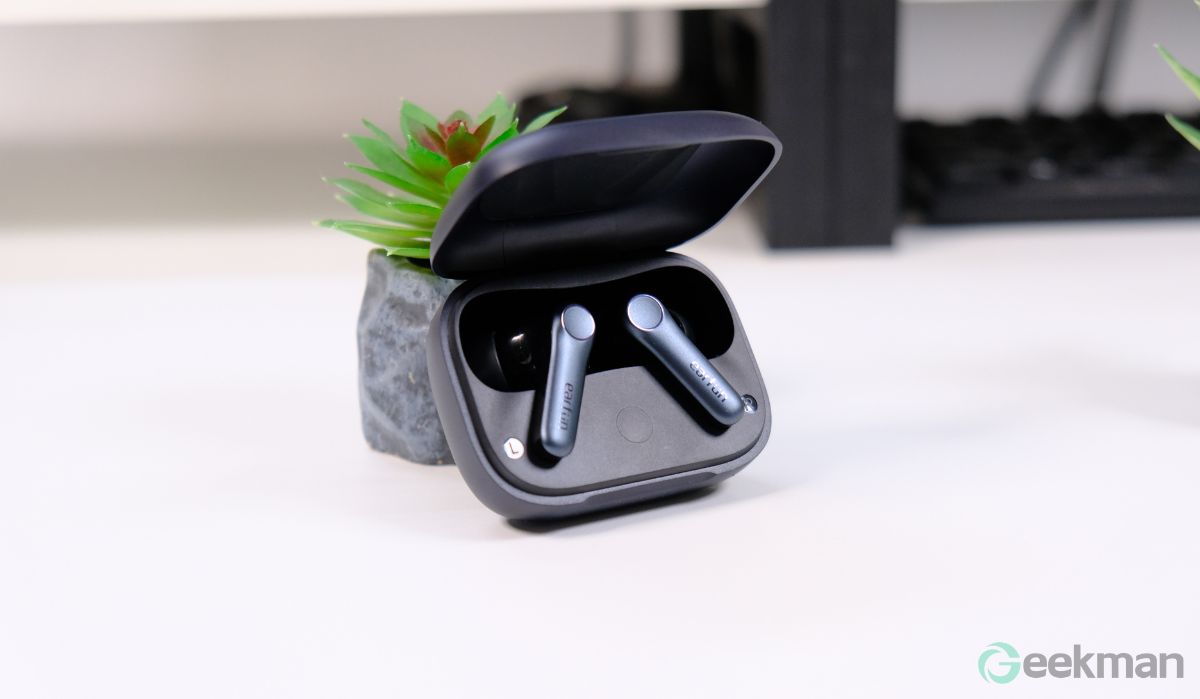
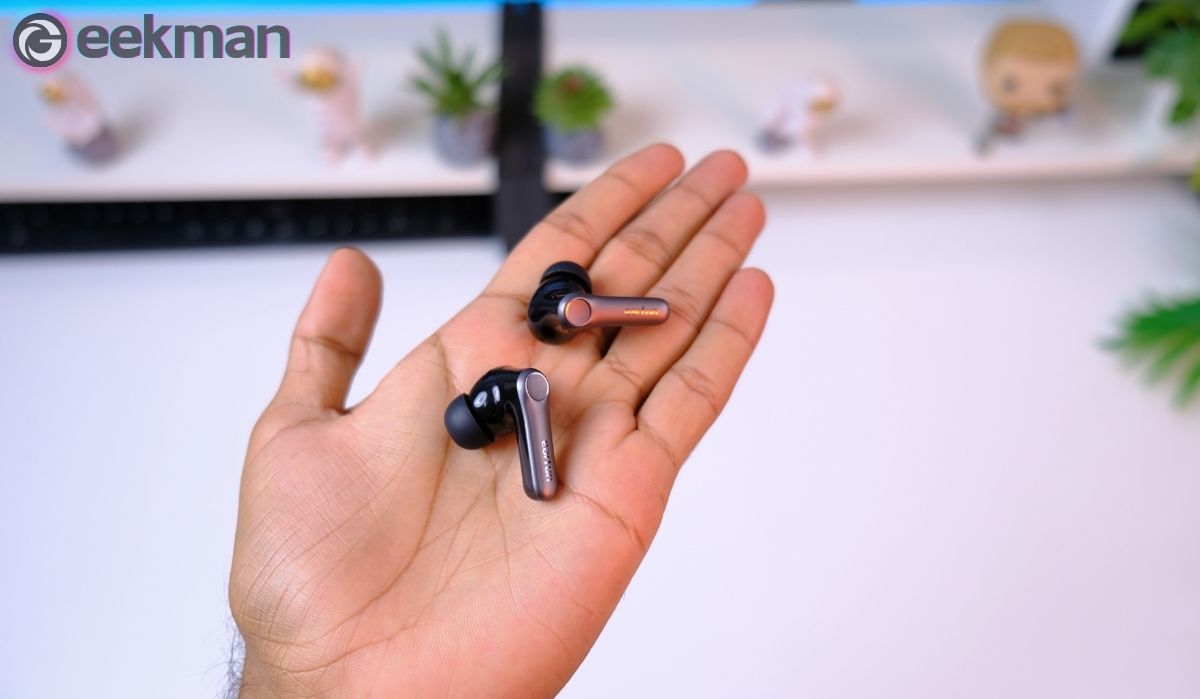
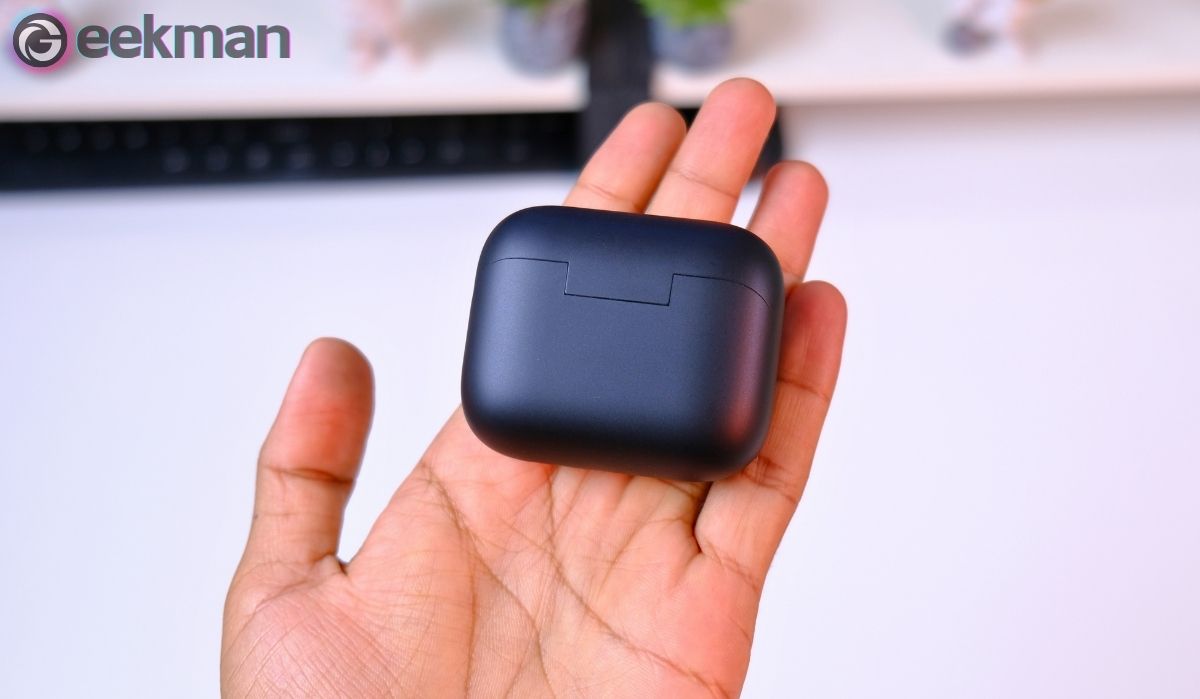
The earbud shells themselves are unchanged from the Air Pro 4: same shape, same fit, same in-ear silhouette. If you’ve handled any recent EarFun bud, you already know what to expect. What’s actually different, and what I spent an unreasonable amount of time appreciating, is the charging case.
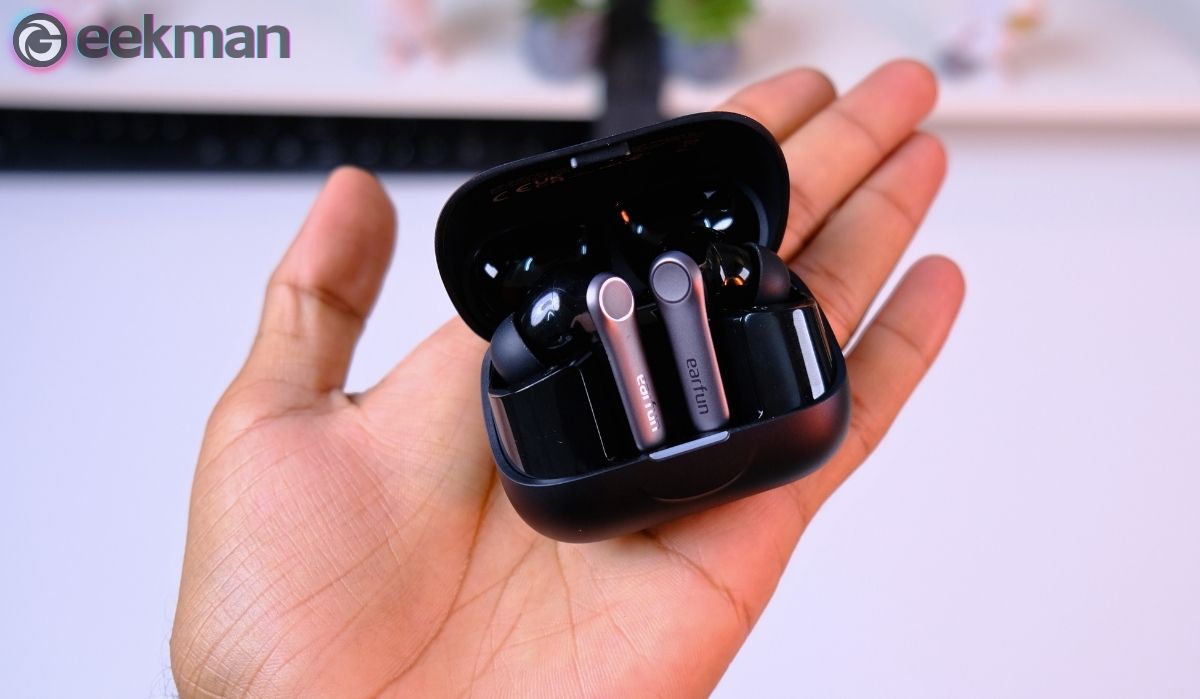
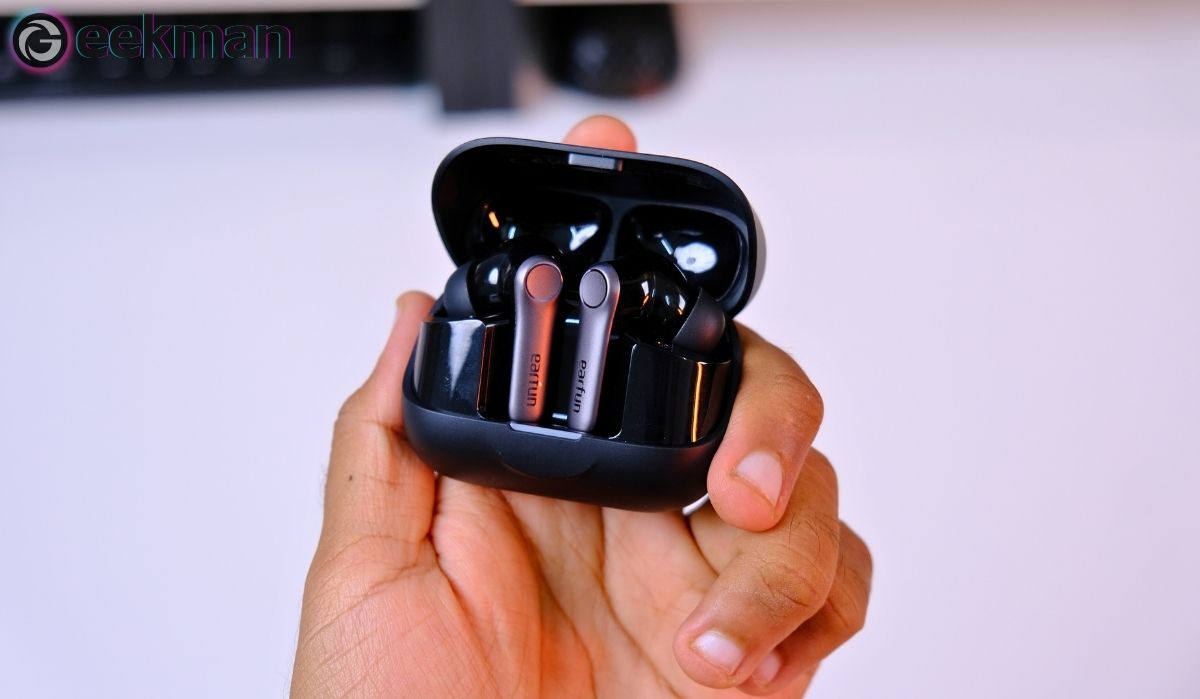
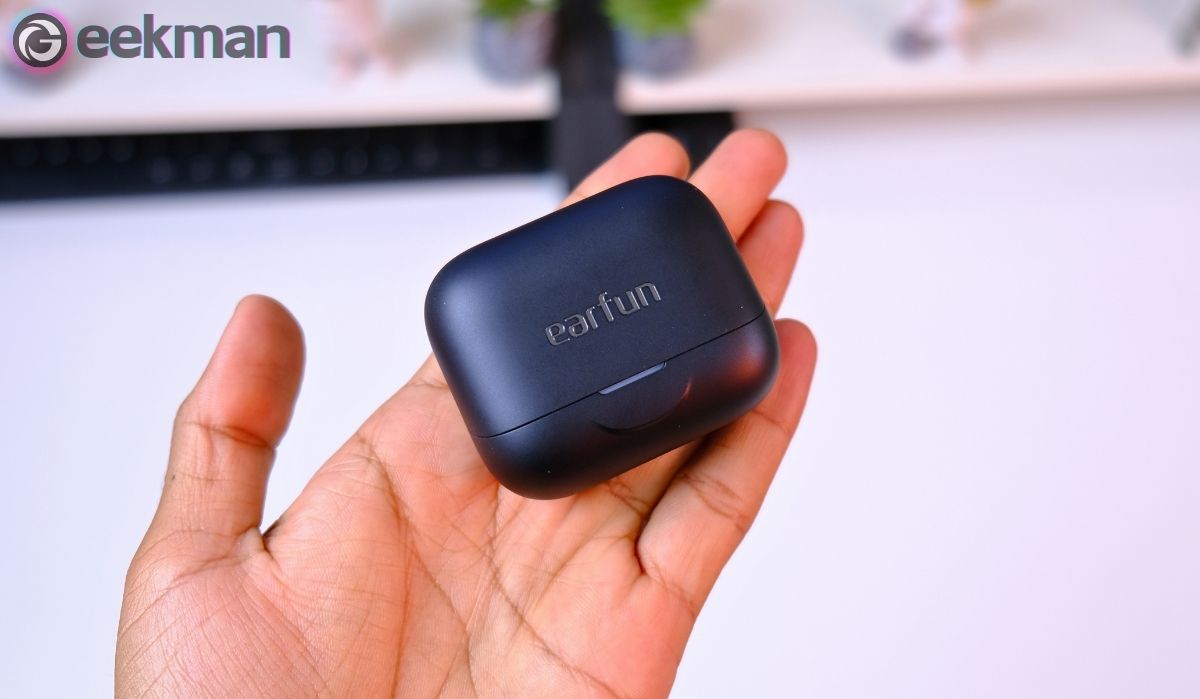
The Air Pro 4’s case build quality was one of my biggest complaints in that review. It felt hollow, a little cheap for the price. EarFun clearly heard that. The Air Pro 4+ case opens vertically, roughly 80 degrees, and it feels properly solid: dense, well-hinged, no creak. Pulling the buds out and dropping them back in is far less fiddly than the old flip-open design. I still think the OnePlus Buds 3 Pro case looks a notch more premium, but in terms of how durable it feels in the hand, this is the best case EarFun has shipped.
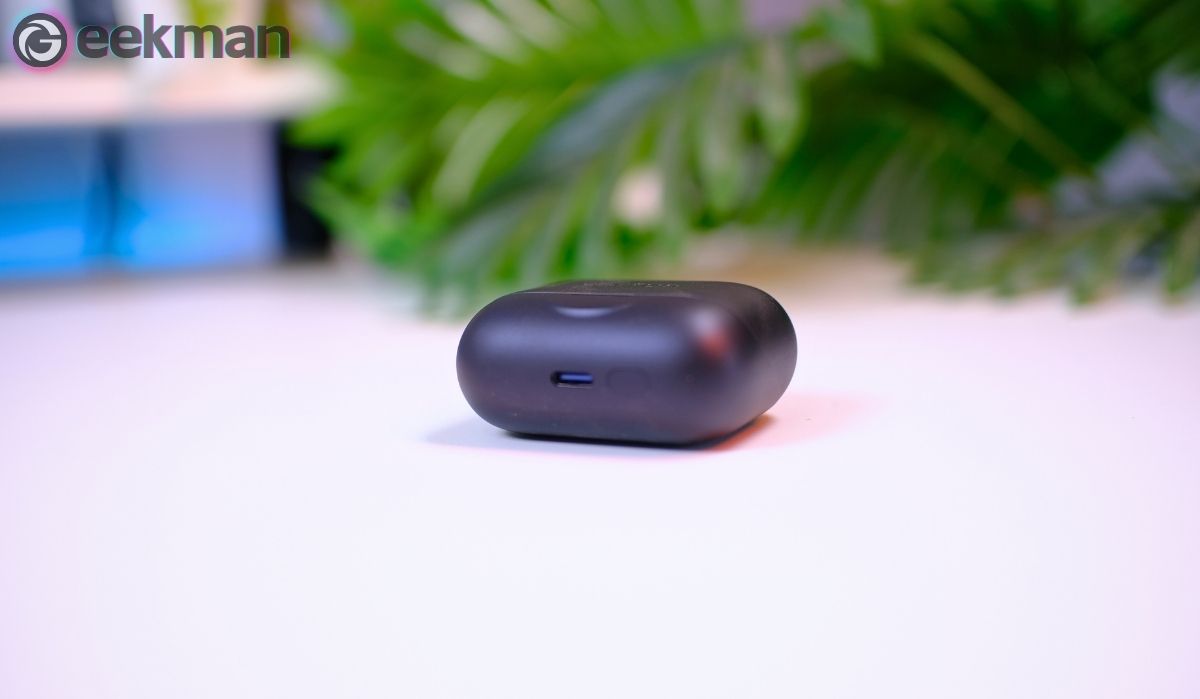
The one upgrade I actually wanted and didn’t get: the earbuds carry an IP55 dust-and-water rating, but the case itself has no water resistance rating at all. Wireless charging is supported on the case, same as other EarFun models, so that part’s covered.
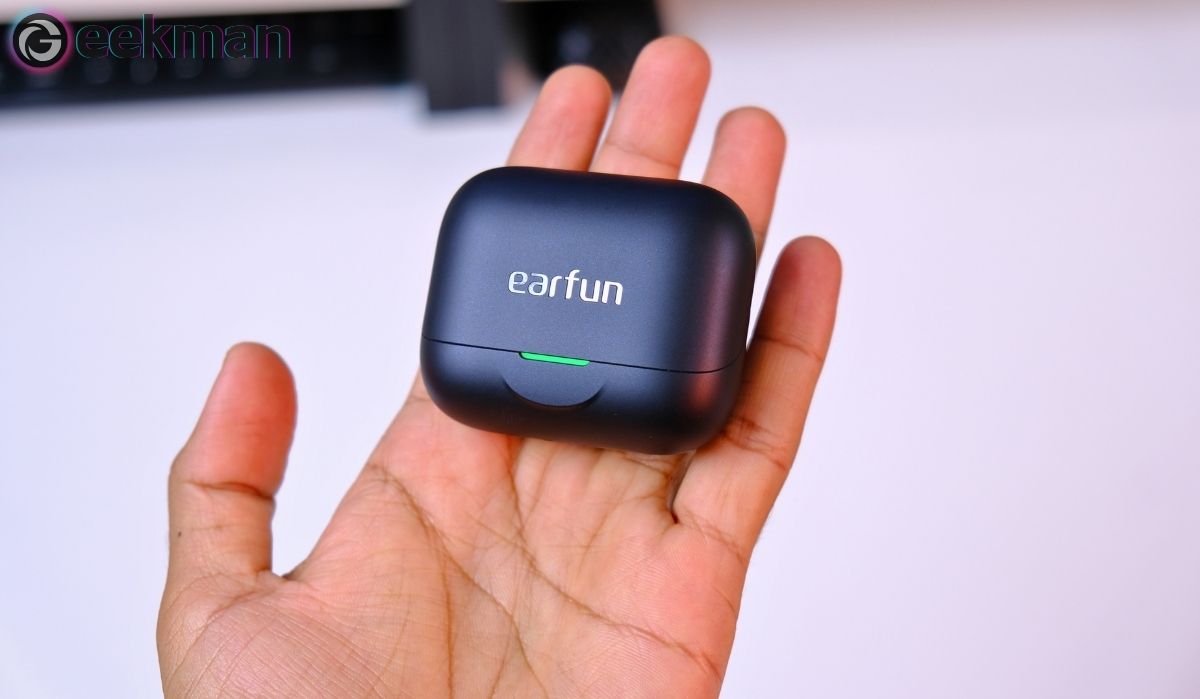
Comfort is where I’d stop short of calling this a slam dunk. Since the shell is identical to the Air Pro 4, comfort is decent, not class-leading. OnePlus’s earbuds sit more comfortably in my ears over long sessions. That said, I didn’t have any issue running two to three hours straight, so don’t let this stop you from buying — just don’t expect an ergonomic revolution.
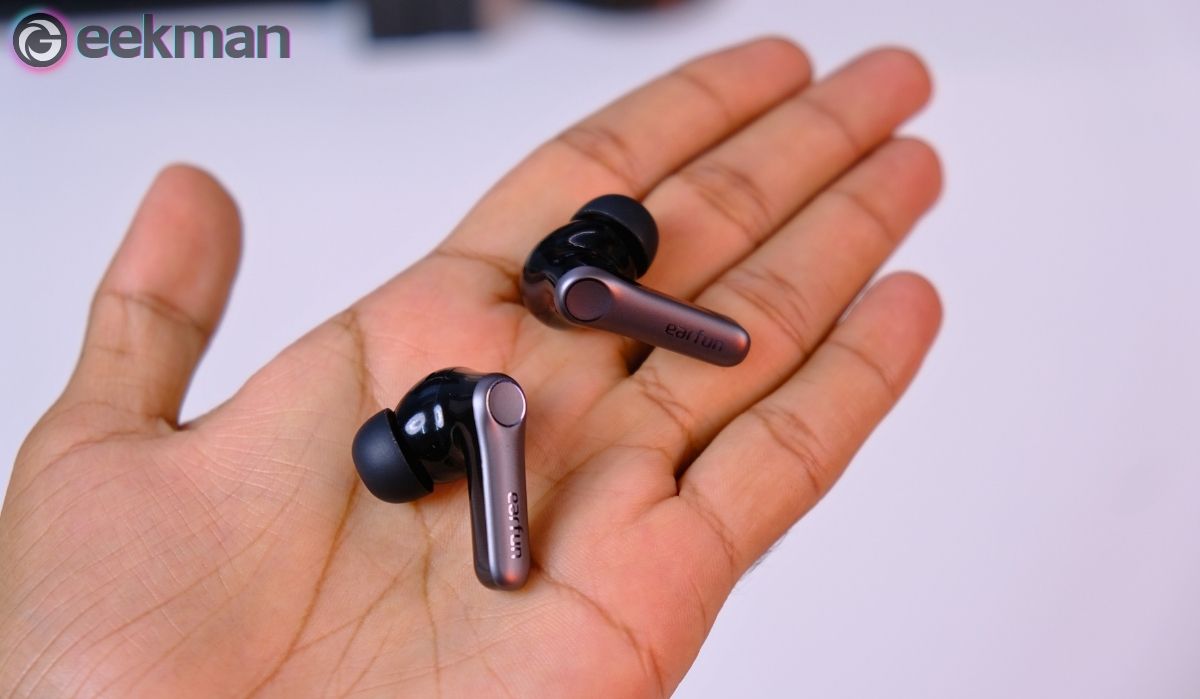
Sound Quality: Where the Air Pro 4+ Actually Earns Its Price
Here’s the thing about a company like EarFun — they design and tune their own drivers rather than just licensing someone else’s tuning, and it shows the moment you A/B this against the standard Earfun Air Pro 4.
The single biggest spec change is the move to a dual-driver hybrid setup: a 10mm dynamic driver paired with a FeatherBA balanced armature driver. In direct comparison against the Air Pro 4’s single dynamic driver, the difference in bass control, treble detail, and soundstage separation is immediately audible, not a marketing footnote.
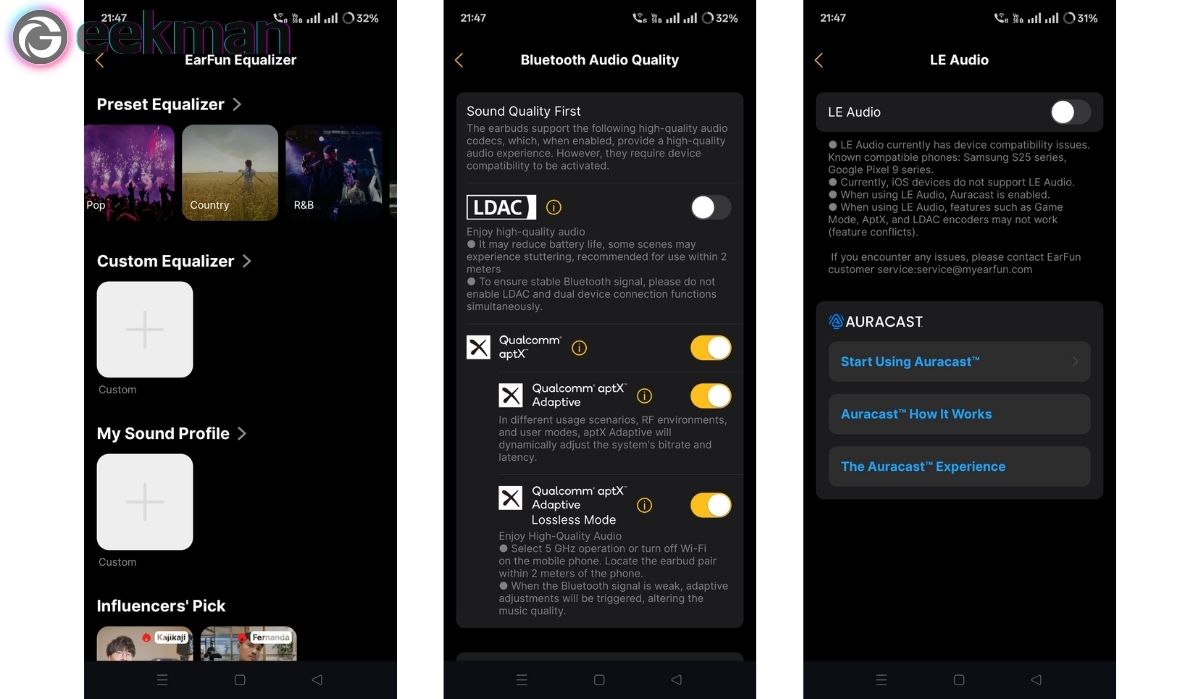
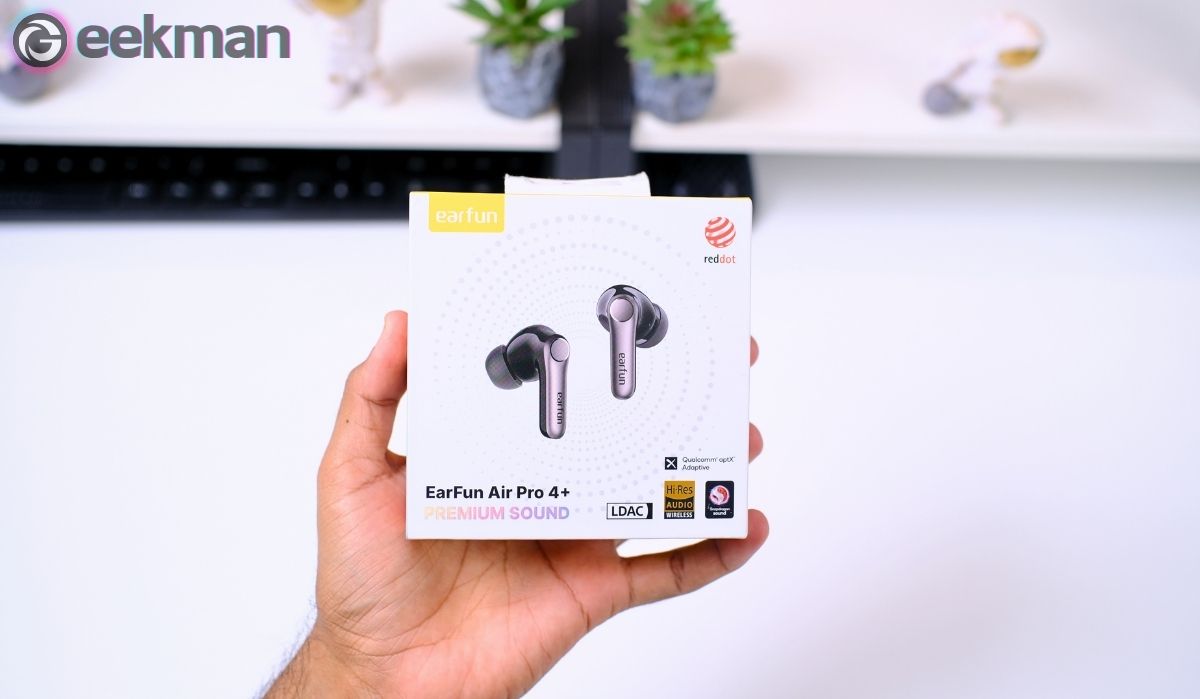
The Earfun Air Pro 4+ also supports aptX Lossless and LDAC simultaneously, which makes Hi-Res audio playback possible over Bluetooth whether you’re on a Snapdragon Sound phone or a regular Android device. I’ll be upfront that this codec combination isn’t actually exclusive to the Plus — EarFun ships the same aptX Lossless plus LDAC stack on the regular Air Pro 4, and LDAC alone on the cheaper Air Pro 4i. That’s still uncommon across the wider market at this price, just not a reason on its own to pick the Plus over its siblings.
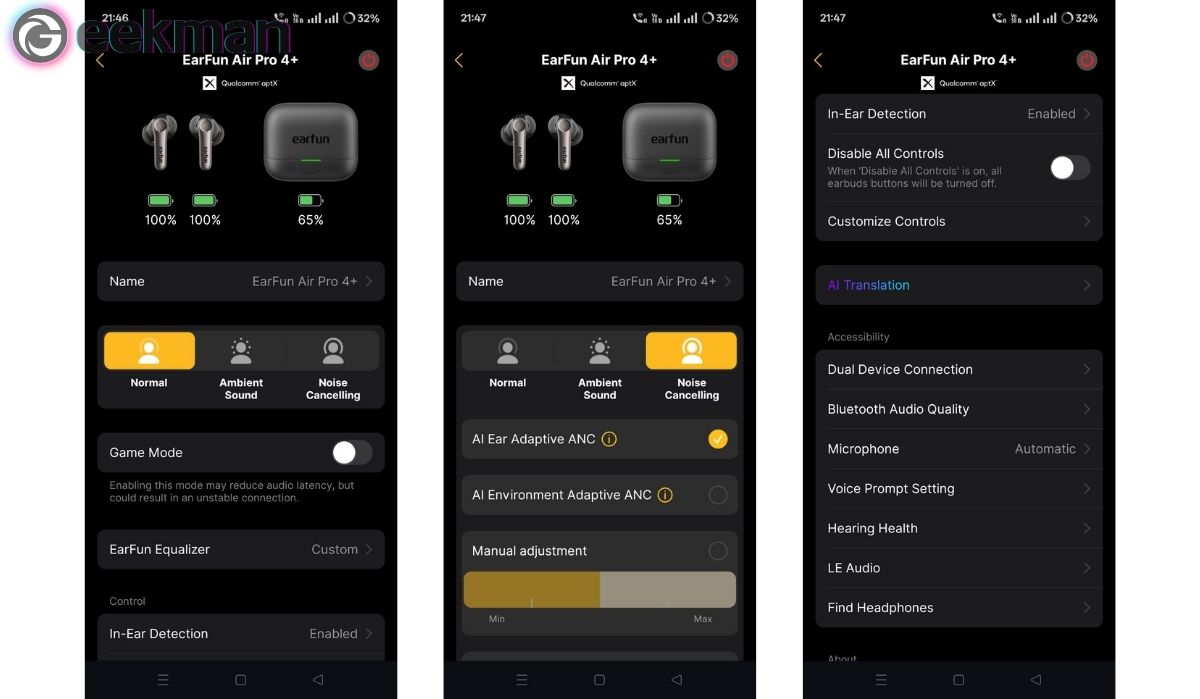
A nice detail I didn’t expect: EarFun lets you toggle aptX Adaptive and aptX Adaptive Lossless independently, giving you three real settings instead of one blanket “Hi-Res on/off” switch. If you’re on a Snapdragon Sound phone and want the absolute best quality, leave it on. If battery, connection stability, or latency matter more for your use case, turn it off and the device automatically falls back to a lighter codec.
The overall tuning is warm and balanced — the same house sound EarFun uses across its lineup, just with more resolution behind it thanks to the second driver. Sub-bass has real depth and a satisfying thump without turning muddy, which is more than I can say for the OnePlus Buds 4 or the Realme Buds Air 8 Pro, both of which lean into an artificially boosted low end. If you do want more bass, there are three dedicated bass-boost presets in the app.
Vocals and mids are this earbud’s real strength. Clear, detailed, never buried under the bass, which is rarer than it should be at this price. Treble has good detail without being pushed too bright, so long listening sessions don’t turn fatiguing. Add 10+ EQ presets and a full custom EQ in the app, and this is, tuning-wise, the most enjoyable set of budget earbuds I’ve used since Sony and JBL’s own preset libraries. That’s an unusual thing to say about a sub-₹10,000 product.
ANC Performance: Real Numbers, Not Marketing Numbers
The Earfun Air Pro 4+ uses a 50dB adaptive hybrid ANC system with a manual transparency mode and automatic level adjustment. I tested it in both an outdoor traffic environment and indoors against a running fan, and in both cases it cut roughly 70% of ambient noise — engine drone and fan hum specifically, not sudden sharp sounds like a door slam.
That’s an improvement over the standard Air Pro 4, but I want to be straight with you: it isn’t the best in this price bracket. The Realme Buds Air 8 Pro and both OnePlus Buds 3 Pro and Buds 4 currently cancel more noise than this. That tracks with what EarFun has always prioritized. They’re an audio-first brand, and ANC has never been the thing they chase hardest. What you get is solidly competent ANC, and that’s it.
Call Quality and Microphone: A Real Test, Not a Spec Sheet
The Air Pro 4+ ships with 6 microphones and ENC 3.0 processing. Indoors, call quality is clean and easy to understand on the other end — a clear step up from the base Air Pro 4. Outdoors, it holds up reasonably well too, though some ambient noise does leak through in windier conditions or near traffic. It’s usable, just not flawless.
I’ve seen comments elsewhere calling the Air Pro 4+ mic “trash,” and after actually testing it myself, I don’t think that’s fair — but I also won’t pretend it matches a Galaxy Buds or AirPods mic array. Compared directly to the OnePlus Buds 3 Pro or Buds 4, the OnePlus mics are a touch clearer, though the gap is small enough that I wouldn’t let it be a deciding factor.
Battery Life: Tested, Not Just Claimed
EarFun’s own listing claims up to 12 hours per charge with ANC off (54 hours total with the case) and up to 8 hours with ANC on (36 hours total). Company battery claims are close to useless without knowing the test conditions, though, so here’s exactly how I tested this myself: aptX Lossless enabled, ANC off, volume at 60%.
Under those real-world conditions, I got roughly 6.5 hours out of the earbuds alone, which puts total battery life with the case at approximately 42-45 hours — meaningfully short of the marketing number, but still a solid result for a Hi-Res codec running the whole time.
Turn ANC on, or keep Hi-Res codecs running constantly, and expect roughly 30% less. That’s a normal trade-off, not a red flag. In practice, the OnePlus Buds 4, OnePlus Buds Pro 3, and Realme Buds Air 8 Pro all land in a similar range, so battery life isn’t really a differentiator here — it’s just solidly good across the board. Fast charging is supported, and so is wireless charging on the case, which none of those three competitors currently offer.
Built for Gaming: Bluetooth 6.0 and aptX Lossless Latency
If you’re specifically shopping for wireless earbuds to game on, this is close to the best case you can make under ₹10,000. Bluetooth 6.0 plus aptX Lossless support is a rare combination, and it’s the pairing that matters most for latency on Android. I didn’t notice any perceptible input lag in either casual or competitive play, and switching on the dedicated gaming mode drops it further still.
Sound-wise, it also happens to suit fast-paced games well. Upper-mids are clear enough to place footsteps and gunfire accurately, and the bass stays controlled instead of smearing into everything else. I’d recommend this to a serious competitive mobile gamer without hesitation, which isn’t something I say about most budget wireless earbuds.
App Features: More Than You’d Expect at This Price
Beyond sound and ANC, the Earfun Air Pro 4+ packs in a surprising number of features usually reserved for earbuds twice the price: Auracast support (still rare outside JBL, Samsung, and EarFun’s own lineup at this price point), touch controls, Google Fast Pair, in-ear detection, dual-device pairing, LE Audio, and an AI translation mode. The companion app also exposes granular in-ear detection and microphone settings if you want to fine-tune behavior rather than accept the defaults.
India Pricing and Where to Actually Buy It
At the time of writing, I paid around ₹8,000 for my unit, and if you’ve bought any EarFun product before, you likely have access to an extra 15-20% loyalty coupon — I’ve linked the one I used in the description/below. Given everything on the spec sheet, that price feels low, not high.
One thing worth flagging directly: pull up Google’s shopping panel for this product and you’ll see listings for EarFun earbuds ranging from roughly ₹6,699 on Amazon.in up to ₹9,175-11,306 on marketplaces like Ubuy and Desertcart. That’s a gap of over ₹4,000 for what can be the same or a lesser variant. Don’t overpay on a grey-market reseller listing when the official Amazon.in listing is sitting right there.
One more thing worth doing after you buy: register your unit on EarFun’s website. The standard warranty is 18 months, but registration stretches that to 24 months — worth the two minutes it takes.
Who Should Buy the Earfun Air Pro 4+ (and Who Should Just Get the Regular Air Pro 4)
Buy the Earfun Air Pro 4+ if: you care about sound quality first and want the extra clarity of a dual-driver setup, the newer Bluetooth 6.0 radio, dust-rated durability, play games on your phone, or want the best charging case EarFun has ever built.
Just get the regular Earfun Air Pro 4 if: you already own a pair and don’t need dual drivers or Hi-Res codecs, or your budget genuinely can’t stretch the extra amount — the base model is still a solid, capable earbud on its own.
Look elsewhere if: best-in-class ANC or a more ergonomic in-ear fit matters more to you than sound quality — the OnePlus Buds 3 Pro and Realme Buds Air 8 Pro will serve you better on those two specific fronts.
EarFun Air Pro 4+ vs OnePlus Buds 4 vs OnePlus Buds Pro 3 vs Realme Buds Air 8 Pro vs Galaxy Buds3 FE vs JBL Live Beam 3 vs Noise MasterBuds 2
This is the comparison I get asked about the most, so here it is with real numbers instead of vibes.
| Earbuds | India price (Aug 2026) | Drivers | ANC (brand claim) | Codec ceiling | Bluetooth | Battery, ANC on (buds/total) | IP rating (buds) |
|---|---|---|---|---|---|---|---|
| EarFun Air Pro 4+ | ₹7,000–8,000 | Dynamic + BA (dual) | 50dB | aptX Lossless + LDAC | 6.0 | ~6.5h / ~42–45h (tested) | IP55 |
| OnePlus Buds 4 | ~₹5,999 | Dynamic + tweeter (dual) | 55dB | LHDC 5.0 only | 5.3/5.4 | 37h total claimed, ANC off | IP55 |
| OnePlus Buds Pro 3 | ~₹10,600 | Dynamic + tweeter (dual) | 50dB | LHDC 5.0 only | 5.4 | 6h / 25.5h | IP55 |
| Realme Buds Air 8 Pro | ~₹6,700–7,000 | Dynamic + planar tweeter (dual) | 55dB | LHDC 5.0 only | 6.1 | 50h total claimed, ANC off | IP55 |
| Samsung Galaxy Buds3 FE | ~₹9,000–11,500 | Single dynamic | Not disclosed | Samsung Seamless Codec only | 5.4 | 6h / 24h | IP54 |
| JBL Live Beam 3 | ~₹12,000–14,000 | Single dynamic | Not disclosed | LDAC | 5.3 | 12h / 48h claimed, ANC off | IP55 |
| Noise MasterBuds 2 | ~₹7,999–9,999 | Single dynamic (Bose-tuned) | 51dB | LHDC 5.0 only | 6.1 | 6h / 30h | IPX5 |
The one line that matters most from that table: not a single competitor here supports aptX or aptX Lossless. All six lean on LHDC 5.0 or Samsung’s own Seamless Codec instead, and only the JBL adds LDAC on top of that. That makes the Air Pro 4+ and the ₹12,000+ Live Beam 3 the only two in this group offering a Hi-Res codec beyond LHDC on Android, and the Air Pro 4+ is the only one offering aptX at all.
The OnePlus Buds Pro 3 used to be my default recommendation under ₹10,000: strong sound, sharp design, a fit that stays comfortable for hours. It’s aged now, and the Air Pro 4+ beats it in nearly every category except comfort, where OnePlus still has the edge.
The OnePlus Buds 4 and Realme Buds Air 8 Pro land close together: cheaper, slightly better ANC and mic performance on their side, but noticeably thinner sound and no Hi-Res codec beyond LHDC.
The Samsung Galaxy Buds3 FE is the ecosystem play, not the audio one. If you’re deep into Galaxy AI and SmartThings, the seamless pairing and interpreter mode genuinely matter. But you’re paying ecosystem tax for a single dynamic driver and zero premium codec support, and at ₹9,000–11,500 it often costs more than the Air Pro 4+ for less on the spec sheet.
The JBL Live Beam 3 is the one earbud here that can actually match the Air Pro 4+ on the sound-hardware conversation. LDAC support and JBL’s own signature tuning are both genuinely good. But it costs 50–70% more at real street prices, and its 1.45-inch touchscreen case, while a neat party trick, isn’t why anyone buys earbuds. If your budget stretches that far, compare it against Sony or Sennheiser instead, you’re not shopping under ₹10,000 anymore.
Noise MasterBuds 2 is the closest fight on paper: Bose-tuned sound, 51dB claimed ANC, Bluetooth 6.1, a similar price band. In practice, reviewers have flagged unreliable multi-device audio handoff and buds that are fiddly to pull out of the case. It stops at LHDC 5.0, no aptX, no LDAC. A genuinely good budget pick, just not a step ahead of the Air Pro 4+ in terms of sound quality and features.
So here’s my simple rule: if your ceiling is ₹5,000–6,000, get the OnePlus Buds 4, nothing else makes sense at that price. If you can stretch to ₹7,000–9,000, the Earfun Air Pro 4 Plus beats everything else on this list on sound and codec support alone. If ANC or ecosystem lock-in matters more to you than raw audio, the Galaxy Buds3 FE (for Samsung users) or the OnePlus Buds Pro 3 (for comfort) are the two worth a look instead. Only go past ₹10,000 for the Live Beam 3 if that touchscreen case is a genuine want, not just a nice-to-have.


The Verdict
Sound quality is the reason to buy this earbud, full stop. It’s a genuinely excellent dual-driver tuning backed by aptX Lossless and LDAC support, a codec combination that’s still rare under ₹10,000 across the wider market even if EarFun now offers it on the whole Air Pro 4 family. ANC does its job without leading the category. Comfort sits somewhere in the middle of the pack. Layer in the dual driver, Bluetooth 6.0, Auracast, wireless charging, and a warranty that stretches to 24 months once you register the product, and the value math is hard to argue with.
Call it what you want, but at this price, with this feature list, I’m comfortable saying it: the EarFun Air Pro 4+ is the best budget flagship earbuds you can buy in India for 2026, and quite possibly into 2027.
Have questions about the Earfun Air Pro 4+ that this review didn’t answer? Drop them in the comments — I read and reply to every one.
Frequently Asked Questions
Is the EarFun Air Pro 4+ available in India?
Yes, it’s available in India through Amazon.in and select online retailers, typically priced around ₹7,000-8,000 depending on ongoing offers and loyalty coupons. Check current listings before buying, since grey-market resellers list it significantly higher.
Both models already share the same aptX Lossless and LDAC codec support and 50dB ANC rating. The Air Pro 4+ adds a second driver (a FeatherBA balanced armature alongside the 10mm dynamic driver), the newer Bluetooth 6.0 radio instead of 5.4, and a dust-rated IP55 shell versus the base model’s water-only IPX5.
Yes, the charging case supports wireless charging, consistent with other recent EarFun earbuds. The earbuds themselves carry an IP55 dust and water resistance rating, though the case has no water resistance rating.
The earbuds are IP55-rated against dust and water splashes, which covers sweat and light rain during workouts. The charging case is not water resistant, so keep it away from moisture.
Put the earbuds in pairing mode by holding the case button, then open Bluetooth settings on your laptop or PC and select “EarFun Air Pro 4+” from the available devices list. Multipoint lets you stay connected to a phone and computer simultaneously.
In my testing, the improvement from Air Pro 4 to Air Pro 4+ is real but incremental for anyone who already owns the base model — better sound and a sturdier case, but not a 20-25% price difference worth of upgrade. It makes far more sense as a first purchase than as an upgrade.
Yes it has aptx lossless codec best for gaming for earbuds and wireless headphones
In my unit, in-ear detection worked consistently without the random pause/play glitches some users have reported on other EarFun models. If you experience issues, the app’s in-ear detection settings let you adjust sensitivity or disable it entirely.
Call quality is clear and reliable indoors thanks to the 6-mic array and ENC 3.0 processing, with some ambient noise leaking through outdoors in windy conditions. It’s usable and competitive at this price, just not on par with flagship earbuds from Samsung or Apple.
None of the three matches its codec support: the Galaxy Buds3 FE and Noise MasterBuds 2 skip aptX and LDAC entirely, and only the pricier JBL Live Beam 3 (₹12,000+) offers LDAC. The Buds3 FE wins on Galaxy ecosystem features, and the Live Beam 3 has a novel touchscreen case, but the Air Pro 4+ leads on sound and codec depth for less money.