
Buying an AC in India in 2026 is not complicated — but it is easy to get wrong. Pick the wrong tonnage and your room never cools properly. Go with a 3-star when you use it 8 hours a day and your electricity bill will sting every month. Buy a cheap aluminium condenser model near the sea and watch it corrode in two years.
This guide covers every decision — room size to tonnage, single rotary vs twin rotary, 3-star vs 5-star electricity costs with real rupee numbers, and a curated list of the best 1 ton, 1.5 ton, 2 ton, and 2.5 ton ACs available in India right now. Both 2026-rated and 2025-rated models, 5-star first.
Quick answers if you are in a hurry:
- Best 1.5T 5-star: Panasonic CS/CU-WU18XKYF (ISEER 5.80)
- Best budget 1.5T: Godrej GIC 18TTC3-WSA (~₹35,000)
- 5-star saves ₹4,200–₹5,400/year over 3-star at 8 hrs/day
- Break-even on 5-star premium: 1.5–2 years for daily users
How Much AC Tonnage Do You Need? Room Size Guide for Indian Homes
Tonnage is the single most important decision. Everything else — star rating, brand, features — comes after you get this right.
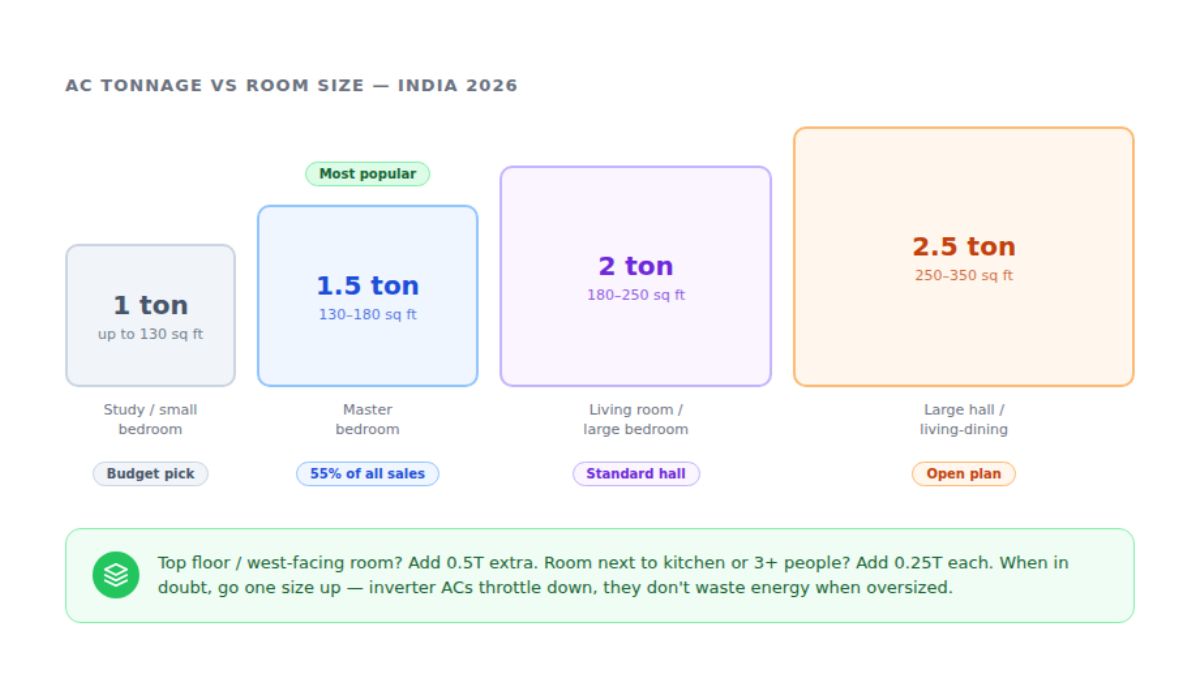
AC Tonnage vs Room Size — India 2026
| Room Size | Recommended Tonnage | Typical Use |
|---|---|---|
| Up to 100 sq ft | 0.8 – 1 Ton | Small bedroom, study, cabin |
| 100 – 130 sq ft | 1 Ton | Single bedroom, home office |
| 130 – 180 sq ft | 1.5 Ton | Master bedroom, standard living room |
| 180 – 250 sq ft | 2 Ton | Large living room, open plan room |
| 250 – 350 sq ft | 2.5 Ton | Large hall, living + dining combined |
| 350+ sq ft | 2 × 1.5 Ton | Two units work better than one 3T |
The 1.5 ton AC is India’s most popular segment — it accounts for over 55% of all AC sales — and for good reason. Most Indian master bedrooms fall between 130 and 180 sq ft, right in the 1.5T zone.
Factors That Increase Your Cooling Requirement
Room size alone does not tell the full story. These conditions add to your heat load and require extra tonnage:
- Top floor flat / terrace-facing room: Add 0.5 ton. An RCC roof in May sits at 55°C and keeps radiating heat past midnight.
- West-facing room: Add 0.25 ton. Afternoon sun directly hits the wall during peak temperature hours (2–6 PM).
- More than 3 people regularly using the room: Add 0.25 ton. Each person generates roughly 100W of body heat.
- Room next to the kitchen: Add 0.25 ton. Cooking heat seeps through shared walls, raising room temperature by 3–5°C.
- Ceiling higher than 12 feet: Add 10–15% extra capacity. More air volume to cool means more load on the compressor.
Example: A 150 sq ft bedroom on the top floor with west-facing windows. Base tonnage: 1.5T. Top floor: +0.5T. West-facing: +0.25T. Total needed: 2.25T. Buy a 2 ton here, not 1.5T.
Why You Should Not Oversize Your AC
Bigger is not always better. An oversized AC hits the set temperature too fast, then shuts off — then restarts. This repeated on-off cycle is called short-cycling. The room feels cold but stays humid because short cycles do not run long enough to pull moisture out of the air. In a coastal city like Mumbai or Chennai, a correctly sized AC that runs longer at lower load will dehumidify better and feel more comfortable than an oversized one that keeps short-cycling.
The one exception: if you buy an inverter AC, slight oversizing is less harmful because inverter compressors can throttle down to 30–40% capacity instead of shutting off completely.
Never oversize a fixed-speed non-inverter AC.
Single Rotary vs Twin Rotary Compressor — What Is the Difference?
Most AC buying guides skip this. It matters more than most people realise, especially in Indian heat conditions where ACs run at full load for months.
Single Rotary Compressor
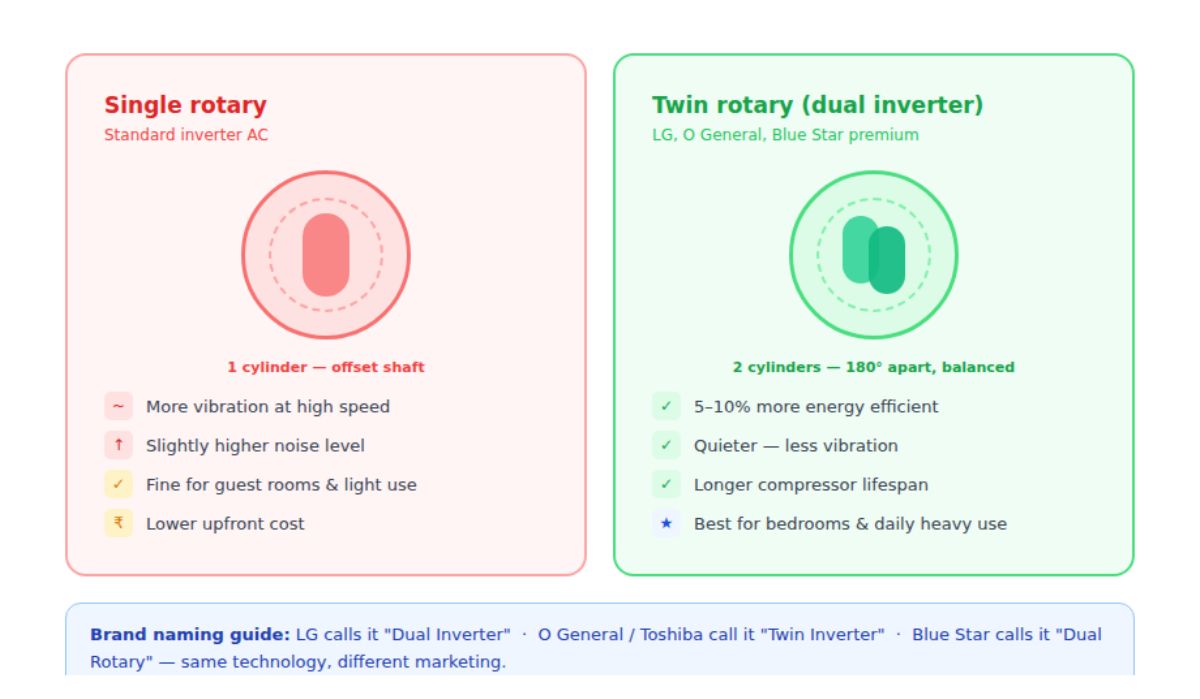
A single rotary compressor has one cylinder and one eccentric shaft. It compresses refrigerant through a single rotation. At normal load it works fine, but at high speed the unbalanced shaft creates vibration and noise. In peak summer when the AC runs at full capacity, this vibration accelerates wear on internal components.
Single rotary is used in most budget and mid-range ACs. Perfectly adequate for light use — a guest room, a home office, 3–4 hours a day.
Twin Rotary Compressor (Dual Inverter)
A twin rotary compressor has two cylinders set 180 degrees apart. The two cylinders counterbalance each other — like a perfectly tuned engine. The result: 5–10% better energy efficiency at the same speed, significantly less vibration, lower noise, and longer compressor life due to reduced wear.
When brands say Dual Inverter (LG), Twin Inverter (O General, Toshiba), or Dual Rotary (Blue Star) — they all mean a twin rotary compressor. It is the same technology, just branded differently.
| Feature | Single Rotary | Twin Rotary (Dual Inverter) |
|---|---|---|
| Cylinders | 1 | 2 |
| Vibration | Higher | Lower |
| Noise level | Moderate | Quieter |
| Energy efficiency | Good | 5–10% better |
| Durability (heavy use) | Good | Better |
| Price | Lower | Higher |
| Best for | Guest rooms, light use | Bedrooms, daily heavy use, coastal areas |
If you sleep with the AC on, buy twin rotary. The noise difference is real, especially at night.
3-Star vs 5-Star AC: Real Electricity Costs, Savings, and Break-Even (India 2026)
This is the section most guides get wrong — they give you vague percentages and skip the actual rupee numbers. Here is the full picture.
What Changed in 2026: BEE’s New Star Rating Rules
The Bureau of Energy Efficiency (BEE) revised its star rating standards from January 2026. The efficiency bar is now stricter. A model sold as 5-star in 2023 or 2024 may now only qualify for 3 or 4 stars under the new 2026 norms. Always confirm the BEE label on the box says “2026 Rating” — not the sticker on the showroom display model.
ISEER Explained: The Number That Actually Matters
The star rating is a label. The ISEER (Indian Seasonal Energy Efficiency Ratio) is the actual number behind it. ISEER measures how much cooling you get per unit of electricity, averaged across real Indian seasonal temperatures — not a fixed lab condition. Higher ISEER = less electricity for the same cooling output.
| Star Rating | ISEER Range (2026 BEE norms) | What It Means |
|---|---|---|
| 3 Star | 4.00 – 4.49 | Decent efficiency, higher monthly running cost |
| 4 Star | 4.50 – 4.99 | Good middle ground |
| 5 Star | 5.00 and above | Best efficiency, lowest electricity bill |
How Many Units Does a 1.5 Ton AC Use Per Hour? (BEE 2026 Data)
| AC Type | Units/hour | Monthly (8 hrs/day) | Monthly cost at ₹7/unit |
|---|---|---|---|
| 1.5T 3-Star Inverter | 1.50–1.65 | 360–396 units | ₹2,520–₹2,772 |
| 1.5T 4-Star Inverter | 1.25–1.45 | 300–348 units | ₹2,100–₹2,436 |
| 1.5T 5-Star Inverter | 1.05–1.25 | 252–300 units | ₹1,764–₹2,100 |
A 5-star AC uses 30–35% less electricity per hour than a 3-star. On 8 hours a day, that monthly difference is ₹700–₹1,000 — just from the AC alone.
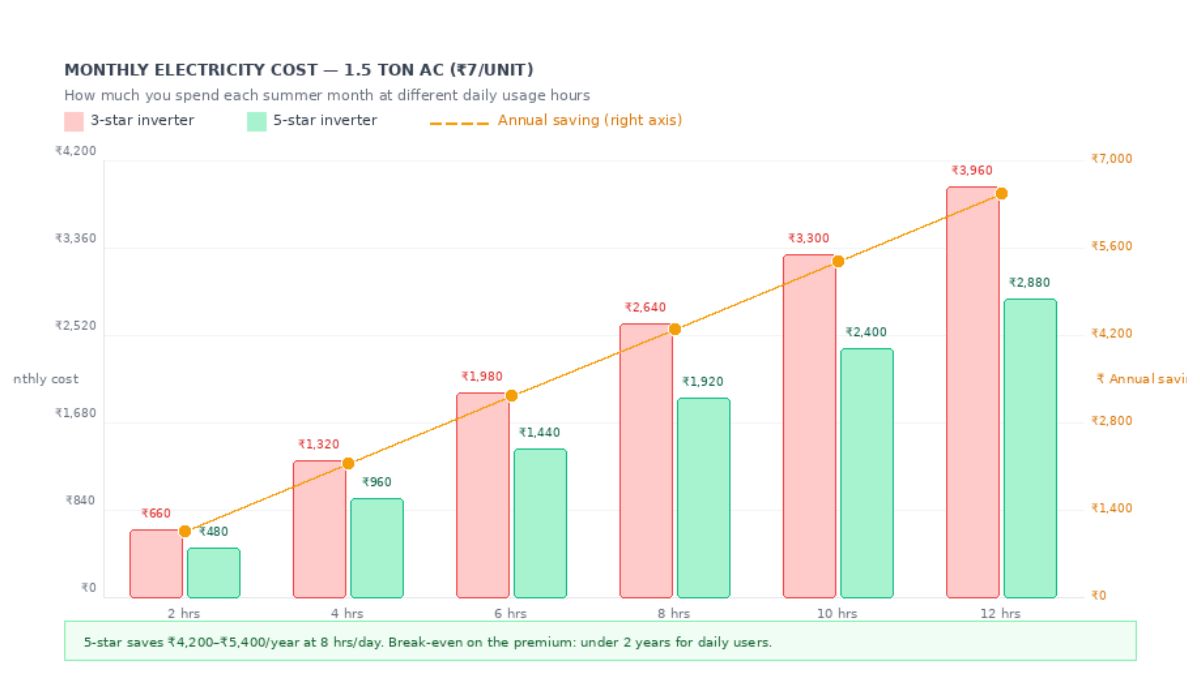
AC Electricity Cost by Daily Usage Hours — 1.5 Ton (Monthly, at ₹7/unit)
This table answers the real question: based on how many hours you actually run it, does the 5-star price premium make sense?
| Daily Usage | 3-Star Monthly Cost | 5-Star Monthly Cost | Monthly Saving | Annual Saving |
|---|---|---|---|---|
| 2 hours/day | ₹630–₹693 | ₹441–₹525 | ₹150–₹200 | ₹900–₹1,200 |
| 4 hours/day | ₹1,260–₹1,386 | ₹882–₹1,050 | ₹300–₹400 | ₹1,800–₹2,400 |
| 6 hours/day | ₹1,890–₹2,079 | ₹1,323–₹1,575 | ₹500–₹600 | ₹3,000–₹3,600 |
| 8 hours/day | ₹2,520–₹2,772 | ₹1,764–₹2,100 | ₹700–₹900 | ₹4,200–₹5,400 |
| 10 hours/day | ₹3,150–₹3,465 | ₹2,205–₹2,625 | ₹900–₹1,100 | ₹5,400–₹6,600 |
| 12 hours/day | ₹3,780–₹4,158 | ₹2,646–₹3,150 | ₹1,100–₹1,300 | ₹6,600–₹7,800 |
These are per-month estimates for peak summer. Most Indian households run AC 4–8 months per year, so multiply accordingly.
5-Star vs 3-Star Break-Even Analysis
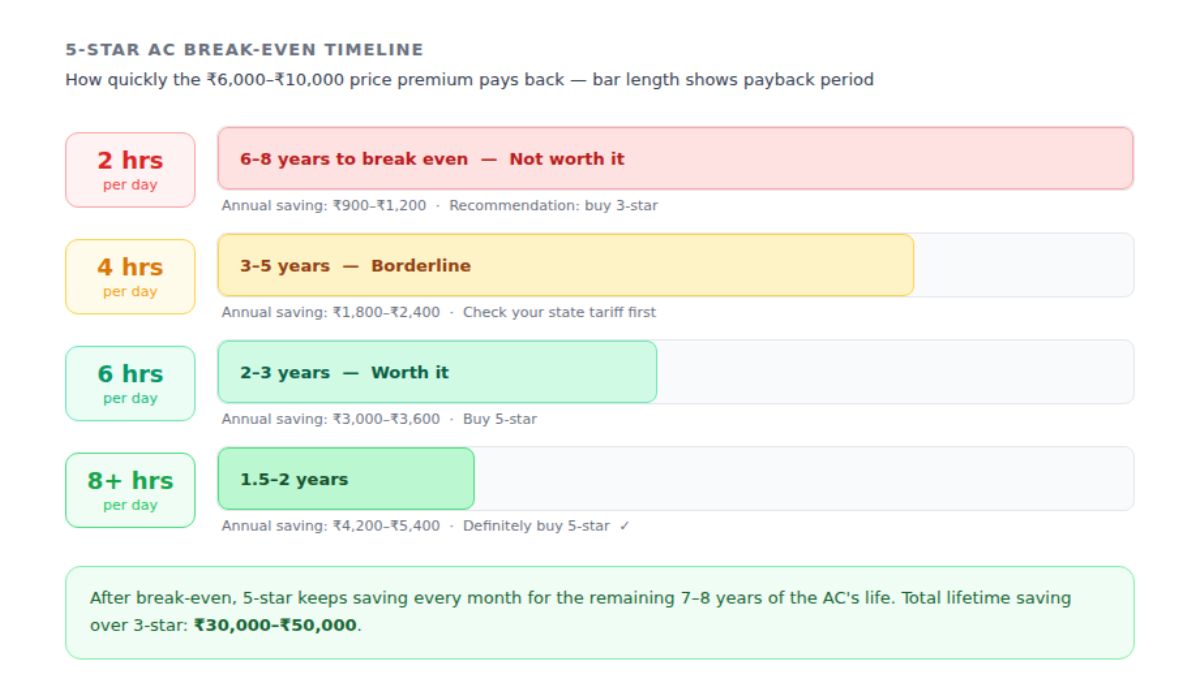
A 5-star 1.5T AC typically costs ₹6,000–₹10,000 more upfront than a 3-star equivalent.
| Usage Hours/Day | Annual Saving | Break-Even Point | Verdict |
|---|---|---|---|
| 2 hours | ₹900–₹1,200 | 6–8 years | Not worth it — buy 3-star |
| 4 hours | ₹1,800–₹2,400 | 3–5 years | Borderline — depends on tariff |
| 6 hours | ₹3,000–₹3,600 | 2–3 years | Worth it |
| 8+ hours | ₹4,200–₹5,400 | 1.5–2 years | Definitely buy 5-star |
After break-even, the 5-star AC saves money every single month for the rest of its 8–10 year life. Total lifetime electricity savings over a 3-star: ₹30,000–₹50,000.
The Electricity Slab Effect — Why Real Savings Are Often 40–60% More
Most online calculators miss this. Indian electricity is not billed at a flat rate — it uses a slab system where the more units you use, the higher the rate per unit becomes.
Take Maharashtra (MSEDCL) as an example:
- Up to 100 units: ₹3.46/unit
- 101–300 units: ₹5.71/unit
- 301–500 units: ₹8.88/unit
- Above 500 units: ₹12.04/unit
A 3-star 1.5T AC running 8 hours/day uses 360 units/month from the AC alone. That pushes you into the ₹8.88 slab. Switch to a 5-star (252 units/month) and you stay in the ₹5.71 slab. The rate difference on top of the unit saving makes the real-world saving in Maharashtra 40–60% bigger than raw unit math suggests.
Electricity Tariff by State — How Much Is 1 Unit Costing You?
| State | Approx. Tariff (domestic mid-slab, 2026) |
|---|---|
| Maharashtra | ₹5.71–₹8.88/unit (among highest in India) |
| Karnataka | ₹6.60–₹7.65/unit |
| Tamil Nadu | ₹4.00–₹5.50/unit (bi-monthly billing) |
| Delhi | ₹0 for first 200 units (subsidy), ₹5.00+ above |
| Gujarat | ₹2.10–₹5.05/unit (among lowest in India) |
| Goa | ~₹3.80/unit |
| UP / Bihar | ₹5.50–₹6.50/unit |
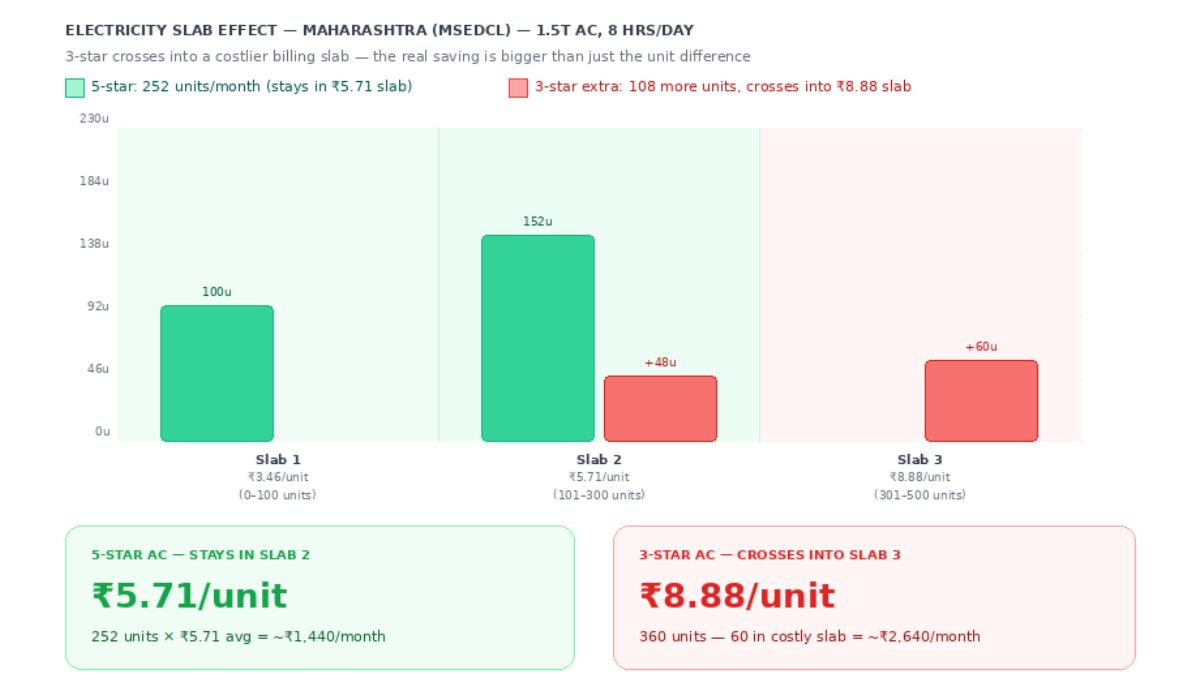
If you are in Maharashtra or Karnataka running the AC 8 hours a day, 5-star is financially non-negotiable — the slab effect alone makes it pay back inside 18 months. If you are in Gujarat using a guest room AC for 2–3 hours daily, 3-star is the smarter buy.
Monthly AC Running Cost by Tonnage — 3-Star vs 5-Star (8 hrs/day, ₹7/unit)
| Tonnage | 3-Star Monthly | 5-Star Monthly | Annual Saving |
|---|---|---|---|
| 1 Ton | ₹1,680–₹1,848 | ₹1,176–₹1,400 | ₹2,800–₹3,600/year |
| 1.5 Ton | ₹2,520–₹2,772 | ₹1,764–₹2,100 | ₹4,200–₹5,400/year |
| 2 Ton | ₹3,360–₹3,696 | ₹2,352–₹2,800 | ₹5,600–₹7,200/year |
| 2.5 Ton | ₹4,200–₹4,620 | ₹2,940–₹3,500 | ₹7,200–₹9,000/year |
A 2.5 ton 5-star in a large living room saves ₹7,000–₹9,000 every year over a 3-star. The price premium pays back in under 14 months.
Should You Buy 3-Star or 5-Star? The Final Answer
Buy 5-Star if:
- You run AC 6+ hours daily (most Indian main bedrooms)
- You are in Maharashtra, Karnataka, Tamil Nadu, or any high-tariff state
- It is for the master bedroom that runs through the night
- You plan to keep the AC for 5+ years
Buy 3-Star if:
- AC runs 2–4 hours max per day (guest room, small office)
- You are in Gujarat, Goa, or a low-tariff state with light usage
- It is a rental property and you will not be paying the electricity bill
- Upfront budget is the primary constraint
Everything Else You Need to Check Before Buying an AC in India
Copper vs Aluminium Condenser — Always Choose Copper
Copper transfers heat better, cools faster, and is repairable on-site. If a copper coil gets a small puncture, a technician can solder it at your home in an hour. Aluminium coils cannot be field-repaired — the whole coil must be replaced, costing ₹4,000–₹8,000.
Aluminium condensers are cheaper for manufacturers but corrode faster, especially in coastal areas. If you live near the sea (Mumbai, Chennai, Kochi, Vizag, Mangalore), look specifically for models with Blue Fin, Ocean Black Protection, or Gold Fin anti-corrosion coating on both the indoor and outdoor units. Salt air destroys bare fins in 2–3 years.
R32 Refrigerant — The Only Acceptable Choice in 2026
BEE mandates R32 refrigerant for all new 5-star-rated ACs from 2026. R32 has 68% lower global warming potential than the older R410A, and it is also 5–8% more energy efficient.
- R32: Standard in all new models — buy this
- R410A: Older standard, being phased out — avoid if possible
- R22: Banned in India — never buy an R22 AC
If a dealer is pushing an R410A model at a discount, check the 2026 BEE label first. There is often a reason it is being cleared out.
Do You Need a Stabiliser?
Almost every inverter AC manufactured after 2018 has built-in voltage protection between 140V and 290V. For most Indian cities, you do not need a separate stabiliser. The “stabiliser-free operation” claim is legitimate for these voltage ranges.
Buy an external stabiliser only if your area experiences voltage drops below 140V — which is uncommon in most metros and tier-1 cities today.
Convertible Mode (5-in-1, 6-in-1, 7-in-1)
Convertible mode lets you run the AC at 40–60% of its full capacity on mild days. In September or October when it is warm but not peak summer, this prevents the AC from blasting at 100% when you only need gentle cooling. Most 2026 mid-range and premium models include this. It genuinely helps — not just a marketing feature.
Installation Cost — Ask Before They Start
Standard installation (up to 12 ft pipe length, ground or first floor) costs ₹2,500–₹4,500 depending on the brand. Anything beyond that — longer piping, higher floors, copper pipe upgrade, drilling through thick walls — adds extra charges. Always get a full written quote before installation begins.
Service Network — More Important Than the Brand Name
A premium Japanese AC with no service centre in your city is a liability in peak summer. The wait for a technician can stretch to 5–7 days in May. Voltas has the widest service network in India, covering tier-2 and tier-3 cities better than any other brand. LG, Daikin, Blue Star, and Godrej are strong in metros and large cities.
Warranty — What to Look For
The minimum you should accept in 2026:
- 1–2 year comprehensive warranty (covers all parts and labour)
- 5 year warranty on PCB (circuit board — the most expensive component to replace)
- 10 year warranty on inverter compressor
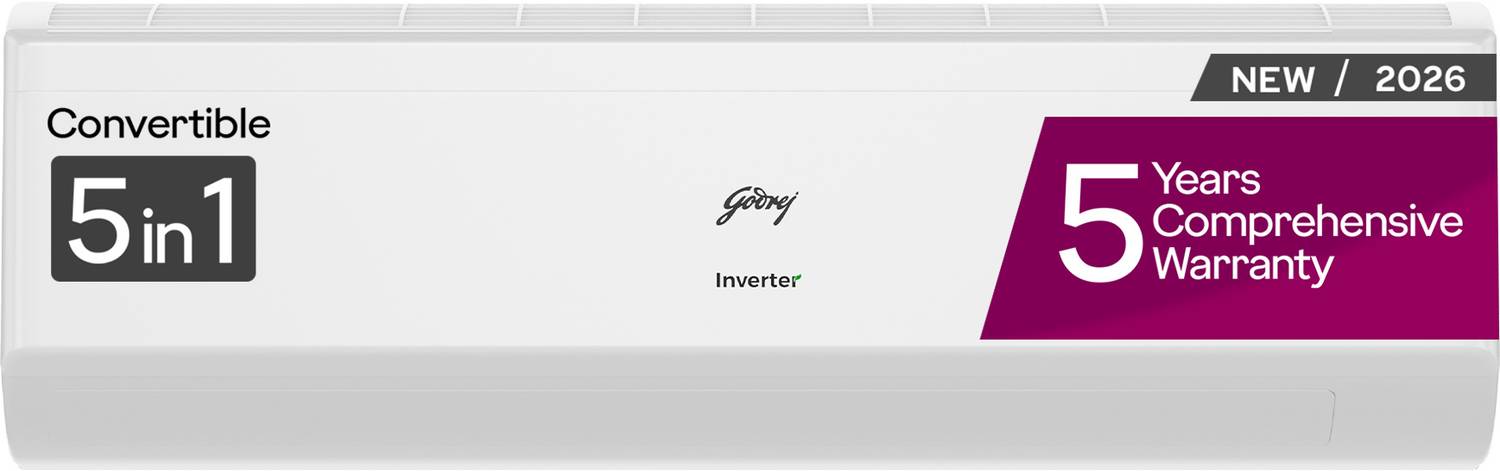
Godrej stands out by offering 5-year comprehensive warranty on select 2026 models, which is unusual in this price range.
6 Tips to Reduce Your AC Electricity Bill
These work regardless of which AC you buy:
- Set temperature to 24–26°C, not 18°C. Every degree lower increases power consumption by ~6%. The BEE officially recommends 24°C for Indian homes. Running at 18°C costs roughly 36% more than 24°C.
- Use a BLDC ceiling fan with the AC. A BLDC fan uses only 28–35W (vs 70–80W for a standard fan) and makes 26°C feel like 23°C. This can reduce your AC bill by 20–30% because you can run the AC at a higher setting.
- Clean the filter every 2–3 weeks. A clogged filter makes the compressor work harder, increasing power consumption by 10–20%.
- Use sleep mode at night. Sleep mode raises the room temperature by 1°C per hour after you sleep. This saves 15–20% on overnight electricity without affecting comfort.
- Do not set it to 16°C to cool faster. The AC cools at the same rate regardless of the set temperature. Lower settings just mean the compressor runs at full load for longer.
- Service the AC annually. A well-maintained AC (clean coils, correct gas level) runs 10–15% more efficiently. Skip two years of service and your 5-star starts behaving like a 3-star.
Best AC in India 2026 — Top Picks by Tonnage (5-Star First, Then 3-Star)
All models below are inverter split ACs with copper condensers and R32 refrigerant unless noted. 2026-rated models listed first within each category, then 2025-rated models that are still widely available.
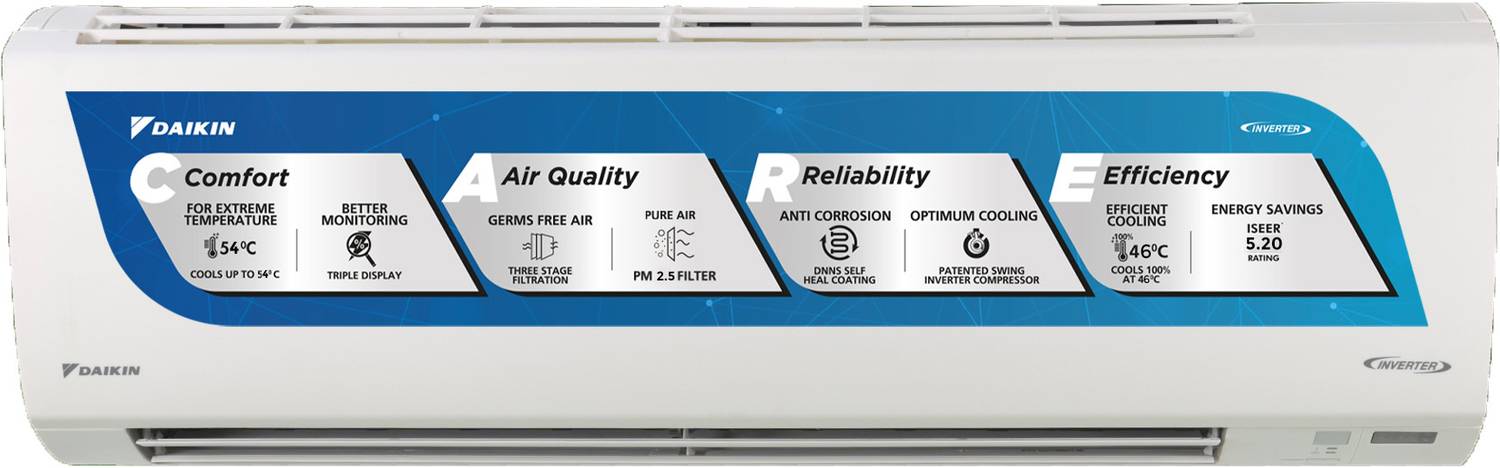
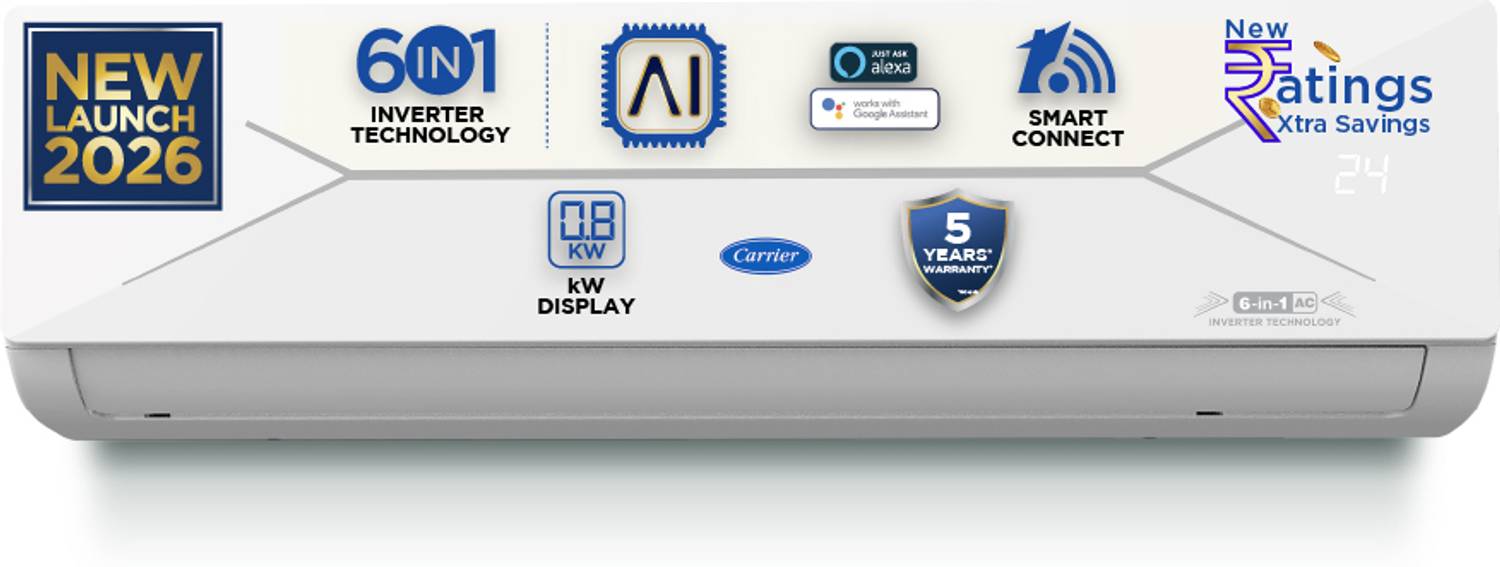
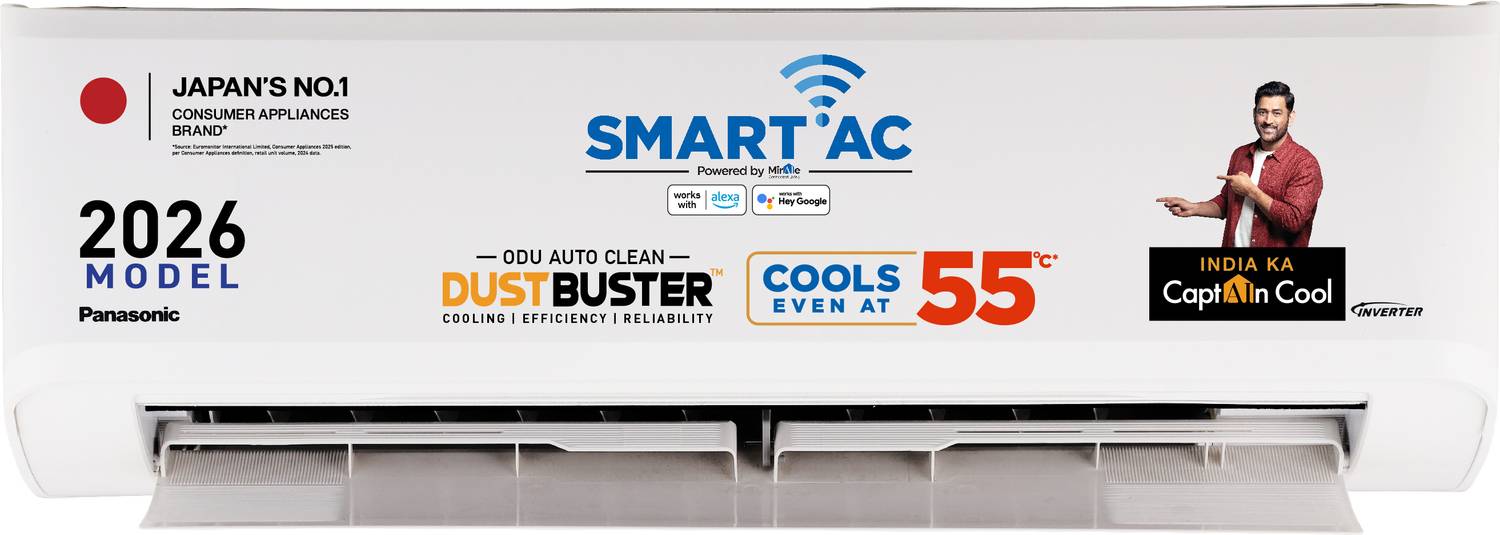
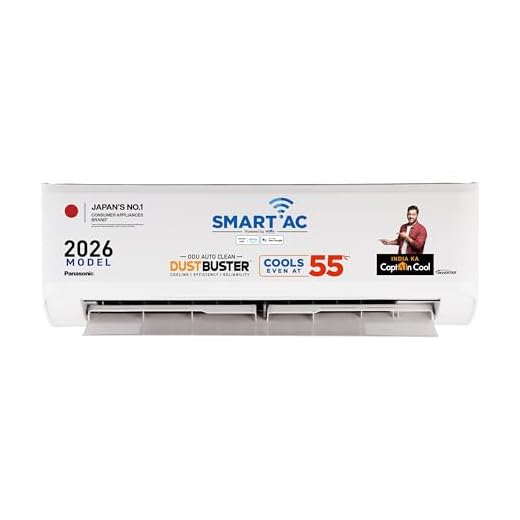
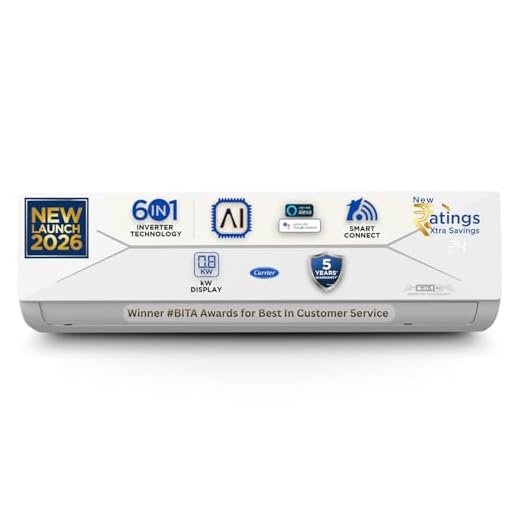
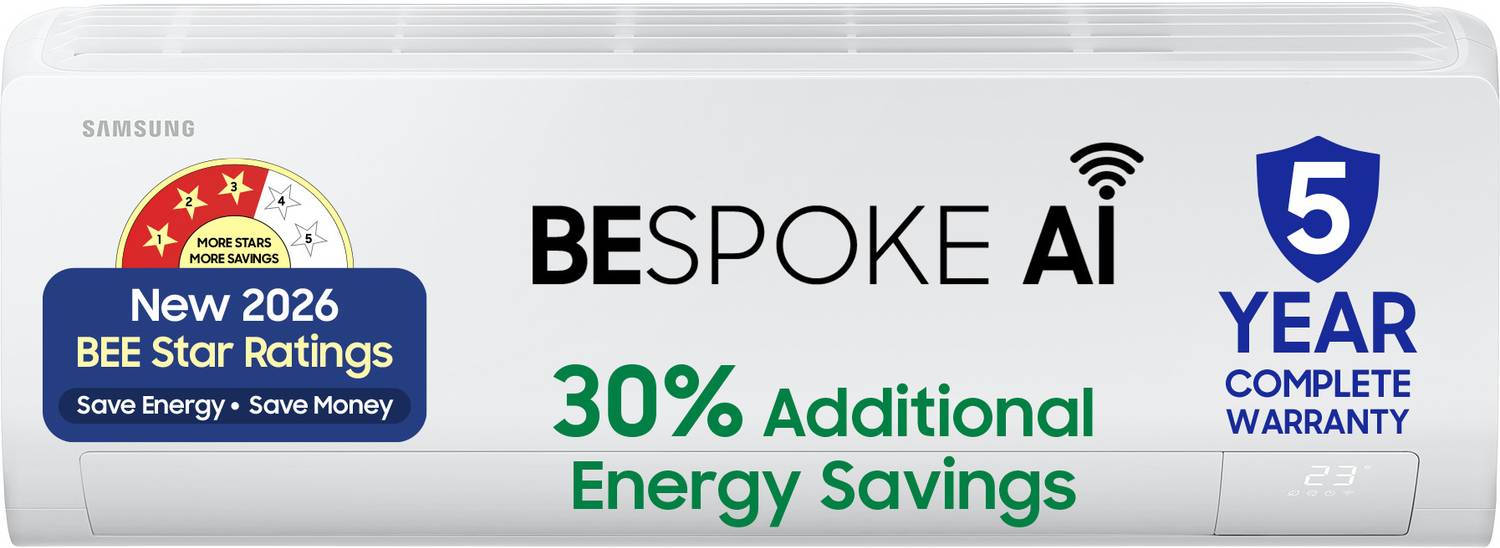
Best 1 Ton AC in India 2026 (Rooms Up to 120–130 sq ft)
5-Star Models





3-Star Models




Best 1.5 Ton AC in India 2026 (Rooms 130–180 sq ft — Master Bedrooms)
5-Star Models



3-Star Models

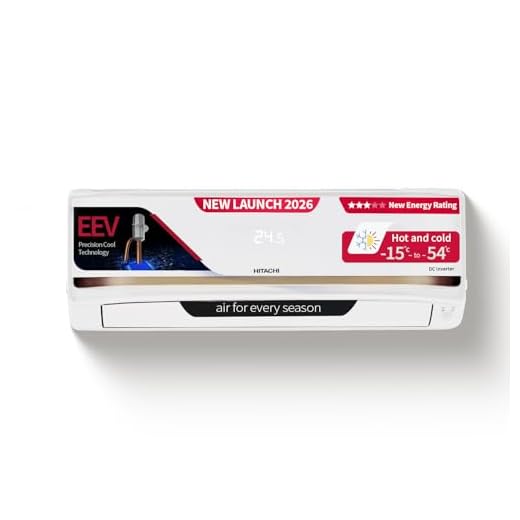
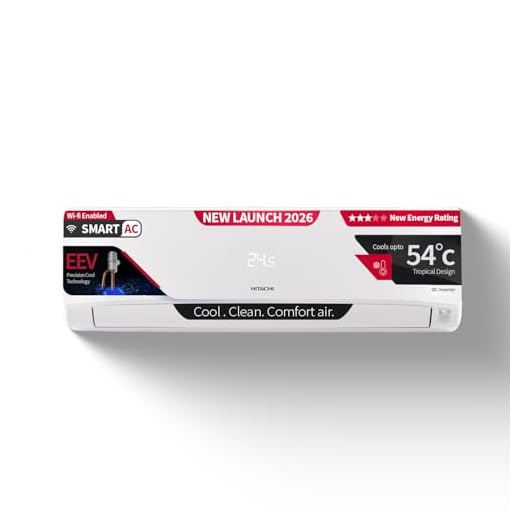

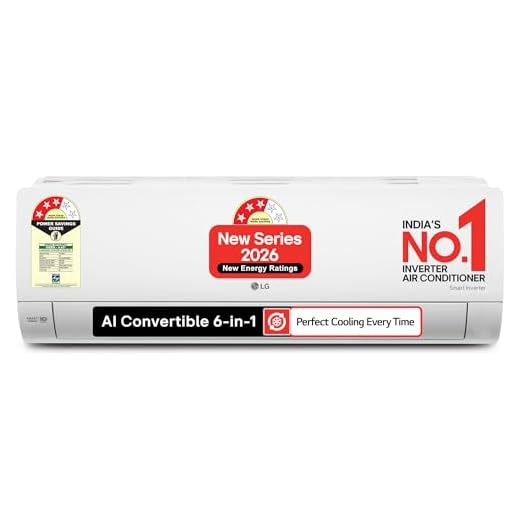
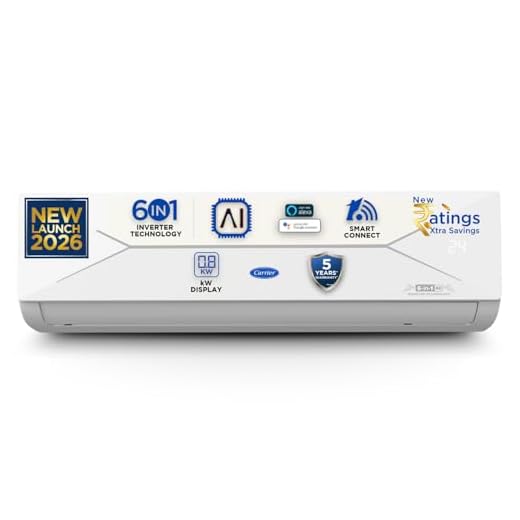
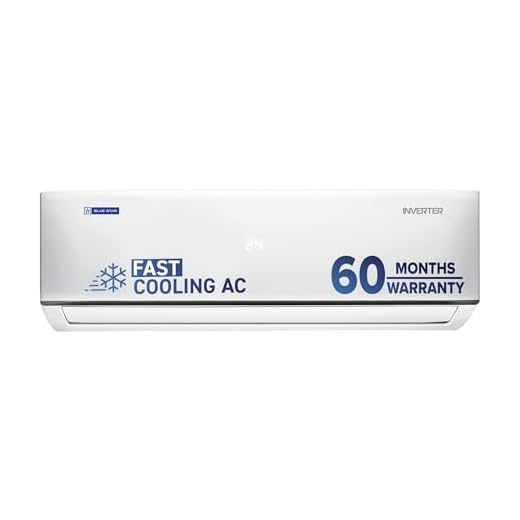
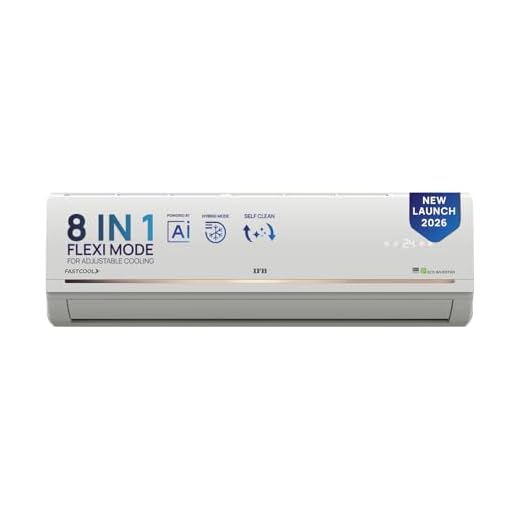
Best 2 Ton AC in India 2026 (Rooms 180–250 sq ft — Living Rooms)
5-Star Models
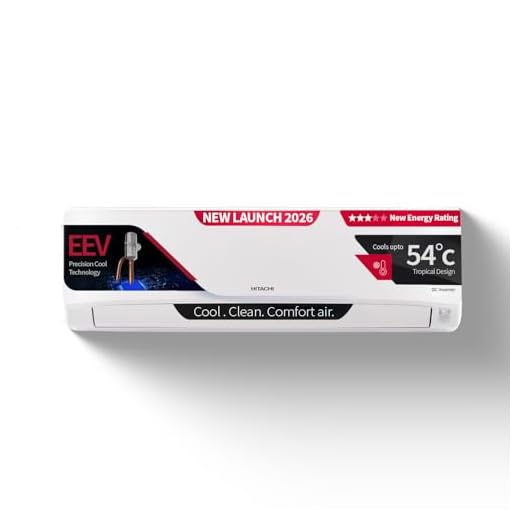

3-Star Models



Best 2.5 Ton AC in India 2026 (Rooms 250–350 sq ft — Large Halls, Open Plans)
Frequently Asked Questions About Buying an AC in India 2026
Which is the best AC to buy in India in 2026?
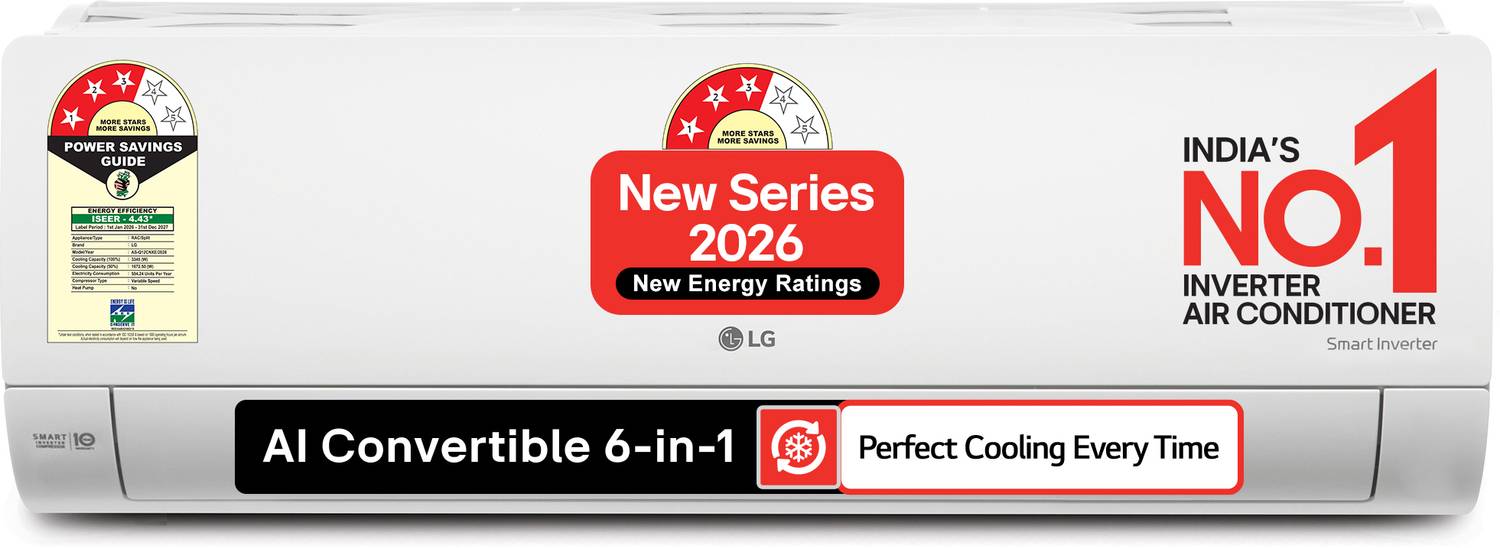
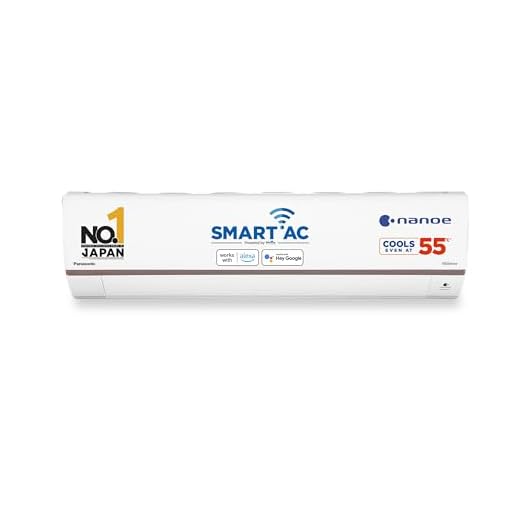
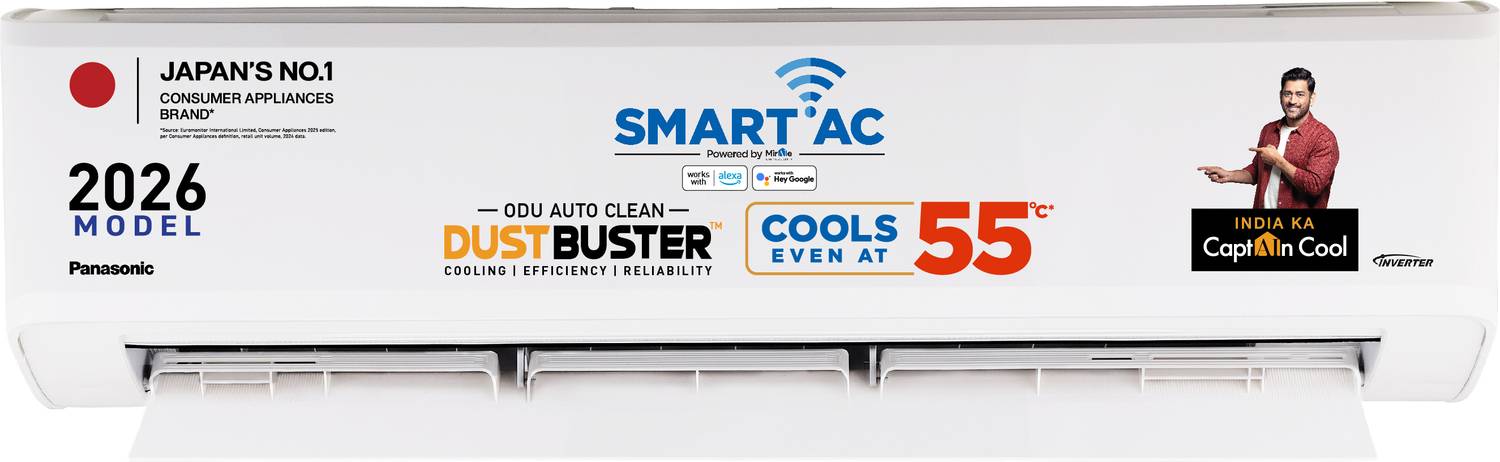
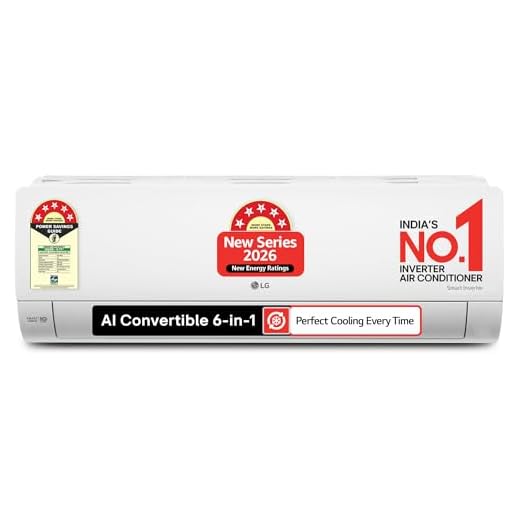
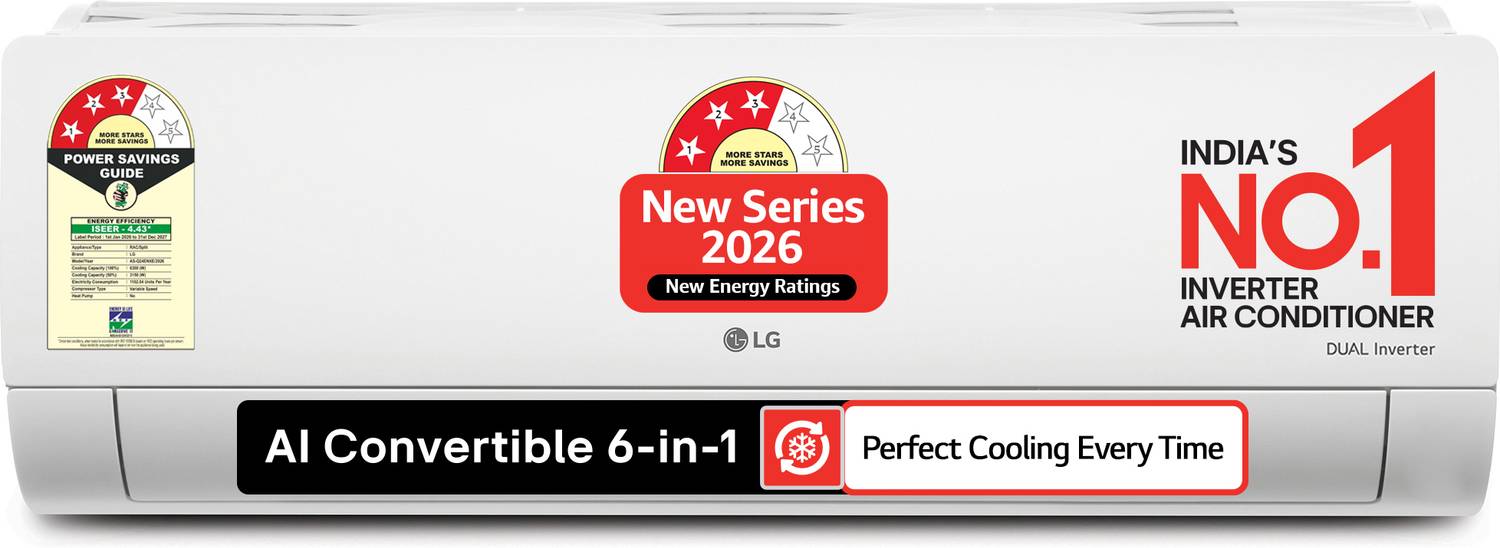
For most Indian homes, the best AC in 2026 is the LG US-Q19YNZE3 1.5 ton 5-star dual inverter split AC (ISEER 5.75, ~₹47,000–₹52,000). It combines twin rotary compressor efficiency, AI convertible modes, smart connectivity, and the widest cooling range (down to 55°C ambient). For maximum energy efficiency, the Panasonic CS/CU-WU18XKYF holds the highest ISEER of 5.80 in the 1.5T segment.
For anyone using an AC 6 or more hours daily, 5-star is better and worth the extra ₹6,000–₹10,000 upfront cost. A 1.5T 5-star inverter saves ₹4,200–₹5,400 per year over a 3-star at 8 hours/day usage — the break-even is just 1.5 to 2 years. For light use (2–4 hours/day in a guest room), 3-star is the more economical choice since the break-even stretches to 4–6 years.
The basic rule: 1 ton per 130 sq ft for a standard Indian room. Use 1T for rooms up to 130 sq ft, 1.5T for 130–180 sq ft, 2T for 180–250 sq ft, and 2.5T for 250–350 sq ft. Add 0.5T if you are on the top floor, and 0.25T each for west-facing windows, a room adjacent to a kitchen, or more than 3 regular occupants.
A 1.5 ton 5-star inverter AC consumes approximately 252–300 units per month when run 8 hours a day. At the Indian average tariff of ₹7/unit, that is roughly ₹1,764–₹2,100 per month. A 3-star equivalent uses 360–396 units per month (₹2,520–₹2,772), making the 5-star about 30–35% cheaper to run.
Yes, for daily heavy use. A twin rotary compressor (marketed as Dual Inverter by LG, Twin Inverter by O General) runs 5–10% more efficiently than a single rotary, produces less vibration, generates less noise, and has a longer operational lifespan. For bedrooms where the AC runs overnight, the quieter operation alone justifies the upgrade. For guest rooms or light use, single rotary is fine.
For most Indian cities, no. Almost all inverter ACs made after 2018 have built-in voltage protection handling input voltages between 140V and 290V — which covers normal grid fluctuations. An external stabiliser is only needed if your area experiences frequent drops below 140V.
R32 is the right answer for 2026. It has 68% lower global warming potential than R410A and is 5–8% more energy efficient. BEE has mandated R32 for all new 5-star rated ACs from January 2026. Avoid any AC still using R410A if there is a 2026-rated R32 alternative available, and never buy an R22 model — it is banned in India.
The Godrej GIC 18TTC3-WSA is the best budget 1.5 ton AC in India in 2026. Priced at ₹33,000–₹37,000, it offers a 5-year comprehensive warranty (best-in-class for a 3-star model), Blue Fin + Black Fin dual anti-corrosion protection, 5-in-1 convertible mode, R32 refrigerant, and cooling capability at ambient temperatures up to 52°C.
A 1.5 ton is the minimum for 150 sq ft. But on the top floor, the heat load increases significantly because the RCC roof absorbs solar radiation all day and radiates it into the room even after sunset. You can keep a 1.5T but choose a model with a high ISEER (5.0 or above) so the compressor can handle the extra load efficiently without running at 100% constantly. If the room also faces west, consider stepping up to a 2 ton.
At minimum once a year, before summer begins (ideally February or March). In dusty cities or near the sea, twice a year. A well-serviced AC (clean coils, correct refrigerant pressure) runs 10–15% more efficiently than a neglected one. Skipping service for two consecutive years can cost you the equivalent of an entire month’s electricity savings.
AC Buying Checklist — Before You Pay
Run through this before you confirm any purchase:
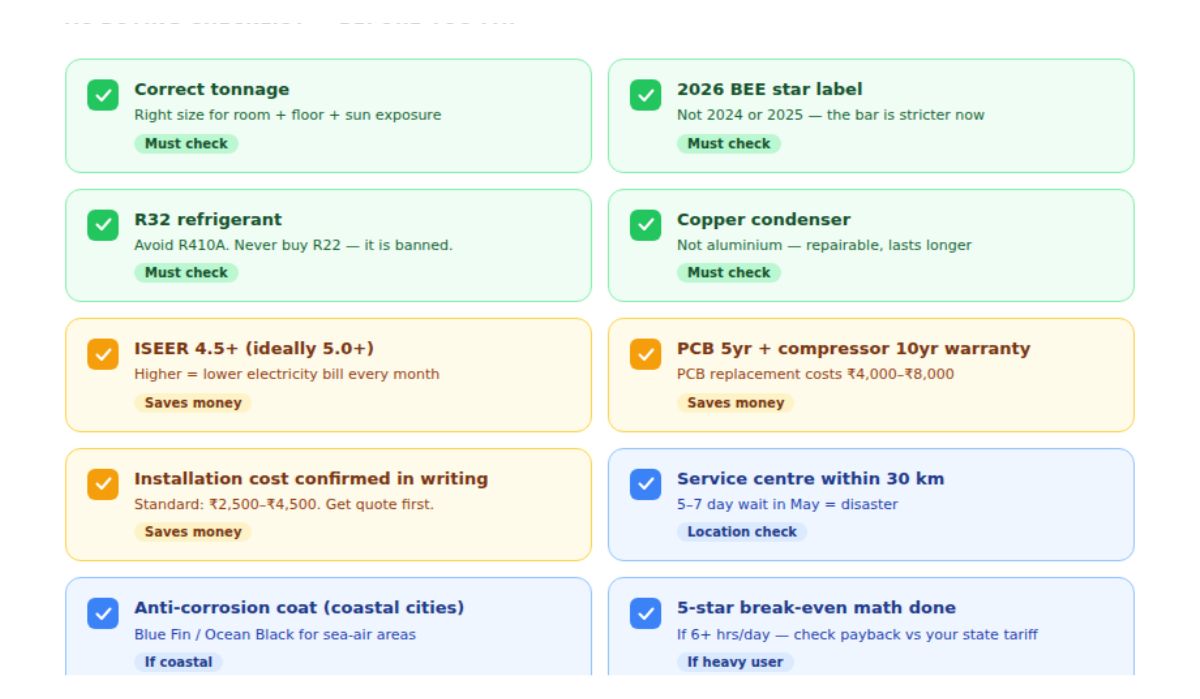
- Is the tonnage correct for my room size, floor, and sun exposure?
- Does the BEE label say “2026 Rating” (not 2024 or 2025)?
- Is the refrigerant R32?
- Does it have a copper condenser (not aluminium)?
- Is the ISEER 4.5 or above? (5.0+ for daily heavy use)
- Does the warranty cover PCB for 5 years and compressor for 10 years?
- Have I confirmed the total installation cost in writing?
- Is there a service centre within 30 km of my home?
- If I live in a coastal city — does the model have Blue Fin or Ocean Black anti-corrosion coating?
- If I run AC 6+ hours daily — have I confirmed the 5-star payback math for my state’s tariff?
Final Recommendation — Which AC to Buy in India in 2026
For most Indian families, the right answer is a 1.5 ton, 5-star inverter split AC with a copper condenser, R32 refrigerant, and ISEER above 5.0. The Panasonic WU18XKYF or LG US-Q19YNZE3 are the top two choices in this category.
If budget is the main constraint and the AC sees light use (guest room, office cabin, 3–4 hours/day), the Godrej GIC 18TTC3-WSA 3-star is genuinely excellent — the 5-year comprehensive warranty is better than many 5-star models, and the ₹35,000 price is hard to beat.
And whichever model you choose — confirm the service network before you buy, not after.