
Short answer: My pick is the Sony Bravia Theatre System 6: real rear speakers, a big sub and the best surround here, with Sony service behind it. The LG SQ75TR is the value system with rears and an Atmos driver included. If you want real 5.1 on a tighter budget, the Sony HT-S20R is still the one I trust most.
A home theatre for a TV in 2026 is mostly a soundbar with a sub and rear speakers, not a box of towers and satellites. Those old-style sets rarely have HDMI ARC, and TV speakers cannot put sound behind you at any price. I picked systems that connect to your TV with one cable and give you real rears, and I note which ones add true overhead sound. Prices change every week during sales, so live prices sit in the buy buttons, not in the text. Updated on 27 November 2026.
Quick picks
| Pick | Home theatre | Best for |
|---|---|---|
| Best overall | Sony Bravia Theatre System 6 | You want effects you can actually place behind you in movies and games |
| Best premium | Sonos Arc Ultra | You want one bar that sounds superb without a sub or rears cluttering the room |
| Best value with Atmos | LG SQ75TR | You want real rear surround without paying full home theatre money |
| Best 5.1 without Atmos | Sony HT-S40R | Living rooms where a wire from the TV to the sofa is not an option |
| Most channels for the money | boAt Prime X | You watch action, horror and thriller films and want sound from behind and above |
| Biggest bass | Zebronics 9900 | Big halls where you want cinema-level bass for action films, sports and parties |
| Most up-firing speakers | Noise Homestage 5.2.4 | You want real up-firing height and rear surround in a 300 to 400 sq ft room |
| Best budget | Sony HT-S20R | Movie and series watchers in a small to medium room who want proper rear speakers |
Tap a name to jump to its review. Ranked by Geekman Score, best first.
Soundbar finder
Answer 3 quick questions, get your top 3
Not sure which one? Start with Sony Bravia Theatre System 6, Sonos Arc Ultra, LG SQ75TR.
How I ranked them
The Geekman Score
Geekman has reviewed audio gear and TVs for over 10 years. For this list I went through home theatre systems and surround soundbars sold in India, on the big stores and on the brands’ own pages, and compared what decides whether a soundbar is still worth it after a year: how clear voices are at normal volume, real bass from a proper subwoofer, whether the surround and height effects are physical speakers or just processing, how it connects to your TV (HDMI ARC or eARC, optical, whether the TV remote controls the volume), output in RMS rather than inflated peak figures, the remote and display, the warranty and how easy service is in Indian cities. I also went through long reviews and owner reports to catch problems a spec sheet hides, like a sub that drops its link or a bar that keeps switching to Bluetooth. Every pick gets a Geekman Score out of 10: Sound 40%, Features 20% (inputs, formats, wireless parts, remote), Service 15% (brand reach and warranty) and Value 25%. Scores compare products inside this list only.
See all Geekman Scores
| # | Home theatre | Sound | Features | Service | Value | Score |
|---|---|---|---|---|---|---|
| 1 | Sony Bravia Theatre System 6 | 8.4 | 8.5 | 9.2 | 9.6 | 8.8 |
| 2 | Sonos Arc Ultra | 9.1 | 9.0 | 8.0 | 8.4 | 8.7 |
| 3 | LG SQ75TR | 7.6 | 9.0 | 9.2 | 9.6 | 8.6 |
| 4 | Sony HT-S40R | 7.6 | 7.8 | 9.2 | 9.6 | 8.4 |
| 5 | boAt Prime X | 7.0 | 9.0 | 8.0 | 9.6 | 8.2 |
| 6 | Zebronics 9900 | 7.1 | 9.0 | 8.0 | 9.0 | 8.1 |
| 7 | Noise Homestage 5.2.4 | 6.8 | 8.3 | 8.0 | 9.6 | 8.0 |
| 8 | Sony HT-S20R | 7.8 | 8.4 | 9.2 | 6.8 | 7.9 |
The reviews
Best home theatre systems in India: 8 picks reviewed
Best overall
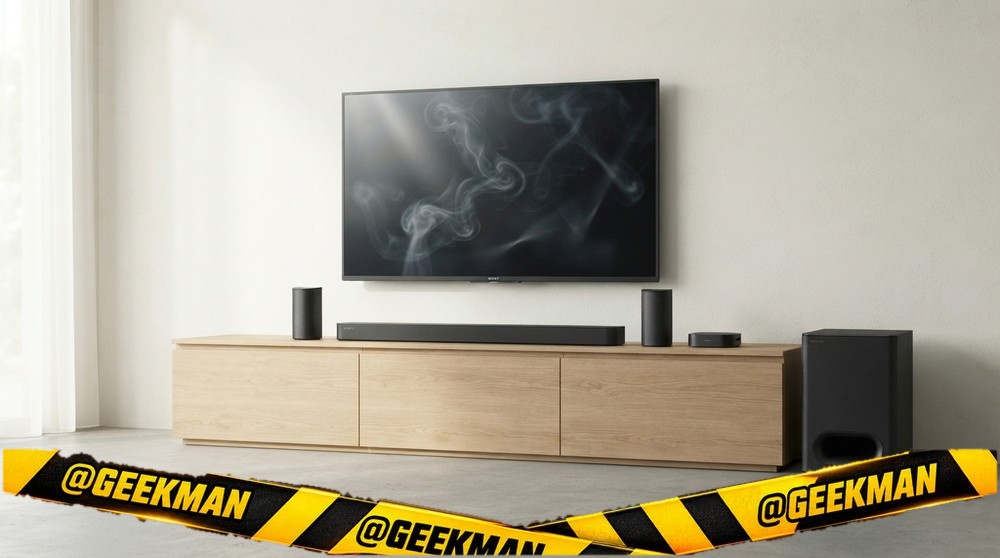
1. Sony Bravia Theatre System 6 (HT-S60)
8.8Geekman Score
8.4 Sound
8.5 Features
9.2 Service
9.6 Value
Real 5.1 surround with physical rear speakers, a big smooth sub and Sony service; the pick when sound behind you matters more than sound above.
Real 5.1 rears · Wireless rear hub · DTS:X · No height
Best for
✓ You want effects you can actually place behind you in movies and games
✓ PS5 and Xbox players who want footsteps and engines moving around the room
✓ Medium to large living rooms where a single bar sounds too small
Skip if
• You want real overhead effects (it has no up-firing drivers; the Sony Bar 6 does)
• Your sub cannot sit near the TV, because every input is on the sub
• You need an HDMI input or Wi-Fi streaming (the Samsung Q800H has both)
My take: This is the full home theatre option I’d recommend to most people with the budget. You get a 3-channel bar with tweeters, a 20 cm front-firing sub and two real rear speakers through a wireless hub, and reviewers found movies and especially games far more involving than any bar alone. Just know that Atmos here is decoded but not played from above, and the sub has to live near the TV because the HDMI port is on it.


SONY Bravia Theatre System 6(HT-S60),Dolby Atmos, subwoofer & Wireless Rear Speakers 1000 W Bluetooth Soundbar
 Lowest price
Up to 15% instant discount on select Credit Cards & SBI cards +1
- Up to 15% instant discount on select Credit Cards & SBI cards
- No Cost EMI on select cards

Up to 8% instant discount on select ICICI, IndusInd & RBL cards Details
- Up to 8% instant discount on select ICICI, IndusInd & RBL cards
Pros and cons
What I like
+ Real wireless-hub rear speakers for true surround
+ Tweeters give clearer dialogue than the Bar 6
+ Big, smooth 20 cm sub
+ Upmix makes stereo content feel wider without muddling voices
What I don’t like
• No height channels, so Atmos has no overhead layer
• All inputs on the sub limit where it can go
• Single HDMI port, no Wi-Fi
My full review: who it suits, what it is like and how it compares
Who should buy it. Someone who wants a proper surround system without running cables from the rear of the room to the TV. Gamers get the most out of it: reviewers singled out Spider-Man, Doom and Gears 5 as some of the most involving game audio they had heard, because sounds really come from behind. It fills medium rooms easily and handles larger living rooms too. If you live in a small bedroom or cannot place rear speakers near your seat, the Bar 6 is the simpler choice.
Sound and dialogue. The bar has three front drivers plus two tweeters, and each rear speaker has its own driver and tweeter. That gives crisper highs and more prominent dialogue than the Bar 6. Voice mode exists, but reviewers felt dialogue was already clear out of the box. For music, turn Sound Field off and it plays as a clean 2.1 system with satisfying bass. Indian listeners who like a bit of extra low end will find it suits them without needing to touch the settings.
Bass and surround. The 20 cm front-firing sub has noticeably more bass than the Bar 6, yet stays smooth rather than thundering. The real story is the rears: physical channel separation means bullets, coins and passing cars move around you instead of floating at the front. There are no up-firing drivers anywhere, so Atmos tracks play without any height, and one reviewer called it not true Atmos. Its Upmix setting for stereo content is a hidden gem, spreading effects to the rears without copying dialogue into them.
TV connection and setup. All inputs sit on the back of the subwoofer: one HDMI eARC, optical and a 3.5mm analogue input. The bar connects to the sub by a long cable, and the supplied HDMI cable is a little over 6 ft, so the sub must sit close to the TV. The rears plug into a small wireless hub that needs its own socket, and the speaker wires still run from hub to speakers. Setup in Bravia Connect includes seating distance and rear level. It decodes Dolby Atmos and DTS:X; one reviewer found an Apple TV box sent only 2-channel after an update, while PS5, Xbox and TV apps passed Atmos fine. No Wi-Fi, AirPlay or HDMI input.
Build, remote and service. Sony gives small feet to raise the bar above TV stands, plus a compact remote with sound field, voice, night mode and bass buttons. Night mode compresses loud scenes for late viewing. There is no Acoustic Center Sync for Sony TVs. Bluetooth 5.3 with AAC handles phone music. Sony India’s 1-year warranty and home service for home theatre products make this one of the safer big systems to own.
Sony Bravia Theatre System 6 or Sonos Arc Ultra? The System 6 gives you a big 20 cm sub and real rear speakers in one box, with DTS:X and Sony service, for a fraction of what a full Sonos setup costs. The Arc Ultra has real up-firing drivers, the best dialogue here and Wi-Fi streaming, but a matching sub and rears cost a lot extra. For movie surround per rupee, the Sony; for a premium system you build over time, the Sonos.
Sony Bravia Theatre System 6 or Sony HT-S40R? Both use a wireless hub or amp for the rears and keep all inputs on the sub. The System 6 adds tweeters, eARC, Dolby Atmos and DTS:X decoding, a bigger front-firing sub and Bluetooth 5.3, so it sounds clearer and fuller. The HT-S40R is plain Dolby Digital over HDMI ARC, but it costs much less and still has an excellent centre for dialogue. Stretch to the System 6 if you stream Atmos titles or game; otherwise the S40R covers the basics well.
Key specs
| Channels | 5.1 (Atmos decoded, no height drivers) |
| Output | 1000W |
| Subwoofer | 20 cm front-firing; holds all inputs |
| Rear/height | 2 rears via wireless hub; no up-firers |
| Formats | Dolby Atmos, DTS:X, Dolby TrueHD |
| HDMI | eARC only, on the subwoofer |
| Other inputs | Optical, 3.5mm analogue |
| Bluetooth/Wi-Fi | Bluetooth 5.3 (SBC, AAC); no Wi-Fi |
| Warranty | 1 year |
| In the box | Bar, sub, 2 rears, rear hub, remote, HDMI cable, feet |
Best premium
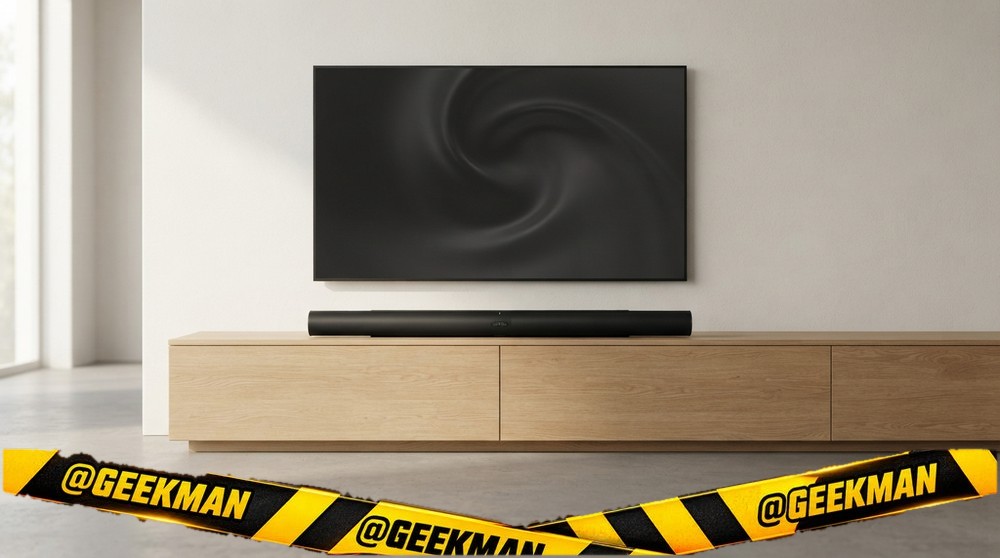
2. Sonos Arc Ultra Dolby Atmos Soundbar
8.7Geekman Score
9.1 Sound
9.0 Features
8.0 Service
8.4 Value
The best-sounding single soundbar here, with standout dialogue, deep bass from the bar alone, Wi-Fi streaming and quick room tuning.
True Atmos · Wi-Fi + AirPlay · Trueplay · No sub needed
Best for
✓ You want one bar that sounds superb without a sub or rears cluttering the room
✓ Music lovers who stream over Wi-Fi, AirPlay or Spotify as much as they watch TV
✓ Homes that may add a Sonos sub and rear speakers later
Skip if
• You want a full sub and rear package for the same money (a Samsung Q90-class system gives more hardware)
• You need an HDMI input or passthrough for a fourth device
• Your budget tops out well below flagship level (the Sony Bar 6 or System 6 get you most of the cinema effect)
My take: If money is not the main constraint, this is the bar I’d want under my TV. Reviewers praised dialogue that stays clear in the busiest scenes and bass from the bar alone that made them question whether the add-on sub is needed in a normal room. The honest catches are the price, a single HDMI port with no passthrough, and a Sonos app that one reviewer found buggy.

Sonos Arc Ultra | Soundbar with Dolby Atmos, WiFi, Bluetooth, Amazon Alexa for 9.1.4 Surround Sound for TV and Music - Black
Black Friday Deal Up to 15% instant discount on select Credit Cards & SBI cards +1
- Up to 15% instant discount on select Credit Cards & SBI cards
- No Cost EMI on select cards
Pros and cons
What I like
+ Outstanding dialogue clarity
+ Deep, controlled bass from the bar alone
+ Real up-firing height drivers
+ Wi-Fi, AirPlay and Bluetooth with Trueplay tuning
What I don’t like
• Very expensive, more so with sub and rears
• Single HDMI port with no passthrough
• Sonos app can be glitchy
My full review: who it suits, what it is like and how it compares
Who should buy it. Someone with a 50-inch or bigger TV in a living room of around 12 by 14 ft who wants top sound without a sub on the floor. It is just as good for music as for movies, which matters if the soundbar doubles as your main speaker. If you already own Sonos speakers, it slots into that system. If you want sub and rears in one box for less, a full Samsung system is the better value.
Sound and dialogue. This is its standout. Reviewers heard voices clearly even during big action sequences, and one called it among the best bars he had heard in his whole career. Next to Sony, Sonos sounds more detailed, while Sony fills the room a little more. Music sounds excellent too; one reviewer could not find a track he could fault. Dialogue clarity is one of the two biggest gains over the original Arc.
Bass and surround. Sonos claims 9.1.4 from the bar alone, and the bass is surprisingly deep and controlled without any sub. With the optional Sub 4, even cranked to the maximum, bass stayed clean and not boomy. The bar has real upward-firing drivers for height. With Trueplay tuning, reviewers heard effects reach out to the sides at a slight height, and one even sensed sound partly from behind. Without rear speakers, though, nothing truly comes from behind you.
TV connection and setup. One HDMI eARC port, Ethernet, Wi-Fi with AirPlay, and Bluetooth for phones. There is no HDMI input or passthrough, so it takes your TV’s eARC port without giving one back. The supplied HDMI cable is short, so plan placement. Setup through the Sonos app, including firmware, took one reviewer about 10 minutes. Trueplay room tuning is worth running; Arc Ultra supports a Quick Tuning mode that also works from Android phones, while full Trueplay needs an iPhone or iPad. The app lets you set height level, sub level, speech enhancement and lip-sync delay.
Build, remote and service. Build is very premium with a matte finish, touch controls on top, a hardware mic-off switch for the voice assistant, and a rail at the back that fits the old Arc wall mount. There is no remote in the box; the TV remote handles volume over eARC. The white version shows dirt easily. Sonos sells through authorised retailers in India; Croma lists a 12-month carry-in warranty, with repairs handled through the distributor, which is thinner than Sony or Samsung service.
Sonos Arc Ultra or Sony Bravia Theatre System 6? The Arc Ultra is one bar that does nearly everything well on its own, with real height, strong bass without a sub and Wi-Fi, AirPlay and Bluetooth for music. The System 6 has no height drivers but includes real rears and a sub for much less money. If you want sound behind you on day one, the Sony; if you value music streaming and a clean single-bar look, the Sonos.
Sonos Arc Ultra or LG SQ75TR? The SQ75TR includes a sub and two rears, has an HDMI input with 4K 120Hz passthrough and DTS:X, and costs a small part of the Sonos price. The Arc Ultra sounds far better, with clearer dialogue, deeper controlled bass and a much stronger height effect, but it is a single bar until you buy the Sonos sub and rears. Budget-minded families should pick the LG; people building a premium room should pick the Sonos.
Key specs
| Channels | 9.1.4 claimed, all in one bar |
| Output | Not stated by Sonos |
| Subwoofer | Built-in; optional Sub 4 |
| Rear/height | Up-firing and side drivers; optional Era 300 rears |
| Formats | Dolby Atmos, Dolby TrueHD; no DTS:X |
| HDMI | eARC only (no input) |
| Other inputs | Ethernet |
| Bluetooth/Wi-Fi | Bluetooth, Wi-Fi, AirPlay |
| Warranty | 12 months carry-in (Croma) |
| In the box | Bar, power cable, short HDMI cable |
Best value with Atmos
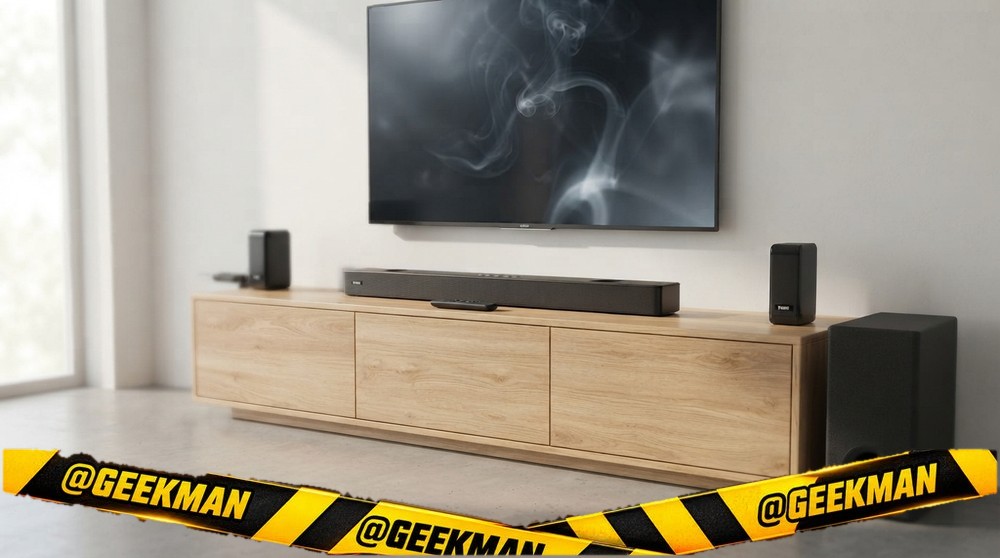
3. LG SQ75TR Dolby Atmos Soundbar with Rear Speakers
8.6Geekman Score
7.6 Sound
9.0 Features
9.2 Service
9.6 Value
Rear speakers, a wireless sub and a centre up-firer in one box, with DTS:X and full HDMI passthrough; the value full system from a big brand.
Rears included · Centre up-firer · HDMI in + eARC · DTS:X
Best for
✓ You want real rear surround without paying full home theatre money
✓ LG QNED or OLED owners who want the matching bracket and WOW Orchestra
✓ Projector setups that need HDMI in and out with 4K and Dolby Vision passthrough
Skip if
• You expect a plane-flying-overhead effect (the Sony Bar 6 has two real up-firers)
• You want deep, soft thump in a big hall (Samsung bars play lower)
• You want a front display to see volume and mode
My take: This is the cheapest way to get a branded bar, wireless sub and two rear speakers in one box. Reviewers liked the surround, clean vocals and correct instrument placement, and a one-year owner was still happy. The single centre up-firer mostly adds richness rather than a clear overhead layer, and the bass is solid but not the deepest. Check the price on the day, because it swings a lot between stores.
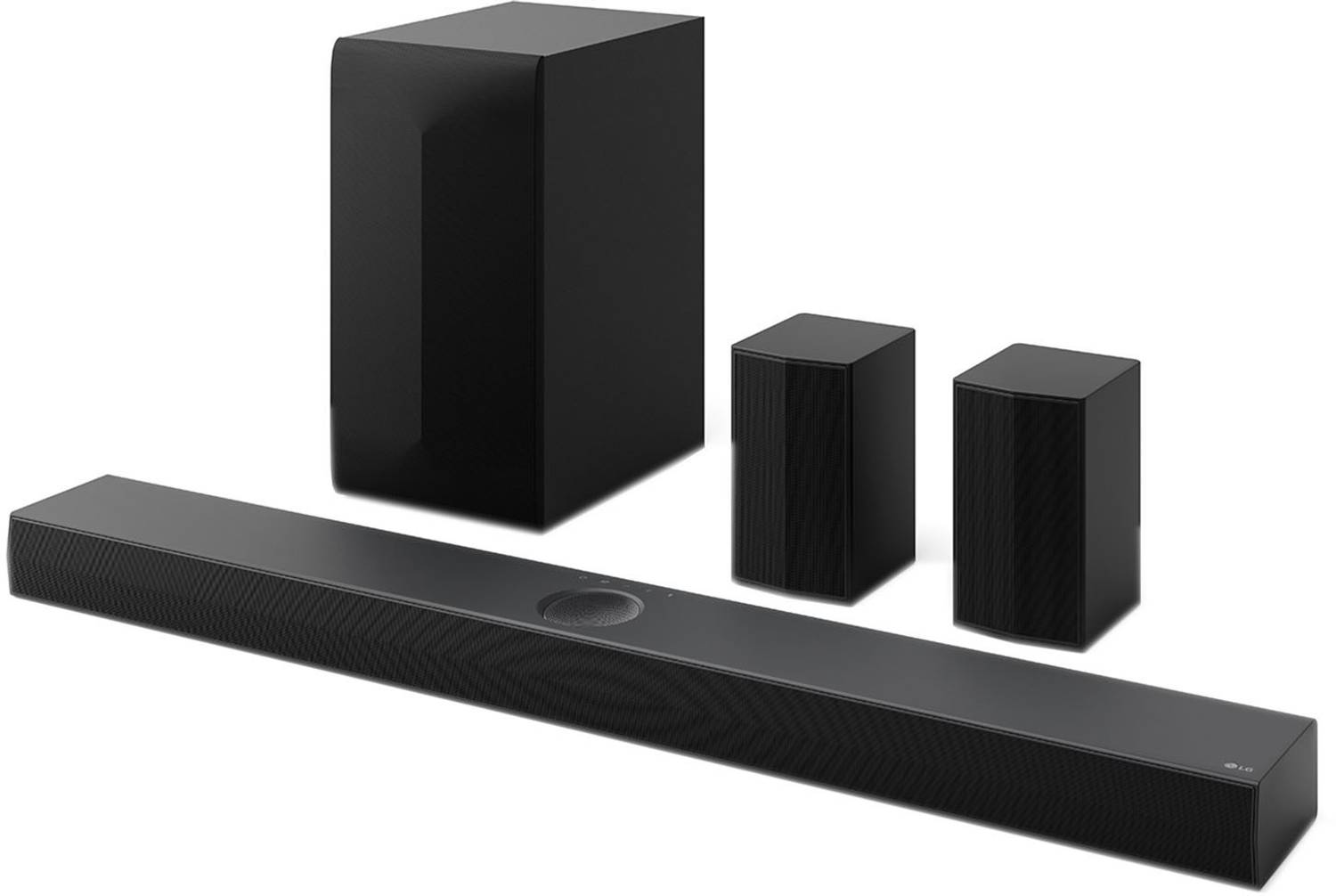
LG SQ75TR, Dolby Atmos, AI Sound Pro, QNED Matching, Center Up-firing Speaker 600 W Bluetooth Soundbar
Up to 8% instant discount on select ICICI, IndusInd & RBL cards Details
- Up to 8% instant discount on select ICICI, IndusInd & RBL cards
Pros and cons
What I like
+ Rear speakers and wireless sub included
+ HDMI in with 4K, Dolby Vision and VRR passthrough
+ Dolby Atmos and DTS:X
+ Clear vocals and good instrument placement
What I don’t like
• Centre up-firer gives little true overhead effect
• Bass lacks deep thump in large rooms
• No display, only colour LEDs
My full review: who it suits, what it is like and how it compares
Who should buy it. Someone with a living room or bedroom of up to about 250 to 300 sq ft who wants sound behind them as well as in front. It suits LG TV owners best, but works with any TV over HDMI. A long-term owner chose it over the cheaper SQ65TR purely for the HDMI input, running a Fire TV stick through it into a projector. If you sit in a big open hall or want floor-shaking bass, look elsewhere.
Sound and dialogue. Vocals and mids are clear, and treble is balanced without harshness. Reviewers found instruments placed where they should be, with a wide soundstage for both movies and music. One owner raised the centre channel level for even clearer dialogue, which the remote and app both allow. The bar plays loud enough for medium halls at around half volume.
Bass and surround. The wireless sub gives solid upper bass, but not the deep, soft thump Samsung bars deliver; in a big hall you hear the bass more than you feel it. The included rears are the highlight, giving proper surround in films and even adding to music. The centre up-firer does not create a rain-from-above or plane-overhead effect; it adds a fuller, more cinematic sound instead. Note that only one rear is wireless: it needs power, and the second rear is wired to it.
TV connection and setup. HDMI eARC plus one HDMI input that passes 4K, Dolby Vision, HDR10, 120Hz and VRR/ALLM, with optical, USB and Bluetooth 5.1. There is no Wi-Fi. It decodes Dolby Atmos and DTS:X. With LG TVs, WOW Orchestra lets the TV speakers join in, though one reviewer heard little benefit on a basic LG model. Use HDMI rather than Bluetooth for a streaming stick: over Bluetooth, an owner got only 14 coarse volume steps. AI Sound Pro switches modes by content automatically.
Build, remote and service. Build is good throughout: metal grille on the bar, a wooden sub and metal-grilled rears. There is no display, only coloured LEDs that turn green, orange and red with volume, and the bar announces mode changes by voice. A QNED Synergy bracket comes in the box, and some sellers include free installation. LG India gives a 1-year warranty with a wide service network.
LG SQ75TR or boAt Prime X? Both include rears. The SQ75TR has tweeters for clearer voices, deeper bass in action scenes, DTS:X and LG service. The Prime X has four up-firing drivers against LG’s one, wider surround, battery rears that dock on the bar and two HDMI inputs, but vocals get muffled at high volume. Choose the LG for dialogue and service, the boAt for more height and surround.
LG SQ75TR or Sony HT-S40R? The SQ75TR adds a single up-firing driver, DTS:X, eARC and an HDMI input with 4K 120Hz passthrough for consoles. The HT-S40R is Dolby Digital only over HDMI ARC, but has an excellent centre channel, punchy Sony bass and Sony’s service reach. If you want Atmos and gaming features, the LG; if you want a simple, proven 5.1 for TV and films, the Sony.
Key specs
| Channels | 5.1.1 (9 speakers) |
| Output | 600W (500W rated) |
| Subwoofer | Wireless |
| Rear/height | 2 rears (one wireless, one wired to it); 1 centre up-firer |
| Formats | Dolby Atmos, DTS:X |
| HDMI | eARC + 1 input (4K, Dolby Vision, VRR/ALLM, 120Hz) |
| Other inputs | Optical, USB |
| Bluetooth/Wi-Fi | Bluetooth 5.1; no Wi-Fi |
| Warranty | 1 year |
| In the box | Bar, sub, 2 rears, remote, HDMI cable, QNED Synergy bracket |
Best 5.1 without Atmos
4. Sony HT-S40R 5.1 Home Theatre Soundbar
8.4Geekman Score
7.6 Sound
7.8 Features
9.2 Service
9.6 Value
Sony’s 5.1 for homes that can’t run a cable across the room: a wireless amp feeds the rears, and the centre channel keeps voices clear.
Wireless rear amp · Dedicated centre · HDMI ARC · Sony service
Best for
✓ Living rooms where a wire from the TV to the sofa is not an option
✓ Families who want clear dialogue plus a Night mode for late films
✓ Buyers who value Sony’s service network over the latest formats
Skip if
• You want Atmos, eARC or an HDMI input for 4K passthrough
• You mostly listen to classical or old Hindi songs
• You want rears that need no socket at all (the amp still needs power; the boAt Prime X rears run on battery)
My take: I’d call this the easy-living 5.1. The rear speakers plug into a small wireless amplifier near the sofa, so no wire crosses the room, and the bar’s dedicated centre gives strong dialogue that Night mode pushes further forward. It is tuned the Sony way, so bass is generous. The catch is dated connectivity: HDMI ARC only, Dolby Digital only, no Atmos and no HDMI input.

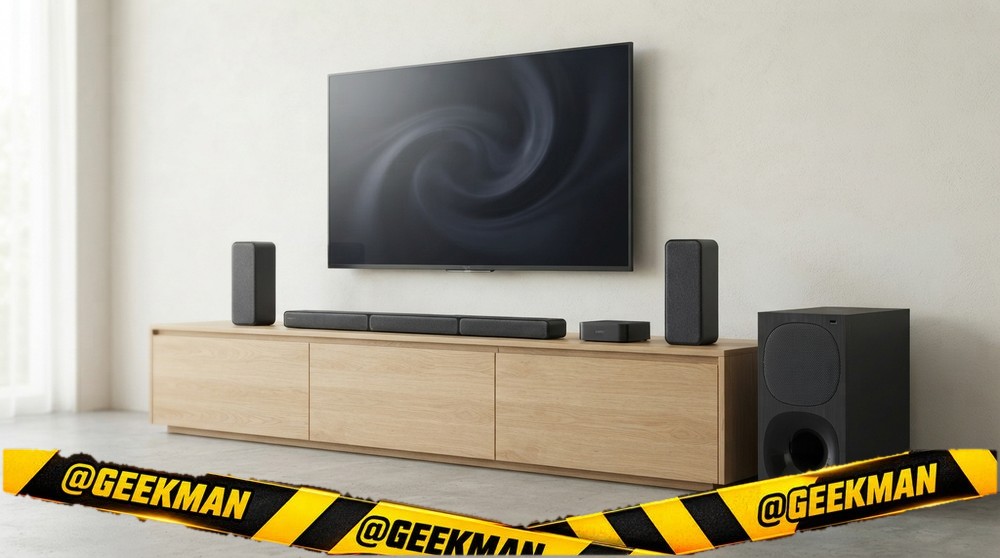
SONY HT-S40R 5.1ch Home Theatre with Dolby Digital, Subwoofer, Rear Speakers, 600 W Bluetooth Soundbar
Lowest price
Up to 15% instant discount on select Credit Cards & SBI cards +1
- Up to 15% instant discount on select Credit Cards & SBI cards
- No Cost EMI on select cards
Up to 8% instant discount on select ICICI, IndusInd & RBL cards Details
- Up to 8% instant discount on select ICICI, IndusInd & RBL cards
Pros and cons
What I like
+ Wireless amp removes cables across the room
+ Dedicated centre with Night mode for clear dialogue
+ Punchy, room-filling bass
+ Sony service network
What I don’t like
• HDMI ARC only: no eARC, HDMI input or Atmos
• Centre level can’t be raised on its own
• Small, fiddly display
My full review: who it suits, what it is like and how it compares
Who should buy it. A living room where the TV is on one wall and the sofa against another, and you can’t or won’t run a cable between them. The rears connect by a short wire to a wireless amplifier that you plug in behind the sofa. It is also the natural step up for anyone who likes the HT-S20R but wants a cleaner rear setup and more muscle. If you want height effects, look at an Atmos bar instead.
Sound and dialogue. The bar has three channels (left, right and a dedicated centre), and that centre gives excellent dialogue when the rears are placed well. Night mode lowers the sub and shifts power to the centre, which is great for late viewing. One reviewer found voices softer than ideal in a few scenes, and you can’t raise the centre level on its own; the Voice mode helps but thins out everything else. Music has Sony’s slightly bass-heavy flavour, which suits parties more than classical or old Hindi songs. Leaving it on Auto works well, as it adapts to what you’re playing.
Bass and surround. Bass is punchy and room-filling; one reviewer liked the controlled upper bass and solid low end, another found it a touch heavy and dialled it down a few notches. Surround is a good 5.1 effect rather than cinematic: in racing games and films like Ready Player One, cars clearly move around you. Separation opens up more above about 70% volume. Front separation is narrow because left, right and centre sit close together in one bar. Place the rears four to five feet from you, facing you, and raise their level up to +6 for the best effect.
TV connection and setup. Every input lives on the sub, not the bar: HDMI ARC, optical and AUX at the back, USB on the front, plus Bluetooth 5.0. A 6 ft HDMI cable is included. There is no eARC, no HDMI input and no 4K passthrough. Having all inputs on the sub can make cable management awkward, depending on where the sub sits. Setup is otherwise plug and play.
Build, remote and service. The bar is light and all plastic but doesn’t feel cheap, and its length suits a 43-inch TV. The sub has a piano-black front. The small display is a bit fiddly for changing settings, and the remote is the simple, rubbery one from the HT-S20R, with sound presets and input on top. Sony’s warranty and wide service network are a real advantage over the Indian brands at this price.
Sony HT-S40R or Sony HT-S20R? Both are real 5.1 with all inputs on the sub and Dolby Digital over HDMI ARC. The HT-S40R connects its rears to a wireless amplifier, so there is no cable running across the room, and it has punchier bass for a bigger room. The HT-S20R has wired rears with fixed cables and costs noticeably less. If you can route cables along the wall, the S20R; if you cannot, the S40R.
Key specs
| Channels | 5.1 (L, C, R in bar; 2 rears) |
| Output | 600W total (Sony figure) |
| Subwoofer | Wired to bar; houses all inputs |
| Rear/height | Rears wired to a wireless amplifier (needs a socket); no height |
| Formats | Dolby Digital (no Atmos) |
| HDMI | ARC (no eARC, no HDMI in) |
| Other inputs | Optical, AUX, USB (on sub) |
| Bluetooth/Wi-Fi | Bluetooth 5.0; no Wi-Fi |
| Warranty | 1 year |
| Size | Bar fits under a 43-inch TV; 6 ft HDMI cable included |
Most channels for the money
5. boAt Aavante Prime X 7.1.4 Dolby Atmos Soundbar
8.2Geekman Score
7.0 Sound
9.0 Features
8.0 Service
9.6 Value
The most wire-free Atmos system in this group: battery-powered rears, four real up-firing drivers and surround tuned for action films.
7.1.4 Dolby Atmos · Battery rears · 2x HDMI in · Wireless sub
Best for
✓ You watch action, horror and thriller films and want sound from behind and above
✓ There is no power socket near your sofa, so rears that run on battery solve a real problem
✓ You have a streaming stick or console and want to plug it into the bar’s two HDMI inputs
Skip if
• Dialogue and vocals matter most (the LG SQ75TR is clearer, it has tweeters)
• You mostly listen to classical, old Hindi songs or instrument-heavy music
• You want deep, chest-thumping rumble; the sub runs out of steam around 60 Hz
My take: This is the one I’d point an action-movie fan toward when the budget won’t stretch to a big-brand Atmos system. Four angled up-firers and properly cordless rears make it a real step up over plain 5.1, and switching between the Atmos and Dolby Digital 5.1 versions of the same film made an audible difference. The catch is the voice range: there are no tweeters, Music mode sounds dark, and vocals turn muffled when you push it. Buy it in a sale, never at its old launch price.
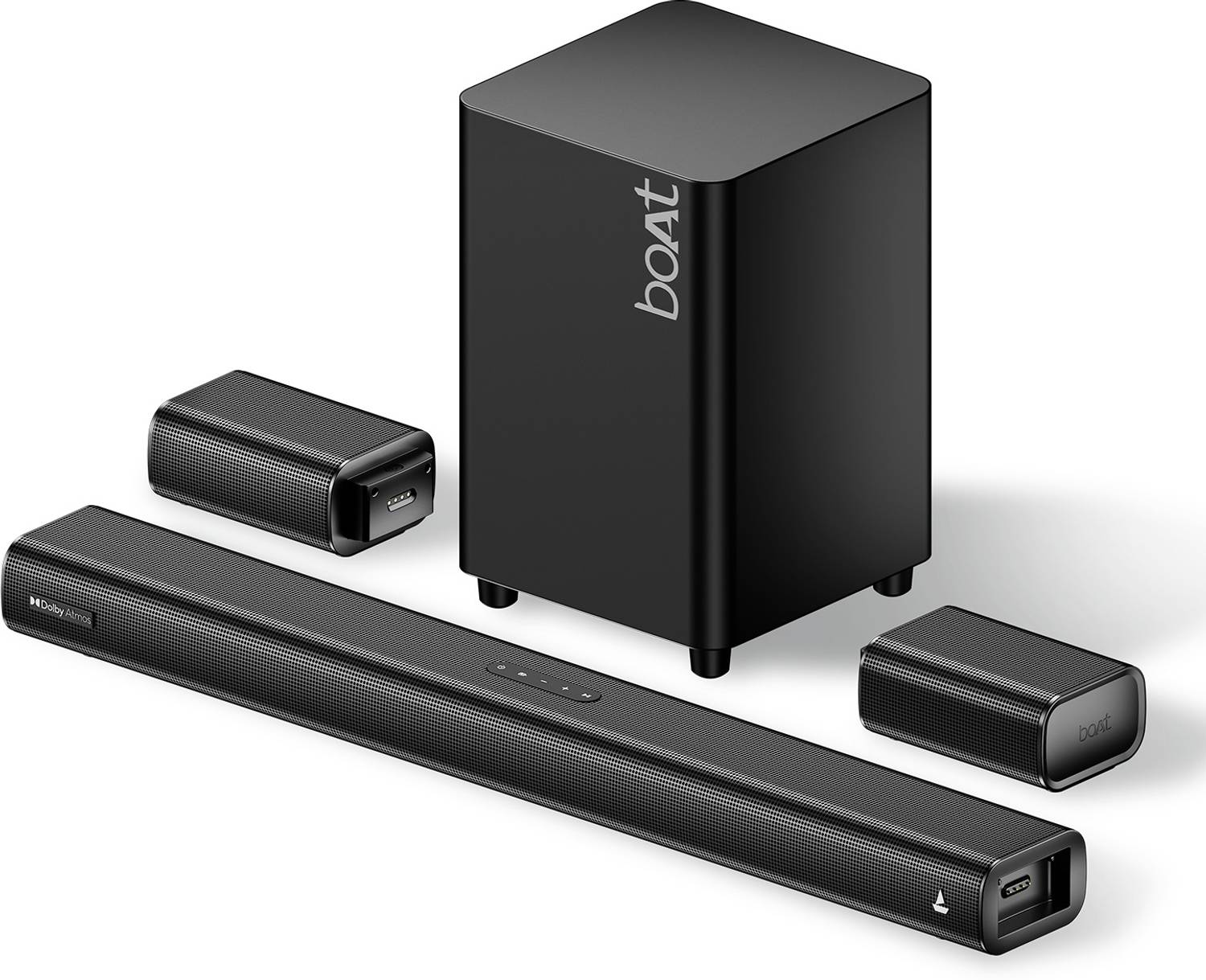
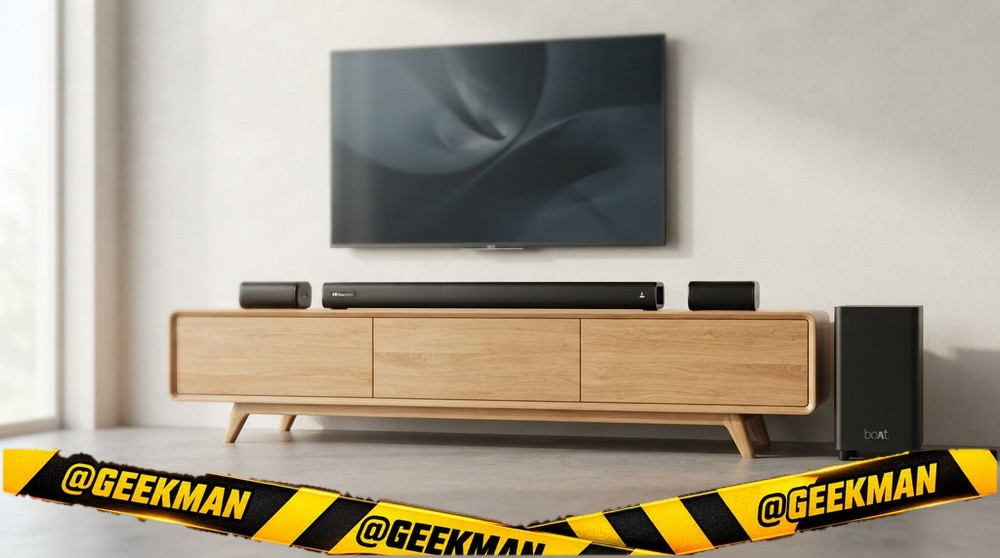
boAt Aavante Prime X, Detachable Satellites, Truly Wireless, Atmos, Free Installation 700 W Bluetooth Soundbar
Up to 8% instant discount on select ICICI, IndusInd & RBL cards Details
- Up to 8% instant discount on select ICICI, IndusInd & RBL cards
Pros and cons
What I like
+ Four real angled up-firing drivers for audible height
+ Battery-powered rears with no cables or sockets
+ eARC plus two HDMI inputs, HDMI and optical cables in the box
+ Loud enough for closed rooms up to about 300 sq ft
What I don’t like
• No tweeters, so vocals turn muffled when pushed
• Bass rolls off around 60 Hz, little rumble
• No centre or height level control on the remote
My full review: who it suits, what it is like and how it compares
Who should buy it. Someone with a medium living room, an eARC TV and a habit of watching films more than listening to music. The rears have their own batteries, so you need neither a socket nor a cable behind the sofa; when they run low you dock them on the bar or charge them over USB-C. It fills a closed room of about 280 to 300 sq ft comfortably, and in a bigger open hall it starts to run short on loudness. If you mostly watch news, serials and talk shows, a dialogue-first bar will make you happier.
Sound and dialogue. The bar has six front drivers (two for the centre, plus left, right and two side surrounds) and two angled up-firers, but no tweeters. That shows in the vocals: they are neither thin nor harsh, yet they lack openness, and from about 70 to 80% volume they can sound muffled. The default Music mode cuts treble so hard that everything sounds dark, so switch to Movie mode and leave it there for films and songs alike. Hip-hop, EDM, remixes and modern Punjabi or Bollywood party tracks are fun, with every beat clearly defined. Old melodies and classical music with lots of instruments don’t get the detail and sweetness they need.
Bass and surround. This is where the Prime X earns its place. With two up-firers on the bar and one on each rear, Atmos titles sound clearly bigger and more layered than the same film in Dolby Digital 5.1, though it is still a soundbar system and not a cinema ceiling. Reviewers rated its rear surround above the LG SQ75TR’s. The 8-inch down-firing wireless sub gives clean, well-defined beats, but output falls away from around 60 Hz, so explosions punch rather than rumble and you won’t feel much vibration. If floor-shaking bass is the point, the LG gives more of it in action scenes.
TV connection and setup. You get HDMI eARC to the TV plus two HDMI inputs for passthrough, along with optical, AUX, USB and Bluetooth. An HDMI cable and an optical cable both come in the box, along with a wall-mount kit and a remote with batteries. The sub and bar each need a power socket; the rears need nothing once charged. Battery life is rated at roughly 12 to 14 hours depending on content and volume, so expect to top them up every few movie nights. There is no Wi-Fi, casting or app.
Build, remote and service. It looks and feels expensive: a matte sub with a gloss bass port, a heavy bar of about 36 inches with a metal grille, a front display and top buttons. The remote covers the basics but has no separate centre or height level, which is exactly what you’d want to fix the soft vocals. Reviewers also noted the display can’t be dimmed and the rear level can’t be set on its own. boAt gives a one-year warranty, and its service network is national but not at Sony or LG level.
boAt Prime X or Zebronics 9900? Both have four up-firing drivers and rears. The Prime X has battery rears that need no socket, an 8 inch wireless sub and two HDMI inputs for a console or stick. The 9900 has two wireless subs for much bigger bass and decodes DTS:X and DTS-HD MA, but one long-term owner needed repairs and the power adapters carry only a short warranty. Pick the boAt for tidy setup, the Zebronics for bass with an extended warranty.
Key specs
| Channels | 7.1.4 (bar 5 front + 2 up-firing, rears 1 front + 1 up-firing each) |
| Output | Up to 700W claimed (no RMS figure) |
| Subwoofer | 8-inch down-firing, wireless |
| Rear/height | Detachable battery rears (4500 mAh each, USB-C or dock charging); 4 up-firing drivers |
| Formats | Dolby Atmos, Dolby Digital |
| HDMI | eARC plus 2 HDMI inputs (passthrough) |
| Other inputs | Optical, AUX, USB |
| Bluetooth/Wi-Fi | Bluetooth 5.3; no Wi-Fi or app |
| Warranty | 1 year |
| In the box | Bar, sub, 2 rears, remote with batteries, HDMI cable, optical cable, wall-mount kit |
Biggest bass
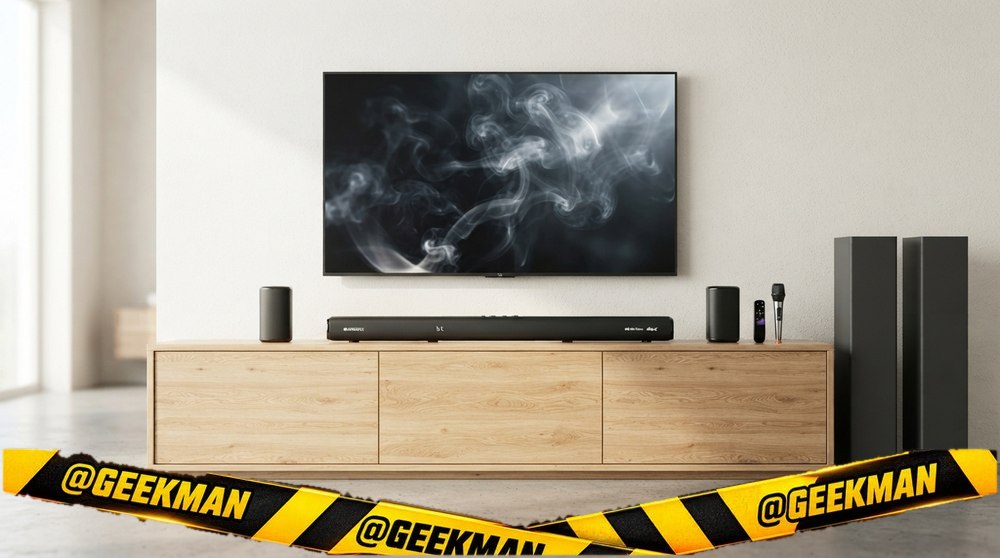
6. Zebronics Juke Bar 9900 Dolby Atmos Soundbar
8.1Geekman Score
7.1 Sound
9.0 Features
8.0 Service
9.0 Value
The biggest system for the money: two wireless subs, wireless rears with their own up-firers, DTS:X and lossless formats, with a real reliability warning attached.
5.2.4 Dolby Atmos · DTS:X · Two wireless subs · Karaoke mic
Best for
✓ Big halls where you want cinema-level bass for action films, sports and parties
✓ Blu-ray or lossless-file collectors who want Dolby TrueHD and DTS-HD Master Audio
✓ Buyers happy to add an extended warranty who live in a city with quick Zebronics service
Skip if
• You watch dialogue-heavy shows without subtitles (a dialogue-tuned bar like the LG S65TR or Samsung B645E suits you better)
• Your TV has no eARC port, so you would lose the Atmos and lossless advantage
• You want a fit-and-forget system; a one-year owner needed technician visits for pairing and board replacements
My take: Nothing else in this range gives you 5.2.4 channels, two wireless subs and both Dolby Atmos and DTS:X, and the bass is genuinely theatre-like. My take is to buy it only with your eyes open. A one-year owner needed a technician just to pair the speakers, had the main board and sub chips replaced under warranty, and still lives with a split-second audio drop at the start of films. If you buy it, buy the extended warranty with it.

ZEBRONICS Juke Bar 9900 (SBSPK C3) DTS X, Dolby Atmos, 2x Wireless Subwoofer & Satellites 725 W Bluetooth Soundbar
Lowest price
Up to 8% instant discount on select ICICI, IndusInd & RBL cards Details
- Up to 8% instant discount on select ICICI, IndusInd & RBL cards
Pros and cons
What I like
+ Two wireless subs with cinema-like bass
+ Real rear surround with top-firing drivers in the satellites
+ Dolby Atmos, TrueHD, DTS:X and DTS-HD MA support
+ Loaded box with karaoke mic, HDMI cable and wall kit
What I don’t like
• Dialogue sits low on OTT content
• Owner-reported pairing, audio-drop and settings problems
• Power adapters covered for only three months
My full review: who it suits, what it is like and how it compares
Who should buy it. A family with a large hall, an eARC TV and a taste for loud action films, cricket and the odd house party. The box is loaded: bar, two wireless subs, two wireless rear satellites, a wireless karaoke mic, remote, HDMI cable and a wall-mount kit. Without eARC on the TV you lose a big part of what this system can do, so check your TV first. If clear speech at low volume is your priority, this is the wrong tool.
Sound and dialogue. Dialogue is its weak spot. On Netflix and Prime Video, voices sit slightly behind the music and effects. Switching to the Dialogue or News mode and dropping bass a few steps mostly fixes it, but expect to fiddle. For music, bass-heavy and full-band tracks like rock, EDM and Bollywood numbers sound rich, and for soft vocal songs the Music preset with a little more treble brings voices forward. Early firmware made the centre channel sound poor; the owner says later firmware (version 90) fixed most of that, but updates only come through a Zebronics technician.
Bass and surround. The two 110W subs are the headline. They shake a room like a cinema, and the one-year owner says the bass after the firmware update beats what he hears in a multiplex. Rear surround is the other strength: footsteps from behind and gunfire past your shoulder land well, because each satellite carries a front driver and a top-firing driver. Overhead effects are there but subtle, noticeably less than far pricier Sony or Samsung systems. It is built for big rooms; in a small bedroom it is overkill.
TV connection and setup. Connect over HDMI eARC to get true Atmos and the lossless formats; there is also optical, AUX, USB and Bluetooth 5.3. Pairing is a one-time job of long-pressing pair on the remote and then on each sub and satellite, and on a good day everything reconnects on its own. The owner’s experience was rougher: pairing failed badly enough to need an on-site visit, settings sometimes didn’t save, and audio cuts out for a split second at the start of films (he bought an audio extractor to work around it). He also called the bundled HDMI cable poor and suggests replacing it. Each satellite and sub needs its own power point, so plan for several sockets.
Build, remote and service. The bar has a metal mesh front and top, RGB side lights you can switch off from the remote, and a display that shows the active format. The MDF subs feel solid, but the owner says the rears can break if dropped and the rubber feet let the subs creep over time. Warranty is one year on the bar but only three months on the power adapters, and the system won’t run without them. In a metro city his repairs were done within a day or two, but out-of-warranty main-board replacement is expensive.
Zebronics 9900 or Noise Homestage 5.2.4? Both are 5.2.4 kits with four up-firing drivers and two subs. The 9900’s subs are wireless and it decodes DTS:X, TrueHD and DTS-HD MA, so it suits media players and downloaded films, plus it includes a karaoke mic. The Noise has an all-metal build and warm, punchy sound, but wired subs, weak channel separation and a very short track record. The 9900 is the fuller kit for a big hall.
Key specs
| Channels | 5.2.4 (bar 3 front + 2 top-firing; each rear 1 front + 1 top-firing) |
| Output | 725W RMS (35W bar, 220W from two subs, 200W rears) |
| Subwoofer | Two wireless subs, 110W each, MDF cabinets |
| Rear/height | Wireless rears (own power adapters) with top-firing drivers; 2 top-firers on bar |
| Formats | Dolby Atmos, Dolby TrueHD, DTS, DTS:X, DTS-HD MA |
| HDMI | eARC |
| Other inputs | Optical, AUX, USB |
| Bluetooth/Wi-Fi | Bluetooth 5.3; no Wi-Fi |
| Warranty | 1 year on system, 3 months on power adapters |
| In the box | Bar, 2 subs, 2 rears, wireless karaoke mic, remote, HDMI cable, wall-mount kit, adapters |
Most up-firing speakers
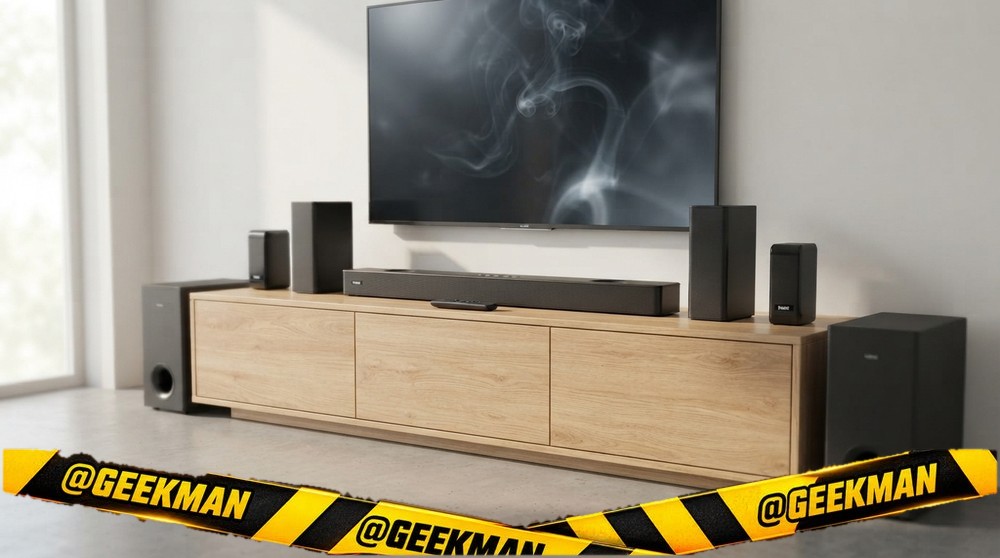
7. Noise Homestage 5.2.4 Dolby Atmos Soundbar
8.0Geekman Score
6.8 Sound
8.3 Features
8.0 Service
9.6 Value
Noise’s first Atmos system: four up-firing drivers, wireless rears and a warm, punchy sound where surround is the star.
5.2.4 Dolby Atmos · Wireless rears · Dual subs · Silver metal
Best for
✓ You want real up-firing height and rear surround in a 300 to 400 sq ft room
✓ You like a warm, punchy tune for both films and Bluetooth music
✓ You want something that doesn’t look like every other black bar (silver all-metal finish)
Skip if
• You want a proven brand with years of soundbar service history (this range only launched in late September 2026)
• You need an HDMI input for a console or streaming stick
• You want a wireless sub; both subs are wired to the bar
My take: On early evidence this is a fun system with surround that genuinely wraps around you, helped by up-firing drivers on both the bar and the rears. The sound is warm with punch, neither thin nor muddy, and the highs come through well. The honest catch is that it is brand new with one detailed review behind it, and depth and channel separation are only average. I’d buy it if you like being early and the sale price is right.

Noise Newly Launched Homestage 5.2.4 Dolby Atmos Soundbar, 700W Peak Power, Dual 6.5" Subwoofers, 4 Up-Firing Height Channels, Wireless Rear Satellites, 3D Audio, HDMI eARC, BT5.3 - (Black)
Up to 15% instant discount on select Credit Cards & SBI cards +1
- Up to 15% instant discount on select Credit Cards & SBI cards
- No Cost EMI on select cards
Pros and cons
What I like
+ Four up-firing drivers with wireless rears
+ Warm, punchy sound with clear highs
+ Premium silver all-metal design
+ HDMI eARC and Bluetooth 5.3
What I don’t like
• Only average depth and separation
• No HDMI input, and both subs are wired
• Brand new, with little long-term evidence
My full review: who it suits, what it is like and how it compares
Who should buy it. Someone with a medium-to-large room of about 300 to 400 sq ft, an eARC TV and a preference for an exciting, room-filling sound over pin-point detail. The rears are truly wireless and only need a power socket each, so no cable crosses the floor. The two subs sit near the TV, wired to the bar. If long service history matters more to you than features, a Sony or LG system is the safer bet.
Sound and dialogue. The tuning is warm with punch: vocals and mids are full without sounding heavy, and bass hits when the track asks for it. Highs are clear, apparently from small tweeters, so it never sounds dull. Depth is missing, though, and instrument separation scored only around 50 to 60% on one reviewer’s careful listening protocol. Noise has published 2-inch front drivers and 3-inch up-firers, but not tweeter details, so treat the tweeter point as a reviewer’s inference.
Bass and surround. Surround is the reason to buy it. With two up-firers on the bar and an up-firing plus a front-firing driver in each rear, Atmos content gives a ‘kind of’ cinema-hall feel at home. It won’t hit like a theatre: the bass is punchy and sweet but not earth-shaking. Two down-firing subs share the low end; the reviewer describes one as active and one passive, while the brand lists dual 6.5-inch wired subs. Mount the rears behind and slightly above your ears, never next to the TV, to get the effect.
TV connection and setup. Inputs are HDMI eARC, optical, AUX, USB and Bluetooth 5.3. There is no HDMI input, so a console or streaming stick has to go into the TV. Mains power goes into the active sub, which feeds the bar through a DC cable and also connects to the second sub; each wireless rear needs its own socket and pairs automatically. The remote is very basic.
Build, remote and service. The silver all-metal bar, matching rears and sturdy sub cabinets look premium, and the touch-sensitive panel on top of the bar works well. Noise gives a one-year manufacturing warranty from delivery, with registration on its website. Noise has a wide after-sales presence for earbuds and watches, but its soundbar service is unproven because the range is so new.
Noise Homestage 5.2.4 or boAt Prime X? Both offer four real up-firing drivers. The Noise has a premium silver metal finish and a warm sound with clear highs, but no HDMI input and both subs wired. The Prime X has cordless battery rears, two HDMI inputs and better surround placement, though dialogue suffers when loud. Early adopters who like the look can try the Noise; most buyers will find the boAt easier to live with.
Key specs
| Channels | 5.2.4 (2 up-firers on bar, 1 up-firer + 1 front driver per rear) |
| Output | 700W claimed (no RMS figure) |
| Subwoofer | Dual down-firing subs, wired (brand: 6.5-inch) |
| Rear/height | Wireless rears (each needs a socket); 4 up-firing drivers |
| Formats | Dolby Atmos |
| HDMI | eARC (no HDMI input) |
| Other inputs | Optical, AUX, USB |
| Bluetooth/Wi-Fi | Bluetooth 5.3; no Wi-Fi |
| Warranty | 1 year from delivery (register on gonoise.com) |
| Design | Silver all-metal bar and rears, touch controls on top |
Best budget
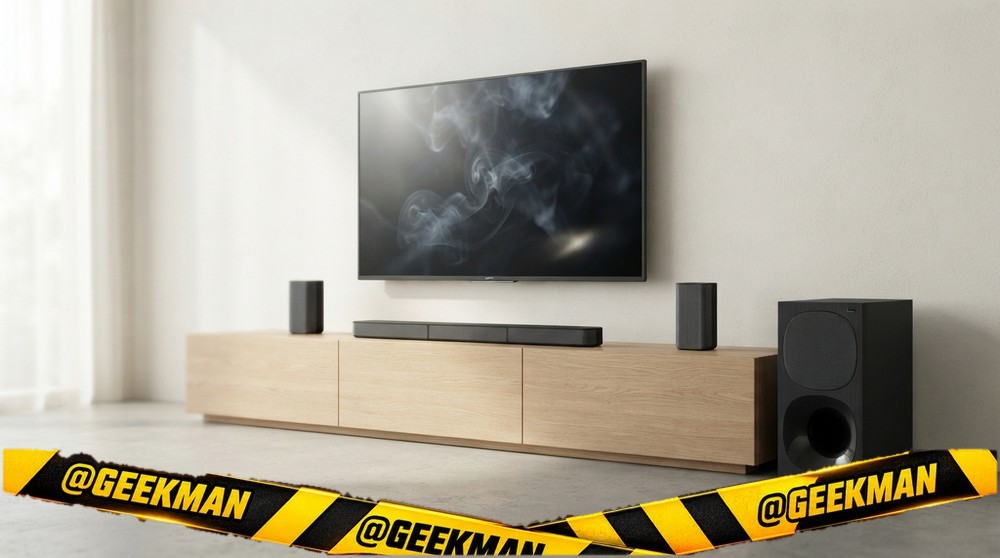
8. Sony HT-S20R 5.1 Home Theatre Soundbar
7.9Geekman Score
7.8 Sound
8.4 Features
9.2 Service
6.8 Value
The dependable real 5.1: Sony tuning, clear dialogue and a long-term owner who says it just keeps working.
Real 5.1 · Dolby Digital · HDMI ARC · Sony service
Best for
✓ Movie and series watchers in a small to medium room who want proper rear speakers
✓ Buyers who want Sony service and a soundbar that lasts for years
✓ People who still listen to music on the system, since it sounds good with plain stereo
Skip if
• You cannot run cables to the rears (the Zebronics 9510WS Pro has wireless rears)
• You want big, chest-thumping bass in a large room (Sony’s own HT-S40R or a bigger system suits that)
• You want Atmos or height effects (look higher up the range)
My take: The HT-S20R is the one I’d trust most at this level. It gets the basics right: front speakers that blend well, clear dialogue, sound that stays composed when you turn it up, and sound modes that each do what they say. One owner has used it for four years with every input still working. The honest catches are wired rears with fixed cables, bass that holds back in big rooms, and rears that tend to play all the time rather than placing sounds precisely.

SONY HT-S20R 5.1ch Home Theatre with Digital, Subwoofer, Rear Speakers, 400 W Bluetooth Soundbar
Lowest price
Up to 15% instant discount on select Credit Cards & SBI cards +1
- Up to 15% instant discount on select Credit Cards & SBI cards
- No Cost EMI on select cards
Up to 8% instant discount on select ICICI, IndusInd & RBL cards Details
- Up to 8% instant discount on select ICICI, IndusInd & RBL cards
Pros and cons
What I like
+ Real 5.1 with clear, well-blended dialogue
+ Proven long-term reliability and Sony service
+ Sound modes that actually work, including night and voice
+ Good with music in plain stereo
What I don’t like
• Wired rears with fixed cables
• Bass holds back in large rooms
• Narrow front stereo spread; rears play all the time
My full review: who it suits, what it is like and how it compares
Who should buy it. Someone who wants real 5.1 from a brand they trust, mostly for movies and OTT shows in a small or medium living room. It is the safer pick over value-brand 5.1 kits, because long-term reliability is where those usually fall down. If running wires to the back of the room is impossible, a wireless-rear system is the only real option. If you have a big hall or want heavy bass, Sony’s HT-S40R exists for that reason.
Sound and dialogue. The front left, centre and right channels blend well and dialogue is clear, including quiet scenes. It stays composed as you push the volume up in a medium room. Voice, night, music and cinema modes each do what they claim, so there are no throwaway presets. One weakness is front stereo width: the left and right drivers sit close to the centre, so sound does not spread wide across the TV. Music with surround processing off sounds surprisingly good, and the owner now uses it as his main music system.
Bass and surround. Bass is balanced, not aggressive. In a medium room with the sub turned up a bit, it is clean and satisfying. In a large room it holds back. It decodes Dolby Digital only, with no Atmos or virtual tricks, which still covers most streaming content. The rears are real speakers, but reviewers found they tend to play all the time, including some front sound, so effects are not placed as precisely as on pricier systems.
TV connection and setup. HDMI ARC handles TV audio and volume control from the TV remote. Optical, a 3.5mm analogue input, USB and Bluetooth are there too, and all of them have kept working over four years for one owner. There is no HDMI input or passthrough. The inputs sit on the back of the sub, so plan where the sub goes. Only a 3.5mm cable comes in the box, so buy an HDMI cable. The bar is 76 cm wide and fits neatly under 32 to 40-inch TVs. Sony can send a technician to install it, for a fee.
Build, remote and service. The system is well built overall, though the rear satellites are light and their cables are attached, so a cut cable cannot be swapped. The front display failed on the four-year owner’s unit, which he blamed on his own mistake, and the repair was not cheap. Sony’s 1-year warranty and its home service network are a big part of why this is the safe pick.
Sony HT-S20R or boAt Prime X? The HT-S20R is plain 5.1 with wired rears and Dolby Digital only, but it gets voices and balance right and has a long record of simply working. The Prime X costs more and gives you far more on paper: four up-firing drivers, battery rears, eARC and two HDMI inputs. If you want a system you set up once and forget, the Sony; if you want height and surround and accept thinner service, the boAt.
Key specs
| Channels | 5.1 (3-channel bar, sub, two rears) |
| Output | 400W total maximum (not RMS) |
| Subwoofer | Wired; all inputs on the sub |
| Rear/height | Wired rear satellites with fixed cables, no height |
| Formats | Dolby Digital |
| HDMI | HDMI ARC (no HDMI input) |
| Other inputs | Optical, 3.5mm analogue, USB |
| Bluetooth/Wi-Fi | Bluetooth, no Wi-Fi |
| Warranty | 1 year, Sony home service |
| Size | Bar 76 cm wide, sub about 6.9 kg |
Popular home theatre systems I would skip (and why)
These come up often when you search for a home theatre. Most are old models, virtual height at a premium, or boxes that cannot connect to a modern TV properly.
Sony HT-S500RF. A 2018 tower system that costs more than newer Sony soundbar systems with HDMI ARC and better sound.
Sony HT-S2000 and HT-A3000. Virtual height at a premium price. The System 6 gives real rears for a similar spend.
Blaupunkt SBW600 12.1.4 and Zebronics 7.2.4 1100W. Big channel counts on the box, but weak owner feedback and no proper hands-on reviews to back the claims.
JBL Bar 9.1 and LG SL10YG. Strong systems in their day, but they are 2020 models and newer ones do more for less.
Samsung HW-Q800T. Another 2020 model that often costs more than the newer Q800H.
JBL Bar 500. Virtual height at a high price, and its MK2 successor costs even more.
1000W tower speaker sets. Peak wattage on the box, no HDMI ARC, and little real bass control. Fine for parties, poor for movies.
Compare all 8 at a glance
| Home theatre | Channels | Output | Subwoofer | HDMI | Formats | Warranty |
|---|---|---|---|---|---|---|
| Sony Bravia Theatre System 6 | 5.1 | 1000W | Wireless | eARC | Dolby Atmos, DTS:X, Dolby TrueHD (no hei | 1 year |
| Sonos Arc Ultra | 9.1.4 (brand claim, single bar) | not stated | Built-in | eARC | Dolby Atmos, Dolby TrueHD (no DTS:X) | 1 year (carry-in) |
| LG SQ75TR | 5.1.1 | 600W | Wireless | eARC | Dolby Atmos, DTS:X, Dolby Digital, DTS | 1 year |
| Sony HT-S40R | 5.1 | 600W total | Wired | ARC | Dolby Digital | 1 year |
| boAt Prime X | 7.1.4 | about 700W | Wireless | eARC | Dolby Atmos, Dolby Digital | 1 year |
| Zebronics 9900 | 5.2.4 | 725W RMS | Wireless | eARC | Dolby Atmos, Dolby TrueHD, DTS:X, DTS-HD | 1 year (power adapters 3 months) |
| Noise Homestage 5.2.4 | 5.2.4 | about 700W | Wired | eARC | Dolby Atmos | 1 year |
| Sony HT-S20R | 5.1 | 400W total | Wired | ARC | Dolby Digital | 1 year |
Specs from brand pages and manuals. Output is RMS where the brand states it; peak figures are marked. Check the exact model number on the buy page, since some brands sell near-identical names.
The buying guide
How to choose a home theatre system for your TV
Rears first
For movies, two real rear speakers add more than height channels. Every pick here has rears in the box or a proper way to add them.
Check the sockets
Wireless rears still need power. The Sony System 6 and HT-S40R use a hub or amp that needs one socket; the boAt Prime X rears run on batteries.
Inputs on the sub
On the Sony System 6, HT-S40R and HT-S20R, every input sits on the sub, so the sub has to stay near the TV.
Atmos needs up-firers
The System 6 decodes Atmos but has no height drivers. For sound from above, look at the Sonos, LG or the 5.2.4 and 7.1.4 kits.
Big brand, longer life
Value 5.2.4 and 7.1.4 kits pack more speakers, but owners report more pairing and board faults. Add an extended warranty.
Skip the towers
Tower and multimedia sets with no HDMI or optical input suit FM and parties, not a modern TV.
1 · 2.1, 3.1, 5.1 and 5.1.2: what the numbers mean
The first number is the count of main channels, the second is the subwoofer, the third is height. 2.1 is left and right in the bar plus a sub. 3.1 adds a centre channel just for voices, which is the single biggest upgrade for Hindi serials and news. 5.1 adds two rear speakers behind you. 5.1.2 or 3.1.2 adds two up-firing speakers for overhead effects.
Many budget bars print “5.1” or “7.1” on the box but have no real rear speakers, only processing. If there are no speakers to place behind you, it is not real surround.
2 · Real Dolby Atmos vs “Atmos supported”
Real Atmos height needs up-firing drivers on top of the bar that bounce sound off your ceiling. Many bars only decode Atmos and play it through front speakers, which sounds a little wider but nothing comes from above. Check for up-firing drivers in the channel count (a third number like 5.1.2) before you pay extra for the Atmos logo.
Up-firing works best with a flat ceiling about 8 to 10 feet high. A false ceiling with cut-outs, sloped roof or very high ceiling weakens the effect. You also need Atmos content: Netflix and Prime Video premium plans and some JioHotstar titles stream it, and your TV must pass it over eARC or ARC (as Dolby Digital Plus).
3 · Rear speakers: wired, wireless and what “wireless” really means
Real rear speakers are what make rain, crowds and gunfire move around you. Wired rears need cables across the room, which is fine if you can run them along the skirting. “Wireless” rears still need a power socket each, or a small receiver box near them, so plan the plugs before you buy.
Place rears slightly behind and above your ears, pointing at you. In small rooms turn the rear level down a step, or voices from the back start to feel odd.
4 · HDMI ARC, eARC, optical or Bluetooth: how it connects to your TV
This matters more than wattage. With HDMI ARC one cable carries sound from the TV to the bar, the TV remote controls the volume, and the bar turns on and off with the TV. eARC is the newer version with more bandwidth, needed for lossless Dolby Atmos from apps and consoles. Look for the port marked ARC or eARC on the back of your TV, and switch on HDMI-CEC (Anynet+ on Samsung, Simplink on LG, Bravia Sync on Sony) in its settings.
Optical is the backup for older TVs. Sound is fine and Dolby Digital passes through, but you usually need the bar’s own remote for volume. Bluetooth to a TV can lag slightly behind lips and some TVs drop the link, so treat it as a music option, not the main TV connection.
5 · Room size, TV size and placement
For a bedroom or room up to about 120 square feet with a 32 to 43 inch TV, a compact 2.1 is enough. For a living room of 150 to 250 square feet with a 50 to 65 inch TV, look at 3.1 or 5.1 with a proper sub. For larger halls, a bigger sub and rears matter more than height channels.
Keep the bar at ear level or just below the TV, not inside a closed cabinet, and do not block the front with the TV’s stand. If the bar is longer than the TV, it looks odd and the stereo effect gets too wide.
6 · Wall mounting, power cuts and surge protection
Check whether the wall bracket is in the box. Some brands include it, others sell it separately or charge for the installation visit. Sony and Samsung often offer installation through their service network, so book it at delivery.
Voltage spikes after power cuts kill more soundbars and subs than anything else. A spike guard or a TV stabiliser outlet for both the bar and the sub is cheap insurance, especially in small towns.
7 · Warranty and service in your city
Most bars carry a one year warranty. Sony, Samsung, LG, JBL and Philips have the widest service reach. Zebronics, boAt, Mivi, GOVO and Noise usually work through pick-up or doorstep service in bigger cities, and it can be slower in small towns. Before you buy, check the brand’s service locator with your pin code, and keep the invoice and box for the first year.
Questions other guides skip
1 · Soundbar or home theatre: which is better for a TV?
For most homes, a soundbar with a subwoofer is the easier buy: one cable to the TV, fewer speakers and a cleaner look. A traditional home theatre with towers or satellites suits big halls and music lovers who want more loudness, but most budget boxes lack HDMI ARC. A 5.1 soundbar with rears gives you both.
2 · Should I buy an AV receiver and separate speakers instead?
Only if you enjoy the hobby. A receiver alone costs about as much as a good soundbar system, and you still have to buy and wire five or more speakers. For most Indian living rooms, a soundbar-based 5.1 gives you nearly the same movie experience with one HDMI cable and far less clutter.
3 · Can I wall-mount the bar if the inputs are on the subwoofer?
Yes, but plan the cables first. On the Sony System 6, HT-S40R and HT-S20R the HDMI cable runs from the TV to the sub, so keep the sub on the floor below or beside the TV. A longer certified HDMI cable gives you more freedom.
4 · Does a home theatre system work with a projector?
It does, if the projector or the streaming box has HDMI ARC or eARC, or optical out. Systems with an HDMI input, like the LG SQ75TR and boAt Prime X, make it easier: plug the streaming box into the bar and send video on to the projector.
5 · How far behind the sofa should the rear speakers go?
Slightly behind your seat and a little above ear height, angled toward you, works best. If your sofa is against the back wall, put the rears beside it at the ends, facing inward. Then lower the rear level a step so voices do not seem to come from behind.
6 · Does a soundbar use a lot of electricity?
No. A typical 2.1 bar uses about 20W to 60W at normal volume and a few watts on standby, far less than an AC or a fridge. Switch it off at the wall when you are away for days to avoid spikes.
Also consider
Samsung HW-Q930F: a full Samsung package with a sub and rear speakers that have their own up-firing drivers, often better value than building up a Sonos system. No solid hands-on review for India yet, so I left it unranked.
Samsung HW-Q800H: a 5.1.2 bar with Wi-Fi, room tuning and an HDMI input that takes Samsung’s wireless rears later. It ranks in my Dolby Atmos list; add the rear kit to turn it into a full home theatre.
An AV receiver with separate speakers: the most flexible route, with room to upgrade one speaker at a time. It is a niche, costly and wire-heavy setup, so it is not ranked against soundbar systems here.
More from Geekman
More soundbar and home theatre guides
Best home theatre under 5,000Best home theatre under 10,000Best Dolby Atmos soundbarBest 5.1 soundbarBest soundbar in IndiaBest smart TVs under 20,000
FAQs
Which is the best home theatre system in India?
The Sony Bravia Theatre System 6 for most homes, thanks to real rear speakers, a big sub, DTS:X and Sony service. If money is no object, the Sonos Arc Ultra with a Sonos sub and rears sounds better. On a budget, the Sony HT-S20R is the dependable real 5.1.
Home theatre or soundbar: which should I buy for my TV?
For a TV, a soundbar-based home theatre with a sub and rears is the better buy. It connects with one HDMI cable, the TV remote controls it, and it decodes Dolby properly. Traditional tower sets suit music and parties but usually lack HDMI ARC.
Which home theatre has real Dolby Atmos?
The Sonos Arc Ultra, LG SQ75TR, boAt Prime X, Zebronics 9900 and Noise Homestage 5.2.4 have up-firing drivers. The Sony System 6, HT-S40R and HT-S20R do not, so they give you surround but nothing from above.
Is 5.1 enough or do I need 7.1.4?
For most living rooms, a good 5.1 is enough and often sounds cleaner. Extra channels on value kits widen the effect, but dialogue and build quality matter more over years of use. Go for 5.2.4 or 7.1.4 only if you have a large room and want maximum surround.
What is the best home theatre for a big hall?
The Sony Bravia Theatre System 6 for clean, loud surround from a big brand, or the Zebronics 9900 if bass is the priority. In a large room, rears and sub size matter more than height drivers.
Do wireless home theatre systems really have no wires?
No. Wireless only means no cable from the bar to the rears. Each rear, hub or amplifier still needs a power socket, except the boAt Prime X, whose rears run on batteries and charge on the bar.
Which home theatre is best for gaming?
The Sony Bravia Theatre System 6 is the most involving for games, with real rears and strong bass. If you want to pass a console through the system, the LG SQ75TR has an HDMI input with 4K 120Hz, VRR and ALLM.
My final home theatre picks
Best overall: Sony Bravia Theatre System 6, real rears, a big sub and the best surround here. Check price
Best premium: Sonos Arc Ultra, the best-sounding system you can build up. Check price
Best value with Atmos: LG SQ75TR, rears and an up-firing driver in the box. Check price
Best 5.1 without Atmos: Sony HT-S40R, no cable across the room to the rears. Check price
Best budget: Sony HT-S20R, dependable real 5.1 from Sony. Check price
For most living rooms, buy the Sony Bravia Theatre System 6 and place the rears properly; that does more for movies than any extra channel count. On a tighter budget, the Sony HT-S20R still gives you real surround that keeps working for years.