
Short answer: The Audio-Technica ATH-M50x is the studio headphone I recommend first: detailed, comfortable and easy to drive. The Sony MDR-7506 is the industry favourite for podcasts and video work. For mixing at home, the open-back Sennheiser HD 560S. On a budget, the Audio-Technica ATH-M20x.
Studio headphones are tuned to show mistakes, not to flatter music. Closed-back pairs suit recording and editing in a shared room; open-back pairs suit mixing in a quiet room. I also flagged which models need an amp, because that catches a lot of first-time buyers. Prices change every week during sales, so live prices sit in the buy buttons, not in the text. Updated on 18 November 2026.
Quick picks
| Pick | Headphone | Best for |
|---|---|---|
| Best overall | Audio-Technica ATH-M50x | Home studios, podcasters and creators who want one do-it-all pair |
| Best value | Sony MDR-7506 | Podcasters, voice-over artists and video editors |
| Best modern reference | Sony MDR-M1 | Serious home studios that need an accurate closed-back |
| Best for vocals and comfort | Beyerdynamic DT 770 Pro | Vocal recording and long editing sessions |
| Best open-back for mixing | Sennheiser HD 560S | Mixing music and audio at home on a mid budget |
| Best isolation | Sennheiser HD 280 Pro | Recording drums, vocals and instruments in noisy spaces |
| Step up from M20x | Audio-Technica ATH-M30x | Editors and students who want the M20x sound with more polish |
| Best mixing reference | Sennheiser HD 600 | Serious mixing and critical listening |
| Best budget | Audio-Technica ATH-M20x | Beginners starting a home studio or editing setup |
Tap a name to jump to its review. Ranked by Geekman Score, best first.
Headphone finder
Answer 3 quick questions, get your top 3
Not sure which one? Start with Audio-Technica ATH-M50x, Sony MDR-7506, Sony MDR-M1.
How I ranked them
The Geekman Score
Geekman has reviewed audio gear for over 10 years. For this list I went through more than 40 studio headphones sold in India and compared what matters on a desk where you record, edit or mix: how flat or coloured the tuning is, closed or open back, isolation and leakage, impedance and whether a phone or audio interface can drive it, the cable and connector, pad comfort over hours, spare parts and warranty. Every pick gets a Geekman Score out of 10: Sound 35%, Features 25% (cable, isolation, comfort, accessories), Build and service 15% and Value 25%. Scores compare headphones inside this list only.
See all Geekman Scores
| # | Headphone | Sound | Features | Service | Value | Score |
|---|---|---|---|---|---|---|
| 1 | Audio-Technica ATH-M50x | 8.7 | 8.8 | 8.9 | 9.6 | 9.0 |
| 2 | Sony MDR-7506 | 8.3 | 8.6 | 8.9 | 9.6 | 8.8 |
| 3 | Sony MDR-M1 | 8.9 | 9.0 | 8.9 | 8.0 | 8.7 |
| 4 | Beyerdynamic DT 770 Pro | 8.7 | 8.6 | 9.2 | 8.1 | 8.6 |
| 5 | Sennheiser HD 560S | 8.9 | 8.8 | 9.2 | 7.2 | 8.5 |
| 6 | Sennheiser HD 280 Pro | 7.9 | 8.6 | 9.2 | 8.4 | 8.4 |
| 7 | Audio-Technica ATH-M30x | 7.9 | 8.4 | 8.9 | 8.4 | 8.3 |
| 8 | Sennheiser HD 600 | 9.1 | 8.6 | 9.2 | 5.9 | 8.2 |
| 9 | Audio-Technica ATH-M20x | 7.6 | 8.2 | 8.9 | 8.2 | 8.1 |
The reviews
Best studio and monitoring headphones in India: 9 picks reviewed
Best overall
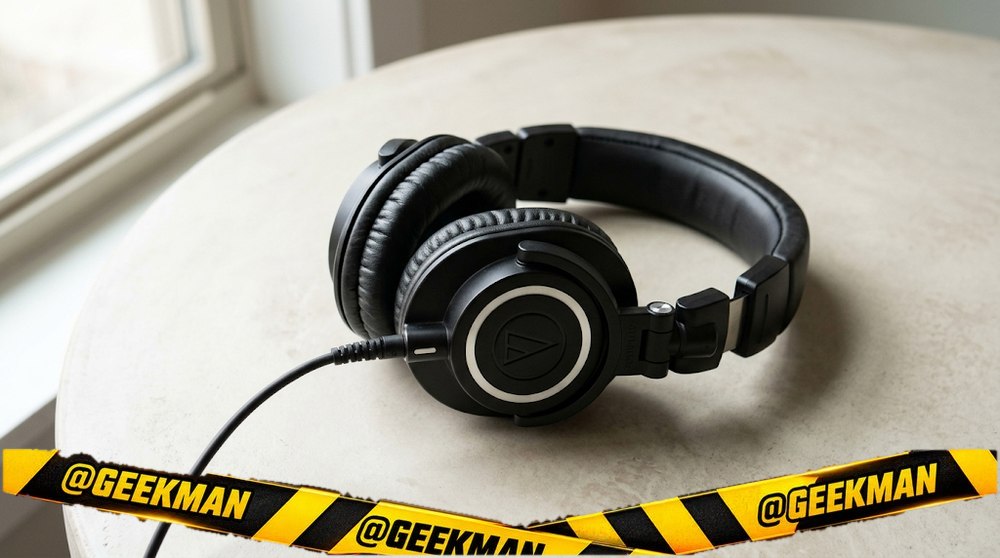
1. Audio-Technica ATH-M50x Studio Monitor Headphones
9.0Geekman Score
8.7 Sound
8.8 Features
8.9 Build & service
9.6 Value
The studio headphone most people already know, with clear mids, detachable cables and a build that lasts years with a pad change or two.
Over-ear, Wired · 45mm drivers · 3 detachable cables · Folds flat · 1 year
Best for
✓ Home studio producers who want one closed-back for recording and mixing checks
✓ Musicians and content creators who need a headphone that folds into a bag and survives travel
✓ Anyone upgrading from a budget studio pair who wants a detachable cable they can replace
Skip if
• You want huge sub-bass (it is softer down low than its reputation suggests)
• You wear glasses for long sessions (the firm pads press on the frames)
• You want noise cancelling for flights or the metro (it only blocks mid and high sounds)
My take: The M50x has stayed popular because it does nearly everything well. It sounds clear and detailed, it is comfortable enough for long sessions once the pads soften, it folds, and it comes with three detachable cables. The honest catch is that the pads and headband covering wear out over the years, especially with sweat, so plan on replacement pads at some point.


Audio Technica ATH-M50x Wired without Mic
 Lowest price
Up to 4% instant discount on select credit cards; cashback on Amazon Pay ICICI cards +1
- Up to 4% instant discount on select credit cards; cashback on Amazon Pay ICICI cards
- No Cost EMI on select cards

Up to 5% cashback on Flipkart Axis & Flipkart SBI credit cards Details
- Up to 5% cashback on Flipkart Axis & Flipkart SBI credit cards
Pros and cons
What I like
+ Clear, detailed sound with smooth treble
+ Three detachable cables in the box
+ Folds flat and swivels for one-ear monitoring
+ Easy to drive from phones and laptops
What I don’t like
• Pads and headband pleather wear over time
• Warm vinyl pads, firm on glasses
• Proprietary twist-lock cable connector
My full review: who it suits, what it is like and how it compares
Who should buy it. A producer, singer or video creator who wants one dependable closed-back for tracking, editing and plenty of everyday music. It plugs into a phone, laptop or interface without an amp at 38 ohm. If you are on a strict budget and only need clear vocals, the M20x does the basics for much less.
Sound and accuracy. Reviewers describe it as accurate with a clear midrange and smooth, non-harsh treble that is easy to listen to for hours. Bass is present and punchy but softer below about 40 to 50 Hz, so it isn’t the bass monster some people expect. There is a small dip around 300 to 400 Hz, which can make some instruments sound a touch lighter in body, so check mixes on speakers or a second pair. Soundstage is closed-back narrow, but detail and timing are strong.
Comfort and build. At 285 g it is mid-weight, and the clamp is secure without squeezing. The pads start stiff and soften with use; reviewers have worn it for six or seven hours in a day. Vinyl pads trap heat, so in an Indian summer without AC you will feel it, and glasses wearers report pressure on the frames. The frame is plastic with metal sliders and hinges. Over a few years the pleather on the pads and headband can flake or crack, mostly from sweat, but replacement pads are easy to find.
Cable and connections. Three detachable cables come in the box: a 1.2 to 3 m coiled one, a 3 m straight and a 1.2 m straight, plus a 6.3 mm adapter. They lock into the left cup with a twist, which is secure, but the connector is proprietary, so a random 3.5 mm cable won’t fit. The cups swivel for one-ear monitoring and the whole headphone folds flat.
Who it is not for. Bassheads and people who want their headphones to block the outside world. Isolation is decent for voices and high sounds but low rumble like traffic or a train gets through. It also leaks at high volume, so it is not ideal for a quiet shared room. If you want wireless, look at a Bluetooth headphone instead.
M50x or MDR-7506? Buy the M50x if you mix music and want some real bass weight, a folding body and three detachable cables. Buy the MDR-7506 if your work is dialogue, podcasts or film audio, where its forward mids show every mistake. The Sony is also lighter, but its coiled cable is fixed.
M50x or MDR-M1? The MDR-M1 is lighter at 216 g, much more comfortable over a long session and digs deeper in the bass. The M50x folds, swivels and has the larger pad and parts ecosystem built up over years. If comfort for long tracking days matters most, take the Sony; for an all-rounder that travels, the M50x.
Key specs
| Type | Over-ear, closed-back |
| Connection | Wired |
| Drivers | 45mm |
| Impedance | 38 ohm |
| Noise cancelling | Passive isolation only |
| Microphone | No mic |
| Cable | 3 detachable cables: 1.2 to 3m coiled, 3m straight, 1.2m straight; 3.5mm with 6.3mm adapter |
| Weight | 285 g |
| Works with | Phones, laptops, audio interfaces, mixers |
| Warranty | 1 year, extendable by registering with Audio-Technica India |
Best value
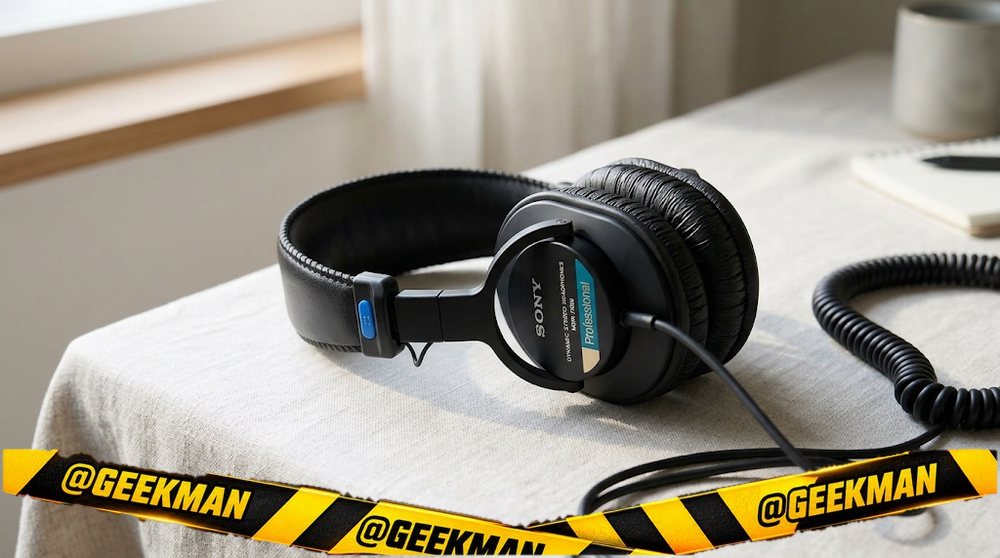
2. Sony MDR-7506 Professional Studio Headphones
8.8Geekman Score
8.3 Sound
8.6 Features
8.9 Build & service
9.6 Value
The broadcast and film-set workhorse: clear, forward mids that expose mistakes in dialogue, light on the head, and parts you can replace for years.
Over-ear, Wired · 40mm drivers · Folds flat · 1 year
Best for
✓ Video editors, podcasters and voiceover artists who mostly judge voices
✓ Location sound and live recording where a folding, coiled-cable headphone is handy
✓ People who want a pro headphone that has been in use on sets for decades
Skip if
• You want punchy bass for music (it is lean down low)
• You hate fixed cables (the coiled cord can’t be swapped; the ATH-M50x’s can)
• You want pads that last (expect to replace them within a year or two of heavy use)
My take: The 7506 is still a favourite because it makes speech, sibilance and noise easy to hear, it is comfortable for long edits and it folds into a pouch. Bass is lean and the build looks dated. Plan on fresh ear pads now and then, but replacement parts are easy to get.

Sony MDR-7506 Professional Wired On Ear Headphones (Best Compatible with Professional Cinema Line Camera) - Black
Up to 4% instant discount on select credit cards; cashback on Amazon Pay ICICI cards +1
- Up to 4% instant discount on select credit cards; cashback on Amazon Pay ICICI cards
- No Cost EMI on select cards
Pros and cons
What I like
+ Clear mids that make dialogue mistakes easy to hear
+ Light and comfortable for long edits
+ Folds into a pouch, swivelling cups
+ Spare parts widely available
What I don’t like
• Lean bass
• Fixed coiled cable
• Pads peel within a year or two of heavy use
My full review: who it suits, what it is like and how it compares
Who should buy it. Anyone whose work is mainly voice: podcast editing, video voiceovers, interviews, film dialogue. It is also a good field headphone for recording on a camera or recorder, since it folds and the coiled cable stretches when you move. For music production where bass matters, the ATH-M50x is the more complete pick.
Sound and accuracy. The midrange is its strength. Measurements show steady mids with no sudden spikes, plus a lift in the upper mids and lower treble that brings out detail, breaths and harsh ‘s’ sounds. That is exactly what you want when checking dialogue. Bass is accurate but lacks punch, with a small bump around 100 Hz and little sub-bass. Some pairs show a small left-right difference in the bass, which is worth knowing if you mix.
Comfort and build. At about 230 g with a relaxed clamp and soft pads, it is comfortable for long edits, though the loose fit can slip if you move around a lot. The cups are shallow, so larger ears may touch the inside. The plastic design hasn’t changed in decades and creaks a little, but it has proven durable. The known weak spot is the pads, which peel and flake within a year or two of daily use. Replacement pads are cheap and widely sold.
Cable and connections. The cable is fixed and coiled, about 1.2 m relaxed and roughly 3 m stretched, with a 3.5 mm plug and a screw-on 6.3 mm adapter. The coil is handy at a mixer but heavy when you use it with a phone. A thin wire runs exposed over the headband. The cups swivel for one-ear monitoring and the headphone folds into the included pouch.
Who it is not for. Bass lovers and anyone who wants a modern look. It also doesn’t block outside noise as well as some closed-backs, so in a loud room low sounds still get in. If a detachable cable matters to you, the M50x is the safer long-term buy.
MDR-7506 or M50x? For voice, film and broadcast work the MDR-7506 is the sharper tool, with clear forward mids and a lighter body. For music with bass, the M50x is fuller and its detachable cables are easier to live with. Expect to replace the Sony’s pads every year or two of heavy use.
MDR-7506 or MDR-M1? The MDR-M1 is Sony’s modern take: deeper bass, a smoother top end, detachable locking cables and far better comfort. The MDR-7506 is leaner and brighter, which helps when checking dialogue. Pick the M1 for long music sessions, the 7506 if you want the proven editing standard for less.
Key specs
| Type | Over-ear, closed-back |
| Connection | Wired |
| Drivers | 40mm |
| Impedance | 63 ohm |
| Noise cancelling | Passive isolation only |
| Microphone | No mic |
| Cable | Fixed coiled cable, about 3m extended, 3.5mm with 6.3mm adapter |
| Weight | 230 g |
| Works with | Phones, cameras, audio interfaces, mixers |
| Warranty | 1 year |
Best modern reference
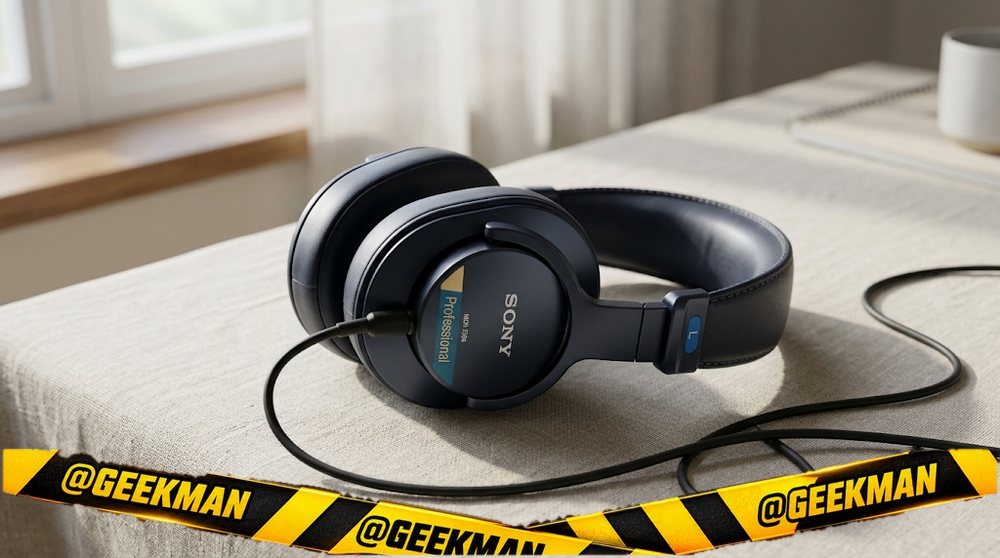
3. Sony MDR-M1 Studio Monitor Headphones
8.7Geekman Score
8.9 Sound
9.0 Features
8.9 Build & service
8.0 Value
Sony’s modern closed-back monitor: light, comfortable for long sessions, with deeper bass and a smoother top than the old MDR-7506.
Over-ear, Wired · 40mm drivers · 2 detachable cables · 1 year
Best for
✓ Musicians tracking for hours who want a light closed-back that stays comfortable
✓ Producers who make bass-heavy music and need to hear the low end properly
✓ Home studio owners who want one closed-back for recording, editing and casual listening
Skip if
• You want a strictly flat reference for final mix decisions (the open HD 600 or HD 560S are more even)
• You want the cheapest way into Sony’s studio sound (the MDR-7506 is far cheaper)
• You want an easy third-party cable swap (the threaded lock socket limits which cables fit)
My take: The MDR-M1 fixes what people disliked about Sony’s old studio classic. It is lighter and much more comfortable, the treble is cleaner and less sharp, and the bass reaches lower, which helps anyone working on music with a lot of low end. The catch is that it is not perfectly neutral. Reviewers disagree on how even the mids are, and the soundstage is closed-in, so I’d treat it as a superb tracking and all-purpose closed-back rather than the last word on a mix.

Sony MDR-M1 Wired High Resolution Monitor Over Ear Headphones, Closed Back Design for Audiophile
Up to 4% instant discount on select credit cards; cashback on Amazon Pay ICICI cards +1
- Up to 4% instant discount on select credit cards; cashback on Amazon Pay ICICI cards
- No Cost EMI on select cards
Pros and cons
What I like
+ Very light (216 g) and comfortable for long sessions
+ Deeper bass and smoother treble than the MDR-7506
+ Two locking detachable cables
+ Easy to drive from almost anything
What I don’t like
• Not perfectly neutral; mids divide reviewers
• Closed-in soundstage
• Only 1 year warranty and no case
My full review: who it suits, what it is like and how it compares
Who should buy it. A singer, guitarist or producer who sits in a home studio for long sessions and needs a closed-back that isolates and stays comfortable. It is easy to drive at 50 ohm, so it works from a phone with a dongle, a laptop or any audio interface. If you mainly mix in a quiet room and want the most even reference, an open-back like the HD 560S or HD 600 makes more sense; if you need the toughest closed-back for the least money, the DT 770 Pro or HD 280 Pro are cheaper.
Sound and accuracy. Bass is lightly lifted but has real depth, reaching lower than the MDR-7506 without turning boomy. Treble is clear and airy without the sharpness the 7506 was known for, so long sessions are less tiring. The mids are where opinions split: some studio reviewers found them natural and slightly warm, others heard a mild V shape and a dip around 200Hz that can make bass seem louder than it is in a mix. The soundstage is narrow and tends to bunch sounds toward the centre, which is normal for a closed-back but worth knowing.
Comfort and build. At 216 g without the cable it is one of the lightest serious studio headphones, and the deeper, softer pads are a big step up from the 7506. Reviewers wore it for hours of tracking without sore spots, and one did so in a heatwave without the pads turning sweaty, though heat does build in very long sessions. Rigid glasses arms can feel the pressure. The frame is plastic but feels solid, the cups lay flat, and the pads are designed to be easy to replace. No case or bag comes in the box.
Cable, impedance and what it needs to drive it. Two detachable cables are included, about 1.2 m for a desk or laptop and 2.5 m for tracking, plus a screw-on 6.3mm adapter. The cable locks into the left cup with a threaded collar, so it won’t pull out mid-take, but it also means a generic replacement cable may not fit. At 50 ohm and about 102 dB/mW it needs no amp. Sony India gives a 1 year warranty, shorter than Sennheiser and Beyerdynamic.
MDR-M1 or DT 770 Pro? Both are built for long sessions. The DT 770 Pro has soft velour pads that cope with heat and a tank-like build, but its treble is bright and its 3 m cable is fixed. The MDR-M1 is lighter, smoother on top and has two detachable cables. Bright-sensitive ears should take the Sony.
MDR-M1 or HD 280 Pro? If you record loud sources like drums, the HD 280 Pro blocks more noise, up to 32 dB. For everything else, the MDR-M1 is lighter, far more comfortable and has deeper bass and detachable cables. The Sennheiser’s strong clamp and sweaty pads are the price of that isolation.
Key specs
| Type | Over-ear, closed-back |
| Connection | Wired |
| Drivers | 40mm |
| Impedance | 50 ohm |
| Noise cancelling | Passive isolation only |
| Microphone | No mic |
| Cable | 2 detachable cables, about 1.2m and 2.5m, with 3.5mm to 6.3mm adapter |
| Weight | 216 g |
| Works with | Phones, laptops, audio interfaces, mixers |
| Warranty | 1 year |
Best for vocals and comfort
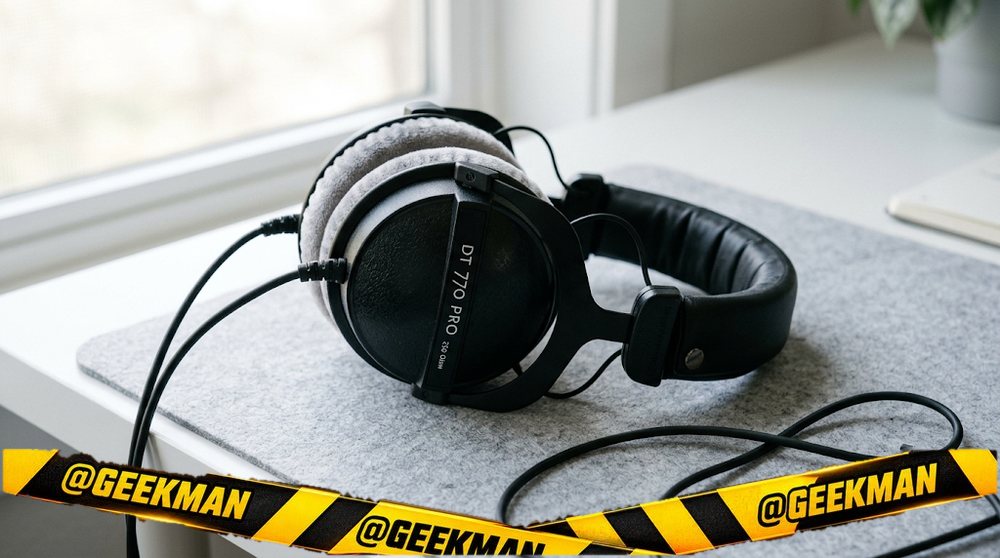
4. Beyerdynamic DT 770 Pro Studio Headphones
8.6Geekman Score
8.7 Sound
8.6 Features
9.2 Build & service
8.1 Value
The closed-back you can wear all day: soft velour pads, a tank-like build and a surprisingly open sound, with bright treble as the catch.
Over-ear, Wired · Velour pads · 2 years
Best for
✓ Home studio owners who want a closed-back they can wear for hours in a warm room
✓ Musicians and podcasters who want gear that survives years of daily use
✓ Bass-heavy producers who need to hear sub-bass while tracking
Skip if
• You are sensitive to sharp S sounds and bright cymbals (the Sony MDR-M1 is smoother up top)
• You need to carry it around (it doesn’t fold, and the 3 m cable is fixed)
• You only use a phone and want the easiest pair to drive (the 32 ohm version or the ATH-M30x fit better)
My take: The DT 770 Pro is a studio staple for good reasons. The velour pads are the most comfortable here for long sessions in Indian heat, the metal frame lasts for years, and it sounds more spacious than most closed-backs. The honest catch is the treble: there is a bright lift that can make S sounds and cymbals sharp on some recordings. Buy the 80 ohm version; it is the best balance of loudness and sound for most home setups.

beyerdynamic Dt 770 Pro 250 Ohm Studio Wired Over Ear Headphones (Black)
Up to 4% instant discount on select credit cards; cashback on Amazon Pay ICICI cards +1
- Up to 4% instant discount on select credit cards; cashback on Amazon Pay ICICI cards
- No Cost EMI on select cards
Pros and cons
What I like
+ Very comfortable velour pads, good in warm rooms
+ Durable metal frame
+ Deep sub-bass and a wide stage for a closed-back
+ Replaceable pads and parts
What I don’t like
• Bright treble can be sibilant
• Fixed 3 m cable, does not fold
• Tight clamp until it breaks in
My full review: who it suits, what it is like and how it compares
Who should buy it. Someone recording at home who wants a closed-back for long tracking, editing or podcast sessions and wants it to last. It comes in 32, 80 and 250 ohm versions. The 80 ohm is the one I’d buy for a laptop or audio interface; the 250 ohm needs a proper headphone amp, and the 32 ohm is the easiest to run from a phone. If you want a lighter pair that folds for travel, look at the ATH-M30x or Sony MDR-M1.
Sound and accuracy. Sub-bass goes deep with almost no roll-off, and there is a gentle lift below about 120Hz that stays clean and doesn’t muddy the vocals. The mids are natural and close to reference. The treble is the issue: a broad lift in the upper range adds sparkle and detail but also some sibilance and glare, though it is much milder than on the DT 990 Pro. For a closed-back the soundstage is unusually spacious and imaging is precise, but separation is a step behind open-backs like the HD 600.
Comfort and build. This is why people buy it. The velour pads are soft, deep and breathe far better than leatherette, so it stays comfortable in a room without AC. Beyerdynamic rates the clamp as firm, and it does feel tight out of the box, but it eases after about a week of use. The metal and thick-plastic frame is built to take years of studio abuse. At about 270 g without the cable it is not light, and it does not fold.
Cable, impedance and what it needs to drive it. The cable is a straight 3 m line, fixed to the left cup, with a 3.5mm plug and a screw-on 6.35mm adapter. The length is great at a desk or across a studio, awkward on the move, and if it gets damaged you need a repair rather than a new plug-in cable. The 80 ohm version runs well from most audio interfaces and laptops; phones and basic dongles get it loud enough for many people but with less headroom. Warranty is 2 years.
DT 770 Pro or MDR-M1? Pick the DT 770 Pro for velour comfort in a warm room and a build that lasts. Pick the MDR-M1 if the Beyer’s bright 5 to 8 kHz treble bothers you or you want detachable cables. The Beyer’s clamp is tight for about a week before it eases.
Key specs
| Type | Over-ear, closed-back |
| Connection | Wired |
| Drivers | Not stated |
| Impedance | 80 ohm (also sold in 32 and 250 ohm) |
| Noise cancelling | Passive isolation only |
| Microphone | No mic |
| Cable | Fixed 3m straight, 3.5mm with 6.35mm adapter |
| Weight | About 270 g without the cable |
| Works with | Audio interfaces, mixers, laptops, phones |
| Warranty | 2 years |
| Variant to buy | 80 ohm. The 250 ohm version needs an amp |
Best open-back for mixing
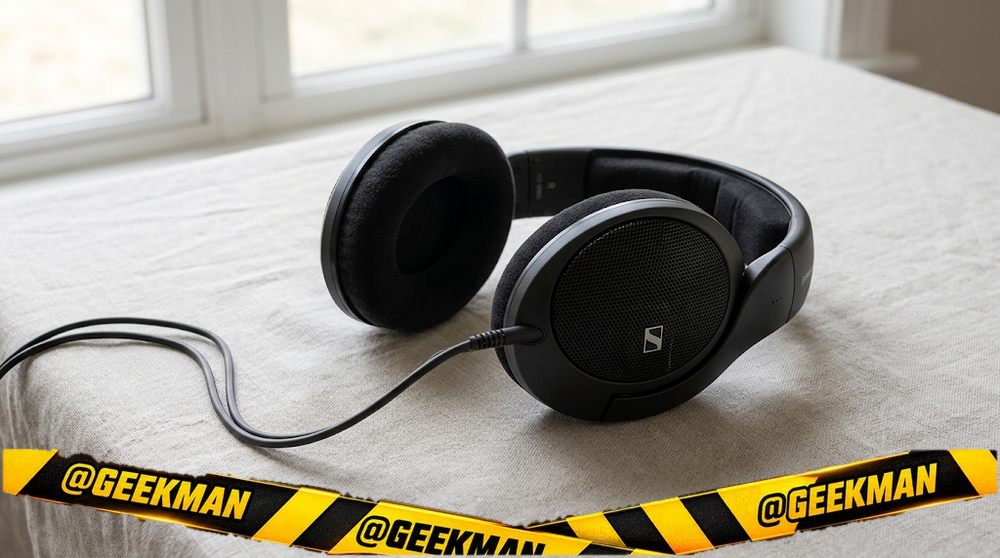
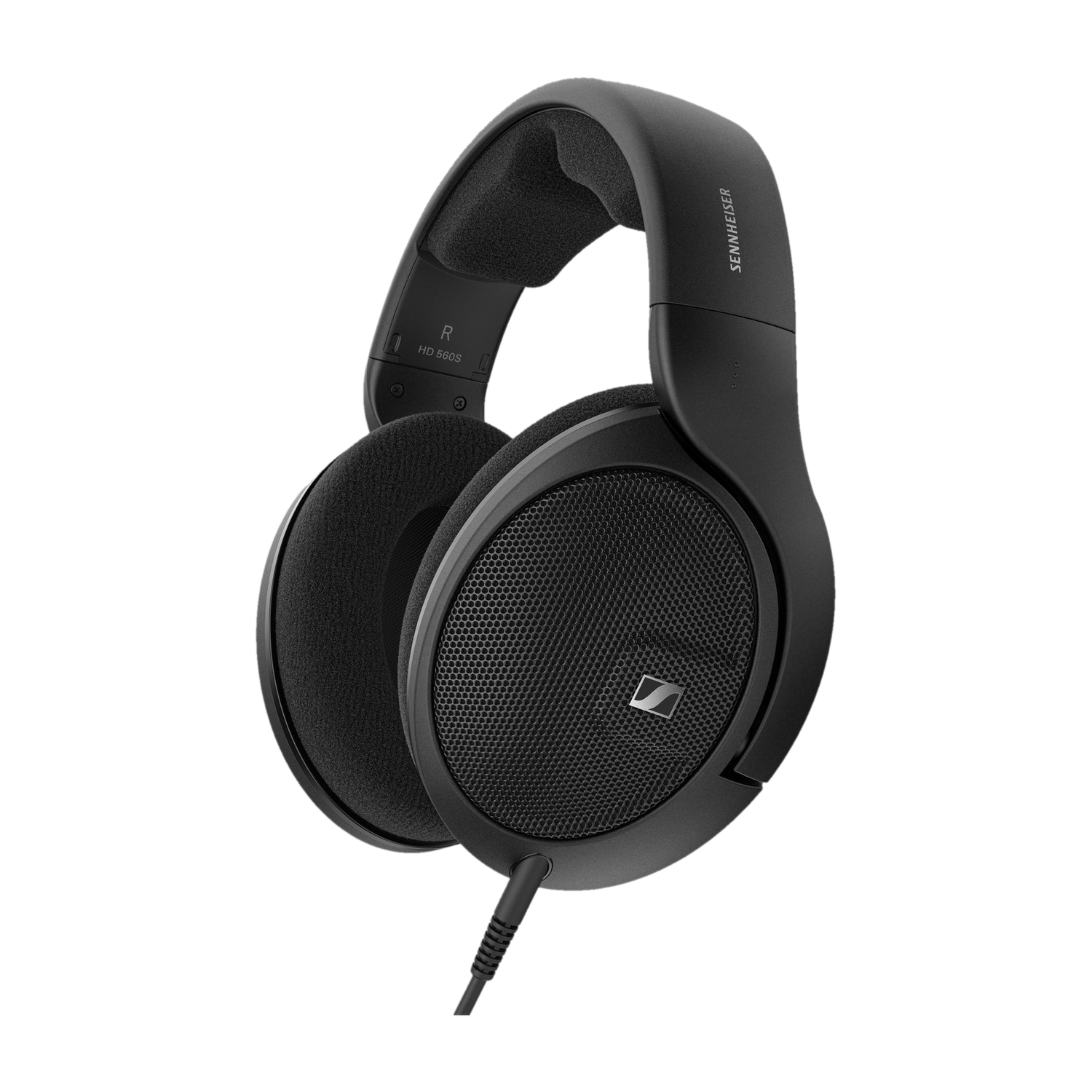
5. Sennheiser HD 560S Open-Back Headphones
8.5Geekman Score
8.9 Sound
8.8 Features
9.2 Build & service
7.2 Value
The open-back I’ve tested and recommend most: wide, detailed and neutral, and it runs from a phone without an amp.
Over-ear open-back, Wired · Detachable cable · 2 years
Best for
✓ Home studio mixing and editing in a quiet room
✓ Listeners stepping up to their first serious open-back without buying an amp
✓ PC gamers who want precise positioning for single-player and competitive games
Skip if
• You record with a mic nearby or work in a noisy room (open-back leaks both ways; the DT 770 Pro or HD 280 Pro isolate)
• You want punchy, bass-boosted sound
• You are sensitive to sibilance on harsh recordings (the HD 600 is smoother)
My take: I tested this one and my verdict was simple: yes, buy it. It sounds like a pair of good studio monitor speakers, with honest mids, flat but well-controlled bass and a wide, precise soundstage. It runs fine straight from a phone or laptop, so you don’t need to buy an amp to enjoy it. The catch is a slightly bright upper treble that can make sibilant recordings sharp, and the plastic build doesn’t look premium.
Sennheiser HD 560S Over Ear Wired Audiophile Headphones with Open Back Design Wired without Mic
Pros and cons
What I like
+ Neutral, natural mids and a wide, precise stage
+ Runs from a phone or laptop, no amp needed
+ Light 240 g with breathable velour pads
+ Replaceable cable and pads
What I don’t like
• Slightly bright treble, sibilance on some tracks
• Plastic build doesn’t look premium
• Open-back: leaks sound, no isolation
My full review: who it suits, what it is like and how it compares
Who should buy it. Someone who mixes, edits or just listens seriously at a desk in a quiet room. In my full review I called it the best-sounding headphone I’d recommend at its price, for creators, music lovers and even competitive gamers. It is an open-back, so it is not for the metro, a noisy office or recording vocals with a mic next to you.
Sound and accuracy. The mids are its strongest area: vocals and acoustic instruments sound natural and transparent, with the upper mids slightly forward. The bass is not weak, it is flat. Sub-bass is controlled and mid-bass is tight, so you hear what is in the mix, but it won’t thump like a bass-boosted pair. Treble is detailed with good air, though a lift in the lower treble can make poor recordings harsh. The soundstage is wider than the HD 600’s and instrument placement is precise, which also makes footsteps easy to place in games, while the HD 600 has more depth and layering.
Comfort and build. At 240 g with velour pads it is easy to wear for long sessions, and velour breathes much better than leatherette in Indian heat. It sits around the ear without pressing, and fits small and large heads. Clamp can feel fairly strong at first and eases with use. The body is mostly plastic and doesn’t look expensive, but it is sturdy and the hinges feel solid. Pads and cable are replaceable, so it should last years.
Cable, impedance and what it needs to drive it. The detachable 3 m cable ends in a 6.3mm plug with a 3.5mm adapter in the box, and clicks into the cup with a twist-lock. The cable is rubbery and a bit springy, and some reviewers swap it for a shorter one. At 120 ohm with high sensitivity it gets loud from a phone, laptop or PC; an amp or good DAC makes it sound better, but it is not required. Sennheiser also sells an add-on boom mic (HD 500 BAM) if you want to use it for calls or gaming chat.
HD 560S or HD 600? I tested the HD 560S and it gives about 90% of the HD 600 without needing an amp (full review). It also has the wider stage. The HD 600 has the more natural, layered mids and is the long-term reference, but it needs an amp or a strong interface. No amp on your desk? Take the HD 560S.
HD 560S or HD 280 Pro? The HD 560S and HD 600 are open-backs: they leak sound and block nothing, so they suit a quiet room only. If you record with a mic near you or work in a noisy house, the HD 280 Pro is the better choice.
Key specs
| Type | Over-ear, open-back |
| Connection | Wired |
| Drivers | 38mm |
| Impedance | 120 ohm |
| Noise cancelling | Passive isolation only |
| Microphone | No mic |
| Cable | Detachable 3m, 6.3mm plug with 3.5mm adapter |
| Weight | 240 g |
| Works with | Phones, laptops, PCs, audio interfaces, DACs |
| Warranty | 2 years |
Best isolation
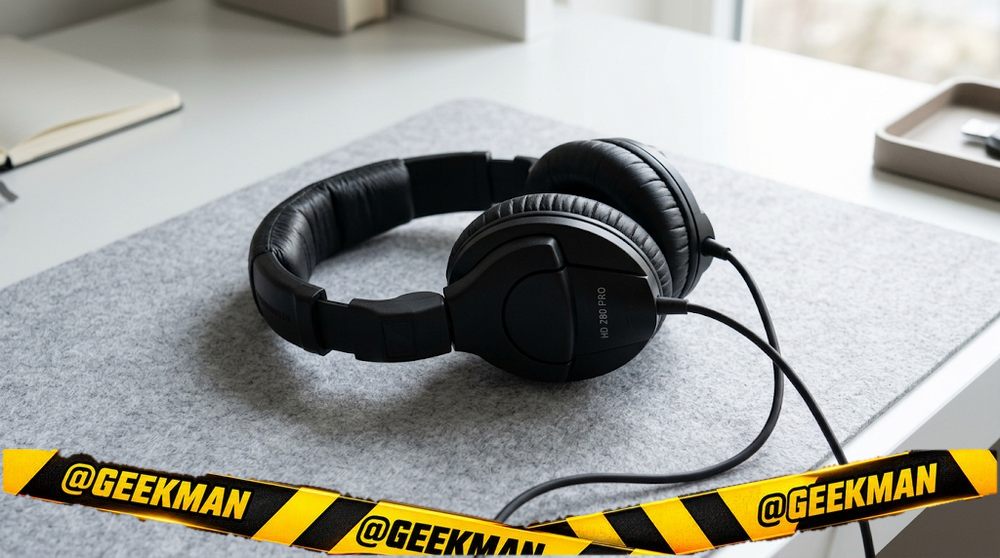
6. Sennheiser HD 280 Pro Studio Headphones
8.4Geekman Score
7.9 Sound
8.6 Features
9.2 Build & service
8.4 Value
The isolation champion: blocks up to 32dB of outside noise, which makes it the pair to wear while recording drums or vocals.
Over-ear, Wired · Up to 32dB passive isolation · 2 years
Best for
✓ Drummers and musicians who need to hear a click track over a loud instrument
✓ Vocal and voice-over recording where the headphone must not leak into the mic
✓ Working in a noisy home, office or near traffic
Skip if
• You wear headphones for many hours (the clamp is strong; the DT 770 Pro is far more comfortable)
• You mostly mix (bass changes with the seal; an open-back like the HD 560S is more reliable)
• You need to carry it around (the fixed coiled cable is bulky)
My take: Buy the HD 280 Pro for one reason: it shuts out the room better than anything else on this list. That strong seal is perfect for tracking drums, recording vocals, or editing next to a noisy road, and the sound is clean and close to neutral. The same clamp is the catch. It gets tiring sooner than the velour-padded DT 770 Pro, and the leatherette pads get sweaty without AC.

Sennheiser HD 280 PRO Wired without Mic
Lowest price
Up to 4% instant discount on select credit cards; cashback on Amazon Pay ICICI cards +1
- Up to 4% instant discount on select credit cards; cashback on Amazon Pay ICICI cards
- No Cost EMI on select cards
Pros and cons
What I like
+ Up to 32dB passive isolation, very little leak
+ Clean, near-neutral sound for tracking
+ Tough build with a 2 year warranty
+ Folds, and pads are easy to replace
What I don’t like
• Strong clamp, tiring on long sessions
• Leatherette pads get sweaty without AC
• Coiled cable is fixed (tools needed to replace)
My full review: who it suits, what it is like and how it compares
Who should buy it. Someone recording in a loud room or recording loud sources: drums, amps, a vocalist singing over a backing track. Sennheiser rates it for up to 32dB of passive noise reduction, and it leaks very little into a nearby mic. It is easy to drive at 64 ohm, so a phone, laptop, interface or mixer all work. If you sit for 4 to 5 hour mixing sessions, its clamp will bother you; the DT 770 Pro or Sony MDR-M1 are kinder.
Sound and accuracy. The tuning is clean and close to neutral: bass is accurate rather than thumpy, mids are clear and detailed, and highs have a little shine without harshness. The catch for mixing is that the bass depends heavily on how well the pads seal on your head, so two people can hear quite different low end. Studio testers describe it as great for tracking, less trusted for final mixes. The soundstage is natural but narrower than the DT 770 Pro.
Comfort and build. At 285 g without the cable it is solid and all plastic, with firm joints that take daily studio use. The newer headband has a centre cutout that removes the hot spot older owners complained about. The ear pads are thick but covered in leatherette that feels cheap and gets sweaty after about an hour in a warm room, and the clamp is strong enough to tire you sooner than most. The pads are replaceable and spare sets are easy to find, which matters because leatherette is a wear item. It folds and the cups swivel.
Cable, impedance and what it needs to drive it. The coiled cable stretches from about 1.3 m to 3 m and is fixed to one cup. It has a 3.5mm plug with a 6.3mm adapter. The coil keeps a desk tidy but is heavy and awkward for travel. It can be replaced, but only by opening the cup with tools, not by unplugging it. At 64 ohm it needs no amp. Sennheiser gives a 2 year warranty.
HD 280 Pro or DT 770 Pro? The HD 280 Pro isolates more and is the tool for tracking drums or vocals. The DT 770 Pro is far more comfortable in heat thanks to velour pads, with a wider stage. For long mixing days take the Beyer; for recording loud sources, the Sennheiser.
Key specs
| Type | Over-ear, closed-back |
| Connection | Wired |
| Drivers | Not stated |
| Impedance | 64 ohm |
| Noise cancelling | Passive isolation only |
| Microphone | No mic |
| Cable | Fixed coiled cable, 1.3m to 3m, 3.5mm with 6.3mm adapter |
| Weight | 285 g |
| Works with | Audio interfaces, mixers, laptops, phones |
| Warranty | 2 years |
Step up from M20x
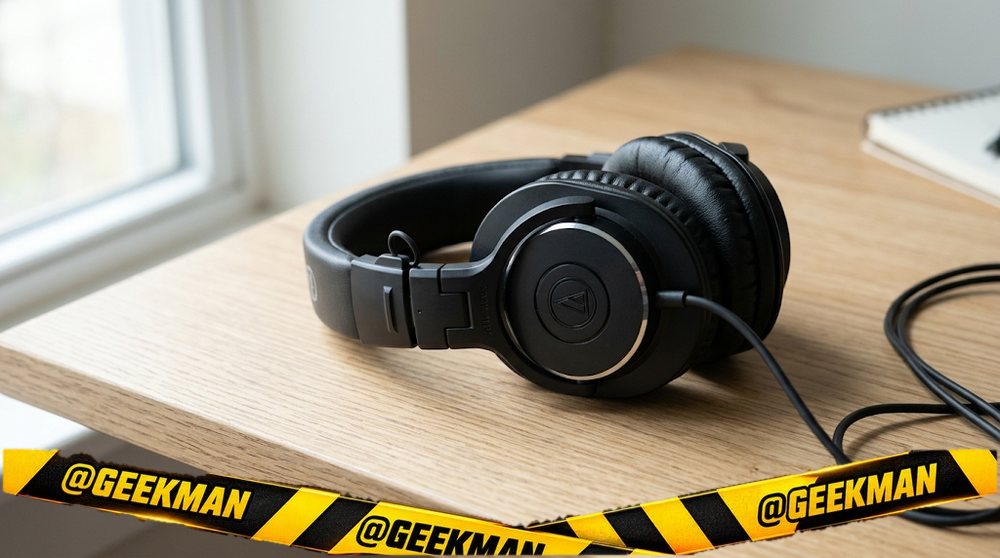
7. Audio-Technica ATH-M30x Studio Monitor Headphones
8.3Geekman Score
7.9 Sound
8.4 Features
8.9 Build & service
8.4 Value
A light, gentle-clamping budget monitor that folds into a bag. Good for tracking and podcasts, less so for mixing.
Over-ear, Wired · 40mm drivers · Folds flat · 1 year
Best for
✓ Glasses wearers who hate tight headphones
✓ Students and home recordists who want a proper studio brand on a budget
✓ Podcasters and editors who move between a desk, a phone and a laptop
Skip if
• You need strong isolation for loud recording (the HD 280 Pro or Maono AU-MH501 seal far better)
• You want a detachable cable (the Sony MDR-M1 or FIFINE H8 have one)
• You plan to make final mix decisions on it (an open-back like the HD 560S is more reliable)
My take: The M30x is a workhorse: light at 220 g, a loose and comfortable clamp, and it folds for a bag. It is honest enough for tracking, podcasting and video editing, and it runs from any phone. The catches are a fixed cable, thin pads and weak isolation against low rumble like a fan or traffic. If the price gap is small, the M40x is the more refined Audio-Technica.
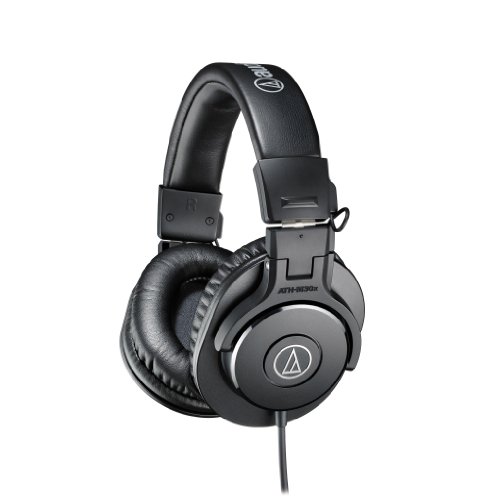
Audio Technica ATH-M30x Wired without Mic
Lowest price
Up to 4% instant discount on select credit cards; cashback on Amazon Pay ICICI cards +1
- Up to 4% instant discount on select credit cards; cashback on Amazon Pay ICICI cards
- No Cost EMI on select cards
Pros and cons
What I like
+ Light at 220 g with a gentle clamp, good with glasses
+ Folds flat for a bag
+ Easy to drive from a phone
+ Better balance than the M20x
What I don’t like
• Fixed 3 m cable
• Thin pads, weak isolation against low rumble
• Not a trusted mixing reference
My full review: who it suits, what it is like and how it compares
Who should buy it. Someone starting with home recording, podcasting or editing who wants a known studio brand without stretching the budget, and who values comfort over a tight seal. It works straight from a phone, laptop, interface or mixer at 47 ohm. If you wear glasses, the gentle clamp is a real plus. If you record loud instruments, pick the HD 280 Pro instead.
Sound and accuracy. Reviewers describe it as accurate-ish with a slight consumer lean. Bass is not heavy, with more thump in the low bass than the upper bass. Reviewers disagree on the mids: one found them a little recessed for mixing vocals, another heard them forward and sensitive to S sounds, so it is not a pair I’d use as a sole mix reference. Highs are clear on guitars and vocals, and it is a clear step up from the cheaper M20x in detail and balance.
Comfort and build. At 220 g it is light and the clamp is on the loose side, so it is comfortable for an hour or two and kind to glasses. The pads are thinner and less cushioned than on the M40x or M50x, which is why long sessions get less comfortable. The body is mostly plastic with a metal-reinforced headband; finish is basic but it holds up. The cups fold for travel, though they don’t swivel fully for one-ear monitoring.
Cable, impedance and what it needs to drive it. The 3 m straight cable is fixed to the left cup, with a 3.5mm plug and a screw-on 6.3mm adapter. That length is great in a studio and long for a bag, and if the cable fails it needs soldering, not a swap. At 47 ohm it gets loud from any phone or dongle. Isolation is weak against low-frequency noise, and the looser clamp leaks a little sound, so it is better in a quiet room. Warranty is 1 year.
M30x or M20x? The M30x folds into a bag, clamps gently and its comfort holds up longer than the M20x’s small firm pads. The M20x is fine if you only track at one desk. Both have fixed 3 m cables. For podcasts and recording on the move, the M30x.
M30x or HD 280 Pro? The HD 280 Pro blocks far more outside noise, which matters when recording. The M30x is lighter and easier to wear, but its thin pads let low rumble in. Quiet room, take the M30x; noisy room, the Sennheiser.
Key specs
| Type | Over-ear, closed-back |
| Connection | Wired |
| Drivers | 40mm |
| Impedance | 47 ohm |
| Noise cancelling | Passive isolation only |
| Microphone | No mic |
| Cable | Fixed 3m straight, left side, 3.5mm with 6.3mm adapter |
| Weight | 220 g |
| Works with | Phones, laptops, audio interfaces, mixers |
| Warranty | 1 year |
Best mixing reference
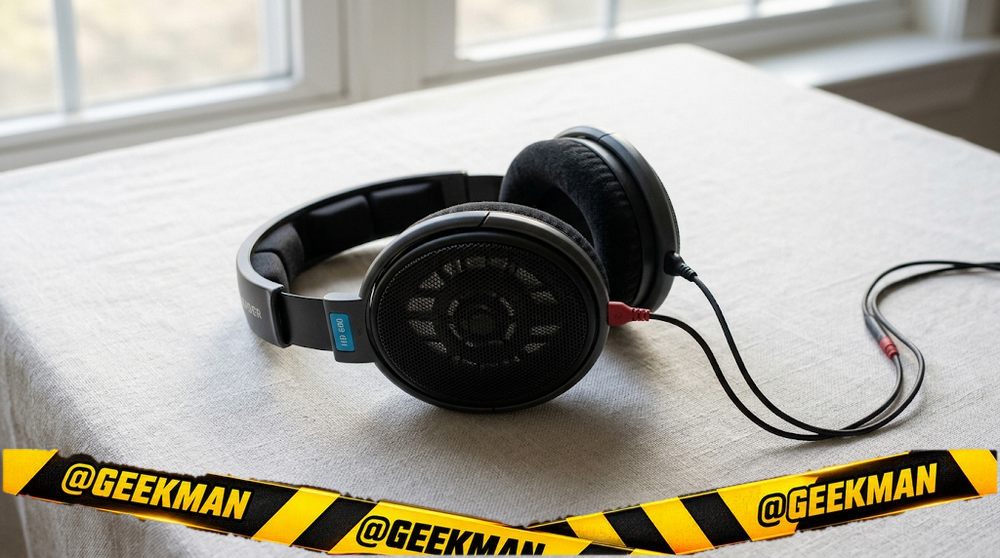
8. Sennheiser HD 600 Open-Back Headphones
8.2Geekman Score
9.1 Sound
8.6 Features
9.2 Build & service
5.9 Value
The mixing reference studios have trusted for decades, for one reason: the most natural midrange here. Budget for an amp.
Over-ear open-back, Wired · Needs an amp or strong interface · 2 years
Best for
✓ Mixing and mastering in a quiet room where you need to trust vocals and instruments
✓ Listeners with a headphone amp, DAC or strong audio interface
✓ Classical, jazz, acoustic and vocal music lovers
Skip if
• You’ll run it straight from a phone or a weak laptop jack (it sounds thin; the HD 560S runs fine without an amp)
• You want a wide, open soundstage (the HD 560S is wider)
• You need isolation or want to use it outside (any closed-back here)
My take: If you want to hear vocals and instruments as they really are, this is still the benchmark. The mids are smooth and honest, the bass is controlled, and the treble is detailed without biting. Two catches: at 300 ohm it needs a proper amp or a strong interface to sound right, and the soundstage is more intimate than the HD 560S. Add the amp to your budget before you buy.

Sennheiser HD 600 Open‑Back Hi-Res Audiophile Headphones,German‑Irish Craftsmanship, Optimised Airflow Control, Wide Frequency Response, Detachable Cable,Rich Bass, Comfort-Fit for Gaming, 2Y Warranty
Up to 4% instant discount on select credit cards; cashback on Amazon Pay ICICI cards +1
- Up to 4% instant discount on select credit cards; cashback on Amazon Pay ICICI cards
- No Cost EMI on select cards
Pros and cons
What I like
+ The most natural, honest midrange here
+ Controlled bass and smooth, detailed treble
+ Comfortable velour pads, light at 260 g
+ Modular, replaceable parts
What I don’t like
• Needs an amp or strong interface
• Intimate soundstage, narrower than the HD 560S
• Tight clamp when new
My full review: who it suits, what it is like and how it compares
Who should buy it. Someone who mixes or listens critically at a desk and already has, or will buy, a headphone amp, DAC or an audio interface with a strong headphone output. On a weak source it can sound flat and thin, which hides exactly what makes it special. If you will use it mostly from a phone or laptop, buy the HD 560S instead; it gives you most of the sound without the extra box.
Sound and accuracy. The midrange is the reason to buy it: vocals, pianos and acoustic instruments sound natural and forward, with no harshness. Bass is controlled and accurate with good depth, but its impact is modest, so bass lovers find it lean. Treble is a little bright but smooth and detailed, without the piercing peaks of some rivals. Compared with the HD 560S, the HD 600 has smoother treble and better layering, so it is easier to pick out individual parts in a dense mix. Its weak point is space: the stage is closer and more intimate than most open-backs.
Comfort and build. At 260 g with velour pads on the cups and headband, it is comfortable for long sessions and the velour breathes better than leatherette in warm rooms. Out of the box the clamp is tight, and it loosens over time. The frame is mostly plastic with a metal headband, functional rather than luxurious, and sturdy enough for years of use. Most parts, including pads, headband padding and cable, are modular and replaceable, which is part of why studios keep them for decades.
Cable, impedance and what it needs to drive it. The detachable 3 m cable plugs into both cups, and an adapter in the box covers both 6.3mm and 3.5mm sockets. At 300 ohm and 97 dB per volt, it needs real voltage: a desktop headphone amp, a DAC/amp combo or an interface known for a strong headphone output. A phone or basic dongle may reach moderate volume but usually sounds thin. Sennheiser gives a 2 year warranty, and Sennheiser service in India is well established.
HD 600 or HD 560S? The HD 600 has the most natural midrange here and the layering that makes it a mixing reference for decades. The HD 560S is wider, a touch brighter and runs from a phone or laptop. If you already own an amp or a strong interface, the HD 600; otherwise, the HD 560S.
Key specs
| Type | Over-ear, open-back |
| Connection | Wired |
| Drivers | Not stated |
| Impedance | 300 ohm |
| Noise cancelling | Passive isolation only |
| Microphone | No mic |
| Cable | Detachable 3m, 3.5mm plug with 6.3mm adapter |
| Weight | 260 g |
| Works with | Headphone amps, DACs, audio interfaces with strong output |
| Warranty | 2 years |
Best budget
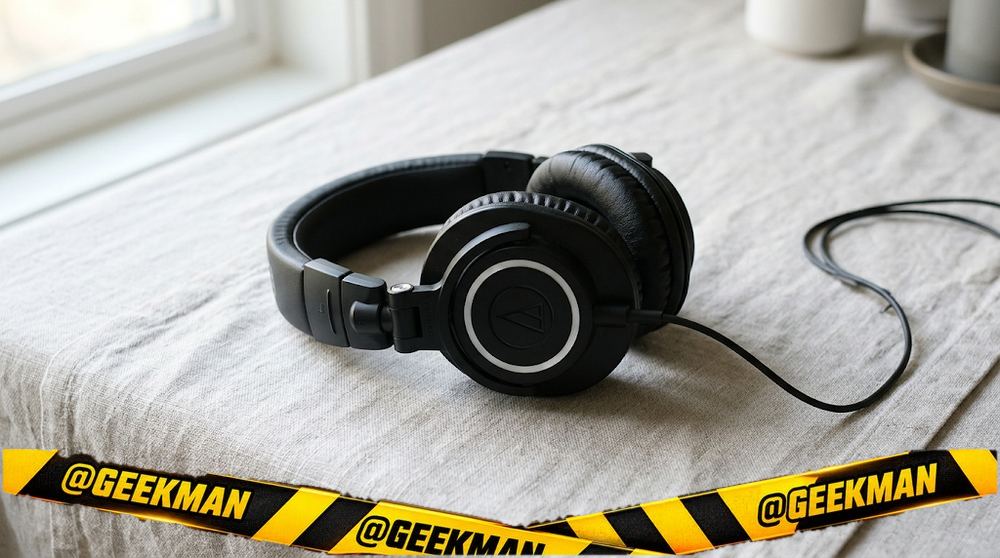
9. Audio-Technica ATH-M20x Studio Monitor Headphones
8.1Geekman Score
7.6 Sound
8.2 Features
8.9 Build & service
8.2 Value
The cheapest proper studio headphone from a big pro brand, honest in the mids and light on the head, but thin in the deep bass.
Over-ear, Wired · 40mm drivers · 47 ohm, no amp needed · 1 year
Best for
✓ Beginners recording vocals, guitar or podcasts at home on a tight budget
✓ Students learning music production who want a flatter sound than consumer headphones
✓ Video editors who need to hear dialogue clearly and plug straight into a laptop or phone
Skip if
• You make bass-heavy music like EDM or hip-hop and need to judge the low end (the ATH-M50x goes deeper)
• You want a cable you can replace when it breaks (the M50x has detachable ones)
• You have large ears or plan 4 to 5 hour sessions (the small, stiff cups get tiring)
My take: The M20x is the honest starter pick. Mids and vocals come through cleanly, the tuning is closer to neutral than most headphones at this budget, and 47 ohm means a phone or laptop drives it fine. The catch is the deep bass, which simply isn’t there below the kick drum, plus a fixed cable and small pads that you will notice after an hour.

Audio Technica ATH-M20x Wired without Mic
Lowest price
Up to 4% instant discount on select credit cards; cashback on Amazon Pay ICICI cards +1
- Up to 4% instant discount on select credit cards; cashback on Amazon Pay ICICI cards
- No Cost EMI on select cards
Pros and cons
What I like
+ Close to neutral, clear mids for vocals and dialogue
+ Light at about 190 g
+ Easy to drive from a phone or laptop
+ Long 3 m cable with 6.3 mm adapter for studio gear
What I don’t like
• Deep bass rolls off below about 60 Hz
• Fixed cable with an exposed section
• Small, firm vinyl pads get tiring and warm
My full review: who it suits, what it is like and how it compares
Who should buy it. Someone starting out with a USB audio interface, a keyboard or a laptop and a mic, who wants a real monitoring headphone without spending much. It is also a good pick for editing videos or podcasts, where clear speech matters more than rumble. If you already know you need accurate bass for mixing, save up for the ATH-M50x instead.
Sound and accuracy. Measurement-based reviews call it one of the more neutral closed-backs around. Bass is fairly flat down to about 60 Hz and then drops away, so kick drums and bass guitar sound lighter than they really are. Mids are full and clear, which is why vocals and dialogue are easy to judge. Treble is clean with a few small peaks, but nothing harsh. For tracking and rough mixes it is fine; for judging sub-bass you will need a second reference.
Comfort and build. At around 190 g it is light, and the headband padding spreads the pressure well. Clamp is gentle. The weak point is the ear pads: they are firm vinyl, the cups are on the small side and don’t swivel, so larger ears get cramped and you will want a break after an hour or two. In a hot room without AC the vinyl gets sweaty. The body is mostly plastic with metal only in the headband sliders. It feels light rather than premium, but it handles normal knocks.
Cable and connections. The 3 m cable is fixed to the left cup, with a 3.5 mm plug and a 6.3 mm adapter for mixers and interfaces. The length is good at a desk and annoying anywhere else. A short section of exposed wire between the cups is the most likely failure point, and if the cable gets damaged it is a repair job, not a swap. It doesn’t fold and no pouch comes in the box.
Who it is not for. People who want headphones for the metro or travel: it doesn’t fold, the cable is very long and isolation only handles moderate noise. Bass lovers will find it dull. And if you are ready to spend more for a headphone you will keep for years, the M50x gives you detachable cables, folding and deeper bass.
M20x or M50x? The M20x gives honest mids for a first studio pair, but its bass rolls off below about 60 Hz and its cable is fixed. The M50x adds deeper bass, folding, swivel cups and detachable cables. If you can stretch, the M50x is the pair you won’t outgrow.
Key specs
| Type | Over-ear, closed-back |
| Connection | Wired |
| Drivers | 40mm |
| Impedance | 47 ohm |
| Noise cancelling | Passive isolation only |
| Microphone | No mic |
| Cable | Fixed 3m straight, left side, 3.5mm with 6.3mm adapter |
| Weight | 190 g |
| Works with | Phones, laptops, audio interfaces, mixers |
| Warranty | 1 year, extendable by registering with Audio-Technica India |
Compare all 9 at a glance
| Headphone | Drivers | Weight | Mic | Warranty |
|---|---|---|---|---|
| Audio-Technica ATH-M50x | 45mm | 285 g | No | 1 year |
| Sony MDR-7506 | 40mm | 230 g | No | 1 year |
| Sony MDR-M1 | 40mm | 216 g | No | 1 year |
| Beyerdynamic DT 770 Pro | Not stated | No | 2 years | |
| Sennheiser HD 560S | 280 g | No | 2 years | |
| Sennheiser HD 280 Pro | 285 g | No | 2 years | |
| Audio-Technica ATH-M30x | 40mm | 220 g | No | 1 year |
| Sennheiser HD 600 | 260 g | No | 2 years | |
| Audio-Technica ATH-M20x | 40mm | 190 g | No | 1 year |
Specs from brand pages and the brand’s own product details. Battery figures are brand claims at medium volume; ANC on cuts them.
The buying guide
How to choose studio headphones
Best overall
Audio-Technica ATH-M50x.
Podcast and video
Sony MDR-7506.
Mixing
Sennheiser HD 560S, HD 600.
Recording
Beyerdynamic DT 770 Pro, Sennheiser HD 280 Pro.
Budget
ATH-M20x, ATH-M30x.
Closed-back, open-back or semi-open?
Closed-back headphones keep sound in and noise out. Use them for recording vocals, in shared rooms and for commuting.
Open-back headphones let air and sound pass through the cups. They sound wider and more natural, which helps mixing and long listening, but people around you hear your music and you hear the room. Semi-open sits in between.
Impedance: will a phone drive it, or do I need an amp?
Most headphones under 64 ohm play loud enough from a phone dongle, laptop or audio interface. Many 250 to 300 ohm studio headphones (Beyerdynamic DT 770 250 ohm, Sennheiser HD 600) need a headphone amp or a strong interface output to sound full.
Phones with no headphone jack need a USB-C to 3.5mm dongle. A good dongle with a DAC costs little and often sounds better than an old laptop jack.
Driver size and sound: does 50mm beat 40mm?
Driver size alone does not decide sound quality. A well tuned 40mm driver from Sony or JBL sounds cleaner than a cheap 50mm one. Bigger drivers do make strong bass easier, which is why most budget brands push 50mm.
Look at the tuning instead: bass-heavy (most Indian brands, Sony ULT), balanced (Sony, Sennheiser, Audio-Technica, Soundcore with EQ) or flat studio tuning (monitor headphones). An app with EQ lets you fix the tuning later.
Comfort in Indian summers: weight, clamp and pads
Under 250 g feels light for long sessions. Above 320 g you notice the weight after an hour or two. Clamp force matters as much as weight: a tight headband gives better isolation but pressure on the jaw and glasses.
Protein leather pads isolate better but get sweaty in summer. Fabric or velour pads breathe better at home. Replaceable pads add years of life, since pads wear out first.
Warranty and service in India
Sony, JBL, Sennheiser, HyperX and Logitech have wide service networks, and HyperX and Logitech give 2 years on many headsets. Indian brands like boAt, Noise and Zebronics mostly give 1 year with pickup service, which works well in big cities.
Earpads and headbands wear first. Brands that sell spare pads (Audio-Technica, Sony, Sennheiser, HyperX) keep a pair alive longer.
Questions other guides skip
1 · Do I need a DAC or amp for studio headphones?
Not for models under about 80 ohm; a laptop, phone dongle or audio interface drives them well. For 250 ohm and above, use an interface with a strong headphone output or a small amp.
2 · My phone has no headphone jack. What do I do?
Use a USB-C to 3.5mm adapter with a built-in DAC. It works with wired headphones and gaming headsets with a mic. For phone gaming, wired through a dongle still beats Bluetooth for delay.
3 · When should I replace earpads?
When they crack, flatten or start to smell. Pads usually last one to two years with daily use. Many brands sell spares, and generic pads fit common sizes.
4 · Do headphones need burn-in?
No. Any change you hear in the first days is mostly your ears getting used to the sound. Just use them normally.
5 · How loud is too loud?
Keep volume around 60 percent for long sessions and take a break every hour. ANC helps here, because you do not need to turn up the volume to beat traffic noise.
Popular studio headphones I’d skip
These get bought for studio work all the time, but they make mixing and editing harder, not easier. A pick from my list is the safer tool.
Superlux HD681. It is cheap and popular as a “studio” headphone, but Stereophile found the treble too harsh to recommend without heavy EQ, Sonarworks measured big differences between units, and the build is mostly plastic with a fixed cable. The Audio-Technica ATH-M20x is far more consistent and easier to trust.
Bluetooth headphones with “Studio” in the name. Names like Beats Studio Pro sound professional, but these are consumer headphones with a tuned sound, and Bluetooth adds delay and compression. What Hi-Fi even found the Studio Pro sounded more focused over a cable than over Bluetooth. For editing or mixing, use a wired monitor like the Audio-Technica ATH-M50x.
250-ohm versions for a laptop or phone. Many studio models come in high-impedance versions, and the 250-ohm one is often the cheapest in a sale. Without a proper headphone amp or interface, it sounds quiet and thin. If you work from a laptop or phone, the Beyerdynamic DT 770 Pro in the 80-ohm version is the one to buy.
Open-back headphones for recording vocals. Open-backs are great for mixing, but they leak your headphone mix into the microphone. For tracking vocals or voice-overs, the Sennheiser HD 280 Pro blocks a lot of outside noise and keeps the mix out of the mic.
Bass-boosted DJ headphones sold as studio headphones. Many cheap headphones with “studio” or “monitor” in the name are really DJ-style pairs with boosted bass. That makes your mixes sound thin everywhere else. The Sony MDR-7506 is the opposite: forward mids and treble that make problems in a recording easy to hear.
Also consider
On a budget? See the best studio headphones under 5,000.
Just want wired for music? See the best wired headphones.
More from Geekman
More headphone buying guides
Best studio headphones under 5,000Best wired headphonesBest headphones in IndiaBest headphones under 10,000Best headphones under 5,000Best Bluetooth headphones in India
FAQs
Which are the best studio headphones in India?
The Audio-Technica ATH-M50x for most home studios, the Sony MDR-7506 for podcasts and video, and the Sennheiser HD 600 for serious mixing with an amp.
Closed or open-back for a home studio?
Closed-back for recording and shared rooms. Open-back for mixing in a quiet room.
Do I need an amp?
Not for the ATH-M50x, MDR-7506, MDR-M1, HD 280 Pro or HD 560S. The HD 600 and DT 770 Pro 250 ohm sound much better with one.
Can I use studio headphones for normal music?
Yes. They sound more neutral, with less bass than consumer headphones. Many people prefer that.
ATH-M50x or Sony MDR-7506?
The M50x has more bass, detachable cables and folds. The 7506 is lighter, brighter and a long-time favourite for voice work.
My final picks
Best overall: Audio-Technica ATH-M50x. Check price
Best value: Sony MDR-7506. Check price
Best for mixing: Sennheiser HD 560S. Check price
Best budget: Audio-Technica ATH-M20x. Check price
Decide closed or open first, then check if your audio interface can drive the impedance. Those two choices narrow the list fast.